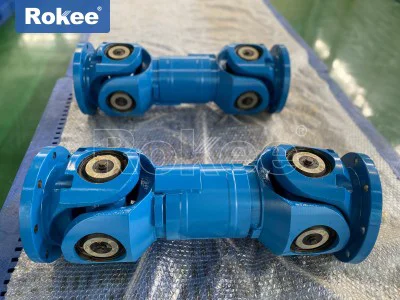
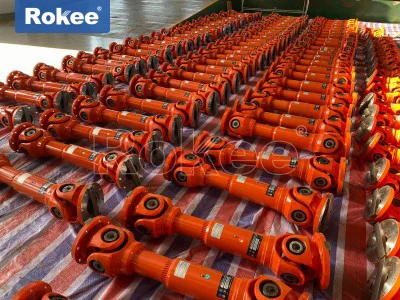
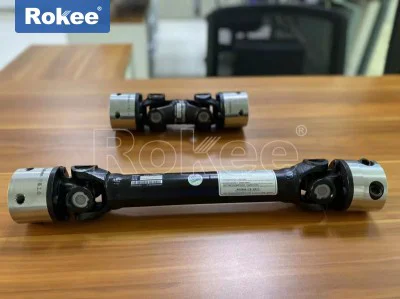
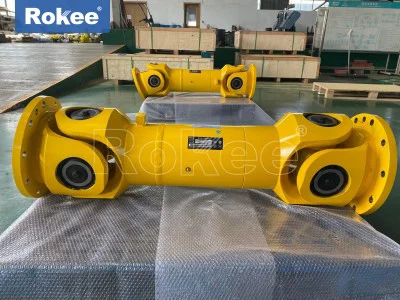
High Torque Cardan Drive Shaft
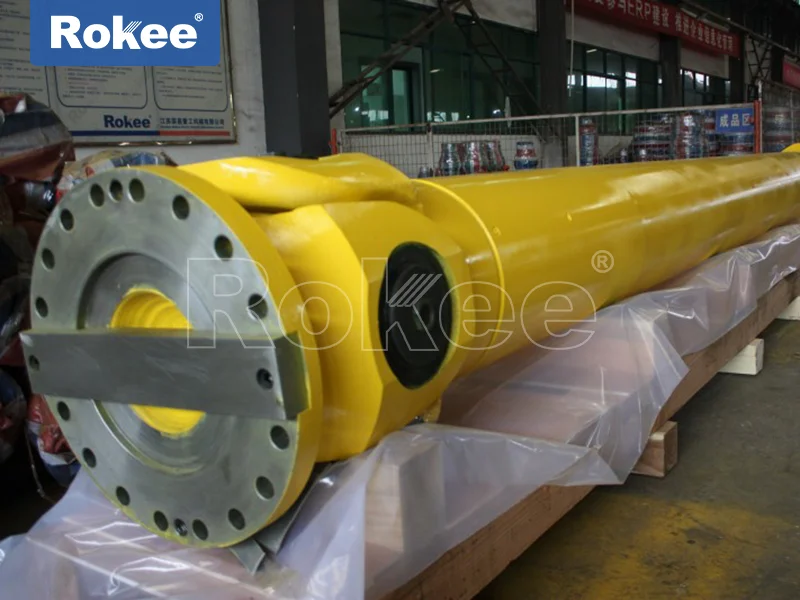
High torque cardan drive shafts are indispensable mechanical transmission components designed to deliver stable and powerful torque transfer in heavy-duty industrial and mobile equipment scenarios. Differing from ordinary drive shafts, this specialized component features an optimized universal joint structure and reinforced mechanical design, enabling it to withstand extreme rotational force while adapting to complex operating conditions such as angular misalignment, axial displacement, and dynamic vibration. Its core value lies in solving the power transmission bottleneck of high-load mechanical systems, ensuring continuous and efficient energy output between driving and driven parts even under non-ideal installation and operation states. Widely applied in engineering machinery, metallurgical equipment, marine propulsion systems and heavy transportation devices, it balances structural robustness, transmission accuracy and environmental adaptability. With superior fatigue resistance and torque bearing capacity, it has become a core guarantee for the long-term stable operation of high-power mechanical equipment, laying a solid foundation for the efficient execution of various heavy-load production and operation tasks.
The core working principle of high torque cardan drive shafts is based on the classic universal joint transmission mechanism, also known as the Hooke hinge principle, which realizes flexible torque transmission between two shafts with variable angular deviation. The key structural design adopts a cross spider connecting two sets of yoke frames, which can freely rotate and deflect within a certain angle range, effectively compensating for the angular misalignment and tiny axial displacement generated during equipment operation. In high-load working environments, ordinary transmission structures are prone to torque loss, structural jamming or component deformation due to slight alignment deviations, while the cardan structure can maintain continuous power output without reducing transmission efficiency. When the driving end rotates, the cross spider evenly distributes the torque to the driven yoke, offsetting the unstable rotation caused by angle changes. This unique mechanical logic enables the drive shaft to adapt to dynamic working postures, such as the lifting and swinging of engineering machinery and the jitter of mobile equipment, ensuring that high torque is accurately transmitted to the executing structure. The double-joint configuration further optimizes the transmission stability, eliminating the periodic speed fluctuation of single-joint structures and realizing constant-speed and high-efficiency torque transmission under large-angle deflection conditions.
Material selection is the fundamental factor that determines the high torque performance and service life of cardan drive shafts, and all core components adopt high-strength, wear-resistant and fatigue-resistant metal materials through precise proportioning and processing. The main shaft body is usually forged from high-alloy structural steel, which has excellent tensile strength and torsional rigidity, and can resist permanent deformation and structural damage under long-term high-torque impact load. The cross spider and bearing parts, as the most stressed moving components, adopt carburizing and quenching heat treatment technology to improve surface hardness and internal toughness, effectively reducing wear and friction loss during high-speed rotation and heavy-load transmission. Different from ordinary low-load drive shafts, high torque models strictly control material purity and structural uniformity to avoid microscopic defects that may cause fatigue fracture under cyclic load. In addition, some advanced models adopt composite reinforcement processes, matching lightweight high-strength auxiliary structures on the basis of ensuring torque bearing capacity, reducing the overall self-weight of the equipment and lowering the extra energy consumption caused by structural inertia. The scientific material matching system enables the drive shaft to maintain stable mechanical properties in high-temperature, low-temperature and dusty harsh environments, realizing long-term uninterrupted heavy-load operation.
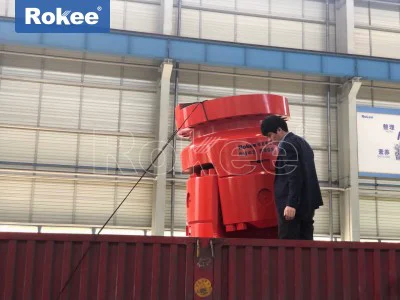
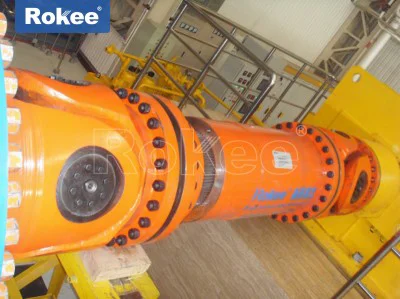
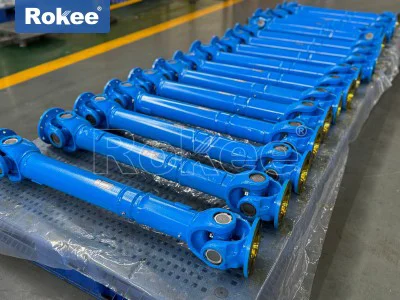
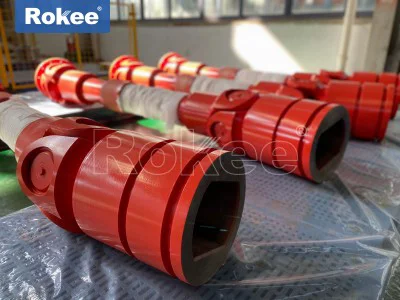
The structural optimization design of high torque cardan drive shafts focuses on torque bearing improvement, misalignment compensation capability and operational stability, forming a mature and efficient mechanical structure system. The overall structure is composed of universal joints, telescopic shaft sections, connecting flanges and anti-loosening limit components, with each part optimized for high-load working characteristics. The universal joint increases the contact area of the cross spider and bearing pair, dispersing high torque pressure and avoiding local stress concentration, which greatly improves the maximum torque threshold of the product. The telescopic shaft section adopts a precise spline structure, which can freely stretch and contract to adapt to the axial distance change between equipment components during operation, while ensuring no torque loss in the telescopic state. The connecting flange adopts an integral forging forming process with high structural precision and good fitting tightness, which can effectively avoid connection looseness and torque attenuation caused by vibration. All rotating and matching parts are designed with rounded transition structures to eliminate stress dead corners and improve the overall fatigue resistance of the structure. The compact and reasonable structural layout not only ensures powerful transmission performance, but also reduces the overall space occupation, making it suitable for various complex equipment installation spaces with limited layout conditions.
High torque cardan drive shafts have extremely broad application coverage, mainly serving heavy-duty mechanical systems that require high-power torque transmission and complex attitude adaptation. In the field of engineering and construction machinery, they are applied to large cranes, excavators and loaders, undertaking the power transmission task between the engine and the walking and executing mechanisms, adapting to the frequent attitude changes and heavy-load operation of construction equipment. In the metallurgical and mining industry, they match rolling mills, mining conveying equipment and crushing machinery, maintaining stable torque output under long-term continuous operation and strong vibration interference to ensure the continuity of industrial production. In marine equipment, they are used for ship propulsion systems, resisting the impact of marine humidity, salt corrosion and hull jitter, and stably transmitting high power to propellers to drive large vessels to navigate. In addition, they are also widely used in agricultural heavy machinery, industrial transmission equipment and special transportation devices, providing reliable power transmission support for various high-load mechanical scenarios. Their strong environmental adaptability and torque transmission capability make them an essential core component in heavy machinery manufacturing.
Compared with other types of transmission shafts, high torque cardan drive shafts have prominent comprehensive performance advantages in heavy-load working conditions. Firstly, they have superior misalignment compensation capability, which can adapt to multi-directional angular deviation and axial displacement that ordinary rigid drive shafts cannot bear, avoiding equipment failure caused by installation errors and operational deformation. Secondly, the torque transmission efficiency is extremely high, with low friction loss and stable power output, which can maximize the utilization rate of equipment power and reduce energy consumption in industrial operation. Thirdly, the overall structure is robust and durable, with strong impact resistance and fatigue resistance, and can adapt to long-term high-intensity cyclic operation, greatly reducing the frequency of component replacement and equipment downtime. In addition, the product has good structural compatibility and scalability, with flexible specifications and adjustable structural parameters, which can be customized according to different equipment power and working condition requirements. Different from flexible transmission parts, it maintains high structural rigidity while ensuring flexibility, avoiding power delay and transmission distortion, and fully meeting the high-precision and high-power operation requirements of modern heavy machinery equipment.
Daily maintenance and scientific operation management are key to extending the service life and maintaining the stable high-torque performance of cardan drive shafts. In the daily use process, regular lubrication maintenance of universal joint bearings and spline telescopic parts is required, and high-performance lubricating grease suitable for heavy-load and high-temperature environments should be selected to reduce component wear and prevent dry friction damage. It is necessary to regularly check the connection tightness of flanges and fasteners to avoid bolt loosening caused by long-term vibration, which leads to torque attenuation and structural vibration. At the same time, observe the operating state of the drive shaft, check for abnormal noise, vibration and rotational jamming during equipment operation, and troubleshoot hidden dangers in a timely manner. For equipment operating in harsh environments such as dust, humidity and corrosion, regular surface cleaning and anti-corrosion treatment are needed to avoid structural corrosion and component aging. In addition, avoid long-term overload operation exceeding the adaptive torque range, so as to prevent permanent structural deformation and fatigue damage. Standardized maintenance can effectively maintain the mechanical performance of the drive shaft, reduce failure rates, and ensure long-term stable and efficient operation of high-power transmission systems.
With the continuous upgrading of modern heavy machinery and industrial equipment, the technical development of high torque cardan drive shafts is moving towards high efficiency, lightweight, intelligence and extreme working condition adaptation. At present, the industry is continuously optimizing material formulas and heat treatment processes to further improve the torque density and fatigue life of products, realizing lighter structural weight while bearing higher load. Structural design is constantly innovating, adopting more precise integrated processing technology to reduce assembly gaps and improve transmission stability and accuracy. In terms of performance optimization, new anti-vibration and noise reduction structures are being developed to adapt to high-speed and high-precision mechanical operation scenarios. In addition, combined with intelligent monitoring technology, the real-time operating state of the drive shaft can be sensed, including torque load, vibration frequency and component wear, to realize predictive maintenance. In the future, with the continuous progress of mechanical manufacturing technology, high torque cardan drive shafts will break through the limitations of extreme working conditions such as ultra-high load and ultra-low temperature, and provide more efficient and reliable transmission solutions for intelligent heavy equipment in various industries.