Upgrade Of Transmission System Of PU Sandwich Panel Line With Industrial Cardan Shaft

The continuous production of polyurethane sandwich panels relies heavily on the coordinated operation of multiple mechanical modules, where the stability, continuity and accuracy of the transmission system directly determine the overall production quality and operational efficiency. PU sandwich panels are composite structural materials composed of double-sided surface layers and polyurethane foam cores, featuring excellent thermal insulation, sound insulation and structural stability, and are widely applied in prefabricated construction, cold storage engineering and industrial enclosure systems. The entire production process covers uncoiling, roll forming, raw material injection, lamination, curing, fixed-length cutting and finished product conveying, forming a closed-loop continuous manufacturing flow. In this highly integrated production mode, any slight fluctuation or failure in power transmission will cause inconsistent material feeding speed, uneven foam bonding, panel dimensional deviation and even unexpected equipment shutdowns, bringing hidden troubles to standardized and large-scale production. Traditional transmission structures adopted in early PU sandwich panel production lines mostly use fixed coupling connections and segmented gear transmission combinations, which can meet basic production demands under low-load and low-frequency operation conditions, but expose prominent structural defects and performance limitations with the improvement of production speed, load weight and long-term continuous operation requirements.
Traditional transmission systems for PU sandwich panel line have long plagued production optimization due to their inherent structural rigidity and poor adaptive capacity. The fixed connection mode of conventional transmission components cannot effectively compensate for the tiny angular deviations and axial displacements generated during long-term equipment operation. In the actual production process, the vibration of servo drive motors, mechanical wear of rotating parts, and slight deformation of equipment frames under long-term load will lead to misalignment between the driving end and driven end of the transmission structure. This misalignment further causes uneven torque transmission, local stress concentration on transmission parts, and increased mechanical friction loss. Under high-speed continuous operation, such subtle problems will be continuously amplified, resulting in fluctuating conveying speed of surface materials, asynchronous operation between the upper and lower lamination belts, and inconsistent curing time of polyurethane foam materials. Eventually, the produced sandwich panels will have problems such as uneven core material density, weak bonding between layers and irregular edge dimensions, which greatly reduces the yield rate of finished products. In addition, the rigid transmission structure has poor buffering performance for instantaneous load changes during equipment start-up, shutdown and variable-speed operation. Instant impact force will accelerate the wear and aging of gears, bearings and couplings, shorten the service life of core transmission components, and increase the frequency of equipment maintenance and parts replacement. Frequent maintenance and shutdown debugging not only reduce the effective operating time of the production line, but also increase the unstable factors of production rhythm, making it difficult to achieve high-efficiency and low-consumption continuous production.
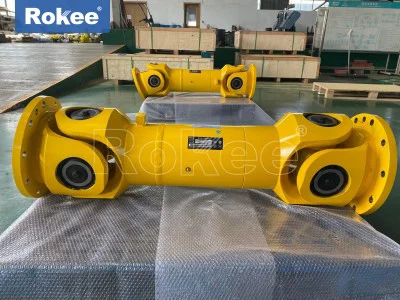
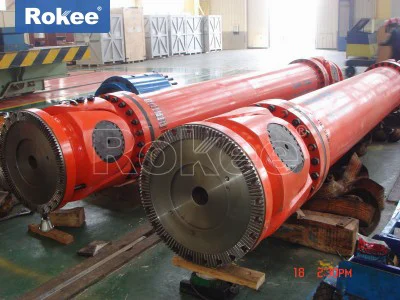
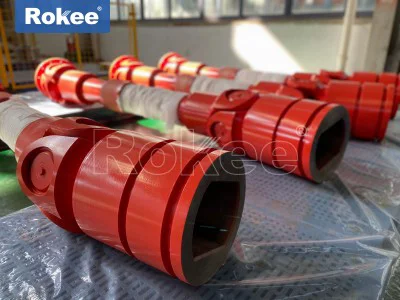
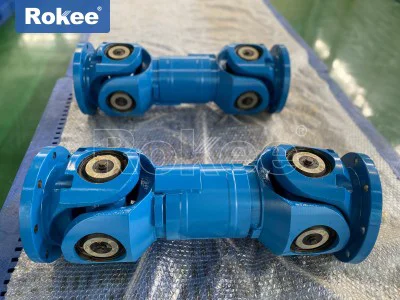
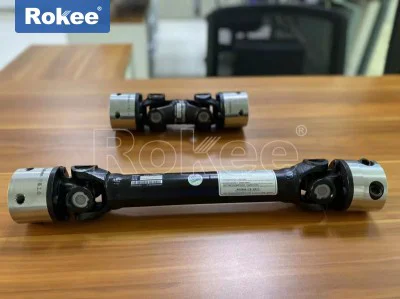
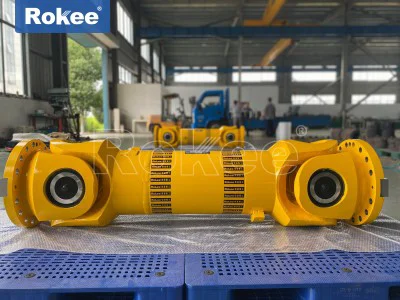
The upgrade of the transmission system with industrial cardan shafts fundamentally solves the performance bottlenecks of traditional rigid transmission structures, bringing comprehensive performance improvements to PU sandwich panel production lines. As a flexible transmission component with unique structural advantages, the industrial cardan shaft realizes power transmission through the flexible cooperation of cross shaft assemblies, hinge forks and precision bearings. Different from fixed transmission structures, the cardan shaft has excellent misalignment compensation capability, which can adapt to small-angle deflection, axial displacement and radial deviation between the driving shaft and driven shaft in the production line operation process. During the continuous operation of the PU sandwich panel line, the cardan shaft can always maintain stable and synchronous torque output without being affected by equipment vibration, slight structural deformation and operational wear, ensuring that the power output by the drive motor can be evenly and continuously transmitted to each functional module such as roll forming, lamination conveying and fixed-length cutting. This highly consistent power transmission state ensures that all links of the production line maintain a unified operating speed and synchronous movement rhythm, realizing precise matching of material feeding, foaming filling and lamination curing speeds, and creating a stable mechanical operation foundation for standardized panel forming.
The structural characteristics of industrial cardan shafts endow the upgraded transmission system with outstanding operational stability and durability. The overall structure of the cardan shaft adopts integrated forging and precision machining technology, with high structural rigidity and fatigue resistance, which can withstand long-term high-load and high-frequency cyclic operation. The internal bearing assembly is tightly matched with the cross shaft and hinge fork, which can effectively reduce mechanical friction and vibration during power transmission. Compared with traditional segmented transmission structures, the integrated transmission mode of the cardan shaft reduces the number of intermediate transmission links, avoids power loss and transmission delay caused by multi-stage gear conversion and connection gaps, and significantly improves the overall transmission efficiency of the system. In the variable-speed operation scenario of the production line, the flexible connection performance of the cardan shaft can effectively buffer the instantaneous impact force generated by speed adjustment and load change, reduce the mechanical load of the drive motor and reduction gearbox, and avoid component damage caused by instantaneous overload. This excellent buffering and damping performance greatly reduces the vibration amplitude of the entire production line during operation, makes the operation of each mechanical module more stable, and effectively suppresses the product quality defects caused by mechanical vibration.
After the transmission system is upgraded with industrial cardan shafts, the production accuracy and product consistency of PU sandwich panels are significantly improved. The core advantage of the upgraded system lies in the realization of zero-delay synchronous transmission of each production module. In the traditional transmission mode, slight speed differences exist in different functional sections of the production line, resulting in unstable tension of surface materials and inconsistent compression degree of foam core materials during lamination. The cardan shaft eliminates the transmission deviation caused by structural misalignment, ensuring that the upper and lower conveyor belts of the lamination system maintain constant pressure and synchronous operating speed at all times. The stable conveying and pressing state enables the polyurethane foam material to be evenly filled and fully bonded in the composite process, avoiding local hollowing, uneven thickness and inconsistent bonding strength of the panel core layer. At the same time, the precise synchronous transmission ensures the positioning accuracy of fixed-length cutting, making the dimensional error of finished panels controlled within a tiny range, and greatly improving the dimensional uniformity and surface flatness of batch products. For the continuous foaming and curing process of PU sandwich panels, stable transmission speed ensures that each panel obtains consistent curing time and pressure environment, which optimizes the physical properties of finished products, including structural strength, thermal insulation performance and overall flatness, and effectively improves the comprehensive quality level of products.
The system upgrade also brings significant improvements in equipment operation cost and production continuity. The flexible transmission and anti-vibration performance of industrial cardan shafts greatly reduce the wear rate of transmission components. Traditional transmission structures are prone to gear tooth wear, bearing failure and coupling loosening after long-term operation, requiring frequent inspection, maintenance and parts replacement. The cardan shaft structure has low wear loss and strong environmental adaptability, and can maintain stable transmission performance in long-term continuous production, effectively extending the service life of the entire transmission system. The reduction of component wear and failure probability greatly reduces the frequency of equipment shutdown maintenance, improves the effective operation rate of the production line, and avoids production stagnation and material waste caused by equipment failure. In addition, the high-efficiency transmission characteristic of the cardan shaft reduces invalid power loss during operation, making the power output of the drive motor more concentrated on production and processing, realizing energy-saving operation of the production line while ensuring production efficiency. For long-term industrial production, the reduction of maintenance costs, improvement of production efficiency and optimization of energy consumption form a comprehensive cost optimization effect, improving the economic operation benefit of the production line.
In terms of production adaptability, the upgraded transmission system with industrial cardan shafts has stronger process compatibility and production flexibility. Modern PU sandwich panel production needs to meet the processing requirements of different surface material thicknesses, different core material densities and different panel specifications, which puts forward higher requirements on the speed adjustment range and load adaptability of the transmission system. The cardan shaft can maintain stable transmission performance in a wide speed regulation range and variable load state, and can adapt to the speed switching and load changes required by different production processes. When adjusting production specifications, the transmission system can quickly respond to speed parameter changes, realize synchronous adjustment of all production links, and avoid process mismatches and quality fluctuations caused by unsynchronized transmission. At the same time, the structural design of the cardan shaft is convenient for daily inspection and maintenance. The simple and compact assembly structure enables staff to quickly complete daily fault detection and lubrication maintenance, reducing the difficulty of equipment management and improving the overall operational stability of the production line.
From the perspective of long-term production development, the transmission system upgrade based on industrial cardan shafts is an important technical optimization for the iterative upgrading of PU sandwich panel production equipment. With the continuous improvement of industrial manufacturing standards, the market has put forward higher requirements for the precision, stability and batch consistency of PU sandwich panel products. The traditional transmission system has been unable to adapt to the high-standard and high-efficiency production mode, and the flexible and efficient transmission mode realized by cardan shafts provides a reliable mechanical guarantee for the high-quality development of sandwich panel production. This upgrade not only solves many pain points in traditional production such as unstable transmission, easy failure of parts and inconsistent product quality, but also lays a foundation for the intelligent and high-speed development of subsequent production lines. The stable mechanical operation state can better match the automatic control system, realize more accurate process parameter control and closed-loop production adjustment, and further promote the standardized and refined development of PU sandwich panel manufacturing technology.
In conclusion, the upgrade of the PU sandwich panel line transmission system with industrial cardan shafts brings comprehensive performance optimization in terms of operational stability, production accuracy, economic benefit and process adaptability. The excellent misalignment compensation, synchronous transmission and anti-wear performance of industrial cardan shafts make up for the inherent defects of traditional rigid transmission structures, effectively improve the continuous production capacity and product quality level of the production line, reduce equipment operation and maintenance costs, and enhance the overall competitiveness of production equipment. In the continuous development of the sandwich panel manufacturing industry, the application of industrial cardan shaft transmission technology will become an important optimization direction for production line upgrading, providing strong technical support for high-efficiency, low-consumption and high-precision industrial production of PU sandwich panels.