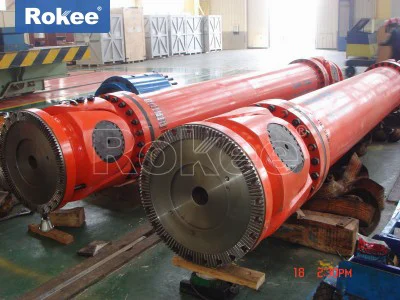
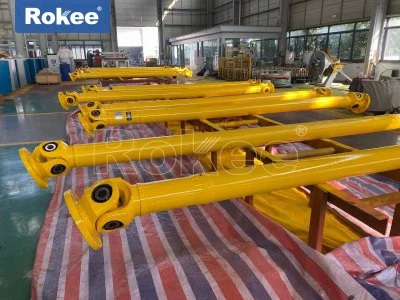
Universal Joint Coupling For Sale
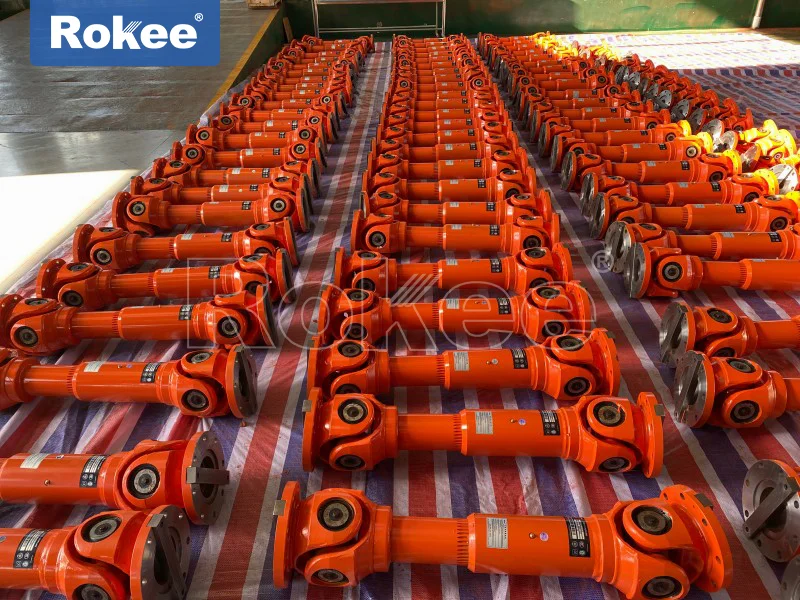
Universal joint couplings are essential mechanical transmission components widely adopted in modern industrial and mechanical systems, serving as a flexible bridge for power transmission between misaligned rotating shafts. Also commonly known as U-joints, these specialized parts effectively transmit torque and continuous rotational motion while accommodating angular deviations, parallel offsets, and dynamic positional changes between driving and driven shafts. Unlike rigid couplings that rely on precise coaxial alignment and flexible couplings with limited compensation capacity, universal joint couplings stand out for their superior misalignment tolerance, stable transmission performance, and strong environmental adaptability. They solve common mechanical operation problems caused by installation deviations, equipment vibration, and thermal deformation, ensuring uninterrupted power output in complex working conditions. Suitable for diverse mechanical equipment across multiple industries, these couplings feature durable structural design, minimal transmission backlash, and low maintenance requirements, making them a cost-effective and reliable choice for upgrading and replacing industrial transmission components.
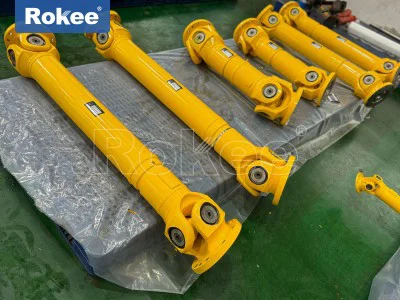
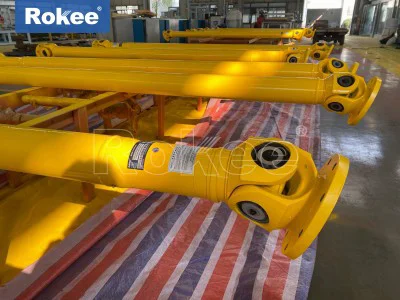
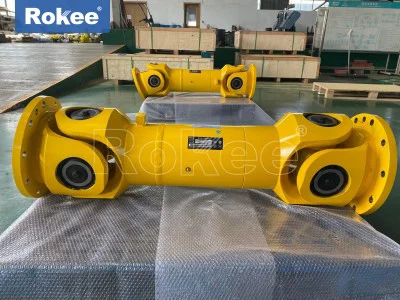
The core working principle of universal joint couplings lies in their unique cross-bearing structural design, which enables flexible and efficient power transmission under multi-dimensional shaft misalignment. The classic structure consists of two yoke joints and a central cross shaft component, with precision-machined bearing parts connecting each contact position, forming a freely movable flexible transmission mechanism. When the driving shaft rotates at an inclined angle, the cross shaft can synchronously adjust its spatial angle to match the positional change of the two shafts, converting offset rotational motion into stable and continuous torque output. This structural advantage allows the couplings to operate stably at relatively large angular misalignments, far exceeding the adaptive range of ordinary rigid and elastic couplings. In actual operation, the symmetrical structural layout effectively balances rotational inertia, reducing vibration and friction loss during high-speed operation. Meanwhile, the integrated force-bearing design ensures uniform stress distribution on each component, avoiding local overloading and premature wear. This reliable working mechanism lays a solid foundation for the long-term stable operation of mechanical transmission systems in complex and variable working scenarios.
Superior material craftsmanship is the key to the excellent performance and long service life of premium universal joint couplings available on the market. High-quality products adopt heat-treated alloy steel as the core raw material for main components such as yokes and cross shafts, which undergoes standardized forging, quenching and tempering processes to enhance overall structural rigidity, surface hardness and impact resistance. This material treatment effectively improves the wear resistance and fatigue resistance of the couplings, enabling them to withstand frequent variable load impacts and long-term continuous operation without structural deformation or component failure. The bearing parts are processed with precision grinding technology to ensure smooth contact surfaces, reduce rotational friction and mechanical noise, and achieve nearly backlash-free transmission effect. In addition, the surface of the couplings is equipped with anti-rust and anti-corrosion protective layers, which can resist oxidation, moisture and dust erosion in harsh working environments. Strict internal and external processing precision control ensures the tight fit of all assembly parts, avoiding loose connection and power loss during operation, and greatly improving the overall durability and operational stability of the equipment.
Universal joint couplings boast diverse functional advantages that make them adaptable to extremely complex mechanical operation scenarios, breaking through the limitations of traditional transmission components. Their most prominent feature is the powerful multi-directional displacement compensation capability, which can simultaneously adapt to angular deviation, axial displacement and radial offset between shafts. This perfectly solves the transmission instability problems caused by installation errors, equipment aging, mechanical vibration and thermal expansion and contraction of parts during equipment operation. Compared with other coupling types, universal joint couplings have larger allowable working angles, ensuring flexible power transmission even when the relative position of the two shafts changes dynamically. Moreover, these couplings maintain high transmission efficiency under various working conditions, with negligible torque loss during power conversion and transmission. They also exhibit excellent shock resistance, which can buffer instantaneous impact loads generated by equipment start-stop and sudden load changes, protecting key mechanical parts such as motors and reducers from damage. The compact and lightweight structural design further facilitates equipment layout and assembly, saving installation space while ensuring powerful transmission performance.
The application scope of universal joint couplings covers almost all fields involving mechanical power transmission, showing extremely high industrial practicality and versatility. In engineering machinery, they are widely used in loaders, excavators, cranes and other equipment to connect power output shafts and execution shafts, adapting to the frequent angle changes and complex movement tracks of engineering equipment. In agricultural machinery such as tractors and harvesters, the couplings connect engine power take-off shafts and working components, ensuring stable power output during field operation and mechanical jitter. In transportation equipment, they serve as core transmission parts for vehicle transmission systems, realizing flexible power transmission during steering and suspension vibration. In heavy industrial fields including metallurgy, mining and petrochemicals, high-strength universal joint couplings bear high-torque and heavy-load transmission tasks, adapting to harsh working environments such as high dust and strong vibration. In addition, they are also applied in general mechanical equipment such as fans, water pumps and automation production lines, providing stable and reliable transmission support for various mechanical systems.
Reasonable installation and daily maintenance are crucial to maximizing the service life and working efficiency of universal couplings, and standardized operation can effectively avoid common equipment failures. During installation, operators need to ensure that the connecting shafts are placed within the allowable misalignment range of the product, avoiding excessive angle deviation that may cause accelerated wear of bearing parts and increased transmission resistance. The assembly process should keep the parts clean to prevent dust, iron filings and other impurities from entering the friction pair, which may affect the rotation flexibility. After installation, it is necessary to check the tightness of connecting fasteners to prevent loosening and displacement during long-term operation. In daily maintenance, regular lubrication of bearing and cross shaft moving parts is required to reduce friction and wear, and high-quality lubricants should be selected according to working conditions to ensure lasting lubrication effect. It is also essential to regularly inspect the surface of parts for wear, deformation and corrosion, and replace aging and damaged components in a timely manner. Regular cleaning of dust and dirt on the coupling surface can prevent long-term erosion and ensure stable and efficient operation of the transmission system for a long time.
When selecting suitable universal joint couplings, users need to comprehensively consider multiple working condition factors to match the most appropriate product model and specification. First of all, the actual torque demand of the mechanical equipment should be taken as the core basis, and the coupling with reasonable load-bearing capacity should be selected according to the conventional operating torque and instantaneous peak torque of the equipment to avoid insufficient bearing capacity causing transmission failure or excessive model selection resulting in resource waste. Secondly, the working misalignment angle and displacement range of the equipment must be clarified, and products with corresponding compensation performance should be matched according to the dynamic offset characteristics of the connecting shafts during operation. In addition, different working environments put forward different performance requirements for couplings; equipment operating in high-dust, humid or corrosive environments needs products with enhanced anti-corrosion and wear-resistant properties. Users also need to consider the operating speed of the equipment, ensuring that the selected coupling can maintain stable rotation without vibration and noise under long-term high-speed operation. Comprehensive selection based on actual working conditions can effectively improve equipment operation efficiency, reduce failure rate and later maintenance costs.
As a mature and reliable mechanical transmission component, universal joint couplings have always been favored by the mechanical industry for their stable performance, strong adaptability and high cost performance. With the continuous upgrading of industrial mechanical equipment, the performance requirements for transmission components are increasingly stringent, and modern optimized universal joint couplings have further improved in structural stability, wear resistance and transmission efficiency. They can not only meet the conventional power transmission needs of general mechanical equipment, but also adapt to the high-intensity and high-precision operation requirements of emerging industrial equipment. The product features of simple structure, convenient installation and low maintenance cost make it an ideal replacement and supporting part for various mechanical transmission systems. Whether it is daily equipment maintenance, mechanical renovation or new equipment supporting, high-quality universal joint couplings can provide long-term stable power transmission guarantee, effectively improve the overall operating performance of mechanical equipment, and create greater operational value for industrial production and mechanical application.