Cardan Shaft Coupling Combination For PU Sandwich Panel Machine is Efficient Operation

The stable and continuous operation of PU sandwich panel production machinery lies in the reliability and stability of its power transmission system, which serves as the core link connecting all functional modules of the entire production line and determines the overall operating efficiency, production continuity and product processing consistency of the equipment. PU sandwich panel manufacturing is a continuous and integrated industrial production process, involving multiple synchronous working procedures including raw material feeding, continuous foaming, composite pressing, fixed-length cutting and finished product conveying. Each functional unit on the production line needs to maintain precise rotational speed coordination and stable torque output during long-term cyclic operation, and any slight deviation or power transmission jitter between the driving end and the driven end will directly lead to fluctuations in panel foaming density, uneven composite bonding, inconsistent board surface flatness and other product quality problems, and even cause frequent equipment shutdowns, increased mechanical component wear and reduced overall production cycle efficiency in severe cases. In such a complex and high-demand industrial production scenario, the reasonable application and scientific combination of cardan shaft couplings have become a key mechanical configuration to ensure the efficient and stable long-term operation of PU sandwich panel machines, effectively solving various power transmission pain points existing in traditional transmission connection methods, optimizing the overall mechanical transmission state of the production line, and laying a solid mechanical foundation for high-efficiency, low-consumption and stable continuous production of PU sandwich panels.
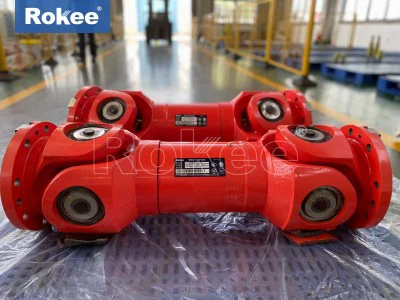
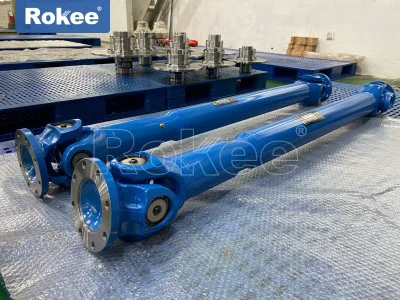
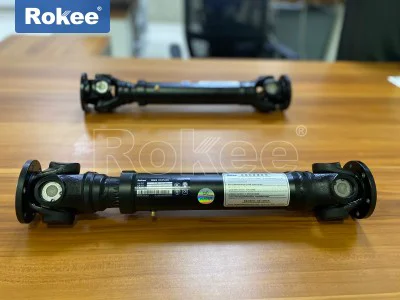
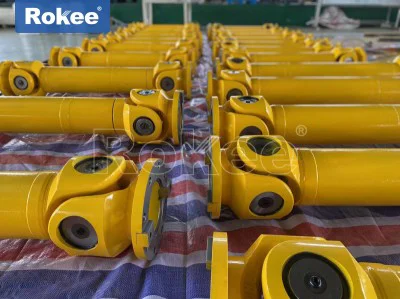
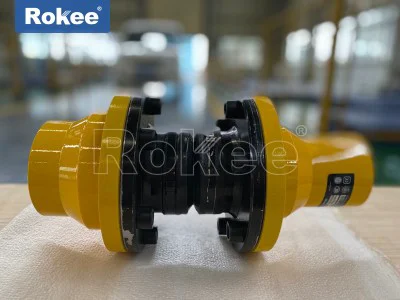
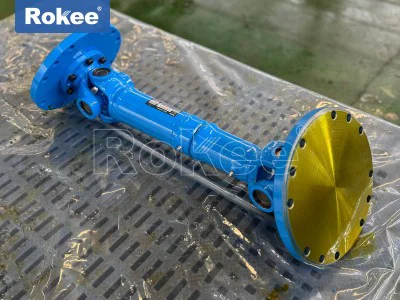
Cardan shaft couplings, also widely recognized as universal joint couplings in the industrial machinery transmission field, feature a simple and practical mechanical structure with excellent adaptive transmission performance, fundamentally different from rigid connection parts that require extremely high coaxiality of connecting shafts. The basic structural composition of this type of coupling relies on two mutually perpendicular hinge fork assemblies and a precision-processed cross shaft intermediate connecting part, matched with high wear-resistant needle bearing components inside each hinge joint position. This unique structural design endows the cardan shaft coupling with powerful multi-dimensional displacement compensation capability in the actual working process, which can not only effectively adapt to angular offset deviation between the driving shaft and the driven shaft generated during equipment installation and operation, but also reasonably buffer and compensate for a certain range of axial displacement and radial displacement changes caused by mechanical vibration, equipment thermal expansion and long-term operational mechanical deformation. For PU sandwich panel production machines, which usually have long transmission distances, multiple transmission nodes and complex on-site installation environments, this adaptive compensation performance is particularly critical. Most PU sandwich panel production lines are composed of multiple connected mechanical sections, and it is difficult to achieve absolute precise coaxial alignment of all transmission shafts during the initial equipment installation and debugging stage due to the limitations of on-site factory space, equipment foundation installation conditions and overall equipment assembly errors. Even if the coaxiality meets the standard requirements after precise debugging and calibration in the initial stage of installation, after long-term continuous high-load operation, the mechanical base will produce subtle settlement deformation, the transmission shaft will have slight bending and wear deformation, and the equipment will generate thermal expansion and contraction changes under the influence of long-term operating temperature, all of which will lead to different degrees of misalignment between the driving end and driven end transmission shafts. Traditional rigid transmission connections cannot cope with these inevitable misalignment changes, and will generate huge additional mechanical stress and transmission friction resistance at the shaft connection position during operation, resulting in increased transmission power loss, severe vibration and noise during equipment operation, accelerated wear and aging of key transmission components, and frequent failures of bearings, shafts and other vulnerable parts, seriously affecting the continuous and efficient operation of the entire production line.
The cardan shaft coupling combination perfectly solves the misalignment adaptation problem faced by the power transmission of PU sandwich panel machines, and its unique transmission working principle ensures continuous and stable torque and power output under various complex shaft displacement conditions. When the power motor and driving power device of the PU sandwich panel production line start to operate and drive the driving shaft to rotate, the hinge fork at the driving end drives the cross shaft component to perform synchronous rotational motion through the flexible connection of internal bearings, and the cross shaft further transmits uniform rotational torque and power to the hinge fork at the driven end, so as to drive the driven shaft and each subsequent functional mechanical module to operate synchronously and stably. In this whole power transmission process, even if there is a certain angle deviation or displacement difference between the driving shaft and the driven shaft, the flexible hinge structure of the cardan shaft coupling can freely adjust the transmission angle and rotation posture without blocking the transmission of rotational power and without generating additional mechanical resistance and stress concentration. This smooth and unobstructed power transmission mode ensures that the torque output of the power source can be efficiently transmitted to each working component of the PU sandwich panel machine with almost no loss, avoiding the power waste and transmission efficiency attenuation caused by rigid connection jamming and friction resistance. For the continuous production mode of PU sandwich panels that requires long-term uninterrupted operation, the high-efficiency and low-loss transmission characteristic of the cardan shaft coupling combination directly reduces the invalid energy consumption of the equipment in the power transmission link, improves the effective utilization rate of the driving power of the production line, and realizes the dual improvement of equipment operating efficiency and energy-saving operation effect.
In the actual production and operation of PU sandwich panel machines, the operating load is not always in a constant stable state, but will generate frequent instantaneous load fluctuations with the switching of production processes, the adjustment of production specifications and the feeding of raw materials. For example, in the stage of PU material continuous foaming and composite pressing, the equipment needs to bear uniform and stable pressing load and conveying load, while in the stages of panel fixed-length cutting, material start-stop feeding and finished product rapid output, the transmission system will bear instantaneous impact load and alternating load changes. Such frequent load fluctuations and impact vibrations pose a severe test to the stability and anti-fatigue performance of the equipment transmission connection parts. If the transmission connection parts lack sufficient buffering and anti-vibration capabilities, the instantaneous impact force generated by load changes will be directly transmitted to the inside of the transmission shaft and the overall mechanical structure of the equipment, resulting in mechanical resonance of the production line, unstable rotational speed of each working roller and conveyor component, and then affecting the foaming molding effect and composite bonding quality of PU sandwich panels. The cardan shaft coupling combination has excellent impact resistance and vibration buffering performance by virtue of its flexible articulated structural characteristics. When the PU sandwich panel machine encounters instantaneous load impact and alternating load changes in the production process, the flexible connection structure of the coupling can effectively absorb and buffer the instantaneous impact vibration generated by load fluctuations, disperse the local stress concentration at the shaft connection position, avoid the direct transmission of impact force to the whole mechanical transmission system, maintain the overall rotational speed stability and operation balance of the production line transmission system, and ensure that each production process link can operate under stable and consistent power transmission conditions.
The efficient operation advantage brought by the cardan shaft coupling combination to the PU sandwich panel machine is also reflected in the long-term operational stability and low maintenance cost of the equipment. Industrial mechanical equipment that operates continuously for a long time needs transmission components with strong durability and low failure rate to reduce frequent shutdown maintenance and parts replacement downtime, because each production shutdown and equipment maintenance adjustment will interrupt the continuous production rhythm of PU sandwich panels, lead to material waste of foaming raw materials, reduce the overall production output, and increase additional labor and maintenance costs. The structural design of the cardan shaft coupling is compact and reasonable, the main stressed components are made of high-strength and wear-resistant mechanical materials, and the internal bearing and hinge moving parts are designed with lubrication and wear reduction structures, which can adapt to long-term high-load cyclic operation and harsh industrial production environments without frequent wear and failure. Compared with other types of transmission connection parts, the cardan shaft coupling combination has fewer vulnerable parts, simpler overall structural maintenance, no complex debugging and calibration work required in daily operation and use, and only regular routine lubrication maintenance can maintain long-term efficient and stable transmission performance. In the daily operation and maintenance management of PU sandwich panel production enterprises, this low-maintenance and high-durability mechanical configuration greatly reduces the frequency of equipment failure shutdowns, shortens the time required for daily equipment maintenance and component replacement, ensures the continuity and uninterrupted nature of the production line operation, maximizes the effective production operation time of the equipment, and effectively improves the overall production efficiency and economic operation benefit of the PU sandwich panel production line.
Moreover, the cardan shaft coupling combination has strong applicability and flexible matching performance, and can be reasonably configured and combined according to different production line scales, different equipment transmission specifications and different production process requirements of PU sandwich panel machines. Whether it is a small and medium-sized PU sandwich panel production line with compact transmission structure and short transmission distance, or a large-scale automated continuous production line with long transmission distance, multiple transmission nodes and high-power load operation, the cardan shaft coupling can be matched with appropriate specifications and combination forms to meet the power transmission requirements of different working conditions. In the actual equipment transformation and production process upgrading of PU sandwich panel production enterprises, when it is necessary to adjust the production line layout, increase production functional modules and adjust the transmission distance and transmission power of the equipment, the cardan shaft coupling combination can also be conveniently adapted and adjusted without large-scale transformation and replacement of the overall mechanical structure of the equipment. This flexible matching and convenient adaptation performance enables the PU sandwich panel machine to always maintain an efficient transmission operating state in the process of production expansion and process optimization, avoiding the problem that the equipment transmission system cannot adapt to production upgrading and transformation due to the limitation of connection parts performance, and ensuring that the efficient operation capacity of the equipment can be continuously improved with the development of production needs.
In the whole life cycle operation of PU sandwich panel machines, the transmission system is the heart of equipment operation, and the cardan shaft coupling combination is the core guarantee to maintain the healthy and efficient operation of this heart. All operational advantages such as multi-dimensional misalignment compensation, low-loss power transmission, impact vibration buffering, long-term durability and low maintenance demand are superimposed and exerted together, which fundamentally optimizes the overall operating state of the PU sandwich panel production line, reduces various mechanical operation risks and potential failure hidden dangers in the production process, ensures the stable coordination of each production link, and thus guarantees the stable improvement of product quality and continuous growth of production efficiency. In the modern PU sandwich panel manufacturing industry that pursues high-efficiency production, stable product quality and low-cost operation, the reasonable application and scientific combination of cardan shaft couplings are no longer an optional mechanical configuration, but an indispensable key mechanical foundation for every PU sandwich panel machine to realize long-term efficient, stable and reliable operational production. With the continuous improvement of the automation level of PU sandwich panel production equipment and the continuous improvement of production efficiency requirements, the important role of cardan shaft coupling combinations in promoting the efficient operation of sandwich panel production machinery will become more prominent, providing solid mechanical support for the stable development and efficient production operation of the whole industry.