Cardan Shaft Coupling Improves Stability Of PU Sandwich Panel Machine And Reduces Failures
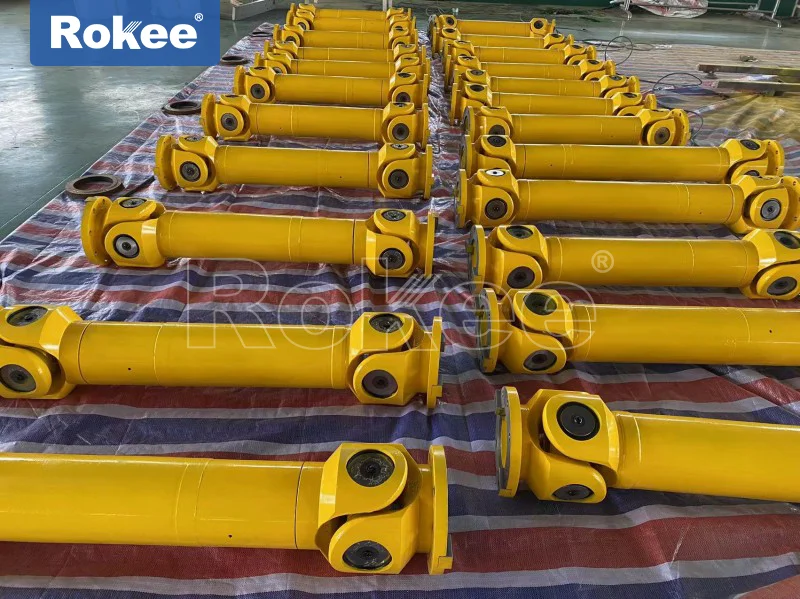
The continuous and stable operation of PU sandwich panel production equipment is the core foundation for maintaining consistent product quality, uninterrupted production rhythm, and efficient operational efficiency in the modern building material manufacturing industry. PU sandwich panels, as essential thermal insulation and structural composite materials widely used in construction enclosure, cold chain storage facilities, and industrial factory building construction, require strict precision control in every production link, from raw material feeding, continuous foaming, composite pressing to fixed-size cutting and finished product conveying. The entire production process of PU sandwich panel machines relies on coordinated power transmission among multiple mechanical components, and any slight fluctuation, vibration or transmission interruption in the power drive system will directly affect the surface flatness, core material foaming uniformity, bonding firmness between panels and protective layers, and overall dimensional accuracy of finished sandwich panels. In the long-term continuous production process that runs for dozens of hours without shutdown, traditional fixed transmission connecting parts often fail to adapt to subtle mechanical changes generated by equipment operation, including installation deviation of driving and driven shafts, thermal expansion and contraction caused by long-time high-load operation, slight structural displacement of the frame under cyclic vibration, and torque fluctuation during variable load starting and stopping. These unavoidable mechanical deviations will gradually lead to unstable power transmission, increased equipment vibration, abnormal component wear, and frequent unexpected failures, which not only cause unplanned production shutdowns and reduce overall production output but also generate a large amount of unqualified products due to unstable equipment operation, bringing unnecessary operational losses and production management pressure to manufacturing enterprises. As a professional and efficient power transmission compensation component, the cardan shaft coupling has become an indispensable key configuration for optimizing the transmission system of PU sandwich panel machines in recent years, relying on its unique articulated structural design, excellent multi-directional displacement compensation capability, and stable high-torque transmission performance. It effectively solves various transmission pain points existing in the long-term operation of traditional transmission structures, significantly improves the overall operating stability and smoothness of PU sandwich panel production equipment, greatly reduces the frequency of mechanical failures and component damage, extends the service life of the entire production line and core transmission parts, and helps building material production enterprises achieve stable, continuous, low-consumption and high-efficiency standardized production of PU sandwich panels.
To understand the essential role of cardan shaft couplings in improving the performance of PU sandwich panel machines, it is first necessary to clarify the harsh operating characteristics and inherent transmission challenges of PU sandwich panel production equipment under actual working conditions. Different from ordinary light-duty industrial processing equipment, PU sandwich panel machine belong to heavy-duty continuous production mechanical equipment, which needs to maintain high-speed and cyclic operation for a long time, and the internal transmission system bears continuous alternating torque and mechanical impact load during operation. The production process of PU sandwich panels involves the synchronous operation of multiple groups of transmission shafts, including the power drive shaft of the raw material mixing and feeding system, the transmission shaft of the continuous foaming and laminating mechanism, the power output shaft of the pressing and shaping roller set, and the conveying power shaft of the finished product cutting and discharging system. All these transmission links require precise and synchronous power transmission to ensure that the operating speed of each mechanism is coordinated and consistent, avoiding product quality defects such as uneven foaming caused by asynchronous speed, inconsistent panel thickness caused by unstable pressing pressure, and panel deviation and edge warping caused by unsmooth conveying. In the actual equipment installation and long-term operation process, it is almost impossible to achieve absolute coaxial alignment between the driving shaft and the driven shaft of each transmission link. On the one hand, there are inevitable installation errors in the assembly process of the equipment frame and transmission components, resulting in initial angular deviation, radial displacement and axial dislocation between the connected shafts. On the other hand, after long-time continuous operation, the equipment frame will produce slight structural deformation under the action of long-term load and mechanical vibration, and the transmission shafts will also have tiny position changes due to thermal expansion and contraction after long-time high-load operation and friction heating. Traditional rigid connecting parts cannot compensate for these natural and dynamic displacements at all. All mechanical deviations and vibration impacts will be directly transmitted to the inside of the transmission system, resulting in unbalanced torque transmission, increased radial runout of the transmission shaft, obvious equipment vibration and abnormal noise during operation. Long-term operation under such unstable working conditions will inevitably accelerate the wear of bearings, transmission shafts, gears and other core components, easily cause loosening of connecting fasteners, fatigue damage of mechanical parts, and even sudden jamming and shutdown of the transmission system in serious cases, seriously disrupting the continuous production rhythm of PU sandwich panels.
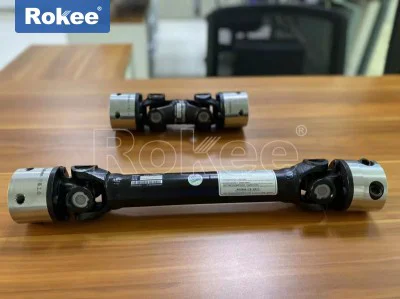
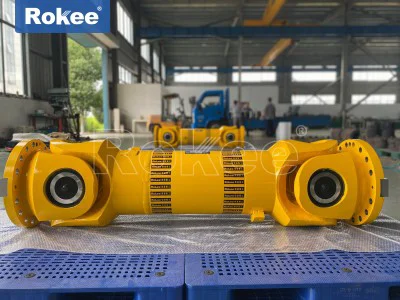
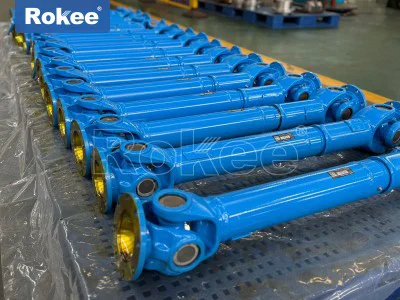
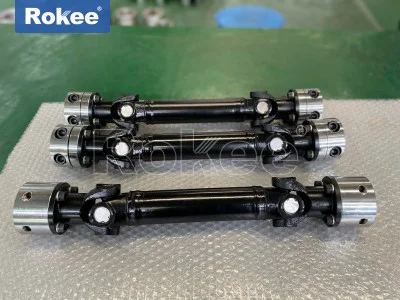
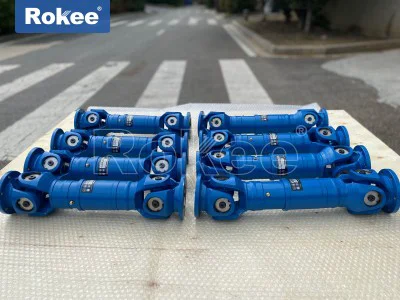
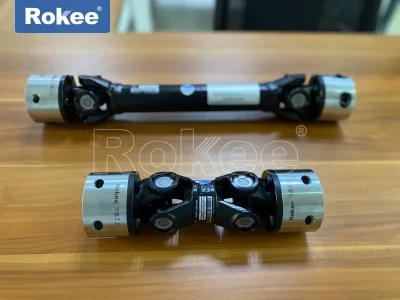
The core structural design and working principle of the cardan shaft coupling perfectly fit the special transmission compensation needs of PU sandwich panel machines under long-term heavy-duty and continuous operating conditions, which is the fundamental reason why it can significantly improve equipment stability and reduce mechanical failures. The cardan shaft coupling is mainly composed of two fork-shaped joint yokes, a precision machined cross shaft and high-strength low-friction bearing components, forming a flexible articulated transmission structure with multi-directional rotation and deflection capabilities. Unlike rigid connecting parts that only realize fixed connection and single power transmission, the cardan shaft coupling can effectively compensate for angular deviation, radial displacement and axial displacement between the driving shaft and the driven shaft within a reasonable range during the power transmission process. When the equipment is running, even if there is obvious non-coaxiality or real-time position change between the two connected transmission shafts of the PU sandwich panel machine, the cross shaft and bearing structure inside the cardan shaft coupling can flexibly rotate and deflect with the operation of the shafts, ensuring that the torque and rotational power can be continuously, smoothly and stably transmitted from the driving end to the driven end without being affected by shaft displacement and angle deviation. This unique flexible transmission and displacement compensation function eliminates the additional mechanical stress and vibration impact generated by shaft misalignment in the traditional transmission process, avoids the problem of unbalanced torque output caused by rigid connection, and makes the rotation speed and power transmission of each transmission mechanism of the PU sandwich panel machine always maintain a consistent and stable state. In addition, the overall structural rigidity of the cardan shaft coupling is high, and it can bear large torque load generated by the heavy-duty operation of the PU sandwich panel machine without deformation or damage. The internal bearing components are designed with low-friction and wear-resistant structure, which can keep flexible rotation and flexible compensation for a long time under harsh working conditions such as high load, continuous operation and dusty production environment, ensuring that the compensation performance and transmission efficiency of the coupling will not decline with the extension of service time. This combination of high rigidity, flexible compensation and wear resistance enables the cardan shaft coupling to always maintain an efficient and stable working state in the long-term operation of PU sandwich panel production equipment, laying a solid mechanical foundation for the stable operation of the entire production line.
The application of cardan shaft couplings in PU sandwich panel machines first brings significant improvement in equipment operating stability, which is directly reflected in reducing equipment vibration, stabilizing transmission synchronization and optimizing the overall operating state of the production line. In the original production mode using traditional rigid connecting parts, the PU sandwich panel machine will produce obvious periodic vibration during the starting, running and variable load switching stages. This vibration is transmitted to the foaming and pressing area of the production line, resulting in unstable pressure during panel pressing, uneven distribution of PU foaming materials, and inconsistent bonding degree between the core material and the metal protective plate, leading to frequent fluctuations in product quality and a high proportion of defective products. After adopting cardan shaft couplings, the flexible articulated structure can effectively absorb and buffer the mechanical vibration and impact generated during equipment operation, isolate the vibration transmission between different transmission shafts and mechanical mechanisms, and greatly reduce the overall vibration amplitude and operating noise of the equipment. With the stable power transmission ensured by the coupling, the rotating speed of each transmission shaft and the operating rhythm of each processing mechanism of the PU sandwich panel machine remain highly synchronized, there will be no speed fluctuation or transmission delay caused by shaft misalignment, and the pressure, speed and feeding amount in the key production links of foaming, pressing and conveying can be always maintained within the set standard range. The stable operating environment of the equipment directly optimizes the molding quality of PU sandwich panels, making the foaming core material uniform and dense, the bonding between layers firm and reliable, and the dimensional specification of finished panels accurate and consistent. At the same time, the stable operation state also avoids the structural fatigue and loose connection of equipment components caused by long-term vibration, keeps the assembly accuracy and mechanical coordination of the entire production line in a good state for a long time, and fundamentally eliminates the quality hidden dangers and production fluctuations caused by equipment instability.
While improving equipment operating stability, cardan shaft couplings effectively reduce various mechanical failures of PU sandwich panel machines from the source, cut down unplanned shutdown times and reduce daily maintenance and component replacement costs. Most of the common mechanical failures of PU sandwich panel production equipment in daily operation are closely related to unstable transmission and excessive component wear caused by shaft misalignment. Traditional rigid transmission connections will generate huge additional mechanical stress on transmission shafts, bearings and gears when there is shaft displacement and angle deviation. Long-term operation under such stress will lead to rapid wear of bearing inner and outer rings and rolling elements, eccentric wear of transmission shafts, tooth surface wear and gear meshing failure, and even fracture of connecting shafts and loosening and falling off of fastening bolts. These failures not only require frequent shutdown maintenance and replacement of damaged parts, affecting the continuity of production, but also increase the daily maintenance workload and operational cost of the enterprise. After installing cardan shaft couplings, the displacement and angle deviation between transmission shafts are all compensated by the flexible articulated structure of the coupling, and no additional abnormal mechanical stress will be generated on the transmission shaft and related matching components. The wear of bearings, transmission shafts, gears and other core parts is reduced to the normal wear level in standard operation, the service life of key components is greatly extended, and the failure rate of mechanical wear and structural damage is significantly reduced. In addition, the cardan shaft coupling itself has a simple and durable structural design, with fewer vulnerable parts inside, strong adaptability to the dusty and humid working environment of building material production workshops, and it is not easy to have faults such as jamming, rusting and failure of compensation function. The maintenance work of the coupling in daily use is extremely simple, only regular routine inspection and lubrication maintenance are needed to maintain long-term stable operation. The reduction of equipment failures enables the PU sandwich panel production line to maintain continuous and uninterrupted production for a long time, improves the overall production efficiency and output, avoids production losses caused by shutdown maintenance, and reduces the comprehensive operational cost of production enterprises.
In the actual production and operation management of building material manufacturing enterprises, the long-term application value of cardan shaft couplings in PU sandwich panel machines is also reflected in optimizing production management efficiency and improving the standardized production level of enterprises. For a long time, many production enterprises have to arrange special personnel to regularly inspect and debug the transmission system of PU sandwich panel machines, frequently calibrate the coaxiality of transmission shafts, and replace worn vulnerable parts in advance to reduce the impact of equipment instability and failures on production. This frequent debugging and maintenance work not only consumes a lot of manpower and time costs, but also cannot fundamentally solve the problem of dynamic shaft displacement and vibration in the operation process, and the production stability is still difficult to be guaranteed. After the popularization and application of cardan shaft couplings, the automatic compensation function of the coupling replaces manual frequent calibration and debugging work, the transmission system of the equipment can maintain a stable working state for a long time without repeated manual adjustment, and the maintenance personnel can focus on other key equipment management work, which effectively improves the efficiency of equipment operation and maintenance management. At the same time, the stable operation of the equipment ensures the consistency and stability of the quality of each batch of PU sandwich panel products, reduces the rate of defective products and rework volume, improves the qualified rate of finished products, and enhances the market competitiveness of enterprise products. In addition, the reduction of equipment failures and shutdown times makes the production plan of the enterprise arranged more reasonably and accurately, avoids production plan delays and order delivery delays caused by sudden equipment failures, helps the enterprise realize standardized, orderly and efficient production operation, and creates more stable and long-term economic benefits for the enterprise.
With the continuous upgrading of the building material manufacturing industry and the increasing market requirements for the quality and production efficiency of PU sandwich panels, the operational stability and failure resistance of production equipment have become important factors restricting the development of manufacturing enterprises. As a key transmission optimization component, the cardan shaft coupling solves the transmission pain points of traditional PU sandwich panel machine equipment with its excellent multi-directional displacement compensation performance, stable high-torque transmission capacity and durable and wear-resistant structural characteristics. It not only effectively improves the overall operating stability and smoothness of the production line, reduces equipment vibration and transmission fluctuation, and ensures the stable and reliable quality of finished PU sandwich panels, but also greatly reduces the frequency of mechanical failures and component damage, extends the service life of equipment, reduces maintenance costs and shutdown losses, and brings multiple practical values of stable production, quality improvement, cost reduction and efficiency increase for production enterprises. In the future, with the continuous development of large-scale and intensive PU sandwich panel production, cardan shaft couplings will become a standard and essential matching component for more PU sandwich panel production machines, continue to play a core role in optimizing equipment transmission performance and improving production stability, and help the building material sandwich panel manufacturing industry develop in a more efficient, stable and high-quality direction.