Performance Testing And Evaluation Method Of Universal Joint Coupling In Polyurethane Sandwich Panel Manufacturing Line

Polyurethane sandwich panel manufacturing lines are continuous and integrated industrial production systems that integrate raw material feeding, high-pressure foaming, continuous laminating, fixed-length cutting, surface shaping and finished product conveying processes, and the stable operation of the entire production process relies heavily on the coordinated transmission of various mechanical power components inside the line. As a key flexible transmission component responsible for connecting non-collinear rotating shafts and transmitting continuous torque and rotational motion between driving and driven equipment, universal joint couplings undertake the core power transmission tasks between the main drive motor, laminating roller sets, traction conveying mechanisms and cutting execution components in polyurethane sandwich panel production equipment. The special production environment of polyurethane sandwich panel manufacturing lines, including long-term continuous high-load operation, frequent start-stop switching of production rhythm, slight shaft misalignment caused by mechanical vibration and equipment thermal deformation, and cyclic alternating load impact in the process of panel extrusion and traction forming, puts forward stringent requirements on the transmission stability, fatigue resistance, torsional rigidity and misalignment adaptation performance of universal joint couplings. Once the performance of universal joint couplings deteriorates or fails to match the actual production working conditions, it will directly lead to uneven transmission speed of key production rollers, inconsistent traction speed of sandwich panels, deviation of panel forming dimensional accuracy, increased vibration and noise of the production line, and even cause unplanned production shutdowns, affecting the continuity of foaming and laminating processes, resulting in a large number of unqualified polyurethane sandwich panel products and increasing unnecessary production loss and equipment maintenance workload. Therefore, carrying out scientific and standardized performance testing and targeted operational performance evaluation for universal joint couplings matched with polyurethane sandwich panel manufacturing lines is of great practical significance to ensuring long-term stable and efficient operation of the production line, maintaining consistent product processing quality, reducing equipment failure rates and extending the service cycle of transmission components.
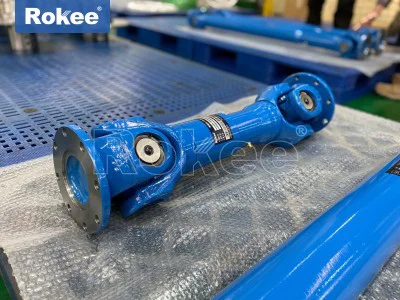
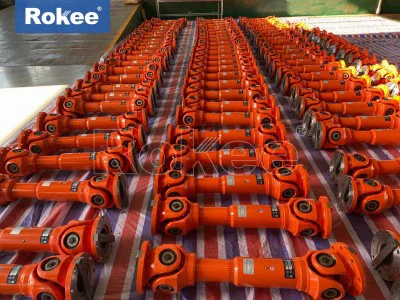
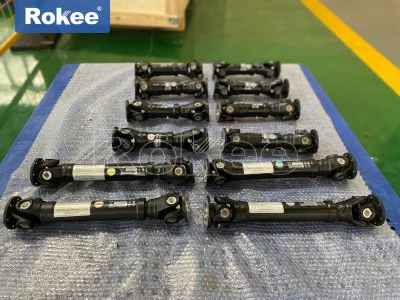
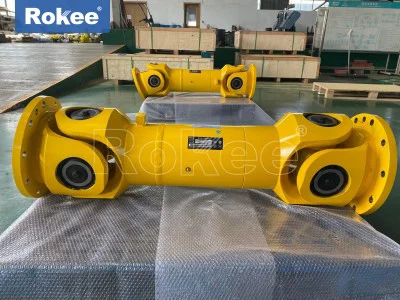
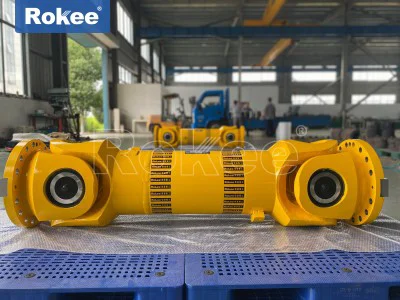
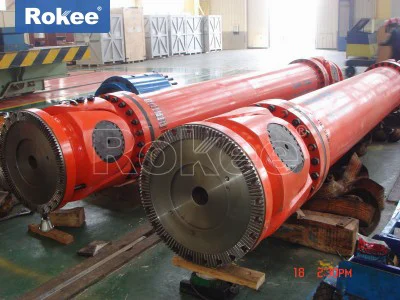
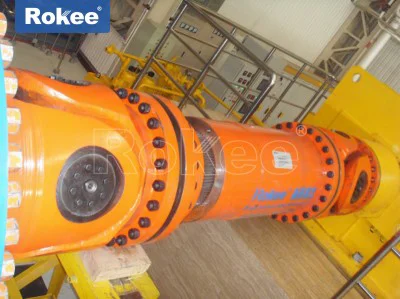
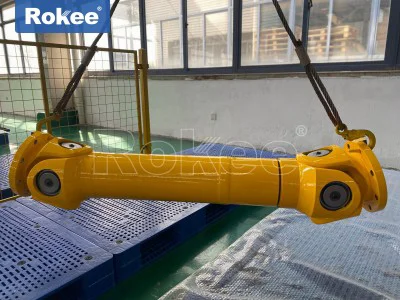
The basic working principle of universal joint couplings determines their unique application advantages and inherent performance characteristics in industrial transmission systems, and the cross-shaft universal joint coupling, which is the most widely used type in polyurethane sandwich panel manufacturing line, adopts a simple and reliable spatial linkage mechanism structure composed of two fork-shaped yokes, a central cross-shaped spider and matching needle roller bearing components. The two yokes are respectively fixedly connected with the driving shaft and the driven shaft of the production line transmission system, and the four shaft ends of the cross-shaped spider are installed inside the bearing holes of the two yokes through needle roller bearings, forming a flexible hinged connection structure that can rotate freely around two mutually perpendicular axes. In the actual power transmission process, the driving shaft drives the connected driving yoke to rotate synchronously, and the torque and rotational motion are transmitted to the driven yoke and the driven shaft through the swinging and rotating coordination of the central cross shaft, realizing continuous power output even when there is a certain angular misalignment and radial displacement between the two connected shafts. Unlike rigid coupling components that require high installation coaxial accuracy, universal joint couplings can effectively compensate for installation errors generated during equipment assembly, shaft position deviation caused by long-term mechanical vibration and axis displacement deformation caused by thermal expansion and contraction of production equipment during continuous operation, which is particularly suitable for the complex working condition environment of polyurethane sandwich panel manufacturing lines where multiple transmission shafts are arranged densely and long-term dynamic operation is accompanied by slight shaft position changes. However, the structural characteristics of single-section universal joint couplings also lead to inherent non-constant velocity transmission characteristics. When there is an included angle between the driving shaft and the driven shaft, the angular velocity of the driven shaft will fluctuate periodically with the rotation cycle, and this periodic velocity fluctuation will produce alternating torsional load and additional mechanical vibration in the transmission process. In the high-precision continuous production scenario of polyurethane sandwich panels, this unbalanced transmission state will directly affect the synchronization accuracy of the upper and lower laminating roller sets and the uniform traction of the conveying mechanism, so it is necessary to rely on professional performance testing means to quantify the transmission performance parameters of universal joint couplings and evaluate their adaptability to the actual production load and operating environment.
The performance attenuation and failure forms of universal joint couplings in polyurethane sandwich panel manufacturing lines show obvious industry-specific characteristics, which are different from those of universal joints used in light-load intermittent transmission equipment, and also different from heavy-duty impact transmission components in mining and metallurgical machinery. In the daily production and operation of polyurethane sandwich panels, the universal joint couplings are in a long-term continuous rotating working state for dozens of hours every day, bearing stable basic torque load and periodic alternating impact load generated by panel feeding, foaming extrusion and fixed-length cutting operations. The long-term cumulative effect of cyclic load will lead to gradual fatigue wear of the needle roller bearings inside the coupling, micro-deformation of the cross shaft surface and gradual loosening of the matching gap between the yoke and the cross shaft, resulting in increased transmission vibration, reduced transmission efficiency and aggravated angular velocity fluctuation during operation. With the extension of service time, the continuous friction and wear of internal moving parts will cause the increase of transmission clearance, which will lead to obvious jitter of the laminating roller sets during start-up and shutdown, inconsistent running speed of the front and rear sections of the production line, and then cause problems such as uneven foaming layer thickness of polyurethane sandwich panels, inconsistent surface flatness and dimensional deviation of finished panels. In addition, the production workshop environment of polyurethane sandwich panels has certain dust and fine chemical raw material particles, which will inevitably enter the internal matching gap of universal joint couplings during long-term operation, accelerating the wear and corrosion of bearing components and cross shaft parts, further reducing the operational reliability and service life of the couplings. Some couplings with insufficient torsional rigidity will produce obvious torsional deformation under high-load transmission conditions, resulting in torque transmission lag and speed synchronization error, affecting the coordinated operation of the whole production line process. These potential performance degradation problems are difficult to be found intuitively through daily equipment surface inspection, and can only be accurately identified and quantitatively analyzed through systematic performance testing and professional evaluation, so as to formulate targeted maintenance, replacement and optimization matching schemes.
The performance testing system of universal joint couplings for polyurethane sandwich panel manufacturing lines needs to be built based on the actual working condition parameters of the production line, including actual operating speed range, rated transmission torque, maximum alternating impact load, normal working angular misalignment between transmission shafts and continuous working time cycle, and all testing links need to simulate the real operating state of the coupling in the production process as much as possible to ensure that the test data is true, effective and consistent with the actual application scenario. The whole testing work is divided into three core stages: basic static performance testing, dynamic load operation testing and fatigue durability cycle testing, each of which corresponds to different performance evaluation dimensions and can comprehensively detect the structural reliability, transmission performance and long-term operational stability of universal joint couplings. Before the formal start of all testing items, it is necessary to carry out standardized pre-test preparation work, including appearance inspection of the tested universal joint coupling to check whether there are obvious surface cracks, deformation, wear defects and assembly looseness, cleaning of the internal and external surface of the coupling to remove surface dust, oil stains and residual impurities, and installation and fixing of the coupling on the professional performance test bench according to the actual installation form and connection mode of the production line. The test bench is equipped with adjustable speed driving components, controllable load loading devices, high-precision torque sensors, speed monitoring sensors, vibration detection modules and temperature measuring equipment, which can collect real-time data of torque, rotational speed, vibration amplitude and operating temperature of the coupling during the test process, providing accurate data support for subsequent performance evaluation. After the installation of the coupling is completed, the coaxiality and angular misalignment parameters of the test bench transmission shaft are calibrated according to the actual installation deviation range of the polyurethane sandwich panel production line, so that the test environment can fully restore the actual working installation state of the coupling, avoiding the test data deviation caused by inconsistent installation conditions.
Basic static performance testing is the primary link to verify the basic structural and static transmission capacity of universal joint couplings, mainly focusing on detecting torsional rigidity, static torque bearing capacity and structural matching clearance, which are the basic guarantees for the normal operation of couplings in production lines. In the torsional rigidity test, one end of the universal joint coupling is fixed and the other end is applied with graded static torque load within the range of rated working torque of the production line, and the torsional deformation angle of the coupling under different torque loads is recorded in real time through high-precision angle measuring sensors. By calculating the ratio of applied torque to torsional deformation angle, the torsional rigidity value of the coupling is obtained, which is used to evaluate the anti-deformation ability of the coupling under static load and low-speed transmission state. For polyurethane sandwich panel production lines, the higher the torsional rigidity of the universal joint coupling, the smaller the torsional deformation during torque transmission, the higher the synchronization accuracy of the front and rear transmission shafts, and the more stable the operating speed of the laminating and conveying mechanisms. The static ultimate torque bearing test is carried out on the basis of torsional rigidity test, by gradually increasing the applied torque load until the coupling produces irreversible plastic deformation or structural stuck state, recording the ultimate static torque value that the coupling can bear, so as to verify whether the structural strength of the coupling meets the peak load demand of instantaneous start-up and sudden load change in the production process. The structural matching clearance test mainly detects the assembly gap between the cross shaft and the needle roller bearing, and the matching gap between the yoke and the cross shaft rotating part. Excessive matching clearance will lead to impact and vibration during positive and negative rotation of the coupling, while too small clearance will cause increased friction and heat generation during operation. The clearance data measured by precision measuring tools is compared with the reasonable clearance range adapted to the production line working conditions to judge whether the assembly quality and structural matching performance of the coupling meet the application requirements.
Dynamic load operation testing is the core part of performance testing, which simulates the real dynamic operating state of universal joint couplings under continuous load and variable speed conditions in polyurethane sandwich panel production lines, focusing on detecting transmission efficiency, speed synchronization performance, vibration and temperature rise changes during dynamic operation. In the dynamic test process, the driving end of the test bench drives the universal joint coupling to run continuously according to the actual working speed regulation range of the production line, including low-speed start-up, rated constant-speed operation and variable-speed switching operation simulating production rhythm adjustment. The load loading device applies continuous stable load and periodic alternating impact load respectively to simulate the normal production load and the instantaneous impact load generated by panel cutting and raw material feeding mutation in actual production. The torque sensors at the input end and output end of the coupling collect real-time torque data, and the transmission efficiency of the coupling under different working conditions is calculated by comparing the input torque and output torque values, so as to evaluate the energy loss and power transmission stability of the coupling during operation. The speed synchronization test monitors the real-time rotational speed of the driving shaft and driven shaft of the coupling through high-precision speed sensors, records the angular velocity fluctuation range of the driven shaft under different angular misalignment and load conditions, and analyzes the constant velocity transmission performance of the coupling. For the continuous forming process of polyurethane sandwich panels, small speed fluctuation and good synchronization performance can ensure the uniform stress of the panel during lamination and traction, avoiding product quality problems caused by speed inconsistency. At the same time, the vibration detection module collects the vibration amplitude and vibration frequency data of the coupling in all directions during dynamic operation, and the temperature measuring equipment monitors the temperature change of the bearing and cross shaft parts of the coupling during continuous operation. Excessive vibration amplitude indicates unstable transmission and serious internal wear of the coupling, while excessive temperature rise reflects large internal friction and poor heat dissipation performance, both of which are important indicators to judge the dynamic operation reliability of the coupling.
Fatigue durability cycle testing is used to verify the long-term operational stability and service life attenuation law of universal joint couplings under long-term continuous cyclic load, which is closely related to the maintenance cycle and replacement cycle of couplings in polyurethane sandwich panel production lines. The fatigue durability test adopts accelerated life test method on the test bench, simulating the long-term continuous start-stop, variable load and variable speed cyclic working state of the coupling in actual production. The test sets the cyclic operation times and continuous working time according to the annual cumulative working hours and load cycle characteristics of the production line, and the coupling runs continuously under the combined action of rated load and alternating impact load. During the test, the performance parameters such as torsional rigidity, transmission efficiency and vibration amplitude of the coupling are detected at regular cyclic intervals, and the change law of each performance index with the increase of cyclic operation times is recorded. After reaching the set cyclic test times, the coupling is disassembled and inspected to observe the wear degree of the cross shaft surface, the abrasion loss of the needle roller bearing, the deformation of the yoke and the aging degree of internal matching parts, and the fatigue wear state and performance attenuation degree of the coupling after long-term operation are analyzed. Through the fatigue durability test, the performance attenuation critical point and effective service cycle of the universal joint coupling adapted to the polyurethane sandwich panel production line can be determined, which provides a reliable basis for formulating scientific equipment maintenance plans and timely replacement of failed couplings, and avoids equipment failures and production shutdowns caused by fatigue failure of couplings in the later stage of service.
On the basis of completing all performance testing items and obtaining comprehensive test data, the performance evaluation of universal joint couplings is carried out by adopting quantitative index scoring and comprehensive adaptive judgment method, combining the static performance, dynamic performance and fatigue durability test data with the actual working condition requirements of polyurethane sandwich panel manufacturing lines. First of all, each test performance index is divided into excellent, qualified and unqualified evaluation grades according to the production line transmission operation standard and product quality production requirements, and the key indicators affecting production stability, such as transmission efficiency, speed synchronization fluctuation range and vibration amplitude, are set with higher evaluation weight. The basic structural performance and long-term durability indicators are taken as auxiliary evaluation parameters to conduct comprehensive quantitative scoring for the overall performance of the coupling. Then, according to the comprehensive scoring result, the adaptive matching degree between the universal joint coupling and the polyurethane sandwich panel production line working conditions is judged. For couplings with excellent comprehensive evaluation indicators, they can be directly applied to the long-term continuous production link of key transmission positions of the production line; for couplings with qualified individual indicators and slight performance attenuation, they can be arranged for non-key auxiliary transmission positions with low load and low operation frequency; for unqualified couplings with insufficient torsional rigidity, excessive speed fluctuation, serious vibration and rapid performance attenuation, they are prohibited from being put into use, and structural optimization or direct replacement is required. In addition, the performance evaluation results also need to be combined with the actual installation and operation environment of the production line, and the influence of workshop dust, ambient temperature and equipment vibration on the long-term performance of the coupling is comprehensively considered, so that the evaluation conclusion is more in line with the actual production application needs.
In conclusion, universal joint couplings are indispensable key transmission components in polyurethane sandwich panel manufacturing lines, and their operating performance directly determines the production stability of the line and the processing quality of finished sandwich panel products. Conducting systematic basic static performance testing, dynamic load operation testing and fatigue durability cycle testing, and implementing scientific comprehensive performance evaluation according to the actual working condition characteristics of the production line, can effectively identify the structural performance advantages and potential hidden dangers of universal joint couplings, accurately judge their adaptability to the complex continuous production environment, and provide reliable technical support for equipment selection, daily maintenance, fault early warning and service life management of transmission components in polyurethane sandwich panel manufacturing lines. With the continuous upgrading of polyurethane sandwich panel production technology and the continuous improvement of production line automation and high-precision production requirements, the performance matching requirements for universal joint couplings will become higher and higher. Perfecting the performance testing and evaluation system of universal joint couplings suitable for the industry production characteristics will help to further improve the overall operational reliability of polyurethane sandwich panel manufacturing lines, reduce production operation and maintenance costs, and promote the stable and high-quality development of polyurethane sandwich panel industrial production.