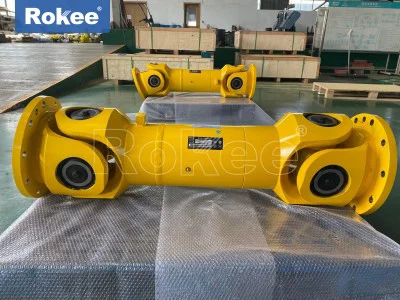
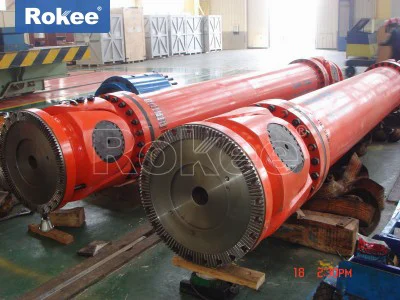
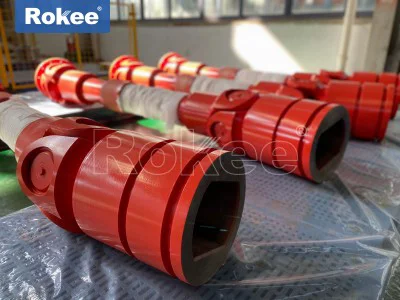
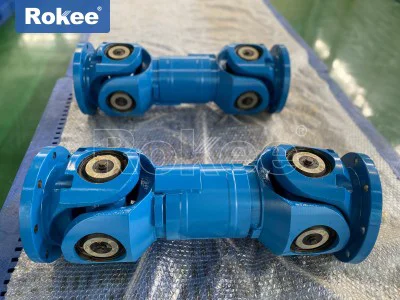
Energy-saving Transformation Scheme Of Universal Joint Coupling Adapting To Polyurethane Sandwich Panel Making Line
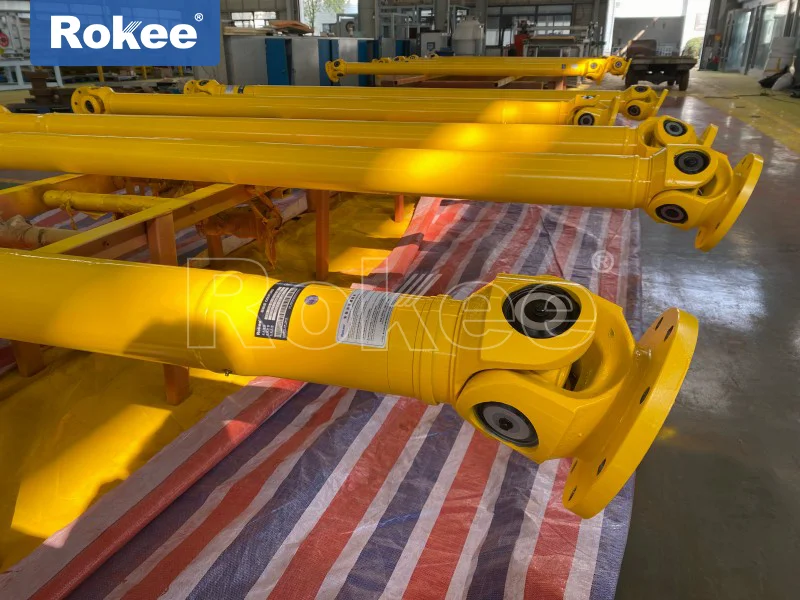
The polyurethane sandwich panel making line represents a typical continuous and high-load industrial production system, which integrates multiple core process links including raw material conveying, surface substrate feeding, high-pressure foaming injection, constant temperature curing shaping, rolling pressing forming and fixed-length cutting and discharging. In the whole production operation process, the stable and efficient operation of the power transmission system is the core guarantee to maintain continuous production rhythm and consistent product processing quality, and the universal joint coupling, as a key connecting and torque transmission component in the transmission shaft system of the production line, undertakes the important task of connecting driving components and driven equipment of each process unit, realizing synchronous power output and compensating the position deviation and angular displacement generated during long-term operation of mechanical equipment. Under the actual production working conditions of polyurethane sandwich panel manufacturing, the production line needs to run continuously for a long time with stable load output, and the transmission system will be affected by multiple adverse factors such as frequent mechanical vibration generated by alternating load, minor position deviation caused by thermal deformation of equipment components under long-term heating environment, and friction loss caused by frequent start-stop and speed regulation operation. The traditional universal joint coupling configured in the early stage of most production lines has relatively backward structural design and single operation adaptation performance, which cannot well adapt to the complex and variable working conditions of polyurethane sandwich panel continuous production. Long-term operation will lead to increased internal friction resistance of the coupling, serious torque transmission attenuation, obvious vibration and impact during power transmission, and additional energy loss in the whole transmission link. A large amount of electric energy consumed by the driving motor is dissipated in the form of useless mechanical friction and vibration heat instead of being effectively converted into effective power for product processing and production operation, resulting in high comprehensive energy consumption of the whole production line, increased long-term operation and maintenance pressure, and even affecting the stability of transmission operation and the consistency of subsequent product processing quality. Carrying out targeted energy-saving transformation for the universal joint coupling of polyurethane sandwich panel making line, optimizing structural design, improving matching operation performance, reducing invalid energy loss in the torque transmission process, and realizing efficient and low-consumption power transmission of the whole shaft system has become an essential key measure for polyurethane sandwich panel production enterprises to optimize production operation conditions, reduce unnecessary energy waste, improve overall production operation efficiency and promote green and low-carbon upgrading of production processes.
The operation characteristics of polyurethane sandwich panel making line and the existing defects of traditional universal joint coupling in practical application are the fundamental basis for formulating scientific and reasonable energy-saving transformation schemes. Different from ordinary intermittent industrial processing equipment, polyurethane sandwich panel production belongs to continuous assembly line operation mode, and each process section on the production line is closely connected and linked with each other, requiring synchronous and coordinated operation of all transmission units without obvious speed difference and operation pause. In the actual production process, the raw material conveying link needs stable and uniform power drive to ensure the continuous and orderly supply of upper and lower metal substrates and polyurethane foaming raw materials; the rolling pressing and curing shaping link needs the transmission system to maintain constant torque output to ensure the consistent thickness and structural compactness of sandwich panels; the cutting and discharging link needs rapid response power transmission to match the fixed-length cutting cycle and finished product conveying rhythm. The whole production process puts forward high requirements for the stability, synchronism and efficiency of the coupling transmission components. The universal joint coupling relies on the cross shaft rotation structure to realize multi-directional torque transmission and has the basic performance of compensating installation deviation and operation displacement of the shaft system, which is widely used in the power transmission system of polyurethane sandwich panel production lines. However, the traditional universal joint coupling designed and configured according to general industrial transmission standards has prominent application limitations in the face of the long-term continuous heavy-load operation and thermal deformation working environment of sandwich panel production lines. First of all, the traditional coupling adopts a relatively simple integral rigid connection structure, and the internal matching clearance between cross shaft and bearing components is unreasonable. Under the long-term alternating load operation of the production line, the internal friction contact area is large, the friction resistance generated during each rotation operation is high, and a large amount of kinetic energy is consumed to overcome mechanical friction, resulting in low torque transmission efficiency, and the actual effective power transmitted to the production process equipment is far lower than the power output by the driving motor. Secondly, the traditional universal joint coupling has poor vibration damping and buffering performance. When the production line starts and stops frequently and adjusts the operation speed according to production scheduling, the rigid impact generated by torque sudden change cannot be effectively buffered and absorbed. The mechanical vibration generated by the impact will not only cause additional energy loss, but also easily lead to loose connection of transmission parts, accelerated wear of internal components, further increase of friction loss in subsequent operation, and form a vicious cycle of energy consumption increase and equipment aging acceleration. In addition, under the long-term working condition of continuous heating operation of the polyurethane sandwich panel curing area, the transmission shaft system and connecting components will produce certain thermal expansion and deformation, resulting in minor axis displacement and angular deviation between the driving shaft and the driven shaft. The traditional coupling has limited compensation ability for thermal deformation displacement, which will lead to eccentric wear during operation, increase additional friction resistance and power loss, and also affect the synchronous operation accuracy of each process link of the production line, indirectly leading to product processing quality fluctuation and increasing unnecessary production loss and rework cost.
The core goal of the energy-saving transformation of the universal joint coupling adapting to the polyurethane sandwich panel making line is to focus on reducing invalid mechanical friction loss in the torque transmission process, improving the effective transmission efficiency of power, enhancing the adaptive matching performance of the coupling to the complex working conditions of the production line, reducing vibration impact and eccentric wear loss in operation, and realizing the dual improvement of energy-saving operation and stable production of the transmission system without changing the original production process flow and affecting the processing quality of polyurethane sandwich panels. In the whole transformation process, it is necessary to always adhere to the principle of matching transformation with actual working conditions, structural optimization coordinated with performance improvement, and energy-saving effect coordinated with operation stability, avoid blind replacement of components and unnecessary structural superposition, ensure that all transformation measures are targeted at the existing energy consumption defects and operation shortcomings of traditional couplings, and maximize the release of energy-saving potential of the transmission system on the premise of ensuring the long-term safe and stable operation of the production line. The overall idea of the transformation is based on the actual operation load characteristics, shaft system installation parameters and long-term operation environmental conditions of each transmission unit of the polyurethane sandwich panel production line, carry out targeted optimization and upgrading from three core dimensions: coupling internal friction reduction structural optimization, vibration damping and buffering performance improvement, and displacement compensation capability upgrading, and cooperate with reasonable assembly and debugging optimization and daily operation and maintenance matching optimization after transformation, so as to fundamentally solve the problems of large friction loss, low transmission efficiency, poor vibration damping effect and insufficient thermal deformation compensation of traditional couplings, effectively reduce the invalid energy dissipation of the transmission link, and improve the overall energy utilization efficiency of the production line.
In terms of the structural optimization and energy-saving transformation of the universal joint coupling body, the primary transformation measure is to optimize the internal matching structure and friction auxiliary design of the coupling to reduce the basic mechanical friction loss in the torque transmission process. For the cross shaft and bearing core transmission components of the universal joint coupling, the original ordinary structural size design is adjusted, the precision of the matching gap between the cross shaft and the bearing inner and outer sleeves is optimized, the excessive matching gap leading to eccentric friction and the too small matching gap leading to operation clamping stagnation are avoided, the running fit precision of internal moving parts is improved, and the friction resistance generated by relative movement between components in the rotation process is fundamentally reduced. At the same time, the surface treatment process of the friction contact parts inside the coupling is upgraded, and a smooth and wear-resistant surface processing mode is adopted for the cross shaft surface and the bearing contact surface to reduce the friction coefficient of the contact surface, so that the torque transmission between the driving end and the driven end is more direct and smooth, and less power energy is consumed to overcome sliding friction and rotating friction in the operation process. On the basis of optimizing the internal friction structure, the overall lightweight and high-strength structural optimization of the coupling is carried out reasonably. Under the premise of ensuring the bearing capacity and torque transmission strength required by the heavy-load operation of the polyurethane sandwich panel production line, the redundant structural parts of the traditional coupling are removed, the overall self-weight of the coupling is reduced, the rotational inertia of the coupling during operation is lowered, and the extra power consumption required for the driving motor to drive the coupling itself to rotate is reduced. The traditional universal joint coupling has a heavy overall structure, and the driving motor needs to consume extra electric energy to drive the coupling to complete rotation operation in addition to transmitting effective production power. After lightweight optimization, the no-load operation energy consumption of the transmission shaft system is significantly reduced, and more motor output power is directly applied to the production and processing links of the sandwich panel, realizing the effective improvement of power transmission efficiency. In addition, the integral sealing structure of the coupling is optimized in the transformation process. The traditional coupling has a simple sealing structure, and dust, debris and fine foam impurities generated in the production process of polyurethane sandwich panels are easy to enter the interior of the coupling, resulting in increased wear of internal friction parts, blocked lubrication and increased friction loss. By adopting an enhanced closed sealing structure, the external impurities are isolated from the internal moving parts of the coupling, the internal operation environment of the coupling is kept clean and stable, the friction increase and component wear caused by impurity intrusion are avoided, and the long-term stable low-friction operation state of the coupling is maintained, so as to ensure the lasting and stable energy-saving effect of the transformation.
The optimization and upgrading of vibration damping buffering and displacement compensation performance is another key core part of the energy-saving transformation of the universal joint coupling for polyurethane sandwich panel making line. The frequent start-stop, speed regulation switching and alternating load impact in the production process are important reasons for vibration energy loss and accelerated component wear of traditional couplings. In the transformation, a flexible vibration damping and buffering adaptive structure is added to the connecting part of the universal joint coupling. On the basis of not affecting the rigid torque transmission demand under normal production operation, the flexible buffering performance during torque sudden change and load impact is enhanced. When the production line starts and stops rapidly or adjusts the operation speed according to the production batch and panel specification switching, the flexible structure can effectively absorb the mechanical vibration and rigid impact generated by torque fluctuation, avoid the vibration energy being dissipated in the form of heat energy and mechanical loss, reduce the additional energy consumption caused by impact vibration, and also reduce the loosening and wear of connecting bolts and internal parts caused by long-term vibration. For the thermal deformation and installation position deviation problems easily occurring in the long-term operation of the polyurethane sandwich panel production line, the angular displacement and axial displacement compensation structure of the universal joint coupling is optimized and upgraded in the transformation. The compensation range and compensation flexibility of the coupling are reasonably expanded, so that the coupling can automatically and adaptively adjust the connection angle and axial position according to the thermal expansion and deformation of the transmission shaft system and the minor position deviation generated by long-term operation, always maintain the concentricity and matching accuracy of the driving shaft and the driven shaft operation, avoid eccentric rotation and unilateral friction wear of the shaft system caused by insufficient compensation capacity, effectively reduce the additional friction loss and power attenuation caused by eccentric operation, and ensure the high-efficiency and synchronous operation of each transmission link of the production line. The optimized coupling can well adapt to the complex working conditions of temperature change and load fluctuation in the production process of polyurethane sandwich panels, keep the transmission system in a low-loss and stable operation state for a long time, and lay a solid foundation for continuous energy saving and consumption reduction of the production line.
The standardized assembly and commissioning optimization after the transformation of the universal joint coupling and the matching optimization of daily operation and maintenance management are important guarantees to give full play to the energy-saving transformation effect and maintain the long-term stable operation of the equipment. After the completion of the structural optimization and upgrading of the coupling, the professional and standardized assembly and installation construction must be carried out in strict accordance with the actual shaft system parameters and transmission operation requirements of the polyurethane sandwich panel production line. In the assembly process, the coaxiality calibration and connection fastening debugging of the driving shaft and driven shaft are strictly implemented to avoid installation deviation caused by irregular assembly, so as to prevent the newly transformed coupling from generating new eccentric friction and operation loss due to installation problems and affecting the energy-saving transformation effect. After the assembly is completed, no-load test operation and load trial production debugging are carried out respectively. Through no-load operation debugging, the running flexibility and friction operation state of the coupling are checked to ensure no clamping stagnation, abnormal noise and excessive vibration during operation; through load trial production debugging, the torque transmission stability and operation coordination of the coupling under actual production load are verified, the minor problems in the operation process are adjusted and optimized in a timely manner, and the coupling is ensured to be perfectly matched with the operation rhythm and load demand of the polyurethane sandwich panel production line. In terms of daily operation and maintenance management after the transformation, a targeted regular maintenance plan for the optimized universal joint coupling is formulated. Regular lubrication maintenance is carried out on the internal friction parts of the coupling according to the operation time and working environment, good lubrication conditions inside the coupling are maintained, friction loss is further reduced, and component wear is delayed. At the same time, regular inspection of the sealing performance, connection fastening state and vibration operation state of the coupling is carried out, potential hidden dangers such as loose connection and sealing failure are found and dealt with in a timely manner, the long-term low-friction and low-vibration operation state of the coupling is maintained, and the energy-saving effect of the transformation is prevented from weakening with the extension of operation time. Scientific and standardized post-transformation management can make the energy-saving advantages of the optimized universal joint coupling fully exerted for a long time, and form a long-term mechanism for energy saving and consumption reduction of the transmission system of the polyurethane sandwich panel production line.
After the implementation of the complete energy-saving transformation scheme for the universal joint coupling adapting to the polyurethane sandwich panel making line, the power transmission efficiency of the core transmission link of the production line can be effectively improved, the invalid energy loss caused by mechanical friction, vibration impact and eccentric operation of the traditional coupling is greatly reduced, and the comprehensive energy consumption level of the whole production line is significantly reduced on the premise of ensuring the stable operation of the production process and the excellent quality of polyurethane sandwich panel products. The optimized universal joint coupling has lower internal friction resistance and higher torque transmission accuracy in the actual operation process, the power output by the driving motor can be more efficiently converted into effective power for product production and processing, the waste of electric energy in the transmission process is reduced, and the production operation cost caused by excessive energy consumption for enterprises is effectively reduced. At the same time, due to the improvement of vibration damping buffering performance and displacement compensation capacity of the transformed coupling, the mechanical impact and component wear in the operation process are significantly reduced, the failure rate of transmission system equipment is decreased, the service life of the coupling and matching transmission components is prolonged, the frequency of equipment maintenance and component replacement is reduced, and the comprehensive operation and maintenance cost of the production line is further saved. In addition, the stable and efficient operation of the transmission system also ensures the synchronous coordination and stable operation of each process link of the polyurethane sandwich panel production line, avoids product quality fluctuation and production pause caused by unstable transmission operation, improves the overall production efficiency and product yield of the production line, and brings dual benefits of energy saving and efficiency increase and stable production and operation for production enterprises. Under the general trend of green development and energy conservation and emission reduction in the manufacturing industry, the energy-saving transformation of universal joint coupling for polyurethane sandwich panel making line, with targeted structural optimization, performance upgrading and scientific management matching, not only solves the practical problem of high energy consumption of traditional transmission components, but also provides a reliable and practical optimization path for the green and low-carbon upgrading of similar continuous production lines in the industry, which has good practical application value and popularization significance.