Continuous Operation Of Polyurethane Sandwich Panel Line Stable Escort By Universal Joint Coupling
The large-scale industrial production of polyurethane sandwich panels relies entirely on the long-term, uninterrupted and high-efficiency continuous operation of integrated automated production lines, where every link from raw material feeding, continuous foaming composite, roller pressing forming, fixed-length cutting to finished product conveying is closely connected through mechanical transmission systems. Any slight fluctuation, transmission pause or power output instability in the transmission structure will directly interfere with the forming quality of polyurethane sandwich panels, cause inconsistent core material foaming density, uneven bonding between surface plate and core layer, dimensional deviation of finished products, and even lead to frequent line shutdowns, production rhythm disruption and substantial production efficiency loss. In the complex and harsh long-term operating environment of polyurethane sandwich panel production lines, mechanical transmission components need to not only complete basic torque and rotational power transmission tasks, but also cope with various inevitable adverse factors generated during long-term continuous operation, including installation deviation of transmission shafts, thermal deformation of mechanical parts caused by long-time equipment heating, slight foundation settlement of production workshop, and dynamic vibration and shaft position offset generated by high-load cyclic operation of multiple devices. Among all kinds of transmission connection components applied in the production line transmission system, universal joint coupling stands out with its unique flexible transmission performance, excellent misalignment compensation capability and durable structural stability, becoming the core basic component to stabilize the continuous operation of polyurethane sandwich panel production lines, ensure consistent transmission efficiency of each production node, and avoid unexpected shutdown risks caused by transmission failure.
Polyurethane sandwich panel production belongs to typical continuous flow industrial manufacturing, and the whole production process cannot tolerate frequent equipment stop and restart. The foaming and curing reaction of polyurethane raw materials has strict time continuity and temperature stability requirements. Once the production line stops suddenly, the polyurethane raw materials in the mixing and pouring area will solidify and block the equipment pipeline, the semi-finished panels in the roller pressing forming area will be deformed due to uneven pressure bearing, and the bonding interface between the metal surface plate and the polyurethane core layer will produce delamination and quality defects due to intermittent pressure. Therefore, the core operation goal of the production line is to maintain uninterrupted, stable and consistent mechanical power output and transmission speed throughout the whole production cycle, so that each process link can operate in a synchronous and coordinated state. The transmission system of the polyurethane sandwich panel line is composed of multiple sets of driving motors, reduction gearboxes, transmission shafts, driving rollers and auxiliary transmission equipment. In the actual installation and long-term operation process, it is almost impossible to achieve absolute precise coaxial alignment between the driving shaft and the driven shaft of each transmission unit. Rigid transmission connections that require high-precision shaft alignment are extremely impractical in this production scenario, because rigid structures cannot buffer and compensate for angular deviation, radial offset and axial displacement between shafts. These tiny deviations that are not obvious in short-term trial operation will gradually accumulate and amplify under long-term high-load continuous operation, resulting in increased transmission friction, severe mechanical wear of shaft parts, abnormal vibration and noise of the equipment, and even shaft deformation and transmission component fracture in severe cases, forcing the production line to shut down for maintenance and bringing huge hidden dangers to stable production.
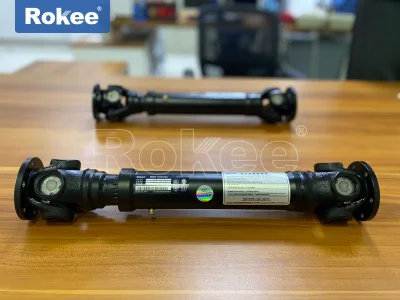
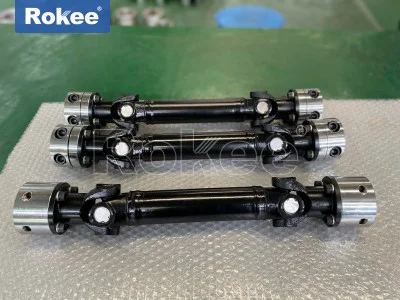
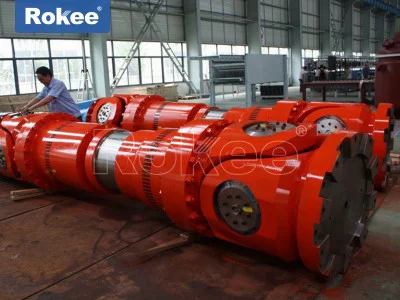
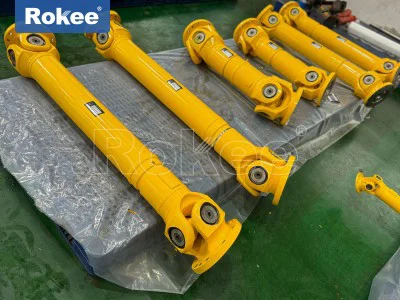
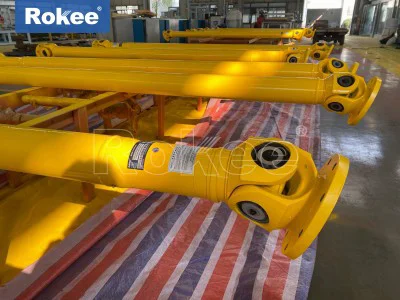
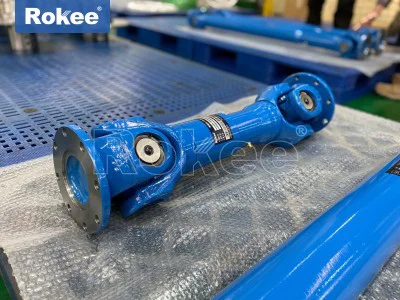
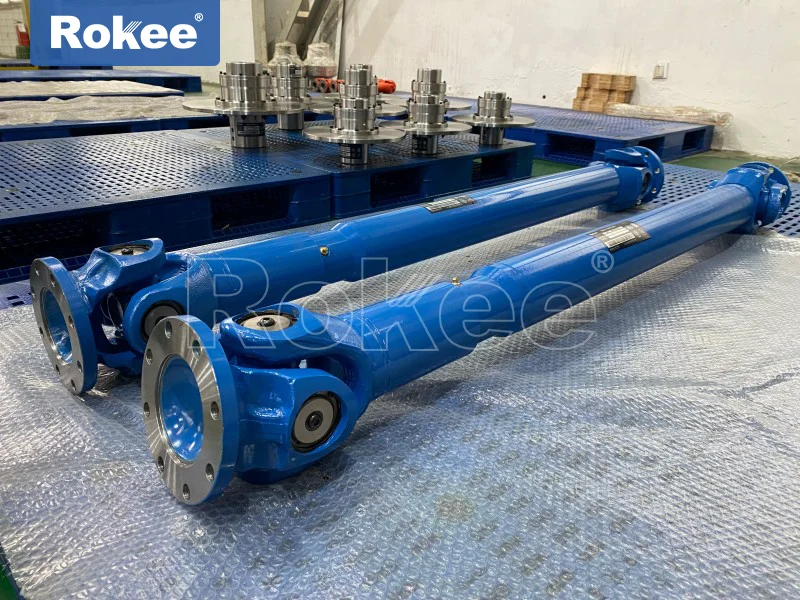
Universal joint coupling, as a professional flexible transmission connecting part designed for misalignment torque transmission, has a simple and reliable basic structure composed of two shaft yokes and an intermediate cross-shaped connecting piece. This special structural design enables it to perfectly solve the core pain point of shaft misalignment in the transmission system of polyurethane sandwich panel production lines. Different from rigid couplings that can only work normally under ideal coaxial conditions, universal joint coupling can stably transmit continuous rotational motion and rated torque between driving and driven shafts with certain angular deviation, radial offset and axial displacement. It can automatically adapt to various dynamic changes of shaft position during equipment operation, without generating additional transmission resistance and mechanical stress, and without affecting the consistency and stability of power transmission. In the daily continuous production process of polyurethane sandwich panels, the production line equipment will generate continuous heat due to long-term motor operation, mechanical friction and polyurethane foaming reaction heat. The thermal expansion of metal transmission shafts and mechanical supports caused by temperature rise will change the relative position and alignment angle between the connected shafts. At the same time, the long-term cyclic vibration of the production line during high-speed operation will also cause slight loosening of installation fasteners and tiny displacement of equipment foundation, further changing the initial alignment state of the transmission shafts. The universal joint coupling can flexibly adjust the connection angle and transmission position in real time according to these dynamic changes, effectively compensate for all kinds of misalignment deviations generated in the whole operation process, ensure that the power transmission from the driving motor to each production execution equipment is always smooth and uninterrupted, and maintain the synchronous operation rhythm of each process link of the production line.
In the key forming and conveying links of polyurethane sandwich panel production lines, the stable transmission performance of universal joint coupling plays an irreplaceable core role. The roller pressing forming link is the key process to determine the flatness, thickness uniformity and bonding firmness of polyurethane sandwich panels. Multiple groups of upper and lower pressing rollers need to maintain constant rotating speed and stable pressing force coordination. Any inconsistent rotating speed of pressing rollers will lead to uneven extrusion of polyurethane foaming core material, resulting in local thinning or thickening of the panel, and even wrinkling and deformation of the metal surface plate. The transmission system of the pressing roller group is connected and driven by multiple sets of universal joint couplings. Due to the large number of pressing rollers and the long transmission distance, the transmission shafts between the reduction gearbox and each pressing roller inevitably have multiple angles and position deviations. The universal joint coupling can reliably transmit uniform torque to each pressing roller under the condition of non-coaxial installation, ensure that all pressing rollers keep synchronous and constant-speed rotation, maintain stable and consistent pressing pressure on the semi-finished sandwich panel in the forming process, make the polyurethane core material fully foam and bond evenly between the upper and lower surface plates, and effectively avoid product quality problems such as panel thickness deviation, core material hollowing and surface plate delamination caused by transmission speed fluctuation.
The finished product conveying and fixed-length cutting link of polyurethane sandwich panels also puts forward high requirements on the stability and continuity of transmission operation. After the sandwich panels are formed by roller pressing, they need to be continuously transported to the cutting equipment at a constant speed to complete fixed-length cutting and automatic stacking. The conveying rollers must maintain stable and uniform conveying speed. Sudden speed change or intermittent conveying will lead to inaccurate cutting positioning, inconsistent length of finished panels, and even collision and damage between panels during conveying. The universal joint coupling used in the conveying transmission system can effectively buffer the vibration and impact generated during the start-stop and continuous operation of the conveying equipment, avoid the transmission jitter caused by dynamic load change, ensure that the conveying shaft maintains stable rotating speed and continuous conveying power all the time. Even in the long-term uninterrupted operation state for several consecutive days, the universal joint coupling will not produce structural fatigue and transmission failure due to continuous load operation. Its robust structural design and reasonable stress distribution enable it to bear long-term cyclic torque load, maintain stable transmission performance without frequent maintenance and replacement, greatly reduce the downtime loss caused by transmission component failure and maintenance, and effectively improve the overall continuous operation efficiency of the production line.
Long-term continuous industrial production inevitably involves the problem of mechanical wear and maintenance cycle control, and the application of universal joint coupling in polyurethane sandwich panel production lines also has outstanding advantages in reducing equipment wear and extending maintenance cycle. Traditional rigid transmission connections will produce severe friction and extrusion wear at the shaft connection due to shaft misalignment. The long-term accumulated wear will lead to increased shaft gap, aggravated vibration and reduced transmission efficiency, and regular shutdown inspection and parts replacement are required, which seriously affects the continuous production schedule. The flexible connection mode of universal joint coupling can effectively disperse the mechanical stress and friction impact generated during transmission, avoid concentrated wear at the shaft connection position, and reduce the wear degree of transmission shafts and matching parts. In the actual production operation, the universal joint coupling can always maintain good transmission coordination state under the conditions of long-term continuous operation, high temperature environment and dynamic load change, with low natural wear rate and long service life. It does not need frequent shutdown maintenance and regular debugging, which not only reduces the labor cost of equipment maintenance, but more importantly, avoids the production interruption caused by maintenance work, ensures that the polyurethane sandwich panel production line can maintain a stable continuous production state for a long time, and realizes the dual improvement of production efficiency and production stability.
In addition to compensating shaft misalignment and reducing mechanical wear, universal joint coupling also plays an important role in isolating equipment vibration and protecting the core power components of the production line. During the continuous operation of polyurethane sandwich panel production lines, the high-speed operation of motors, the meshing operation of reduction gears and the cyclic rotation of pressing rollers will generate certain mechanical vibration. These vibrations will be transmitted along the transmission shaft to all parts of the equipment, which will not only affect the operating stability of the equipment itself, but also cause vibration interference to the polyurethane foaming and forming process, resulting in unstable foaming effect and reduced product qualification rate. The flexible connecting structure of universal joint coupling can effectively isolate and absorb most of the vibration and impact generated in the transmission process, prevent the vibration of the driving end from being directly transmitted to the driven end equipment, reduce the overall vibration amplitude of the production line, maintain the stable operating environment required for polyurethane foaming and composite forming, and further stabilize the product quality while protecting the motor, reduction gearbox and other core power equipment from vibration damage.
In the actual operation and management of polyurethane sandwich panel production enterprises, the stable continuous operation capacity of the production line is directly linked to production capacity benefit and product market competitiveness. Any unplanned shutdown will not only reduce the total output of products, but also increase the production cost of raw material waste and equipment restart debugging. The application of universal joint coupling in the transmission system of the production line builds a solid and reliable transmission guarantee foundation for the continuous operation of the whole line. It solves various transmission hidden dangers caused by installation deviation, thermal deformation, dynamic vibration and long-term wear in the production process from the source, ensures that all transmission links of the production line operate synchronously and stably for a long time, maintains the continuity and stability of each production process, avoids product quality fluctuation and production shutdown loss caused by transmission failure. With its excellent flexible transmission performance, reliable misalignment compensation ability, durable structural stability and low maintenance characteristics, universal joint coupling has become an indispensable stable escort component for the continuous and efficient operation of modern polyurethane sandwich panel production lines, providing solid mechanical transmission support for enterprises to realize long-term continuous production, stable product quality and efficient production operation.