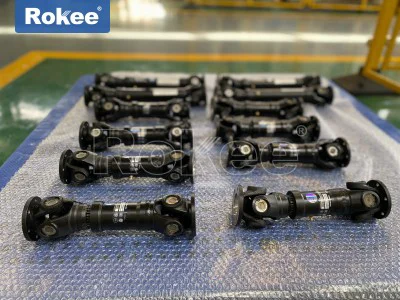
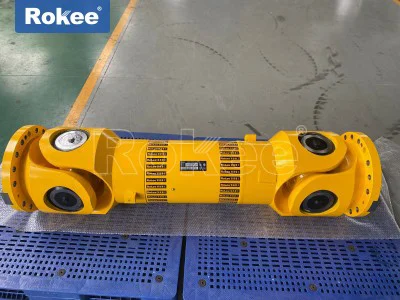
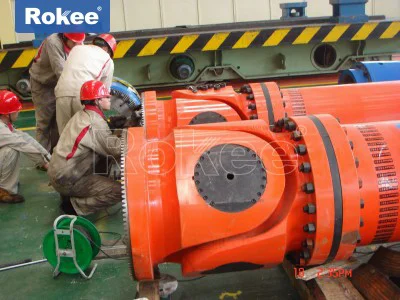
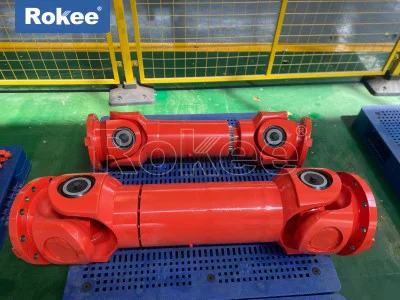
Cardan Coupling Dynamic Balanced
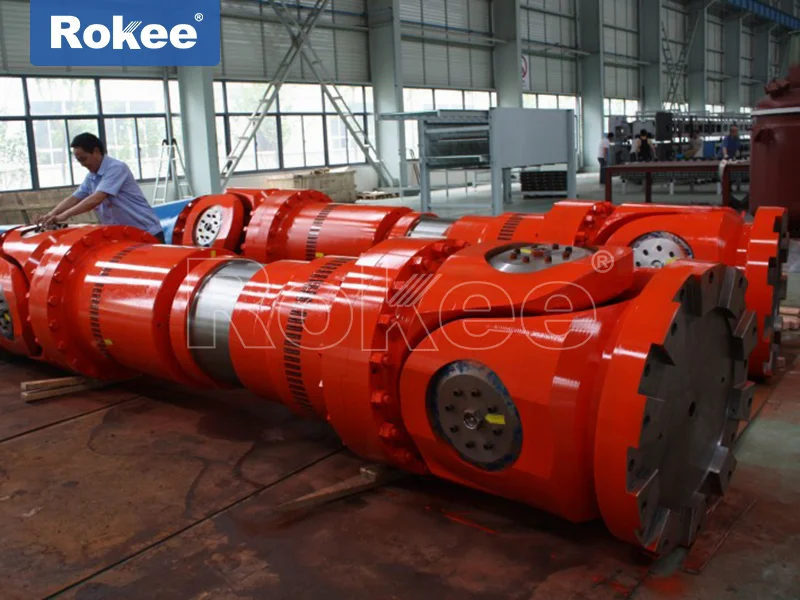
As a core mechanical transmission component widely applied in rotating machinery systems, cardan couplings undertake the critical task of transmitting torque and rotational motion between disjointed, offset, or angularly displaced shafts. Their unique structural design with universal joint mechanisms enables effective compensation of axial, radial, and angular misalignment during equipment operation, making them indispensable in diverse mechanical transmission scenarios ranging from industrial manufacturing equipment to mobile mechanical systems. However, the structural characteristics of cardan couplings, combined with material heterogeneity, machining tolerances, assembly deviations, and operational wear, inevitably lead to uneven mass distribution around the rotational axis. This unbalanced state will generate periodic centrifugal force and alternating torque during high-speed rotation, triggering mechanical vibration, operational noise, and cyclic structural stress. Dynamic balancing has therefore become a pivotal precision processing technology to eliminate mass imbalance, stabilize operating status, and extend the service life of cardan couplings, serving as a fundamental guarantee for the efficient and reliable operation of the entire transmission system.
To fully comprehend the necessity and technical connotation of cardan coupling dynamic balancing, it is essential to first clarify the inherent mechanical characteristics and imbalance formation mechanism of cardan couplings. Different from rigid couplings with fixed-axis transmission, the cardan coupling relies on the mutual rotation and hinge cooperation of cross shafts, yokes, and articulated joints to realize flexible transmission. A single cardan joint exhibits non-constant velocity transmission characteristics during operation: when the coupling runs at a certain angular deflection, its output rotational speed fluctuates periodically twice per revolution, and the amplitude of this speed oscillation increases significantly with the growth of the deflection angle. This inherent kinematic characteristic produces periodic alternating load during operation, which superimposes on the mass imbalance caused by structural and processing factors, further amplifying the vibration response of the transmission system. In low-speed and low-load working scenarios, the adverse effects of this composite imbalance are relatively subtle and difficult to observe in daily operation, but in high-speed, high-torque, and continuous working conditions, tiny mass deviation will be magnified exponentially with the increase of rotational speed, evolving into destructive mechanical vibration and system oscillation.
Mass imbalance of cardan couplings can be divided into two core categories: static imbalance and dynamic imbalance, with dynamic imbalance being the dominant factor affecting high-speed operation stability. Static imbalance mainly refers to the inconsistent distribution of mass on the static plane of the coupling, manifested as the offset of the overall center of mass relative to the rotational axis. This type of imbalance is mostly caused by uneven material density, asymmetric structural size, and inconsistent machining allowance of single components. Dynamic imbalance, by contrast, involves the coupled imbalance state of multiple axial planes. During the rotation of the cardan coupling, the unbalanced mass distributed in different axial positions will generate unbalanced centrifugal forces with different phases and magnitudes, forming unbalanced bending moments and coupled vibration in the axial direction. For assembled cardan couplings composed of multiple parts such as shafts, universal joints, and connecting flanges, assembly errors are the primary source of dynamic imbalance. Minor deviations in the butt joint angle, coaxiality deviation of connecting sections, and tiny gaps in hinge parts during assembly will all change the overall mass distribution state of the coupling, resulting in obvious dynamic imbalance problems in high-speed rotation.
The adverse effects of unbalanced cardan couplings on mechanical systems are systematic and progressive, covering component wear, operating accuracy, energy consumption, and equipment safety. First, unbalanced centrifugal force induces continuous periodic vibration during coupling operation, which directly acts on supporting bearings, bearing seats, and connecting shafts. Long-term alternating vibration will accelerate the fatigue wear of bearing rolling elements and raceways, increase the clearance of hinge joints, and cause premature aging and failure of lubricating grease, greatly shortening the service life of core transmission components. Second, vibration and torque fluctuation caused by imbalance will destroy the stability of power transmission, leading to unstable rotational speed of the driven equipment, reduced transmission accuracy, and obvious jitter in the operation of precision mechanical equipment, which directly affects product processing quality and operational consistency. In addition, continuous vibration operation will increase the mechanical friction resistance of the system, raise ineffective energy consumption, and reduce the overall transmission efficiency of the equipment. More importantly, when the unbalanced excitation frequency is close to the natural resonance frequency of the mechanical system, resonance phenomenon will occur, producing instantaneous huge vibration amplitude and impact load, which may cause structural deformation of the coupling, fracture of connecting parts, and even sudden failure of the entire transmission system, bringing serious hidden dangers to continuous and safe production.
Dynamic balancing treatment is the core technical means to solve the above imbalance problems, and its essence is to adjust the overall mass distribution of the cardan coupling through precision detection and quantitative correction, so that the center of mass of each rotating section coincides with the rotational axis, and the unbalanced centrifugal force and bending moment generated during rotation are controlled within a reasonable tiny range. The complete dynamic balancing process of cardan couplings includes three key links: precision detection of unbalanced state, quantitative calculation of correction parameters, and accurate mass correction. In the detection stage, professional dynamic balancing equipment is used to drive the assembled cardan coupling to rotate at a set stable speed. High-precision sensors arranged in multiple directions collect vibration amplitude, phase signal, and frequency characteristic data of the coupling in the rotating state. The system analyzes the collected signal data to accurately locate the axial position and circumferential angle of the unbalanced mass, and calculates the accurate unbalanced magnitude of each detection plane, forming a complete unbalanced state report of the coupling.
Based on the detection results, targeted mass correction operations are carried out to eliminate dynamic imbalance, and the common correction methods include material removal and mass addition. The material removal method is the most widely used precision correction process in industrial production. It adopts precision grinding, drilling, and milling processes to remove a tiny amount of excess material at the determined unbalanced position, so as to balance the mass distribution on both sides of the rotational axis. This method has the advantages of high correction accuracy, stable processing quality, and no influence on the overall structural strength and assembly precision of the coupling, and is suitable for most high-precision and high-speed cardan coupling products. The mass addition method realizes mass balance by adding balancing gaskets, welding balancing blocks, or bonding counterweights at the specified balance position. This method is convenient and efficient, with low processing damage, and is mostly applied to large-scale heavy-duty cardan couplings or scenarios where material removal is not suitable for structural reasons. In actual production and processing, the two methods are often used in combination according to the structural characteristics, operating speed, and accuracy requirements of the coupling to ensure the optimal balance correction effect.
It is worth emphasizing that the dynamic balancing of cardan couplings is a holistic systematic correction, not a single partial component balance. Many single parts such as coupling shafts and universal joints may meet the static balance standard after independent processing, but after assembly and combination, the superposition of tiny assembly errors and component deviations will produce new dynamic imbalance. Therefore, the formal dynamic balancing correction must be completed after the overall assembly of the cardan coupling. Only the overall balance detection and correction of the assembled finished product can truly eliminate the comprehensive imbalance caused by material, processing, and assembly factors, and ensure the stability of the coupling in actual working conditions. For double-cardan coupling structures commonly used in high-precision transmission systems, dynamic balancing needs to focus on the phase matching of the front and rear universal joints. Reasonable alignment of the input and output yoke planes can offset the speed fluctuation caused by the inherent kinematic characteristics of the single universal joint, and cooperate with mass balance correction to achieve ultra-stable constant-speed transmission effect.
The technical requirements of cardan coupling dynamic balancing vary significantly with operating speed, load level, and application scenarios, and the balance accuracy directly determines the comprehensive performance and service life of the product. For low-speed and light-load general mechanical transmission scenarios, the balance tolerance can be appropriately relaxed, meeting the basic stable operation requirements. For medium-speed industrial equipment with continuous operation, higher balance accuracy is required to control system vibration and reduce component wear. For high-speed, high-precision, and high-load key transmission systems, ultra-high-precision dynamic balancing treatment is mandatory. Tiny unbalanced mass will cause severe vibration and precision loss in high-speed operation, so the residual unbalanced quantity must be controlled within an extremely strict range to ensure the long-term stable and reliable operation of the equipment. In addition, the working environment also puts forward differentiated requirements for dynamic balancing quality. For equipment operating in complex environments such as variable temperature, heavy dust, and alternating load, higher balance stability is needed to resist the vibration interference caused by environmental factors and operational load changes.
In the actual service process of cardan couplings, dynamic balance state is not static, but will gradually change with the extension of service time and the change of working conditions, making regular balance maintenance and detection particularly important. During long-term operation, the coupling will experience minor material wear, surface corrosion of structural parts, slight deformation under alternating load, and loosening of assembly gaps. These subtle changes will accumulate continuously, leading to the re-appearance and gradual aggravation of mass imbalance, resulting in increased equipment vibration, louder operating noise, and reduced transmission stability. Therefore, regular dynamic balance detection and correction should be carried out for cardan couplings in key equipment operation and maintenance. Timely elimination of secondary imbalance generated during operation can effectively delay the aging speed of transmission components, reduce equipment failure rate, and extend the overall service cycle of the coupling.
The application value of dynamic balancing technology for cardan couplings is reflected in multiple dimensions of equipment operation and production benefits. First, high-precision dynamic balancing fundamentally eliminates the vibration source of the coupling transmission system, realizes smooth and stable power transmission, significantly improves the operating stability and running accuracy of mechanical equipment, and provides reliable technical support for precision production and stable operation of equipment. Second, balanced operation effectively reduces the cyclic stress and fatigue wear of coupling components and supporting parts, reduces the frequency of equipment maintenance and part replacement, and greatly reduces the later operation and maintenance cost of the equipment. Third, stable transmission operation reduces ineffective energy consumption caused by vibration and friction, improves the overall mechanical transmission efficiency, and achieves the effect of energy saving and consumption reduction. In addition, eliminating vibration and resonance risks avoids sudden equipment failure and shutdown accidents caused by imbalance, ensures the continuity and stability of production operation, and brings stable economic benefits to mechanical system operation.
With the continuous upgrading of mechanical equipment towards high speed, high precision, and high efficiency, the technical requirements for cardan coupling dynamic balancing are also constantly improving. Traditional manual detection and single correction methods have been unable to meet the balance accuracy requirements of modern high-end mechanical transmission components. Modern dynamic balancing technology integrates automatic signal collection, intelligent data analysis, and precise numerical control correction, realizing full-process intelligent and high-precision balance treatment. The advanced balancing system can quickly capture tiny unbalanced signals in complex operating states, accurately identify multi-plane coupled imbalance problems, and complete quantitative correction with micron-level precision, which greatly improves the balance quality and production efficiency of cardan couplings. At the same time, the iterative optimization of balancing process parameters and correction methods further adapts to the diversified structural forms and complex working condition requirements of cardan couplings, making the dynamic balance performance of products more stable and reliable.
In conclusion, dynamic balancing is an essential and core precision processing technology in the production, manufacturing, and operation maintenance of cardan couplings. It solves the inherent mass imbalance problem of couplings caused by materials, processing, assembly, and operation wear from the source, eliminates various adverse effects brought by unbalanced vibration on mechanical systems, and provides a solid guarantee for the stable operation, efficient transmission, and long-life service of cardan coupling transmission systems. In the field of modern mechanical transmission, excellent dynamic balance performance has become an important symbol to measure the comprehensive quality of cardan couplings. Reasonable application of dynamic balancing technology, strict control of balance accuracy in production and processing, and adherence to regular balance detection and maintenance in service are crucial to giving full play to the transmission advantages of cardan couplings, improving the overall operation level of mechanical equipment, and reducing equipment operation risks and costs. With the continuous development of mechanical manufacturing technology, dynamic balancing technology will continue to be optimized and upgraded, providing more accurate and reliable technical support for the high-performance application of cardan couplings in more sophisticated mechanical scenarios.