Cardan Coupling Speed Rating
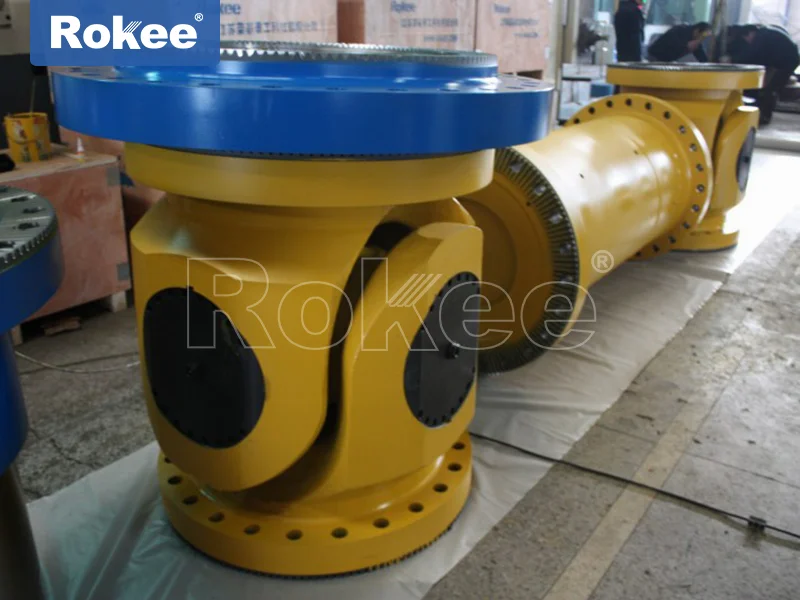
Cardan couplings, also widely recognized as universal joint couplings, serve as indispensable mechanical transmission components designed to transfer rotational power and torque between two non-collinear shafts in mechanical systems. The speed rating stands as one of the most critical performance indicators of cardan couplings, defining the safe, stable, and sustainable rotational speed range within which the coupling can operate without generating abnormal vibration, excessive noise, accelerated component wear, or power transmission failure. Unlike static structural parameters that remain fixed after manufacturing, the speed rating of a cardan coupling is a dynamic performance attribute constrained by multiple structural, mechanical, and operational factors, and it directly determines the application scope, service life, and operational reliability of the coupling in various mechanical transmission scenarios. In industrial transmission systems involving variable-angle power transmission, a comprehensive understanding of the connotation, influencing mechanisms, and application rules of cardan coupling speed rating is essential for optimizing equipment matching, reducing operational failures, and extending the service cycle of transmission components.
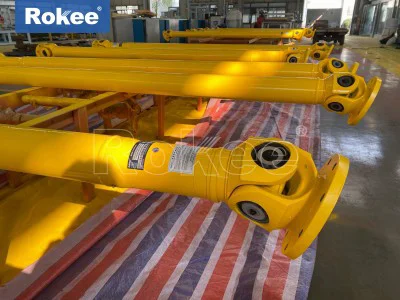
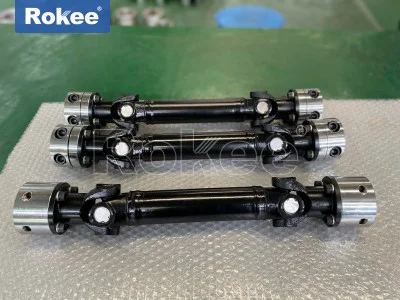
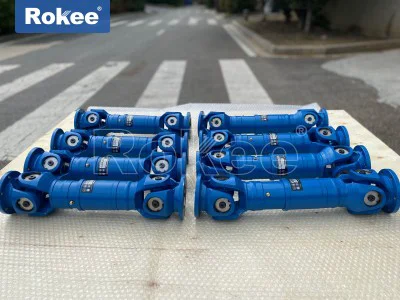
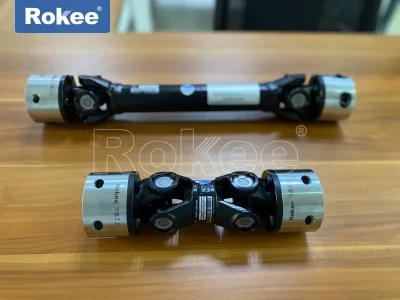
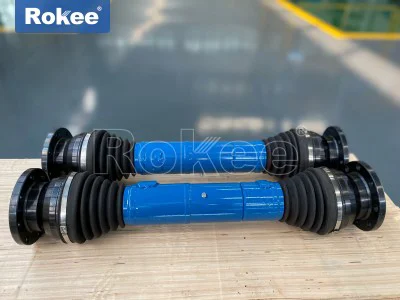
To fully comprehend the speed rating of cardan couplings, it is necessary to start with the inherent mechanical operating principle of the structure. A typical single cardan coupling consists of a cross shaft, two fork-shaped joints, and matching bearing assemblies, forming a flexible connection structure that allows angular misalignment between the driving shaft and the driven shaft. The core mechanical characteristic that differentiates cardan couplings from rigid couplings is its inherent periodic velocity fluctuation during rotation. When the driving shaft rotates at a constant speed, the instantaneous rotational speed of the driven shaft does not remain uniform throughout each rotation cycle. Instead, it fluctuates periodically twice per revolution of the input shaft, with the amplitude of the speed fluctuation closely tied to the angular deflection between the two connected shafts. This fundamental mechanical property is the root cause that restricts the upper speed limit of cardan couplings and shapes their unique speed rating characteristics. With a small angular deflection, the speed fluctuation amplitude is minimal, and the transmission process remains smooth, allowing the coupling to maintain stable operation at relatively high rotational speeds. As the operating angle increases, the degree of speed non-uniformity rises significantly, bringing about drastic changes in angular acceleration and generating additional dynamic loads inside the coupling structure, which severely limits the allowable operating speed and reduces the overall operational stability of the system.
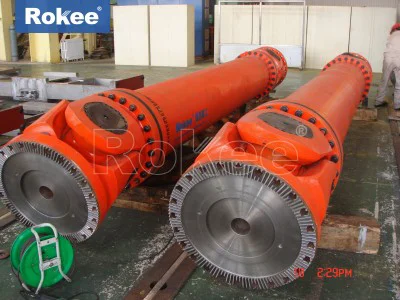
The structural design and manufacturing quality of cardan couplings constitute the foundational determinants of their speed rating. The overall structural rigidity of the coupling directly affects its ability to resist deformation and vibration during high-speed operation. Couplings with thickened structural walls, optimized cross shaft geometry, and integrated fork joint structures exhibit higher structural stability, effectively suppressing micro-deformation and resonant vibration under high-speed centrifugal force, thus supporting a higher rated operating speed. In contrast, lightweight or simplified structural designs, while reducing material consumption, tend to produce slight elastic deformation during high-speed rotation, triggering continuous vibration and noise, which compresses the effective speed range and lowers the speed rating standard. Additionally, the precision of component manufacturing and assembly plays a decisive role in speed performance. Tiny dimensional deviations in cross shaft roundness, bearing fitting clearance, and fork joint symmetry will be amplified exponentially under high-speed rotation. Minor assembly misalignment or inconsistent gap distribution can trigger unbalanced centrifugal force, leading to intensified operational vibration. High-precision machining and fine assembly eliminate structural unbalance, ensuring uniform force distribution during rotation, which is a basic prerequisite for maintaining high and stable speed ratings of cardan couplings.
Bearing performance and lubrication conditions are core operational factors that restrict the speed rating of cardan couplings. Bearings act as the key rotating friction pairs inside cardan couplings, undertaking the dual loads of radial pressure and rotational friction during operation. The maximum allowable rotating speed of the bearing assembly directly defines the upper speed limit of the entire coupling. Bearings with high rotational precision, low friction coefficient, and strong high-temperature resistance can maintain stable friction performance and structural integrity under long-term high-speed operation, avoiding thermal deformation or rapid wear caused by frictional heat accumulation. Inadequate bearing performance will lead to increased frictional resistance at high speeds, accompanied by rapid temperature rise, bearing clamping stagnation, and accelerated abrasive wear, forcing the coupling to operate at a reduced speed to avoid structural failure. Meanwhile, lubrication status is closely linked to speed adaptability. High-speed operation generates intense relative friction between bearing rolling elements and contact surfaces, and qualified lubricating oil or grease can form a uniform protective oil film, isolating metal contact, reducing friction heat, and dissipating accumulated heat in a timely manner. Insufficient lubrication, deteriorated lubricant performance, or uneven oil film distribution will cause dry friction inside the coupling at high speeds, resulting in sharp temperature increases, component thermal expansion, and increased rotational resistance, which not only reduces the safe operating speed but also easily induces early failure of transmission components. Sealed lubrication structures further optimize high-speed adaptability by preventing dust and impurities from entering the friction pairs, maintaining long-term stable lubrication effects and effectively retaining the coupling’s original speed rating during prolonged service.
Dynamic balance performance is a pivotal factor affecting the high-speed rating of cardan couplings. All rotating mechanical components generate centrifugal force during operation, and any unbalanced mass distribution will produce eccentric centrifugal force that increases with the rise of rotational speed. At low and medium speeds, the vibration and impact caused by slight unbalance are negligible and will not affect normal operation. However, when the rotational speed enters the high-speed range, tiny unbalanced deviations are continuously magnified, producing periodic vibration and alternating impact loads on the coupling structure. These dynamic loads not only reduce the smoothness of power transmission but also cause fatigue damage to the cross shaft, bearings, and fork joints over time, severely limiting the maximum safe operating speed. Cardan couplings that pass strict dynamic balance correction can achieve uniform mass distribution, effectively eliminating eccentric centrifugal force and inhibiting high-speed vibration. Such balanced structures can maintain stable operation at higher rotational speeds and retain consistent speed rating performance throughout their service life, while uncorrected couplings can only adapt to low-speed operating scenarios due to inherent unbalanced defects.
Operating conditions and load characteristics significantly regulate the actual applicable speed range of cardan couplings, making the nominal speed rating a variable performance index adjusted according to working scenarios. Load magnitude is the most intuitive influencing factor: under no-load or light-load conditions, the coupling bears minimal transmission torque and structural stress, with small frictional loss and stable operation, allowing it to operate stably near the nominal maximum speed rating. As the transmission load increases, the contact pressure between internal components rises, frictional resistance grows, and structural deformation becomes more obvious. The superposition of load stress and high-speed centrifugal force increases the risk of vibration and wear, requiring a corresponding reduction in operating speed to ensure operational safety. For heavy-load and impact-load working conditions, the allowable operating speed is far lower than the nominal speed rating, as frequent load shocks will exacerbate internal component fatigue and amplify the adverse effects of speed fluctuation.
In addition, the operating angle of the coupling, a key installation parameter, has an inverse correlation with the speed rating. A smaller working angle ensures more uniform instantaneous speed of the driven shaft, weaker speed fluctuation, and fewer additional dynamic loads, enabling the coupling to exert its maximum speed performance. As the working angle gradually increases, the periodic speed variation of the driven shaft becomes more intense, generating obvious alternating acceleration and deceleration effects. This cyclic dynamic impact will cause continuous vibration of the transmission system, reduce transmission efficiency, and accelerate component wear. Therefore, couplings operating at large deflection angles must adopt a lower operating speed to offset the adverse effects of speed fluctuation, meaning the actual effective speed rating decreases with the increase of installation angle. For mechanical systems requiring long-term continuous operation, the matching of working angle and operating speed must be strictly optimized to avoid speed overload caused by improper parameter matching.
The structural form of cardan couplings also brings distinct differences in speed rating performance. Single cardan coupling structures feature simple composition and flexible installation but have prominent inherent speed fluctuation defects, resulting in limited high-speed adaptability, making them more suitable for medium and low-speed transmission scenarios with small angular deflection. Dual cardan coupling structures, by compensating the speed fluctuation of two single joints, can achieve approximate constant-speed transmission between shafts, effectively eliminating periodic speed variation and dynamic impact. This optimized structural compensation mechanism greatly improves high-speed operational stability, enabling dual cardan couplings to have a significantly higher speed rating than single-joint structures and adapt to high-precision and high-speed mechanical transmission scenarios. Moreover, compact and lightweight optimized coupling structures reduce rotational inertia during operation, lowering centrifugal load and vibration amplitude at high speeds, further improving speed stability and expanding the effective speed range.
Material performance of manufacturing components provides fundamental performance support for the speed rating of cardan couplings. High-speed operation requires coupling materials to have high structural strength, good toughness, excellent wear resistance, and stable high-temperature mechanical properties. High-quality alloy materials with precise heat treatment can maintain stable structural size and mechanical properties under high-speed centrifugal force and frictional high-temperature environment, avoiding thermal deformation, fatigue cracking, or rapid wear. Materials with insufficient hardness and toughness are prone to micro-wear and plastic deformation under high-speed and friction conditions, leading to increased structural clearance, aggravated vibration, and continuous attenuation of speed performance. The surface treatment process of components also affects speed adaptability: refined surface polishing and anti-wear treatment reduce surface roughness of friction pairs, lower frictional coefficient, weaken high-speed frictional heat generation, and effectively maintain the long-term stability of the coupling’s speed rating.
In practical mechanical system design and equipment operation, the rational matching and scientific application of cardan coupling speed rating are key to ensuring efficient and reliable system operation. In the equipment design stage, it is necessary to comprehensively select the appropriate coupling structure and speed grade according to the system’s transmission power, operating speed range, installation deflection angle, and load characteristics. It is essential to avoid blind pursuit of high-speed parameters while ignoring the restrictive effects of working conditions, so as to prevent potential failures such as vibration, noise, and component damage caused by speed overload. For equipment with variable operating speeds and variable loads, the speed margin should be reasonably reserved during selection, ensuring that the coupling can maintain stable operation under peak working conditions and avoid long-term operation close to the limit speed rating.
Daily maintenance and operational management also play a vital role in retaining the speed performance of cardan couplings. Long-term operation will inevitably cause slight wear of internal bearings and friction pairs, leading to increased structural clearance and reduced dynamic balance accuracy, which will gradually lower the effective speed rating. Regular inspection of coupling operating status, timely replenishment and replacement of lubricants, and elimination of installation deviation and structural looseness can effectively delay performance attenuation. For couplings that have experienced long-term high-speed operation or impact load operation, regular dynamic balance detection and component wear inspection are required to eliminate unbalanced defects and hidden wear hazards, ensuring that the coupling always maintains the designed speed transmission capacity. Abnormal vibration and noise during coupling operation are typical signs of speed mismatch or performance degradation, and timely troubleshooting and parameter adjustment can avoid further damage to the transmission system.
In summary, the speed rating of cardan couplings is a comprehensive performance index integrated with structural design, manufacturing precision, material performance, assembly quality, and working conditions. It is not a fixed numerical parameter but a dynamic performance range that changes with application scenarios. The inherent speed fluctuation characteristic of cardan couplings is the essential mechanical limitation of their speed performance, while structural optimization, high-precision manufacturing, reliable lubrication, and reasonable working condition matching are effective ways to improve and stabilize their speed rating. In industrial mechanical transmission applications, accurate grasping of the coupling’s speed rating characteristics, standardized model selection and installation, and systematic daily maintenance can give full play to the advantages of cardan couplings in variable-angle power transmission, ensure long-term stable and efficient operation of mechanical equipment, and reduce operational failure rates and maintenance costs. With the continuous upgrading of mechanical transmission technology, the optimization of cardan coupling speed performance will further adapt to the high-speed, high-precision, and high-reliability development trend of modern mechanical systems, providing more stable technical support for diversified power transmission scenarios.