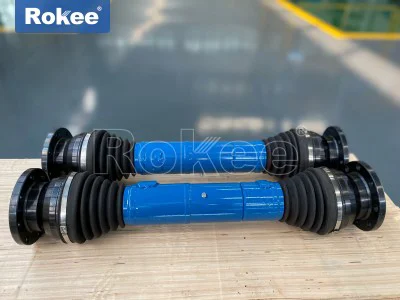
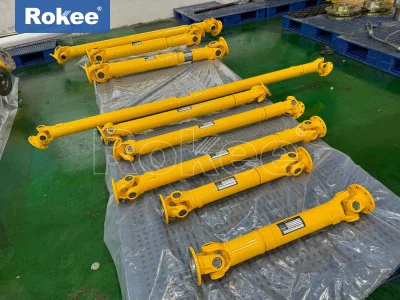
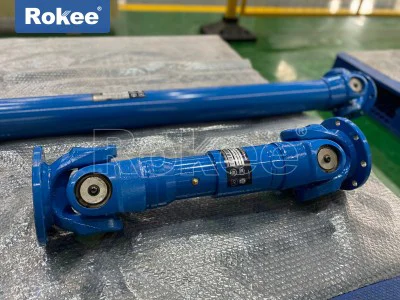
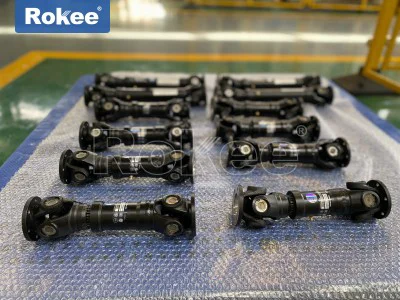
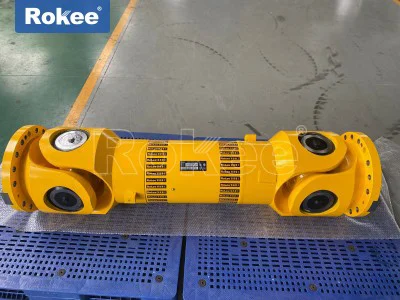
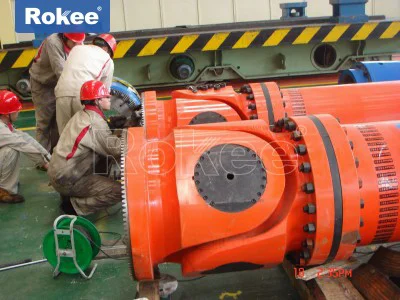
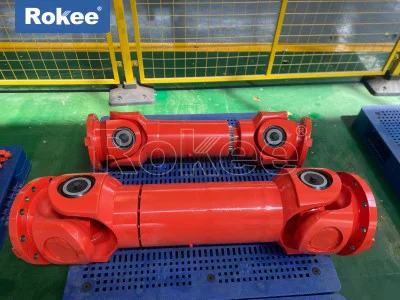
Medium Torque Cardan Shaft

A medium torque cardan shaft, also known as a universal shaft or driveshaft, is a critical mechanical component designed to transmit rotational power and torque between two shafts that are not aligned perfectly, either angularly or axially. Unlike light torque cardan shafts that handle low load applications and heavy torque variants built for extreme stress, medium torque cardan shafts strike a balance between strength, flexibility, and versatility, making them suitable for a wide range of industrial, agricultural, and automotive applications. Their design is engineered to accommodate misalignments while maintaining efficient power transmission, reducing vibration, and ensuring long-term reliability under moderate load conditions. To fully understand the role and functionality of medium torque cardan shafts, it is essential to explore their structural composition, key performance characteristics, various types, and the diverse applications where they play an indispensable role.
The structure of a medium torque cardan shaft is carefully designed to withstand moderate torque levels while allowing for the necessary flexibility to compensate for shaft misalignments. At its core, every medium torque cardan shaft consists of several fundamental components that work together seamlessly to transmit power. The most essential part is the universal joint, also referred to as a U-joint or cardan joint, which serves as the flexible connection point between the shafts. A typical universal joint comprises two yokes—one attached to the input shaft and the other to the output shaft—and a cross-shaped pivot, known as a spider, which connects the two yokes. The spider is equipped with bearings at each of its four ends, allowing it to rotate freely within the yokes and enabling angular movement between the input and output shafts. These bearings are usually sealed to prevent contamination from dust, dirt, and moisture, which can degrade performance and shorten the service life of the shaft. In addition to the universal joints, the medium torque cardan shaft includes a central shaft, often called the propeller shaft or intermediate shaft, which connects the two universal joints. This central shaft is typically made of high-strength steel or alloy materials to ensure it can handle the moderate torque without bending or breaking. The central shaft may be solid or hollow; hollow shafts are often preferred in many applications because they are lighter in weight while maintaining sufficient structural integrity, which helps reduce overall system weight and improve energy efficiency. Some medium torque cardan shafts also feature a slip joint, which is a telescopic section that allows for axial movement between the shafts. This slip joint is particularly useful in applications where the distance between the input and output shafts changes during operation, such as in automotive suspension systems or adjustable industrial machinery. The slip joint consists of a splined shaft that fits into a splined sleeve, allowing the shaft to extend or retract as needed while still transmitting torque effectively. Flanges are another common component of medium torque cardan shafts, serving as the connection points between the shaft and the equipment it powers. These flanges are bolted to the yokes and the input/output shafts, ensuring a secure and rigid connection that minimizes power loss during transmission. The overall structure of the medium torque cardan shaft is optimized to balance rigidity and flexibility, ensuring that it can transmit torque efficiently even when there are small to moderate angular, radial, or axial misalignments between the shafts.
The performance characteristics of a medium torque cardan shaft are directly related to its structural design and the materials used in its construction, and these characteristics determine its suitability for specific applications. One of the key performance metrics is torque capacity, which refers to the maximum amount of torque the shaft can transmit without suffering damage or deformation. As the name suggests, medium torque cardan shafts are designed to handle moderate torque levels, typically ranging from a few thousand to several hundred thousand newton-meters, depending on the specific design and size. This torque capacity is determined by factors such as the material strength of the central shaft and yokes, the size of the universal joint spider and bearings, and the overall diameter of the shaft. Another critical performance characteristic is angular compensation, which is the ability of the cardan shaft to accommodate angular misalignment between the input and output shafts. Medium torque cardan shafts typically have an angular compensation range of 15 to 35 degrees, depending on the type of universal joint and the design of the yokes. This flexibility allows the shaft to function effectively even when the two shafts are not perfectly aligned, which is common in many real-world applications due to installation errors, equipment movement, or structural deflection. In addition to angular compensation, medium torque cardan shafts also offer radial and axial compensation capabilities, allowing for small amounts of radial displacement (side-to-side movement) and axial displacement (back-and-forth movement) between the shafts. This compensation helps reduce stress on the shafts and the connected equipment, minimizing wear and tear and extending the service life of the entire system. Vibration damping is another important performance feature of medium torque cardan shafts. Excessive vibration during operation can cause noise, damage to connected components, and reduce the overall efficiency of the system. To mitigate this, medium torque cardan shafts are designed with balanced components, and the universal joints are precision-manufactured to ensure smooth rotation. Some designs also incorporate vibration-damping materials or mechanisms, such as elastomeric components, to further reduce vibration and noise. The operating speed range is another key performance characteristic, as different applications require cardan shafts to operate at varying rotational speeds. Medium torque cardan shafts are typically designed to operate at moderate to high speeds, with maximum rotational speeds ranging from several hundred to several thousand revolutions per minute (RPM). The speed capacity is determined by factors such as the balance of the central shaft, the quality of the bearings, and the material fatigue resistance. Durability and service life are also critical performance considerations for medium torque cardan shafts, especially in industrial and agricultural applications where the shafts are exposed to harsh operating conditions, such as dust, moisture, extreme temperatures, and continuous use. To ensure long service life, the components are made of high-quality materials that are resistant to corrosion, wear, and fatigue, and the bearings are sealed and lubricated to reduce friction. Regular maintenance, such as lubrication and inspection, can further extend the service life of the shaft, but the inherent design and material selection play a major role in its overall durability. Efficiency is another important performance metric, as medium torque cardan shafts are expected to transmit power with minimal loss. The efficiency of a cardan shaft is influenced by factors such as the friction in the universal joint bearings, the alignment of the components, and the rigidity of the central shaft. Well-designed medium torque cardan shafts typically have high transmission efficiency, often above 95%, ensuring that most of the input power is transferred to the output shaft without significant waste.
There are several types of medium torque cardan shafts, each designed to meet the specific requirements of different applications, based on factors such as the type of misalignment, operating conditions, and installation constraints. One of the most common types is the single cardan shaft, which consists of a single universal joint connecting two shafts. This type is simple in design, cost-effective, and suitable for applications where there is a small amount of angular misalignment between the shafts. Single medium torque cardan shafts are often used in light industrial machinery, agricultural equipment such as small tractors and harvesters, and some automotive auxiliary systems. However, they have a limitation: when the angular misalignment is significant, they can cause speed fluctuations, which may lead to vibration and noise. To address this issue, the double cardan shaft, also known as a constant velocity (CV) cardan shaft, is used. A double cardan shaft consists of two universal joints connected by an intermediate shaft, with the two joints aligned in a way that cancels out the speed fluctuations caused by angular misalignment. This type of medium torque cardan shaft provides smoother power transmission even at larger angular misalignments, making it suitable for applications where precision and smooth operation are critical, such as in automotive drivelines, precision industrial machinery, and some aerospace applications. Another type of medium torque cardan shaft is the telescopic cardan shaft, which incorporates a slip joint to allow for axial movement between the shafts. This type is ideal for applications where the distance between the input and output shafts changes during operation, such as in automotive suspension systems, where the movement of the wheels causes the distance between the transmission and the axle to vary. Telescopic medium torque cardan shafts are also used in adjustable industrial machinery, such as conveyor systems and machine tools, where the position of the equipment components can be adjusted. Flange-mounted medium torque cardan shafts are another common type, featuring flanges at both ends for secure connection to the input and output shafts. This type of shaft is easy to install and remove, making it suitable for applications where maintenance or equipment replacement is frequent. Flange-mounted cardan shafts are widely used in industrial machinery, such as pumps, compressors, and generators, as well as in marine propulsion systems. Another type is the splined cardan shaft, which uses splined connections instead of flanges to attach to the shafts. Splined connections provide a more compact design and allow for some axial movement, making them suitable for applications where space is limited. Splined medium torque cardan shafts are often used in automotive transmissions, small industrial gearboxes, and agricultural machinery. Additionally, there are custom-designed medium torque cardan shafts that are tailored to meet the specific requirements of unique applications. These custom shafts may feature specialized materials, unique joint designs, or non-standard dimensions to accommodate extreme operating conditions, such as high temperatures, corrosive environments, or unusual misalignment angles. The selection of the appropriate type of medium torque cardan shaft depends on a thorough understanding of the application requirements, including torque levels, misalignment types and ranges, operating speed, installation space, and environmental conditions.
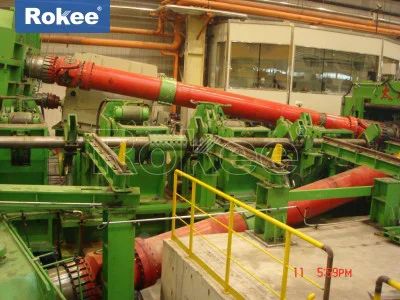
The versatility of medium torque cardan shafts makes them indispensable in a wide range of applications across various industries, where they play a critical role in ensuring efficient power transmission between misaligned shafts. One of the primary industries where medium torque cardan shafts are widely used is the automotive industry. In passenger cars, trucks, and other vehicles, medium torque cardan shafts are used in the driveline to transmit power from the transmission to the rear axle (in rear-wheel drive vehicles) or to the front and rear axles (in four-wheel drive vehicles). They are also used in auxiliary systems, such as power steering, air conditioning compressors, and water pumps, where they transmit torque between small, misaligned shafts. In commercial vehicles, such as trucks and buses, medium torque cardan shafts are used to handle the moderate torque requirements of the driveline, ensuring reliable power transmission even when the vehicle is carrying heavy loads or operating on uneven terrain. The agricultural industry is another major user of medium torque cardan shafts, as they are ideal for use in tractors, harvesters, combines, and other agricultural machinery. Agricultural equipment often operates in harsh conditions, with significant misalignments between shafts due to the movement of the machinery over uneven ground. Medium torque cardan shafts can handle the moderate torque requirements of these machines while accommodating the necessary misalignments, ensuring that power is transmitted efficiently from the engine to the various components, such as the wheels, PTO (power take-off) systems, and implements. For example, in a tractor, the medium torque cardan shaft transmits power from the engine to the PTO, which in turn powers implements such as plows, harrows, and mowers. In harvesters, they are used to transmit power to the cutting blades, augers, and other moving components. The industrial sector also relies heavily on medium torque cardan shafts for a wide range of applications. In manufacturing plants, they are used in conveyor systems to transmit power from the motor to the conveyor rollers, even when the motor and rollers are not perfectly aligned. They are also used in machine tools, such as lathes, milling machines, and grinders, where they transmit torque between the motor and the spindle, ensuring precise and smooth operation. Medium torque cardan shafts are used in pumps and compressors to transmit power from the motor to the impeller or compressor rotor, accommodating small misalignments that may occur during installation or operation. In the steel and metallurgical industry, they are used in rolling mills, straightening machines, and other equipment to transmit moderate torque between the motor and the rolling or straightening components, ensuring efficient production of steel products. The marine industry also uses medium torque cardan shafts in small to medium-sized boats and ships, where they are used in the propulsion system to transmit power from the engine to the propeller. Marine applications require cardan shafts that can handle moderate torque while resisting corrosion from saltwater, and medium torque cardan shafts are designed with corrosion-resistant materials and sealed bearings to meet these requirements. They are also used in auxiliary systems on ships, such as pumps, winches, and steering systems. The construction industry uses medium torque cardan shafts in construction machinery, such as excavators, loaders, bulldozers, and cranes. These machines often have multiple moving components with misaligned shafts, and medium torque cardan shafts transmit power between these components, ensuring reliable operation even in harsh construction environments. For example, in an excavator, the medium torque cardan shaft transmits power from the engine to the hydraulic pump, which in turn powers the excavator's arms and bucket. In cranes, they are used to transmit power to the hoist and boom mechanisms, ensuring that heavy loads can be lifted and moved safely. Other applications of medium torque cardan shafts include amusement park rides, where they are used to transmit power to the various moving components of the rides, such as Ferris wheels, roller coasters, and carousels, accommodating the misalignments and varying distances between shafts. They are also used in renewable energy systems, such as small wind turbines and solar tracking systems, where they transmit torque between the motor or turbine and the various components, ensuring efficient energy generation. In the food and beverage industry, medium torque cardan shafts are used in processing equipment, such as mixers, conveyors, and packaging machines, where they transmit torque between misaligned shafts while meeting the hygiene requirements of the industry (often with specialized materials and seals to prevent contamination). The wide range of applications for medium torque cardan shafts is a testament to their versatility, reliability, and ability to meet the diverse needs of different industries.
In conclusion, medium torque cardan shafts are essential mechanical components that play a critical role in power transmission between misaligned shafts across various industries. Their carefully engineered structure, consisting of universal joints, a central shaft, and often slip joints and flanges, balances rigidity and flexibility, allowing them to handle moderate torque levels while accommodating angular, radial, and axial misalignments. The key performance characteristics, such as torque capacity, angular compensation, vibration damping, operating speed range, durability, and efficiency, make them suitable for a wide range of applications where light torque shafts would be insufficient and heavy torque shafts would be unnecessarily large and costly. The various types of medium torque cardan shafts, including single, double, telescopic, flange-mounted, splined, and custom-designed variants, ensure that there is a suitable solution for almost any application requirement. From the automotive and agricultural industries to the industrial, marine, and construction sectors, medium torque cardan shafts are indispensable in ensuring the efficient and reliable operation of countless machines and systems. As technology advances, the design and materials used in medium torque cardan shafts continue to evolve, with manufacturers focusing on improving durability, efficiency, and performance to meet the growing demands of modern industries. Whether in a passenger car, a tractor, a manufacturing plant, or a construction site, medium torque cardan shafts quietly work behind the scenes, ensuring that power is transmitted smoothly and reliably, making them a cornerstone of modern mechanical systems.