Cardan Coupling Adapts To The Heavy-load Transmission Needs Of PU Sandwich Panel Line
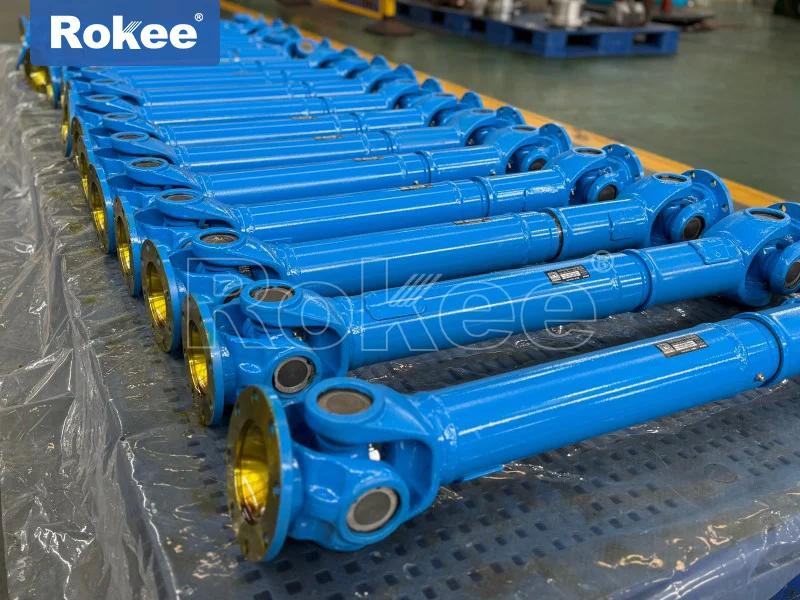
The continuous advancement of modern building thermal insulation and enclosure material manufacturing technology has driven the PU sandwich panel production industry to move toward large-scale, continuous and high-efficiency automated production modes. As the core basic equipment for producing energy-saving building composite materials, the PU sandwich panel production line undertakes the integrated processing procedures of raw material feeding, continuous foaming, composite pressing, fixed-length cutting and finished product conveying. The entire production process puts forward extremely stringent requirements for the stability, continuity and bearing capacity of the mechanical transmission system, because any slight transmission failure or power fluctuation will directly affect the forming quality of the sandwich panel, the consistency of product specifications and the overall operating efficiency of the production line. In the actual production and operation process, the transmission links of the PU sandwich panel line often face multiple complex challenges such as long-term heavy-load operation, inevitable shaft body misalignment caused by equipment installation deviation and mechanical vibration, dynamic displacement generated by thermal expansion and cold contraction of mechanical components during long-term continuous operation, and impact load caused by frequent start-stop and variable-speed adjustment of the production line. These harsh operating conditions make traditional rigid transmission components difficult to meet the long-term stable operation requirements of the production line, as rigid structures cannot effectively compensate for various deviations in the transmission process, and are prone to excessive component wear, transmission torque attenuation, equipment vibration and even unexpected shutdown failures, which seriously restrict the continuous production capacity of the PU sandwich panel production line and increase the daily operation and maintenance cost of mechanical equipment. Against this industrial production background, the cardan coupling, with its unique articulated structural design, excellent multi-dimensional deviation compensation performance and reliable heavy-load torque transmission capacity, has become an indispensable core transmission component adapted to the special operating conditions of the PU sandwich panel production line, perfectly solving various transmission pain points existing in the heavy-load operation process of the production line and providing solid mechanical power guarantee for the stable, efficient and long-term continuous operation of the entire panel production system.
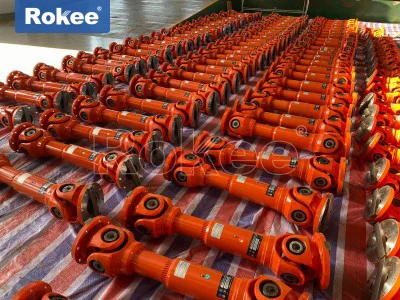
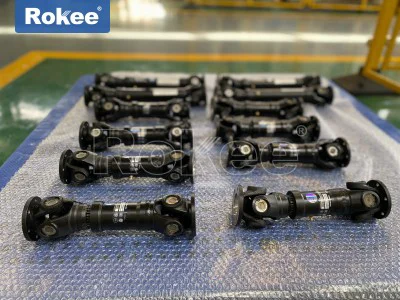
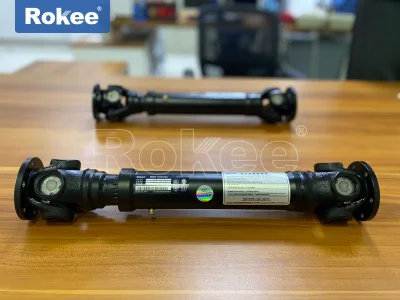
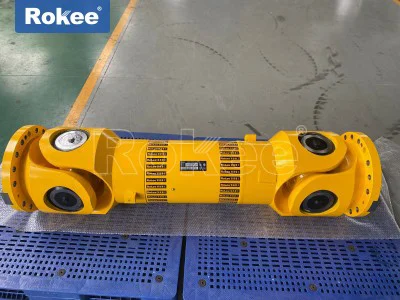
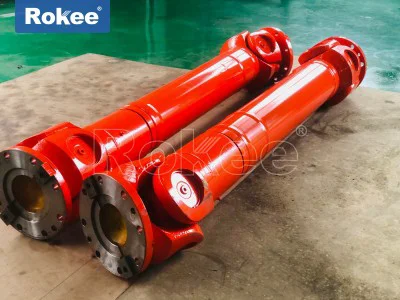
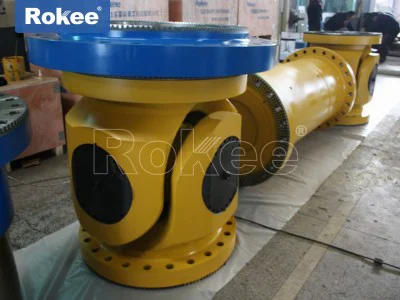
The inherent structural advantages and working mechanism of the cardan coupling lay a solid foundation for its stable adaptation to the heavy-load transmission scenario of the PU sandwich panel production line. The core structure of the cardan coupling is composed of two fork-shaped joint bodies and an intermediate cross shaft connecting the two joints, supplemented by precision-machined needle bearings and wear-resistant matching components, forming a flexible articulated transmission structure that is different from ordinary rigid couplings. This special structural design enables the cardan coupling to break through the limitation of strict coaxial alignment required by traditional rigid transmission parts, and can effectively realize continuous and stable power transmission between the driving shaft and the driven shaft under the premise of existing obvious angular deviation, axial displacement and radial misalignment between the connected shafts. In the actual operation of mechanical equipment, the shafts of various power components and execution components on the PU sandwich panel production line cannot achieve absolute ideal coaxial installation due to inevitable installation errors, foundation settlement of the production workshop, long-term mechanical operation vibration and thermal deformation of metal parts after heating. Even if the installation accuracy is strictly controlled in the initial stage of equipment commissioning, various misalignment deviations will gradually occur in the transmission shaft system with the extension of equipment service time and the accumulation of production operation cycles. The cardan coupling can well adapt to this objective mechanical operation reality, relying on the flexible rotation fit between the cross shaft and the fork-shaped joints, it can compensate for three-dimensional comprehensive deviations including angular, axial and radial directions in the transmission process in real time, ensuring that the power output by the power unit can be efficiently and continuously transmitted to each execution mechanism of the production line without power loss and transmission jitter caused by shaft body misalignment. At the same time, the main body of the cardan coupling is made of high-strength alloy steel through forging, heat treatment and precision cutting processing, which has excellent structural rigidity, mechanical strength and wear resistance. This material and processing technology endows the coupling with super strong torque bearing capacity, enabling it to withstand the long-term heavy-load impact and cyclic torque load generated during the pressing, composite forming and stable conveying processes of thick-specification and high-density PU sandwich panels, without structural deformation, component fatigue damage or transmission failure under long-term high-strength operating conditions.
The heavy-load production characteristics of the PU sandwich panel line determine the particularity and harshness of its transmission system operation, and also highlight the irreplaceable application value of the cardan coupling in this professional production scenario. The production and processing of PU sandwich panels involve multiple continuous heavy-duty process links, among which the core composite pressing and finished product conveying links are the most demanding on the transmission system. In the composite pressing stage of the production line, the upper and lower metal surface plates and the intermediate PU foaming core material need to be tightly bonded and pressed under a continuous and stable heavy pressure state to ensure the overall structural compactness and bonding firmness of the finished sandwich panel. In this process, the pressing roller set and the traction power mechanism need to output stable and huge traction torque and pressing power for a long time, and the transmission shaft system connected with the power device will bear continuous heavy torque and periodic impact load. In the finished product conveying and subsequent cutting and stacking links, with the improvement of production line automation and production speed, the overall operating load of the conveying mechanism increases significantly, and the frequent start-stop and speed regulation operations in the production process will generate instantaneous impact torque on the transmission components. If the transmission coupling cannot bear such heavy and impact loads and maintain stable power transmission, it will lead to asynchronous operation of each roller set and conveying mechanism, resulting in inconsistent feeding speed of surface plates and core materials, uneven foaming and pressing of PU materials, and finally producing a large number of unqualified products with unqualified thickness, poor bonding and irregular specifications. Traditional rigid couplings and ordinary elastic couplings are difficult to adapt to this working condition: rigid couplings have no deviation compensation ability, and slight shaft misalignment will cause eccentric wear of bearings and shafts, increasing equipment failure rate; ordinary elastic couplings have limited torque bearing capacity, and are easy to age and deform under long-term heavy-load and high-temperature working conditions, resulting in reduced transmission efficiency and shortened service life. The cardan coupling, however, perfectly matches these heavy-load and continuous operation characteristics, its excellent torque transmission performance can maintain stable power output under long-term heavy-load pressing and conveying working conditions, and its flexible structure can effectively absorb the impact load generated by equipment start-stop and speed regulation, buffer the mechanical vibration in the transmission process, and protect the core power components and execution equipment of the production line from fatigue damage caused by impact and vibration.
In addition to meeting the basic heavy-load torque transmission requirements, the cardan coupling also brings multiple indirect operational advantages for the long-term stable and low-cost operation of the PU sandwich panel production line through its excellent adaptive performance. In the daily production and operation management of industrial production lines, equipment maintenance downtime and component replacement cost are important factors affecting production efficiency and economic benefits. Many transmission equipment failures of PU sandwich panel production lines are caused by long-term uncompensated shaft misalignment, which leads to accelerated wear of bearings, shafts and other matching parts, frequent equipment shutdown maintenance and regular replacement of damaged parts, seriously affecting the continuous production schedule. The application of the cardan coupling fundamentally improves this situation, its good multi-dimensional deviation compensation function can eliminate the additional mechanical stress and eccentric wear caused by shaft misalignment in the transmission process, reduce the wear degree of the matching parts of the transmission shaft system, and greatly prolong the service life of the core mechanical components of the production line. This not only effectively reduces the frequency of equipment failure shutdown and daily maintenance workload, but also cuts down the comprehensive operation and maintenance cost of the production line in the long-term production cycle. At the same time, the structural design of the cardan coupling is compact and reasonable, and it can be installed and arranged in the limited mechanical installation space of the PU sandwich panel production line without modifying the original equipment structure and occupying extra production space. The assembly and disassembly process of the coupling is simple and convenient, which can shorten the time required for daily inspection and maintenance, and further improve the overall operation efficiency of the production line. Moreover, the stable transmission performance of the cardan coupling ensures the synchronization and consistency of the operation speed of each key mechanism in the production line, avoids product quality fluctuations caused by unstable transmission power and asynchronous operation, improves the overall yield and product quality stability of PU sandwich panel products, and creates more stable production benefits for manufacturing enterprises.
With the continuous upgrading of the PU sandwich panel manufacturing industry toward larger board width, thicker product specifications and higher production speed, the heavy-load transmission demand of the production line is constantly escalating, and the performance requirements for supporting transmission components are also becoming higher and higher. The production of large-specification thickened PU sandwich panels requires the production line to provide greater pressing pressure and stronger traction power, and the high-speed continuous production mode makes the transmission system operate under higher load intensity and longer continuous working cycle. In this development trend, the cardan coupling, with its excellent heavy-load bearing capacity, reliable deviation compensation performance and durable structural stability, can always keep pace with the upgrading and iteration of PU sandwich panel production equipment. Different from other transmission components that are easy to be eliminated due to insufficient performance with the upgrading of production equipment, the cardan coupling can adapt to the increasing heavy-load transmission pressure and more complex mechanical operating conditions only through reasonable structural parameter optimization and matching according to the actual production scale and equipment parameters of the production line. In the future development of the PU sandwich panel production industry, the continuous production trend of high automation, high efficiency and high load will further highlight the core role of the cardan coupling in the transmission system of the production line. It will continue to serve as a key connecting component between the power unit and the execution mechanism, ensure that all links of the PU sandwich panel production process are carried out in an orderly, stable and efficient manner, effectively cope with various complex working condition challenges in heavy-load production, and provide reliable mechanical transmission support for the high-quality and high-yield production of building energy-saving insulation sandwich panels. Whether it is conventional standard-specification panel production or special large-scale thickened panel customized production, the cardan coupling can always adapt to the diversified heavy-load transmission needs of different production scenarios, becoming an indispensable and important guarantee for the long-term stable operation and efficient production improvement of PU sandwich panel production lines.