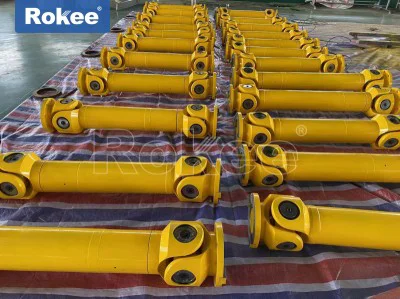
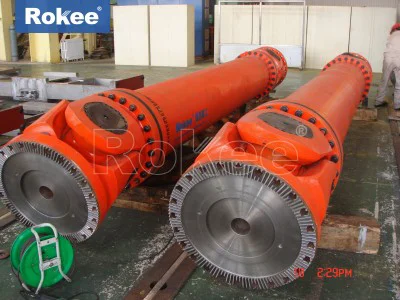
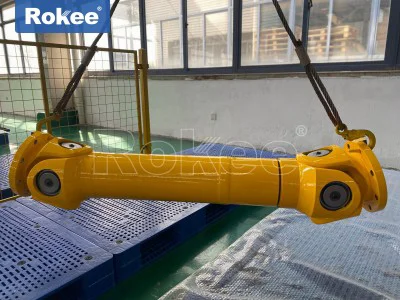
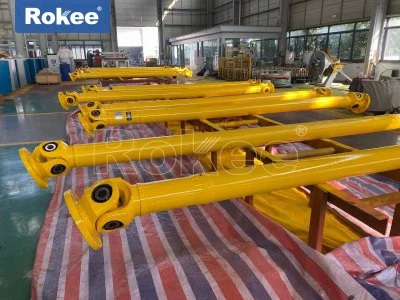
High Speed Cardan Shaft
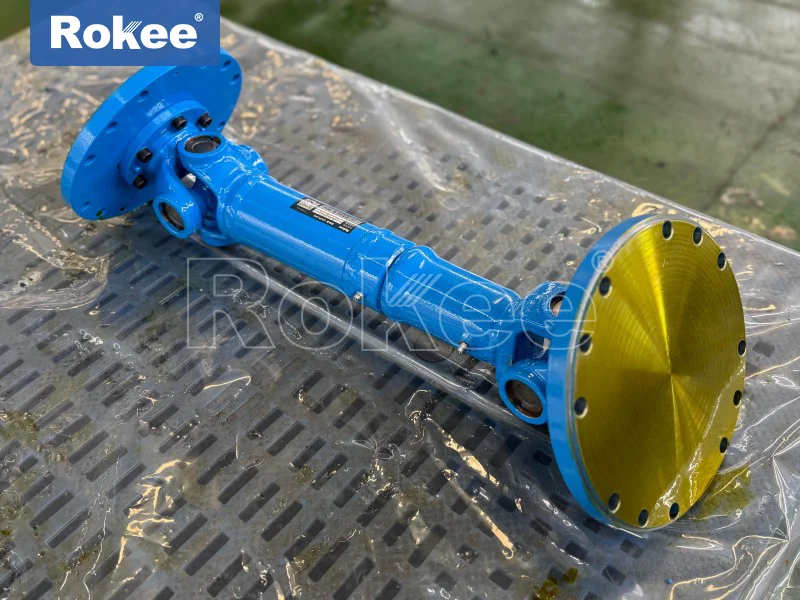
A high speed cardan shaft, also known as a high speed universal shaft, is a critical mechanical transmission component designed to transfer torque and rotational motion between two misaligned shafts, especially in scenarios requiring high rotational speeds. Unlike standard cardan shafts, which are primarily engineered for general torque transmission, high speed variants are optimized to maintain stability, minimize vibration, and ensure efficient power transfer even when operating at extremely high rotational velocities. This makes them indispensable in a wide range of industrial, automotive, aerospace, and marine applications where precision, reliability, and durability under high-speed conditions are non-negotiable. The unique combination of their structural design, superior performance characteristics, and diverse types allows them to adapt to various misalignment conditions, including angular, axial, and radial misalignments, while preserving the integrity of the power transmission process.
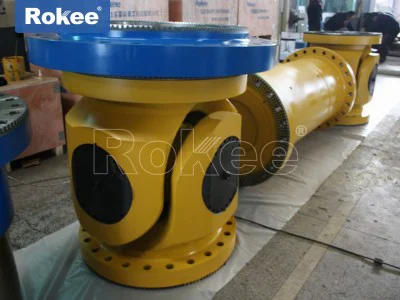
The structure of a high speed cardan shaft is meticulously engineered to withstand the stresses and challenges associated with high rotational speeds, ensuring smooth operation and long service life. At its core, every high speed cardan shaft consists of several key components that work in tandem to achieve efficient torque transmission and misalignment compensation. The most fundamental components include the shaft body, universal joints (also referred to as cardan joints), yokes, bearings, and a splined connection (in some variants). The shaft body, typically crafted from high-strength materials to resist bending and torsional stress, serves as the main structural backbone, connecting the two universal joints at either end. The choice of material for the shaft body is crucial, as it directly impacts the shaft’s ability to handle high speeds without deformation or failure. Common materials include alloy steels, which offer excellent strength-to-weight ratios, and in some high-performance applications, composite materials such as carbon fiber-reinforced polymers, which provide superior rigidity and reduced weight compared to traditional metals. These composite materials have been shown to significantly enhance performance, with some designs exhibiting a substantial increase in safety factor and a dramatic reduction in damage factor when compared to steel counterparts.
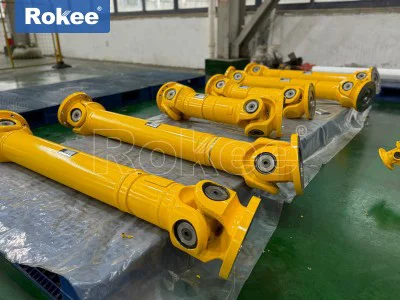
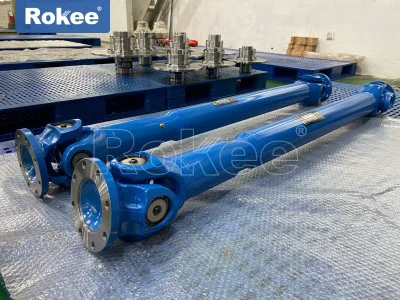
The universal joints are the heart of the high speed cardan shaft, enabling it to accommodate misalignment between the input and output shafts. Each universal joint consists of a cross-shaped intermediate member (known as a cross or spider) and four bearing cups, which house bearings to facilitate smooth rotation. The cross is connected to the yokes, which are attached to the shaft body and the driven/driving shafts. The bearings within the universal joints are critical for reducing friction at high speeds; needle bearings are commonly used in high speed applications due to their ability to handle high rotational velocities and radial loads while maintaining a compact design. The yokes, often forged or machined from high-strength steel, are designed to transfer torque from the shaft body to the universal joints and vice versa, ensuring that the rotational motion is transmitted without significant energy loss. In some high speed cardan shafts, the universal joints are designed as double joints, which consist of two universal joints connected by an intermediate shaft. This double joint design improves balance, reduces vibration, and enhances stability, making it particularly suitable for applications requiring extremely high speeds and precision.
Another key structural component in many high speed cardan shafts is the splined connection, which allows for axial movement between the shaft body and the yokes or the driven/driving shafts. This axial flexibility is essential for accommodating thermal expansion and contraction that occurs during high-speed operation, as well as any axial misalignment between the shafts. The splines are precision-machined to ensure a tight fit, minimizing backlash and ensuring that torque is transmitted evenly. In some designs, the splined connection is lubricated to reduce friction and wear, further enhancing the shaft’s durability and performance at high speeds. Additionally, some high speed cardan shafts feature balancing weights or are dynamically balanced during manufacturing to minimize vibration. Vibration is a major concern at high speeds, as it can lead to premature component failure, increased noise, and reduced transmission efficiency. Dynamic balancing involves adjusting the distribution of mass along the shaft to ensure that it rotates uniformly, reducing centrifugal forces and vibration.
The performance of a high speed cardan shaft is defined by several key characteristics, each of which plays a critical role in its ability to function effectively in high-speed applications. One of the most important performance metrics is rotational speed capacity, which refers to the maximum rotational velocity at which the shaft can operate safely without experiencing failure or excessive wear. High speed cardan shafts are typically designed to operate at rotational speeds exceeding several thousand revolutions per minute (rpm), with some specialized variants capable of reaching speeds of 4,000 rpm or higher. The rotational speed capacity is determined by several factors, including the material of the shaft body, the design of the universal joints, the quality of the bearings, and the dynamic balance of the shaft. For example, shafts made from composite materials often have higher speed capacities than those made from steel, due to their lower weight and higher rigidity, which reduces centrifugal forces at high speeds.
Torque transmission efficiency is another critical performance characteristic of high speed cardan shafts. Efficiency refers to the ratio of the torque delivered to the driven shaft to the torque input from the driving shaft, expressed as a percentage. High speed cardan shafts are designed to minimize energy loss during transmission, typically achieving efficiency levels of 95% or higher. Energy loss is primarily caused by friction in the universal joints and splined connections, so the use of high-quality bearings, precision machining, and effective lubrication is essential for maintaining high efficiency. In high-speed applications, even small losses in efficiency can lead to significant energy waste and increased operating costs, making high efficiency a key consideration in the design and selection of high speed cardan shafts. Additionally, the ability to accommodate misalignment without sacrificing efficiency is a key advantage of high speed cardan shafts over other types of transmission components, such as rigid shafts, which require perfect alignment to operate efficiently.
Vibration damping and stability are also essential performance traits of high speed cardan shafts. As mentioned earlier, vibration at high speeds can cause premature component failure, increased noise, and reduced performance, so high speed cardan shafts are designed to minimize vibration through dynamic balancing, robust universal joint design, and the use of damping materials in some cases. The double universal joint design, for example, helps to cancel out the vibrations caused by angular misalignment, ensuring smoother operation at high speeds. Additionally, the use of needle bearings in the universal joints reduces friction, which in turn reduces vibration and noise. Stability is also influenced by the rigidity of the shaft body; a more rigid shaft is less likely to bend or deflect at high speeds, maintaining its alignment and reducing vibration. The ability to maintain stability under varying load conditions is also important, as many high-speed applications involve fluctuating torques and loads, which can cause additional vibration if the shaft is not designed to handle them.
Durability and wear resistance are also key performance considerations for high speed cardan shafts, as they are often used in harsh operating environments where they are exposed to high loads, extreme temperatures, and contaminants. The materials used in the construction of the shaft, universal joints, and bearings are selected for their ability to resist wear, corrosion, and fatigue. Alloy steels, for example, are often heat-treated to enhance their hardness and wear resistance, while composite materials offer excellent corrosion resistance, making them suitable for use in marine or chemical processing applications. The use of high-quality bearings, such as needle bearings or roller bearings, also enhances wear resistance, as they are designed to handle high loads and high speeds without excessive wear. Effective lubrication is another critical factor in maintaining durability, as it reduces friction between moving components, preventing premature wear and corrosion. Some high speed cardan shafts are equipped with sealed bearings or automatic lubrication systems to ensure consistent lubrication, even in harsh environments.
Angular misalignment capacity is another important performance characteristic, referring to the maximum angle between the input and output shafts that the cardan shaft can accommodate without sacrificing performance or durability. High speed cardan shafts typically have angular misalignment capacities ranging from 5° to 45° per joint, with some specialized designs capable of accommodating even larger angles. The angular misalignment capacity is determined by the design of the universal joints; for example, cross-shaped universal joints typically have a higher misalignment capacity than ball cage universal joints, but ball cage joints offer smoother operation at high speeds. The ability to accommodate angular misalignment is essential in applications where the shafts are not perfectly aligned, such as in automotive drivetrains, where the engine and wheels are mounted at different angles, or in industrial machinery, where equipment installation errors or thermal expansion can cause misalignment.
High speed cardan shafts are available in several different types, each designed to meet the specific requirements of different applications. The classification of these shafts is typically based on their design, the type of universal joints used, the torque capacity, and the application they are intended for. One of the most common types is the single universal joint high speed cardan shaft, which consists of a single universal joint at each end of the shaft body. This type of shaft is compact, lightweight, and cost-effective, making it suitable for applications where space is limited and the misalignment requirements are relatively moderate. Single universal joint shafts are widely used in automotive drivetrains, such as connecting the engine to the wheels in rear-wheel drive vehicles, as well as in small industrial machinery, such as pumps and compressors, where high speed and moderate torque are required.
The double universal joint high speed cardan shaft, also known as the double cardan shaft, is another common type, featuring two universal joints connected by an intermediate shaft. This design offers several advantages over single universal joint shafts, including improved balance, reduced vibration, and the ability to accommodate larger angular misalignments without sacrificing performance. The double universal joint design cancels out the rotational fluctuations caused by angular misalignment, ensuring that the driven shaft rotates at a constant speed, even when the input shaft is misaligned. This makes double cardan shafts ideal for high-speed applications requiring high precision and stability, such as aerospace propulsion systems, high-performance industrial machinery, and racing vehicles. Additionally, double cardan shafts are often used in applications where the distance between the driving and driven shafts is relatively large, as the intermediate shaft allows for greater flexibility in installation.
Ball cage high speed cardan shafts are a specialized type of cardan shaft that uses ball cage universal joints instead of cross-shaped universal joints. Ball cage joints consist of an inner race, an outer race, and a set of steel balls that are guided by a cage. This design allows for smoother operation at high speeds, as the steel balls roll smoothly between the inner and outer races, reducing friction and vibration. Ball cage cardan shafts also have a higher angular misalignment capacity than cross-shaped universal joint shafts, making them suitable for applications where large misalignments are present, such as in automotive front-wheel drive systems, where the wheels move up and down with the suspension. Additionally, ball cage shafts are often used in high-performance applications, such as racing vehicles and aerospace equipment, where smooth operation and high speed capacity are critical.
Another type of high speed cardan shaft is the splined cardan shaft, which features a splined connection between the shaft body and the yokes or the driven/driving shafts. The splined connection allows for axial movement, making it suitable for applications where thermal expansion or axial misalignment is a concern. Splined cardan shafts are commonly used in industrial machinery, such as steel rolling mills, where the shafts are exposed to high temperatures, causing thermal expansion. The splined connection allows the shaft to expand and contract without causing damage to the universal joints or other components. Additionally, splined cardan shafts are often used in applications where the torque requirements are high, as the splines provide a larger contact area, allowing for more efficient torque transmission.
Custom high speed cardan shafts are also available, designed to meet the unique requirements of specialized applications. These shafts can be tailored in terms of length, diameter, material, universal joint type, and torque capacity, making them suitable for use in a wide range of specialized fields, such as robotics, medical devices, and aerospace technology. For example, custom shafts used in robotics may be designed to be lightweight and compact, with high precision and low vibration, while those used in medical devices may be made from biocompatible materials to ensure safety. Custom high speed cardan shafts are often used in applications where standard shafts cannot meet the specific performance or dimensional requirements, making them a critical component in many cutting-edge technologies.
The applications of high speed cardan shafts are diverse, spanning across multiple industries, each with its own unique requirements and challenges. One of the largest application areas is the automotive industry, where high speed cardan shafts are used in a variety of vehicles, including rear-wheel drive, four-wheel drive (4WD), and all-wheel drive (AWD) passenger cars, trucks, commercial vehicles, and high-performance racing vehicles. In these applications, the cardan shaft is used to transmit torque from the engine to the wheels, accommodating the misalignment between the engine and the drivetrain caused by the vehicle’s suspension system and the relative movement of the wheels. High speed cardan shafts are particularly important in racing vehicles, where they must operate at extremely high speeds and transmit high torques while maintaining stability and minimizing weight, as even small improvements in performance can make a significant difference in race results.
The aerospace industry is another major user of high speed cardan shafts, where they are used in aircraft engines, propellers, and other critical components. In aircraft engines, high speed cardan shafts are used to transmit torque from the engine core to the accessories, such as the fuel pump, oil pump, and generator, which operate at high speeds. The shafts must be lightweight, durable, and capable of operating in extreme environments, including high temperatures and low pressures, while maintaining high precision and reliability. Failure of a high speed cardan shaft in an aircraft engine could have catastrophic consequences, so these shafts are subjected to rigorous testing and quality control to ensure their performance and safety. Additionally, high speed cardan shafts are used in spacecraft applications, where they must operate in the vacuum of space, withstanding extreme temperature fluctuations and high radiation levels.
The industrial machinery sector also relies heavily on high speed cardan shafts, with applications in steel rolling mills, paper mills, textile mills, pumps, compressors, and turbines. In steel rolling mills, for example, high speed cardan shafts are used to transmit torque from the motors to the rolling stands, which operate at high speeds to shape steel into various forms. The shafts must be capable of handling high torques and accommodating misalignment caused by the heavy loads and thermal expansion of the equipment. In paper mills, high speed cardan shafts are used in the paper-making process, where they transmit torque to the rollers that press and dry the paper, requiring smooth operation and high precision to ensure the quality of the final product. Similarly, in textile mills, high speed cardan shafts are used in spinning and weaving machines, where they must operate at high speeds while maintaining stability and minimizing vibration, to prevent damage to the delicate textile fibers.
Marine applications are another important area for high speed cardan shafts, where they are used in ship engines, propellers, and auxiliary systems. In ship engines, high speed cardan shafts transmit torque from the engine to the propeller, accommodating the misalignment between the engine and the propeller shaft caused by the movement of the ship in the water. The shafts must be corrosion-resistant, as they are exposed to saltwater, and capable of handling high torques and speeds, ensuring efficient propulsion of the ship. Additionally, high speed cardan shafts are used in marine auxiliary systems, such as pumps and generators, which operate at high speeds to provide power and other essential services to the ship.
Other specialized applications of high speed cardan shafts include robotics, where they are used in robotic arms and joints to transmit torque and rotational motion, allowing for precise and smooth movement. In robotics, the shafts must be lightweight, compact, and capable of operating at high speeds with high precision, as robotic systems often require rapid and accurate movements. Medical devices, such as surgical robots, also use high speed cardan shafts, where they must be made from biocompatible materials and operate with extremely high precision to ensure the safety and effectiveness of surgical procedures. Additionally, high speed cardan shafts are used in renewable energy systems, such as wind turbines, where they transmit torque from the turbine blades to the generator, operating at high speeds to convert wind energy into electrical energy. In wind turbines, the shafts must be durable and capable of withstanding harsh weather conditions, including high winds and extreme temperatures, while maintaining high efficiency.
In conclusion, high speed cardan shafts are essential mechanical transmission components that play a critical role in a wide range of high-speed applications across multiple industries. Their unique structural design, which includes a robust shaft body, precision universal joints, high-quality bearings, and optional splined connections, enables them to accommodate misalignment, transmit torque efficiently, and maintain stability at high rotational speeds. The performance characteristics of high speed cardan shafts, such as high rotational speed capacity, excellent torque transmission efficiency, vibration damping, durability, and misalignment capacity, make them superior to other types of transmission components in high-speed applications. The diverse types of high speed cardan shafts, including single universal joint, double universal joint, ball cage, splined, and custom variants, allow them to be tailored to the specific requirements of different applications, from automotive and aerospace to industrial and marine. As technology continues to advance, the demand for high speed cardan shafts is expected to grow, with ongoing innovations in materials, design, and manufacturing processes further enhancing their performance, durability, and versatility. These innovations will enable high speed cardan shafts to meet the evolving needs of high-speed applications, ensuring that they remain a critical component in the machinery and systems that power our modern world.