Medium Load Cardan Shaft
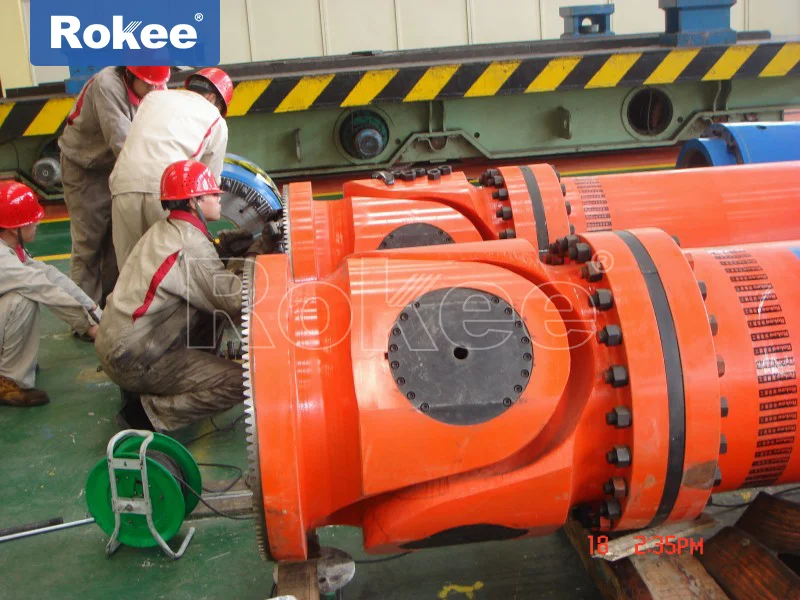
The medium load cardan shaft, a critical component in industrial power transmission systems, is engineered to transfer torque between misaligned shafts while accommodating angular, axial, and radial displacements. Unlike light load cardan shafts designed for low-torque, high-speed applications and heavy-duty variants built for extreme stress and slow operation, medium load models strike a balance between strength, flexibility, and efficiency, making them indispensable across a wide range of industrial sectors. Their ability to operate reliably under moderate torque loads—typically between the capacities of light and heavy-duty shafts—while maintaining rotational stability and compensating for misalignments has solidified their role as a versatile solution for machinery where precision and durability are equally important.
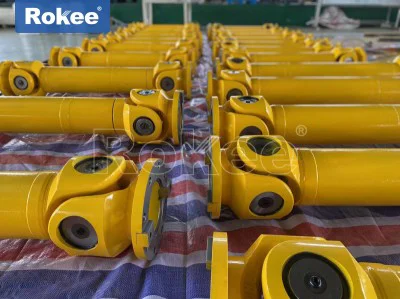
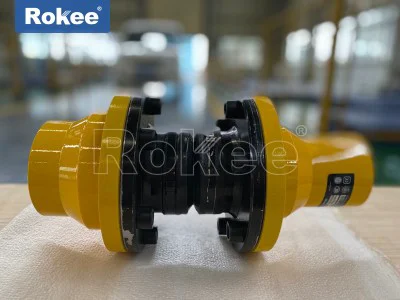
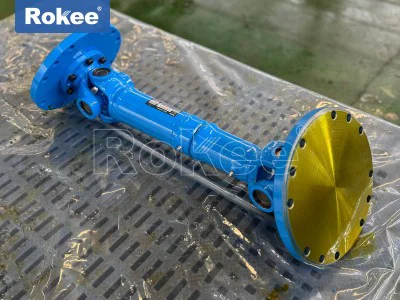
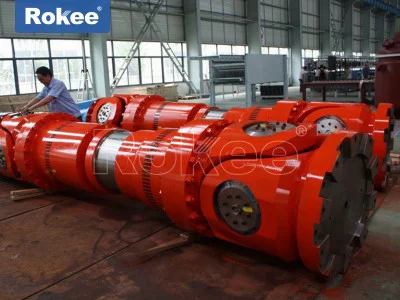
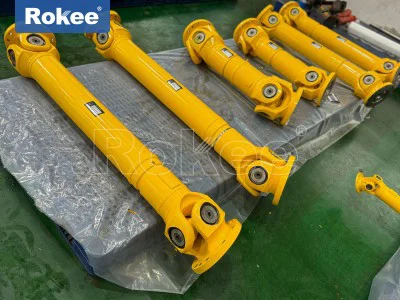
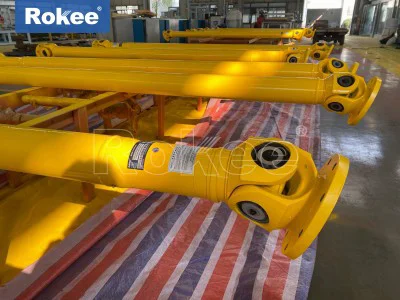
At the core of a medium load cardan shaft’s functionality is its modular structure, which is carefully designed to withstand moderate torque while ensuring flexibility. The primary components include two universal joints (also known as cardan joints), a central shaft (or tube), yokes, and a sliding mechanism—often a spline connection—that enables axial adjustment. The universal joints serve as the pivot points, allowing the shaft to bend and rotate without compromising torque transmission. Each universal joint consists of a cross journal (or spider) with four bearing-equipped trunnions that connect to the yokes. The yokes, which attach to the driving and driven shafts, are precision-machined to ensure a secure fit and alignment, as any deviation in their geometry can lead to vibration, premature wear, or even component failure. The central shaft, which links the two universal joints, is typically a hollow tube for weight reduction without sacrificing torsional stiffness—a key consideration for medium load applications where rotational inertia must be minimized to maintain efficiency. The spline connection, integrated into one end of the central shaft, allows for axial movement, compensating for thermal expansion or slight misalignments between the driving and driven components. This modular design not only facilitates easy assembly and disassembly but also enables customization to suit specific application requirements, such as varying shaft lengths, torque capacities, and operating angles.
The working principle of a medium load cardan shaft revolves around the ability to transmit rotational motion and torque between two shafts that are not perfectly aligned. When the driving shaft rotates, it transfers torque to the connected yoke, which in turn rotates the cross journal of the universal joint. The cross journal’s trunnions, supported by bearings, allow the joint to pivot, accommodating angular misalignments of up to 25 degrees in some configurations. The torque is then transmitted through the central shaft to the second universal joint, which repeats the process to drive the driven shaft. The spline connection plays a crucial role in this process by allowing the central shaft to slide axially, ensuring that torque transmission remains consistent even as the distance between the driving and driven shafts changes due to thermal expansion or mechanical movement. Unlike a single universal joint, which can cause variations in rotational speed (known as angular velocity fluctuation) when operating at large angles, medium load cardan shafts often use two universal joints arranged in a way that cancels out these fluctuations, ensuring smooth and consistent power transmission. This is particularly important in applications where precision is critical, such as in conveyor systems, machine tools, and agricultural machinery, where uneven power transmission can lead to product defects, equipment damage, or reduced operational efficiency.
Material selection for medium load cardan shafts is a critical factor that directly impacts their performance, durability, and service life. Given their role in transmitting moderate torque and withstanding cyclic stress, these shafts require materials that offer high tensile strength, good toughness, and resistance to fatigue and wear. High-strength alloy steels are the most common choice for the central shaft, yokes, and cross journals, with grades such as 42CrMo and 40Cr being widely used. These alloys exhibit excellent mechanical properties, including tensile strengths exceeding 800MPa, and can be heat-treated to enhance their hardness and fatigue resistance. The selection of materials is also influenced by the application’s operating environment—for example, shafts used in corrosive environments may be made from stainless steel or coated with corrosion-resistant materials, while those operating in high-temperature settings may require heat-resistant alloys. Bearings within the universal joints are typically made from hardened steel or ceramic materials, which offer low friction and high wear resistance, ensuring smooth operation even under continuous use. The choice of lubricants is also tied to material performance, with high-quality greases or oils used to reduce friction between moving parts, prevent corrosion, and extend the service life of the bearings and other components.
The manufacturing process of medium load cardan shafts involves a series of precision operations designed to ensure dimensional accuracy, structural integrity, and consistent performance. The process begins with material preparation, where alloy steel billets are carefully selected and inspected to verify their chemical composition and mechanical properties. Spectral analysis is used to confirm the presence of key elements such as carbon, chromium, and molybdenum, while tensile and impact tests are conducted to validate yield strength and ductility. The billets are then cut to the required length using CNC band saws or Circular sawing machine, with strict control over cutting precision—cutting surfaces must maintain a perpendicularity of no more than 0.1mm per meter, and the length tolerance must be within ±0.5mm to ensure adequate processing margin for subsequent operations. The cut billets are then subjected to preprocessing treatments, such as normalizing or quenching and tempering, to refine the grain structure and improve mechanical properties. Normalizing at 850℃±10℃ helps to eliminate internal stresses and uniformize the material’s structure, while quenching followed by high-temperature tempering (at 550℃) enhances toughness and strength, resulting in a hardness range of HRC25-32 for the raw material.
After preprocessing, the components undergo precision machining to achieve their final shape and dimensions. The central shaft is typically processed using CNC lathes to turn the outer diameter, create stepped sections, and machine the spline connection. CNC milling machines are used to fabricate keyways, flanges, and other features on the yokes and cross journals, ensuring that these components fit together seamlessly. The spline connection, which requires high precision to enable smooth axial movement, is machined using hobbing or shaping processes, with strict control over tooth profile and spacing. The cross journal’s trunnions are precision-ground to ensure a smooth surface finish and consistent diameter, which is critical for proper bearing fit and reduced friction. Throughout the machining process, dimensional accuracy is monitored using high-precision tools such as coordinate measuring machines (CMMs), roughness meters, and ultrasonic flaw detectors, which identify any internal or external defects that could compromise performance. After machining, the components are subjected to heat treatment to further enhance their hardness and fatigue resistance. This typically involves processes such as carburizing, induction hardening, or tempering, with the goal of achieving a surface hardness of HRC58-62 while maintaining core toughness. A deep cryogenic treatment at -70℃ for 2 hours may also be used to convert residual austenite to martensite, reducing internal stresses and improving dimensional stability.
Surface treatment is another important step in the manufacturing process, as it enhances the cardan shaft’s resistance to corrosion, wear, and environmental damage. Sandblasting is used to remove oxide scale, rust, and residual oil from the surface, ensuring that the substrate is clean and ready for coating. The surface roughness is controlled to Ra≤6.3μm to improve coating adhesion. Phosphating is a common surface treatment for medium load cardan shafts, where the components are immersed in a phosphate solution to form a dense, 5-10μm thick phosphate film that enhances corrosion resistance and serves as a base for subsequent coatings. Alternatively, chromate passivation may be used for temporary rust protection during storage, with a typical storage life of up to 30 days. For applications requiring enhanced wear resistance, hard chrome plating may be applied to the trunnions and other high-wear components. This process involves acid cleaning and cathodic electrolytic degreasing to prepare the surface, followed by chrome plating and a post-treatment annealing process at 200℃ for 2 hours to eliminate hydrogen embrittlement. The plated components are then tested using salt spray tests (500 hours without red rust) to ensure corrosion resistance.
Medium load cardan shafts find applications across a diverse range of industrial sectors, thanks to their versatility, reliability, and balanced performance. One of the most common applications is in agricultural machinery, where they are used in tractors, harvesters, and irrigation systems to transmit power between misaligned components. In these applications, the cardan shaft must withstand moderate torque while accommodating the angular misalignments that occur as the machinery moves over uneven terrain. They are also widely used in light industrial machinery, such as conveyor systems, where they transfer power from motors to conveyor rollers, accommodating axial movement caused by thermal expansion and ensuring smooth operation. Machine tools, such as lathes, milling machines, and grinders, also rely on medium load cardan shafts to transmit precision rotational motion, where smooth power transmission is critical for achieving high-quality surface finishes and accurate machining.
Another key application area is in the automotive and transportation sector, particularly in light commercial vehicles, buses, and trams. In these vehicles, cardan shafts are used to transmit power from the transmission to the rear axle, accommodating the angular misalignments that occur when the vehicle turns or travels over bumps. They are also used in the drive systems of electric vehicles, where their compact design and efficient torque transmission make them suitable for integration into tight spaces. Medium load cardan shafts are also employed in mining machinery, such as small to medium-sized crushers and conveyors, where they must withstand dusty environments and moderate torque loads. In the chemical and glass industries, they are used in mixing equipment and conveyor systems, where corrosion resistance is critical—here, stainless steel or coated cardan shafts are often used to withstand harsh chemicals and high temperatures.
Proper maintenance is essential to ensure the long-term performance and reliability of medium load cardan shafts, as neglecting maintenance can lead to premature wear, component failure, and costly downtime. Regular lubrication is one of the most important maintenance tasks, as it reduces friction between the moving parts (such as the cross journal trunnions and bearings) and prevents corrosion. The type of lubricant used should be selected based on the application’s operating temperature, load, and environment—high-temperature greases are recommended for applications operating above 100℃, while anti-corrosion greases are ideal for humid or corrosive environments. Lubrication intervals vary depending on the application but typically range from 500 to 2000 operating hours, with more frequent lubrication required for high-load or high-speed applications. During lubrication, it is important to remove old grease to prevent contamination and ensure that new grease fully penetrates the bearings.
Regular inspection is also critical for identifying potential issues before they escalate into major problems. Inspections should include checking for signs of wear, such as excessive play in the universal joints, cracks in the yokes or central shaft, and damage to the spline connection. Vibration analysis can be used to detect imbalances or misalignments, which can cause premature wear and reduce performance. If excessive vibration is detected, the shaft should be rebalanced or realigned to restore smooth operation. The spline connection should be inspected for wear or damage, as worn splines can lead to slipping and reduced torque transmission. If wear is detected, the splines should be replaced or repaired. Additionally, the cardan shaft should be inspected for corrosion, particularly in harsh environments, and any rust or damage should be addressed promptly to prevent further deterioration.
Performance optimization of medium load cardan shafts involves several strategies aimed at enhancing efficiency, reducing wear, and extending service life. One key optimization is dynamic balance, which is critical for reducing vibration and ensuring smooth operation at high speeds. During manufacturing, the shaft is balanced to ensure that the center of mass aligns with the axis of rotation, with an allowable unbalance of no more than 10g·cm. If the shaft becomes unbalanced due to wear or damage, it should be rebalanced using precision balancing equipment. Another optimization strategy is the use of advanced bearing technologies, such as roller bearings or ceramic bearings, which offer lower friction and higher wear resistance than traditional plain bearings. These bearings can significantly reduce energy consumption and extend the service life of the universal joints.
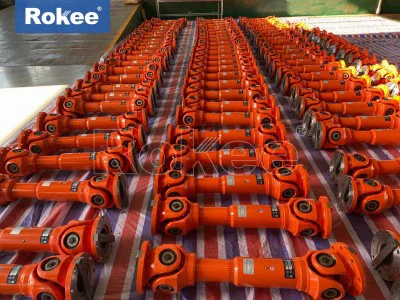
Customization is also an important aspect of performance optimization, as medium load cardan shafts can be tailored to suit specific application requirements. For example, the length of the central shaft can be adjusted to fit the distance between the driving and driven components, while the torque capacity can be enhanced by increasing the diameter of the central shaft or using higher-strength materials. The operating angle can also be customized, with some designs capable of accommodating angles up to 30 degrees, depending on the application. Additionally, the spline connection can be modified to provide greater axial movement, making the shaft suitable for applications with significant thermal expansion or mechanical movement.
In conclusion, the medium load cardan shaft is a versatile and essential component in modern industrial power transmission systems, offering a balanced combination of strength, flexibility, and efficiency. Its modular structure, precision manufacturing, and careful material selection enable it to transmit moderate torque reliably between misaligned shafts, accommodating angular, axial, and radial displacements while maintaining smooth operation. From agricultural machinery and conveyor systems to machine tools and light commercial vehicles, medium load cardan shafts play a critical role in ensuring the efficiency and reliability of industrial operations. Proper material selection, precision manufacturing, and regular maintenance are key to maximizing their performance and service life, while customization allows them to adapt to a wide range of application requirements. As industrial machinery becomes more advanced and demanding, the medium load cardan shaft will continue to evolve, with ongoing improvements in material technology, manufacturing processes, and design optimization ensuring that it remains a vital component in power transmission systems for years to come.