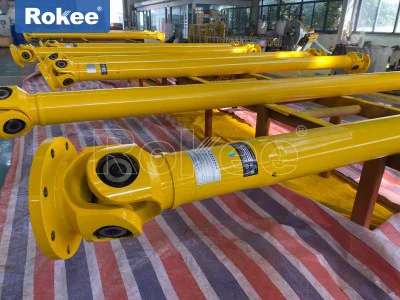
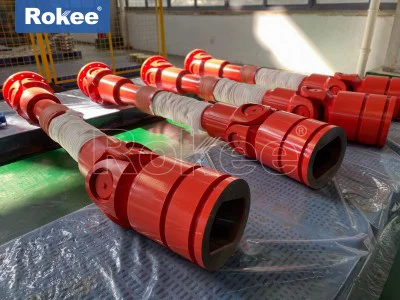
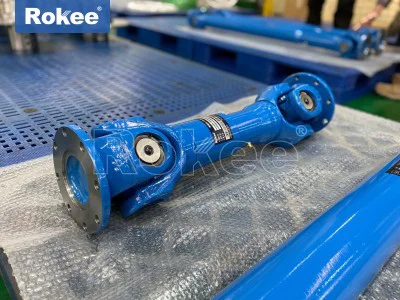
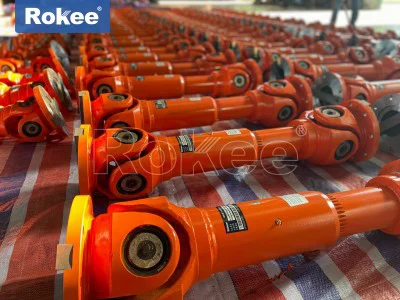
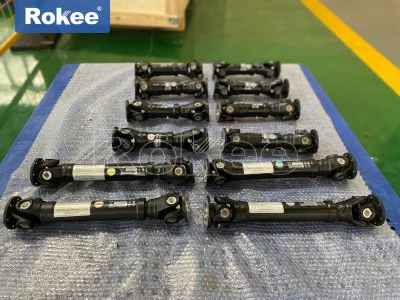
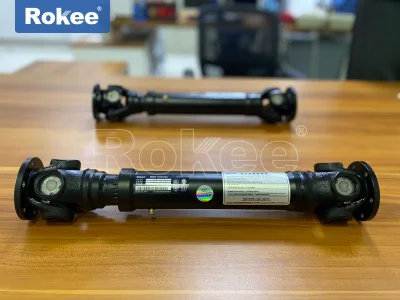
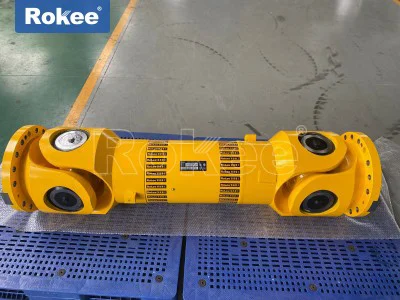
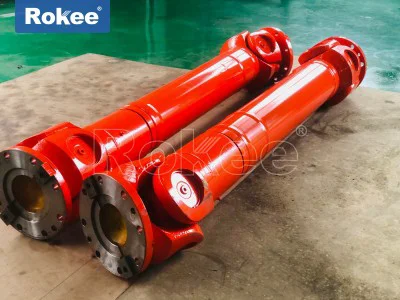
Rolling Mill Universal Shaft
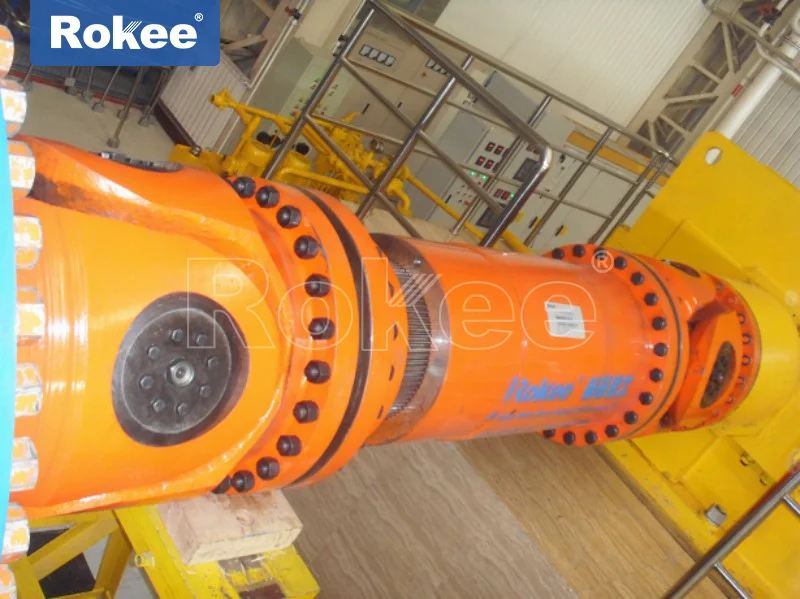
The rolling mill universal shaft, also commonly referred to as the cardan shaft for rolling mills, is a critical mechanical component that serves as the core of power transmission in rolling mill systems. It plays an indispensable role in connecting the driving mechanism and the rolling rolls, ensuring the stable transfer of torque and rotational motion even under complex working conditions involving angular misalignment, high loads, and variable speeds. In the metal processing industry, where rolling mills are widely used to produce steel sheets, bars, profiles, and other metal products, the performance and reliability of the universal shaft directly affect the efficiency of the rolling process, the quality of the finished products, and the overall operational stability of the equipment. As the demand for high-strength metals and precise rolled products continues to grow, the design, material selection, and maintenance of rolling mill universal shafts have become increasingly important, driving continuous technological advancements to meet more stringent industrial requirements.
The basic function of a rolling mill universal shaft is to transmit torque between two shafts that are not aligned on the same axis, accommodating angular deviations and slight axial displacements that may occur due to manufacturing errors, installation deviations, load-induced deformation, or temperature changes during operation. Unlike ordinary couplings, which can only work under conditions of minimal misalignment, universal shafts for rolling mills are designed with strong angular compensation capabilities, typically allowing an allowable angle between the two connected shafts ranging from 5° to 45° depending on the structural type. This unique feature enables them to adapt to the complex layout of rolling mill systems, where the driving shaft and the roll shaft often need to be installed at different angles to meet the operational requirements of the rolling process. Additionally, the universal shaft must maintain stable torque transmission even at high rotational speeds, as modern rolling mills are increasingly designed for high-speed operation to improve production efficiency.
The structure of a rolling mill universal shaft is meticulously engineered to withstand the harsh working environment of rolling mills, which are characterized by heavy loads, high temperatures, vibration, and the presence of metal debris. A typical universal shaft consists of several core components that work in tandem to ensure reliable performance. The cross shaft, also known as the spider, is the central rotating joint, usually forged from high-strength materials and featuring four shaft necks distributed in a cross shape. These shaft necks are equipped with bearing components, mostly needle roller bearings, which reduce friction between the cross shaft and the yokes, enabling smooth rotation even under heavy loads. The yokes, or fork heads, are paired components that connect the cross shaft to the driving shaft and the driven roll shaft, respectively. They are designed to withstand the torsional forces generated during torque transmission and are often machined with precision to ensure a tight fit with the cross shaft and the connected shafts.
Another key component of the rolling mill universal shaft is the telescopic sleeve and spline shaft assembly, which provides axial compensation. This assembly allows the length of the universal shaft to adjust dynamically during operation, compensating for axial displacements caused by thermal expansion of the equipment, load-induced deformation, or changes in the distance between the driving and driven shafts. The spline connection ensures that torque is transmitted efficiently even as the length adjusts, maintaining a consistent power transfer without slippage. In some heavy-duty applications, the universal shaft may also be equipped with balancing weights or undergo dynamic balance testing to minimize vibration at high rotational speeds, as excessive vibration can lead to premature wear of components and affect the quality of the rolled products.
Material selection is a critical factor in determining the strength, durability, and performance of rolling mill universal shafts. Given the heavy loads, high temperatures, and abrasive conditions they face, the materials must possess excellent tensile strength, fatigue resistance, wear resistance, and heat resistance. High-quality alloy steels are the most commonly used materials, with grades such as 45 steel, 40 chromium, and other alloy steels being preferred for their superior mechanical properties. These steels undergo rigorous heat treatment processes, including quenching and tempering, to enhance their hardness, toughness, and fatigue life. For particularly heavy-duty rolling applications, such as those involving high-strength steels (HSS) or advanced high-strength steels (AHSS), alloy cast steel or forged steel parts may be used to further improve load-carrying capacity. In recent years, with the advancement of materials science, new materials such as high-strength stainless steel and special alloys have also been adopted in some specialized applications, such as corrosive environments, expanding the application scope of universal shafts.
The manufacturing process of rolling mill universal shafts is highly precise, requiring strict quality control to ensure that each component meets the required specifications. Forging is the primary process used to produce the cross shaft and yokes, as forging enhances the material's density and mechanical properties by aligning the grain structure, making the components more resistant to fatigue and impact. After forging, the components undergo precision machining, including turning, milling, and grinding, to achieve the required dimensions, surface finish, and geometric accuracy. The bearing surfaces are polished to minimize friction, and the spline shafts are machined with precision to ensure smooth axial movement and reliable torque transmission. Additionally, many universal shafts undergo non-destructive testing (NDT) to detect potential internal defects, such as cracks or inclusions, which could compromise their performance under heavy loads.
Rolling mill universal shafts are widely used in various types of rolling mills, adapting to different rolling processes and product requirements. In hot rolling mills, which operate at high temperatures (often exceeding 1000°C), the universal shafts must withstand not only heavy loads but also thermal stress and oxidation. They are used to drive the work rolls and backup rolls, ensuring the continuous rolling of hot metal slabs into sheets, bars, or profiles. In cold rolling mills, which produce precise, high-quality metal sheets with tight thickness tolerances, the universal shafts must maintain stable torque transmission and minimal vibration to avoid surface defects on the finished products. Cold rolling mills often use smaller-diameter work rolls to achieve greater thickness reductions, which places higher demands on the universal shafts, requiring them to be smaller in diameter while maintaining high torque-carrying capacity.
The application of rolling mill universal shafts is not limited to steel rolling; they are also used in non-ferrous metal rolling mills, such as those processing aluminum, copper, and their alloys. These applications may have different requirements, such as resistance to corrosion from non-ferrous metal oxides, but the core function of torque transmission with angular compensation remains the same. Additionally, universal shafts are used in auxiliary equipment of rolling mills, such as straighteners and crushers, where reliable power transmission under misaligned conditions is required. With the trend toward downsizing rolls to improve rolling efficiency, the demand for smaller, high-strength universal shafts has increased, driving the development of new designs and manufacturing technologies.
Proper maintenance is essential to extend the service life of rolling mill universal shafts and ensure the continuous operation of rolling mill systems. The harsh working environment of rolling mills leads to inevitable wear and tear of components, making regular inspection and maintenance critical. One of the most important maintenance tasks is lubrication, as adequate lubrication reduces friction between moving parts, prevents wear and corrosion, and dissipates heat. High-quality lubricants suitable for high temperatures and heavy loads should be used, and the lubrication points should be checked and refilled regularly. The bearings, in particular, require regular lubrication to avoid seizure, which can cause severe damage to the cross shaft and yokes.
Regular inspection of the universal shaft components is also necessary to detect signs of wear, damage, or misalignment early. The cross shaft, yokes, and spline shaft should be checked for cracks, deformation, or excessive wear, and any damaged components should be replaced promptly to prevent sudden failure. The alignment of the universal shaft should also be checked periodically, as misalignment can increase stress on the components and lead to premature failure. Additionally, the accumulation of metal debris and dirt should be removed regularly to prevent abrasion of the components and ensure smooth operation. Training operators to identify warning signs of potential issues, such as unusual noise, vibration, or temperature rise, can also help prevent major breakdowns.
In recent years, technological advancements have driven significant improvements in the design and performance of rolling mill universal shafts. The development of advanced analysis and simulation tools has enabled engineers to optimize the design of universal shafts, improving their load-carrying capacity, fatigue life, and efficiency. For example, finite element analysis (FEA) is used to simulate the stress distribution in components under various working conditions, allowing for the design of lighter, more compact universal shafts without compromising strength. The application of surface treatment technologies, such as tungsten carbide (WC) thermal spraying and ball burnishing, has also improved the wear resistance and surface hardness of components, extending their service life.
Another important technological trend is the development of smart monitoring systems for rolling mill universal shafts. These systems use sensors to monitor parameters such as temperature, vibration, and torque in real time, providing data that can be used to predict potential failures and schedule maintenance proactively. This predictive maintenance approach helps reduce unplanned downtime, improve operational efficiency, and extend the service life of the universal shafts. Additionally, advancements in material science have led to the development of new high-strength, lightweight materials, which enable the design of universal shafts that are more efficient and adaptable to the evolving needs of the rolling industry.
The performance of rolling mill universal shafts has a direct impact on the efficiency and quality of the rolling process. A reliable universal shaft ensures stable torque transmission, reducing the risk of downtime caused by component failure. This stability is particularly important in high-speed rolling mills, where even a brief interruption can result in significant production losses. Additionally, the ability of the universal shaft to accommodate angular misalignment and axial displacement helps reduce stress on other components of the rolling mill, such as the rolls and bearings, extending the overall service life of the equipment. In the production of high-precision rolled products, the minimal vibration and stable performance of the universal shaft help ensure consistent product quality, reducing defects such as surface unevenness or thickness variations.
As the global metal processing industry continues to evolve, the demand for more efficient, reliable, and high-performance rolling mill universal shafts will continue to grow. The increasing use of high-strength and advanced high-strength steels in industries such as automotive manufacturing requires rolling mills to operate under higher loads and more stringent conditions, placing greater demands on the universal shafts. Additionally, the trend toward automation and smart manufacturing in the rolling industry is driving the integration of smart monitoring and predictive maintenance technologies into universal shaft systems, enabling more efficient and cost-effective operation.
In conclusion, the rolling mill universal shaft is a vital component in rolling mill systems, playing a critical role in ensuring reliable torque transmission under complex working conditions. Its carefully designed structure, high-quality material selection, and precise manufacturing process enable it to withstand the heavy loads, high temperatures, and vibration of rolling mill operations. From hot rolling to cold rolling, and from steel to non-ferrous metals, universal shafts are indispensable in a wide range of rolling applications. Proper maintenance and technological advancements continue to improve the performance and service life of universal shafts, supporting the efficiency and quality of the metal processing industry. As the industry moves toward higher efficiency, precision, and smart operation, the rolling mill universal shaft will continue to evolve, adapting to new challenges and contributing to the advancement of metal rolling technology.