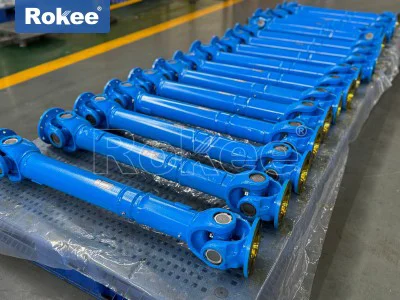
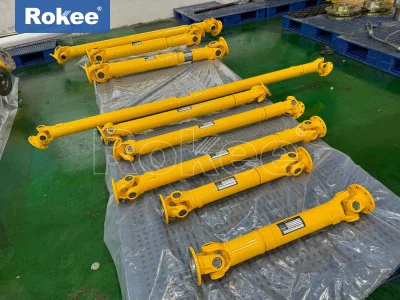
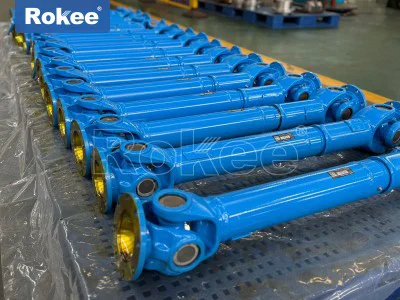
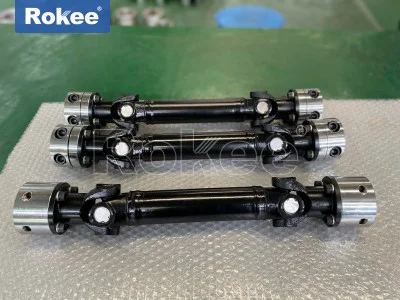
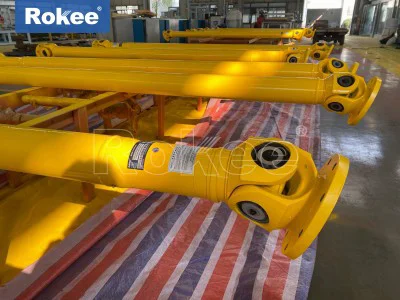
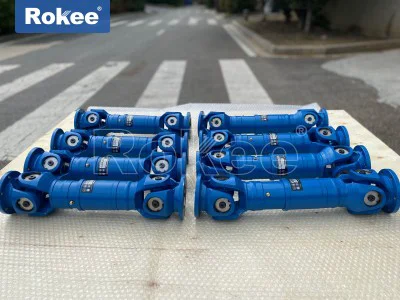
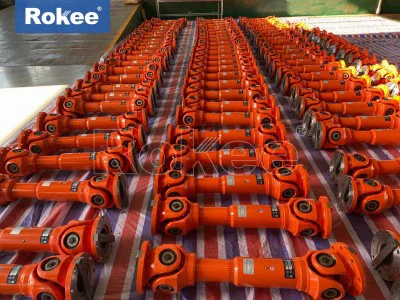
Heavy Duty Double Cardan Shaft
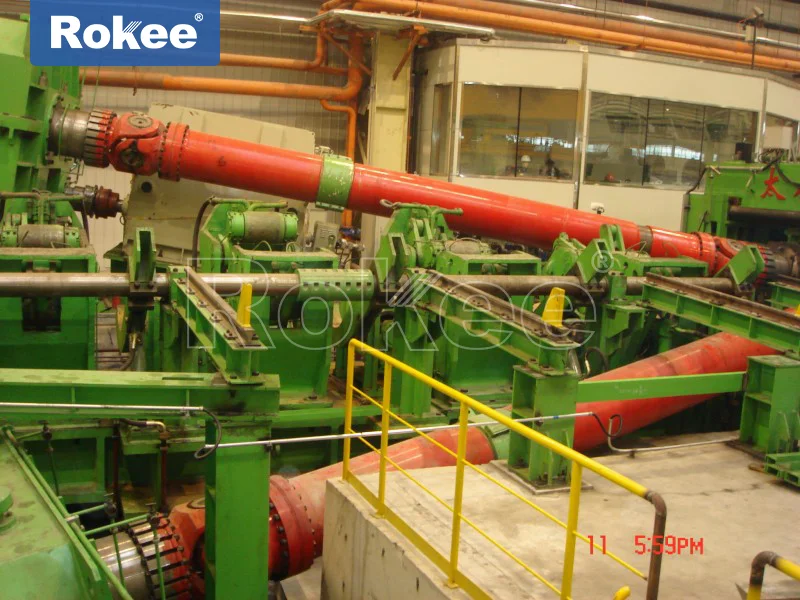
In the field of mechanical power transmission, especially in heavy-duty scenarios where high torque, large angular misalignment, and stable operation are required, the heavy duty double cardan shaft plays an irreplaceable role. Unlike single cardan shafts that are limited by speed fluctuations and vibration issues, the double cardan design optimizes power transmission efficiency and stability, making it a core component in numerous industrial and automotive systems.
The fundamental advantage of a heavy duty double cardan shaft lies in its improved structural design, which addresses the inherent limitations of single universal joints. A typical heavy duty double cardan shaft consists of two universal joints connected by an intermediate shaft and a centering yoke, forming a symmetrical transmission structure. Each universal joint comprises a cross shaft and four bearing cups, which allow rotational movement while transmitting torque. The intermediate shaft, also known as the connecting shaft, serves as the bridge between the two universal joints, ensuring that the angular displacement of the input and output shafts is balanced. The centering yoke is a key component that maintains the alignment of the two universal joints, ensuring that their bend angles remain equal during operation. This symmetrical arrangement eliminates the speed variation that plagues single cardan shafts, where the output shaft speed fluctuates even when the input shaft rotates at a constant speed—a phenomenon caused by the geometric characteristics of single universal joints that leads to vibration and premature wear over time.
The working principle of a heavy duty double cardan shaft revolves around the coordinated operation of its components to achieve constant velocity transmission. When the input shaft rotates, it drives the first universal joint, which transfers torque to the intermediate shaft. The intermediate shaft then transmits this torque to the second universal joint, which ultimately drives the output shaft. The centering yoke ensures that the angle between the input shaft and the intermediate shaft is equal to the angle between the intermediate shaft and the output shaft. This equal angle configuration compensates for the speed fluctuation of each individual universal joint, resulting in a constant output speed that matches the input speed. Additionally, the design allows for axial, radial, and angular misalignment between the input and output shafts, typically accommodating misalignment angles ranging from 5° to 45° depending on the specific design and application requirements. This flexibility makes the heavy duty double cardan shaft suitable for scenarios where equipment installation errors or operational displacement are inevitable, such as in heavy machinery with moving components.
Material selection for heavy duty double cardan shafts is critical to ensuring their durability, load-bearing capacity, and resistance to harsh operating conditions. Given their application in heavy-duty scenarios, the components must withstand high torque, repeated stress cycles, corrosion, and extreme temperatures. The cross shafts and yokes are typically made from high-strength alloy steels, such as chromium-molybdenum steel or nickel-chromium steel, which undergo heat treatment processes like quenching and tempering to enhance hardness, tensile strength, and fatigue resistance. These heat treatment processes refine the material structure, reducing the risk of cracks and failure under repetitive load. The bearing cups and rollers are often manufactured from bearing steel, which offers excellent wear resistance and dimensional stability. In some corrosive environments, such as marine or offshore applications, components may be coated with anti-corrosion materials like zinc plating or powder coating, or made from corrosion-resistant alloys to extend service life. The intermediate shaft, which bears the brunt of torque transmission, is usually a thick-walled tubular structure to balance strength and weight, ensuring it can withstand high torque without excessive deformation.
The heavy duty double cardan shaft finds widespread application across multiple industries, particularly in sectors that require reliable power transmission under extreme conditions. In the automotive industry, it is commonly used in heavy-duty trucks, buses, and off-road vehicles, where it connects the transmission system to the differential, accommodating the angular misalignment between the chassis and the wheels during movement. Off-road vehicles, in particular, benefit from the shaft’s ability to handle large misalignments caused by uneven terrain, ensuring consistent power delivery to all wheels. In the construction machinery sector, the shaft is a key component in excavators, bulldozers, cranes, and loaders, where it transmits power from the engine to hydraulic pumps, gearboxes, and other critical components. These machines operate in harsh environments with high vibration and variable loads, making the durability and stability of the double cardan shaft essential for uninterrupted operation.
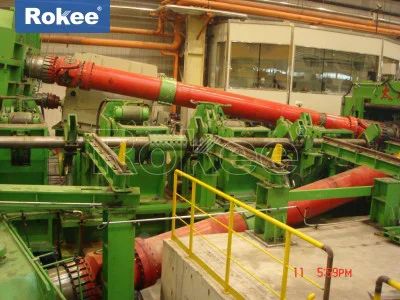
Beyond automotive and construction applications, heavy duty double cardan shafts are widely used in industrial machinery, including metallurgical rolling mills, paper mills, and mining equipment. In metallurgical plants, they transmit power to rolling stands, which require high torque to process metal sheets and bars. The shaft’s ability to handle misalignment ensures that the rolling process remains stable, reducing material waste and equipment wear. In paper mills, the shafts are used in conveyor systems and pulp processing machinery, where they must operate smoothly to avoid disrupting the production line. Mining equipment, such as crushers and conveyors, relies on heavy duty double cardan shafts to transmit power in dusty, high-load environments, where reliability is critical to minimizing downtime. Additionally, the shafts are used in marine propulsion systems, connecting the engine to the propeller and accommodating the angular misalignment between the engine and the hull.
Proper maintenance is essential to extend the service life of heavy duty double cardan shafts and ensure their optimal performance. One of the most critical maintenance tasks is regular lubrication of the universal joints, as insufficient lubrication can lead to excessive friction, wear, and overheating. The type of lubricant should be selected based on the operating temperature and load conditions—for example, lithium-based greases are commonly used for their excellent thermal stability and wear resistance, with different grades selected for summer and winter use. Regular inspection of the universal joints, intermediate shaft, and centering yoke is also necessary to detect signs of wear, damage, or misalignment. Common issues to look for include excessive play in the universal joints, cracks in the yokes or intermediate shaft, and wear on the bearing cups and rollers. If these issues are detected early, they can be repaired or replaced to prevent catastrophic failure.
Another important maintenance consideration is balancing. Heavy duty double cardan shafts must be precisely balanced during manufacturing and after any repairs to avoid vibration at high speeds. Unbalanced shafts can cause excessive stress on the components, leading to premature wear and failure of the shaft itself or connected equipment, such as gearboxes and bearings. If vibration is detected during operation, the shaft should be rebalanced using specialized equipment to ensure the imbalance is within acceptable limits. Additionally, proper installation is crucial to prevent misalignment issues. During installation, the centering yoke must be correctly aligned to ensure equal angles between the input, intermediate, and output shafts. The use of alignment tools can help ensure that the shafts are installed correctly, reducing the risk of stress and wear.
Like all mechanical components, heavy duty double cardan shafts are subject to common issues that can affect their performance. Misalignment is one of the most prevalent problems, often caused by improper installation, worn mounting brackets, or structural deformation of the equipment. Misalignment can lead to excessive stress on the universal joints, resulting in noise, vibration, and premature wear. Fatigue failure is another common issue, caused by repeated stress cycles that lead to microscopic cracks in the material. These cracks can grow over time, eventually leading to component failure. To prevent fatigue failure, it is important to select high-quality materials, follow proper design guidelines, and avoid overloading the shaft. Corrosion is also a concern in harsh environments, and regular cleaning and anti-corrosion treatments can help mitigate this issue.
The development of heavy duty double cardan shafts is closely tied to advancements in materials science, manufacturing technology, and industrial automation. In recent years, there has been a trend toward lighter, stronger shafts that can handle higher torques while reducing energy consumption. The use of composite materials, such as carbon fiber, is gaining traction in some applications, as these materials offer high strength-to-weight ratios, reducing the overall weight of the shaft without compromising durability. Composite shafts are particularly suitable for applications where weight reduction is critical, such as in high-performance vehicles and aerospace systems. Advances in manufacturing technology, such as CNC machining and friction welding, have also improved the precision and consistency of shaft components, reducing tolerances and enhancing performance.
Another area of development is the integration of smart monitoring systems into heavy duty double cardan shafts. These systems use sensors to detect vibration, temperature, and torque levels in real time, allowing for predictive maintenance. By monitoring these parameters, operators can identify potential issues before they lead to failure, minimizing downtime and maintenance costs. Smart shafts are particularly useful in large-scale industrial applications, where equipment downtime can result in significant financial losses. Additionally, improvements in lubrication technology, such as long-life lubricants and sealed bearing designs, are reducing maintenance requirements, making the shafts more cost-effective to operate over their service life.
In conclusion, the heavy duty double cardan shaft is a vital component in mechanical power transmission, offering superior stability, torque capacity, and flexibility compared to single cardan shafts. Its symmetrical design eliminates speed fluctuations, making it ideal for heavy-duty applications where reliable performance is essential. From automotive and construction to industrial and marine sectors, the shaft plays a critical role in ensuring the smooth operation of equipment under extreme conditions. Proper material selection, installation, and maintenance are key to maximizing the shaft’s service life, while advancements in materials and technology are driving the development of lighter, more efficient, and smarter shafts. As industrial machinery continues to evolve toward higher performance and reliability, the heavy duty double cardan shaft will remain an indispensable component in power transmission systems worldwide.