Welded Cardan Shaft
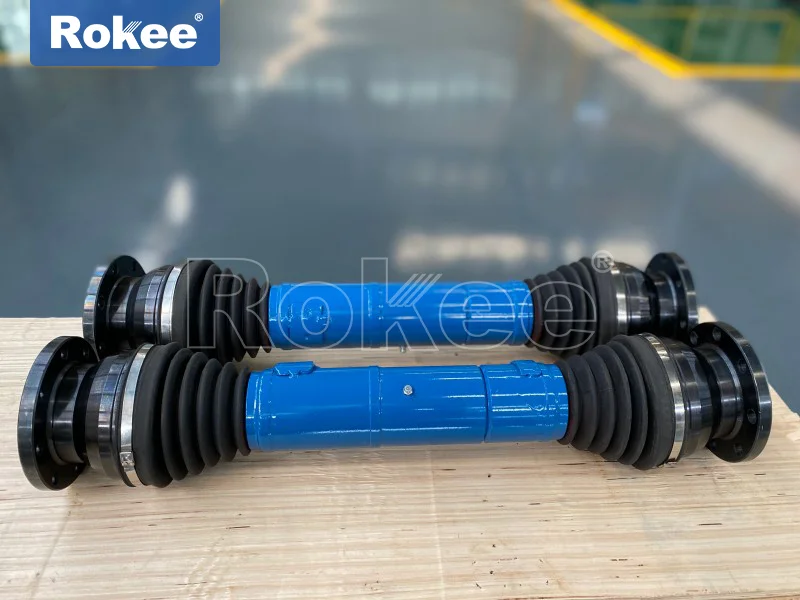
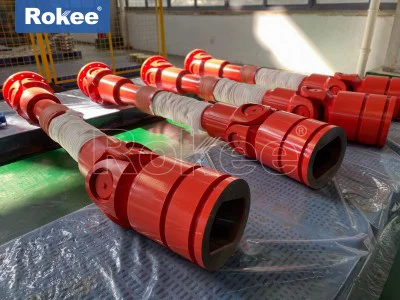
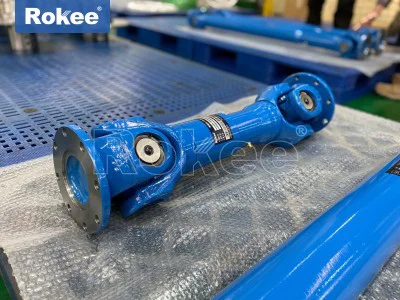
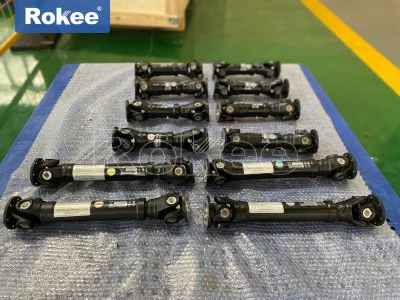
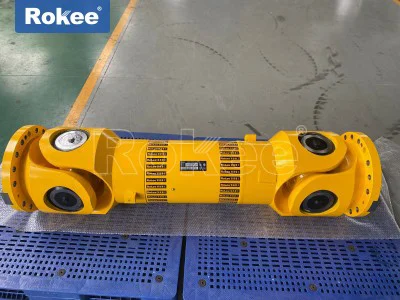
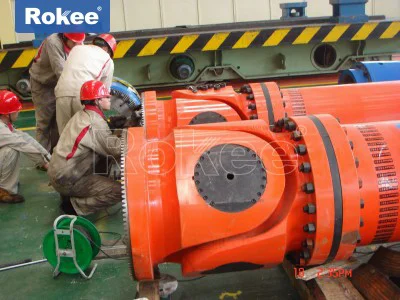
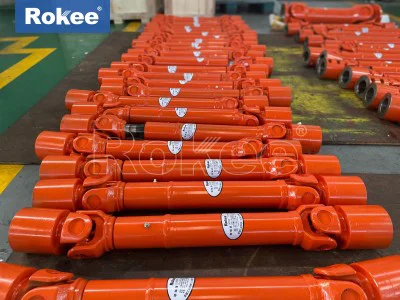
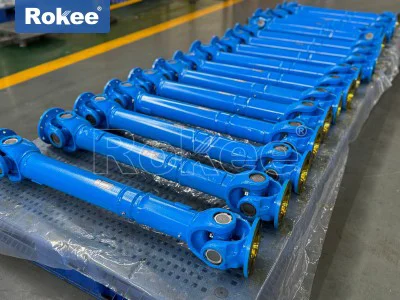
Welded cardan shaft is an important type of cross axis universal joint, which belongs to rigid movable joint. It fixedly connects the coupling components through welding, utilizing its unique mechanical characteristics to enable continuous rotation of the two shafts connected without being on the same axis or having an axis angle, and reliably transmitting torque and motion.
The characteristics of a welded cardan shaft are its large angular compensation capability, compact structure, and high transmission efficiency. The allowable angle between the two axes of welded universal joints with different structural forms varies, generally between 5 ° -45 °. According to specific structure and usage requirements, welded universal joints can be divided into various models, including SWC-CH type long telescopic welding, SWC-BH type standard telescopic welding, SWC-WH type non telescopic welding, etc.
Welded universal joints are widely used in industries such as metallurgy, lifting, engineering transportation, mining, petroleum, shipbuilding, coal, rubber, paper machinery, etc., especially suitable for heavy machinery equipment and occasions that require high torque transmission. Its reliable performance and flexible adaptability make it an indispensable and important component of modern industrial transmission systems.
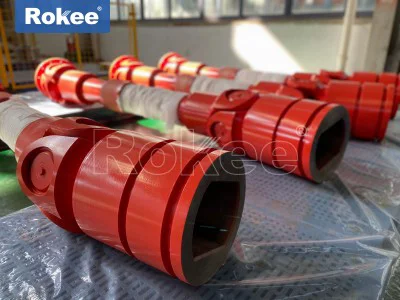
The core structure of a welded universal joint coupling mainly consists of fork head components, cross shaft assemblies, and connecting components. Compared with ordinary universal couplings, its uniqueness lies in the use of welding to fix key components instead of bolted connections. The integral fork head design is a typical feature of welded universal joints, which connects the fork head to other components through welding processes, significantly improving overall strength and reliability. In terms of bearing fixation methods, welded designs usually do not require bolts, simplifying the structure and reducing potential failure points.
The welded cardan shaft is a critical component in mechanical power transmission systems, designed to transfer torque and rotational motion between two shafts that are not aligned perfectly, either in terms of angular offset or axial displacement. Unlike other types of transmission shafts that rely on bolted or flange connections, the welded cardan shaft features integral welded joints, which enhance its structural integrity, load-bearing capacity, and resistance to mechanical stress. This design makes it particularly suitable for applications where high torque, reliability, and compactness are essential, spanning a wide range of industries from heavy machinery to automotive and aerospace. Understanding the design principles, manufacturing processes, material selection, and operational characteristics of welded cardan shafts is crucial for ensuring their optimal performance and longevity in various working environments.
At its core, the welded cardan shaft consists of several key components that work together to facilitate efficient power transmission. The main body typically includes two yokes, a cross shaft (also known as a spider), and bearings, all connected through precise welding techniques. The yokes are the end components that attach to the driving and driven shafts, and their design is tailored to accommodate the specific angular misalignment between the two shafts. The cross shaft, which is the central rotating element, connects the two yokes and allows for rotation at different angles, ensuring that torque is transferred smoothly even when the shafts are not in perfect alignment. Bearings are installed at the intersection of the cross shaft and the yokes to reduce friction and wear, enabling the cross shaft to rotate freely within the yokes. The welded joints between these components are critical, as they must withstand the full torque and rotational forces exerted during operation without failing or deforming.
The design of a welded cardan shaft is governed by several key principles that ensure its functionality and durability. One of the most important considerations is the ability to accommodate angular misalignment, which refers to the angle between the driving and driven shafts. Welded cardan shafts are typically designed to handle angular misalignments ranging from a few degrees up to 30 degrees, depending on the application requirements. This flexibility is achieved through the design of the yokes and cross shaft, which allow for rotational movement around multiple axes. Another critical design principle is torque capacity, which is determined by the size of the shaft, the material used, and the quality of the welds. The shaft must be able to transmit the maximum torque required by the application without experiencing excessive stress or deformation. Additionally, the design must account for axial displacement, which is the linear movement of the shafts along their axes, and ensure that the welded cardan shaft can accommodate this movement without affecting performance.
Material selection is a vital aspect of welded cardan shaft manufacturing, as the materials used directly impact the shaft’s strength, durability, and resistance to wear and corrosion. The most commonly used materials for welded cardan shafts are high-strength steels, which offer excellent tensile strength, toughness, and weldability. These steels include carbon steels, alloy steels, and stainless steels, each selected based on the specific application requirements. Carbon steels are often used for applications with moderate torque requirements, as they are cost-effective and easy to weld. Alloy steels, which contain additional elements such as chromium, molybdenum, and nickel, offer higher strength and durability, making them suitable for heavy-duty applications with high torque and harsh operating conditions. Stainless steels are preferred for applications where corrosion resistance is essential, such as in marine or chemical environments, as they are resistant to rust and chemical degradation. The selection of the appropriate material also involves considering factors such as weight, cost, and the operating environment, ensuring that the shaft can perform reliably under the given conditions.
The welding process is a critical step in the manufacturing of welded cardan shafts, as the quality of the welds directly affects the shaft’s structural integrity and performance. Several welding techniques are commonly used, including gas metal arc welding (GMAW), shielded metal arc welding (SMAW), and submerged arc welding (SAW), each selected based on the material, the size of the components, and the desired weld quality. GMAW, also known as MIG welding, is widely used for its high welding speed and versatility, making it suitable for welding a variety of steels. SMAW, or stick welding, is often used for on-site welding or for components that require a strong, durable weld. SAW is used for large-scale production, as it offers high deposition rates and produces high-quality welds with minimal defects. Regardless of the welding technique used, strict quality control measures are essential to ensure that the welds are free from defects such as cracks, porosity, and incomplete fusion. These defects can significantly reduce the strength of the shaft and lead to premature failure, so non-destructive testing methods such as ultrasonic testing, magnetic particle testing, and radiographic testing are often used to inspect the welds after welding.
After welding, the welded cardan shaft undergoes a series of post-welding processes to enhance its performance and durability. Heat treatment is a common post-welding process, which involves heating the shaft to a specific temperature and then cooling it at a controlled rate to relieve internal stresses caused by welding. This process helps to improve the material’s toughness and reduce the risk of cracking. Machining is another important post-welding process, which involves shaping the components to their final dimensions and ensuring that the surfaces are smooth and precise. This is particularly important for the yokes and cross shaft, as any irregularities or inaccuracies can lead to increased friction, wear, and vibration during operation. Surface treatment processes such as painting, galvanizing, or powder coating may also be applied to protect the shaft from corrosion and extend its service life, especially in harsh operating environments.
The performance of a welded cardan shaft is influenced by several factors, including the design, material, welding quality, and operating conditions. One of the key performance metrics is torque transmission efficiency, which refers to the percentage of torque that is transferred from the driving shaft to the driven shaft without loss. Welded cardan shafts typically have high transmission efficiency, often exceeding 99%, due to their rigid design and minimal friction. Another important performance metric is durability, which is the ability of the shaft to withstand repeated cycles of torque and rotational motion without failing. The durability of a welded cardan shaft is determined by the material’s fatigue strength, the quality of the welds, and the effectiveness of the lubrication system. Lubrication is critical for reducing friction between the cross shaft and bearings, as insufficient lubrication can lead to excessive wear, overheating, and premature failure. Regular lubrication with the appropriate type of lubricant helps to extend the service life of the shaft and ensure smooth operation.
Welded cardan shafts are used in a wide range of applications across various industries, each with unique requirements and operating conditions. In the automotive industry, they are commonly used in rear-wheel-drive and four-wheel-drive vehicles to transmit torque from the transmission to the rear axle. In this application, the welded cardan shaft must be able to accommodate the angular misalignment between the transmission and the rear axle, which changes as the vehicle moves over uneven terrain. In the heavy machinery industry, welded cardan shafts are used in equipment such as excavators, bulldozers, and cranes, where they transmit high torque between the engine and the various working components. These applications require the shaft to be highly durable and able to withstand harsh operating conditions, including heavy loads, vibration, and exposure to dust and debris. In the aerospace industry, welded cardan shafts are used in aircraft engines and auxiliary systems, where they must be lightweight, high-strength, and reliable, as any failure could have catastrophic consequences. Other applications include industrial machinery, such as pumps, compressors, and generators, where the shaft is used to transmit torque between different components.
Proper maintenance is essential for ensuring the long-term performance and reliability of welded cardan shafts. Regular inspection is a key maintenance activity, which involves checking the shaft for signs of wear, damage, or corrosion. This includes inspecting the welds for cracks or other defects, checking the bearings for wear or leakage, and ensuring that the lubrication system is functioning properly. Any signs of damage or wear should be addressed immediately to prevent further deterioration and potential failure. Lubrication is another critical maintenance task, as it helps to reduce friction and wear between the moving components. The type of lubricant used should be appropriate for the operating conditions, including temperature, load, and speed, and the lubricant should be changed at regular intervals to ensure its effectiveness. Additionally, proper alignment of the driving and driven shafts is important, as misalignment can lead to increased stress on the shaft and bearings, reducing their service life.
Despite their many advantages, welded cardan shafts also have some limitations that must be considered when selecting them for a particular application. One of the main limitations is their inability to accommodate large axial displacements, as the welded joints are rigid and do not allow for significant linear movement. In applications where large axial displacement is required, other types of transmission shafts, such as telescopic cardan shafts, may be more suitable. Another limitation is the potential for weld fatigue, which can occur over time due to repeated cycles of torque and vibration. This can lead to cracks in the welds, which can eventually cause the shaft to fail if not detected and repaired. Additionally, welded cardan shafts are typically heavier than other types of shafts, which can be a disadvantage in applications where weight is a critical factor, such as in aerospace or automotive applications where fuel efficiency is important.
Advancements in technology and manufacturing processes have led to significant improvements in the design and performance of welded cardan shafts. One of the key advancements is the use of computer-aided design (CAD) and finite element analysis (FEA) tools, which allow engineers to design and optimize the shaft for specific applications. These tools enable engineers to simulate the performance of the shaft under various operating conditions, identify potential stress points, and make design modifications to improve strength and durability. Another advancement is the development of advanced welding techniques, such as laser welding and electron beam welding, which offer higher precision and better weld quality than traditional welding methods. These techniques also allow for the welding of more complex shapes and materials, expanding the range of applications for welded cardan shafts. Additionally, the use of advanced materials, such as composite materials and high-strength alloys, has helped to reduce the weight of the shaft while maintaining or improving its strength and durability.
In conclusion, the welded cardan shaft is a versatile and reliable component that plays a critical role in mechanical power transmission systems. Its integral welded design provides high structural integrity and load-bearing capacity, making it suitable for a wide range of applications across various industries. The design, material selection, welding process, and maintenance of welded cardan shafts all contribute to their performance and longevity, and careful consideration of these factors is essential for ensuring optimal operation. While welded cardan shafts have some limitations, advancements in technology and manufacturing processes continue to improve their design and performance, making them an indispensable component in modern mechanical systems. As industries continue to evolve and demand higher performance and reliability from their equipment, the welded cardan shaft will remain a key component in power transmission, adapting to meet the changing needs of various applications.