Highly Adaptable Universal Shaft Coupling Empowers The Upgrading Of Sandwich Panel Lines
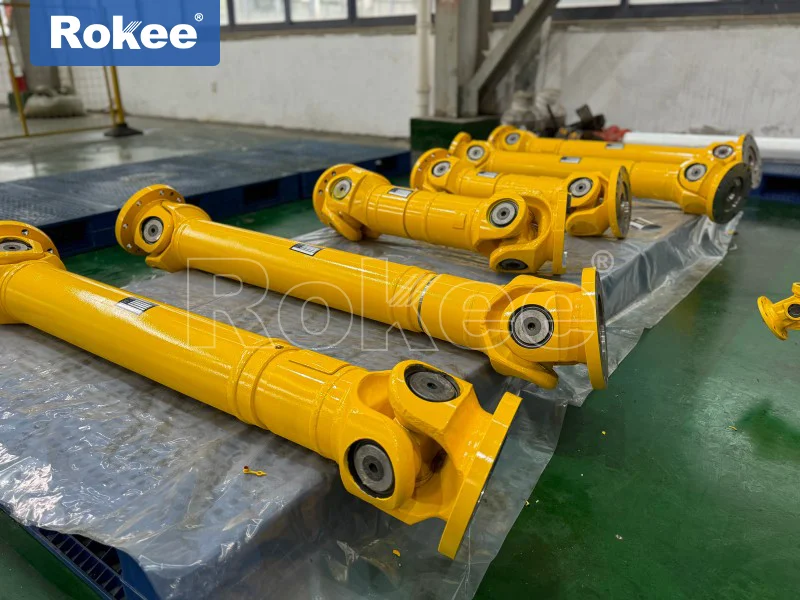
In the modern manufacturing landscape, the continuous upgrading of production lines is not only a response to the growing demand for high-quality products but also a key driving force for enterprises to maintain competitiveness. Among the numerous mechanical components that support industrial production, the universal shaft coupling, with its exceptional adaptability and reliable performance, has emerged as a crucial enabler for the upgrading of sandwich panel lines. Sandwich panels, widely used in construction, cold storage, warehousing, and other fields due to their lightweight, high strength, thermal insulation, and sound insulation properties, have increasingly strict requirements for production efficiency, product precision, and operational stability as market demand evolves. The traditional sandwich panel production lines often face challenges such as unstable power transmission, poor adaptability to complex working conditions, high maintenance costs, and difficulty in meeting the diversified production needs of different specifications and types of panels. It is in this context that the highly adaptable universal shaft coupling has stepped into the spotlight, effectively addressing these pain points and providing strong technical support for the transformation and upgrading of sandwich panel production.
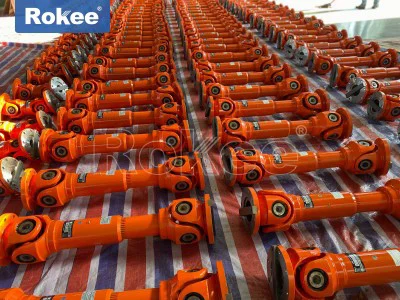
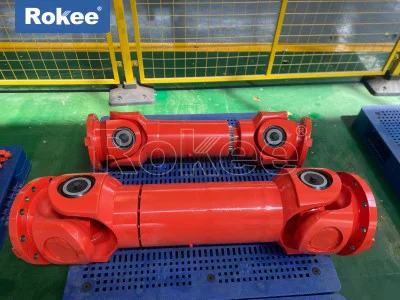
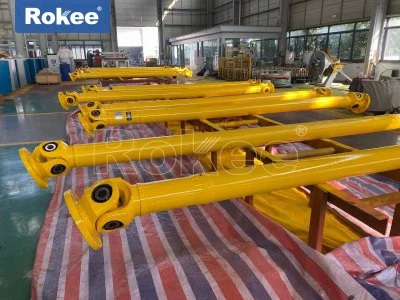
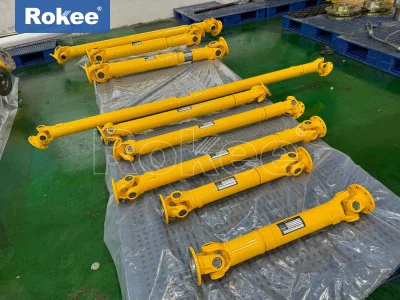
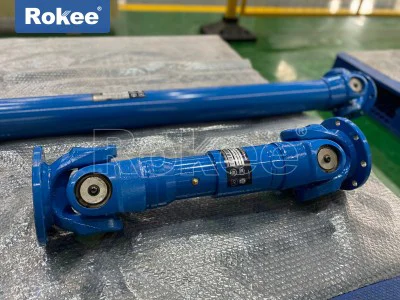
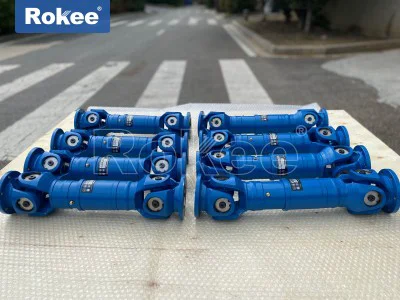
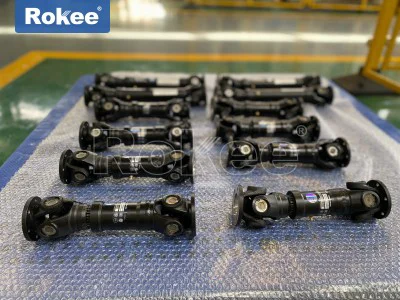
To understand how the highly adaptable universal shaft coupling empowers the upgrading of sandwich panel lines, it is first necessary to clarify the core functions and unique advantages of this mechanical component. A universal shaft coupling is a key part used to connect two shafts in different mechanisms, enabling them to rotate synchronously and transmit torque and motion efficiently. Unlike rigid couplings that require perfect alignment of the two shafts and offer no flexibility for misalignment, or flexible couplings that can only absorb minor displacements through elastic elements, the universal shaft coupling is designed with a unique articulating structure that allows it to accommodate significant angular offsets, axial displacements, and radial deviations between the driving and driven shafts. This adaptability is particularly critical in sandwich panel production lines, where multiple mechanical components such as uncoilers, roll formers, compounding machines, and cutting equipment are connected in series, and slight misalignments are inevitable due to manufacturing errors, installation deviations, load deformation, and temperature changes during long-term operation. The universal shaft coupling’s ability to compensate for these misalignments ensures stable power transmission, reduces wear and tear on equipment components, and lays a solid foundation for the smooth operation of the entire production line.
The high adaptability of universal shaft couplings is reflected in multiple aspects, including angular compensation, displacement adaptation, load-bearing capacity, and environmental resilience, all of which are closely aligned with the operational characteristics and upgrading needs of sandwich panel lines. In terms of angular compensation, different types of universal shaft couplings can accommodate angular offsets between 5° and 45° according to their structural design, which is far superior to rigid and ordinary flexible couplings. In a typical sandwich panel production line, the roll forming machine, which is responsible for shaping the surface and inner layers of the panel, often needs to adjust its angle slightly according to the thickness and specification of the panel to ensure the accuracy of the forming process. The universal shaft coupling can easily adapt to this angular adjustment, ensuring that the power from the motor is transmitted stably to the roll forming rollers without any loss or fluctuation. This not only guarantees the uniformity of the panel’s shape and size but also reduces the occurrence of defective products caused by unstable power transmission.
In addition to angular compensation, the universal shaft coupling also excels in adapting to axial and radial displacements. During the operation of a sandwich panel line, factors such as thermal expansion and contraction of equipment components, vibration generated by high-speed operation, and slight positional changes due to long-term load-bearing can lead to axial or radial displacements between connected shafts. If these displacements are not effectively compensated, they will cause excessive stress on the shafts and bearings, leading to frequent equipment failures and increased maintenance costs. The universal shaft coupling, especially those equipped with expansion splines and flexible components, can effectively absorb these displacements, reducing vibration and noise, and protecting the transmission system from damage. For example, in the compounding section of the sandwich panel line, where the surface layer, core material, and inner layer are bonded together, the compounding machine needs to maintain a stable speed and pressure to ensure the bonding strength. The universal shaft coupling connects the motor to the compounding roller, compensating for any axial or radial displacements caused by the pressure adjustment of the roller, thus ensuring the stability of the compounding process and the quality of the finished panel.
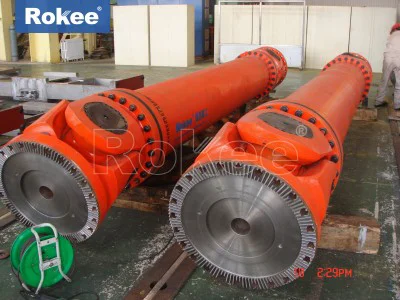
The load-bearing capacity and durability of universal shaft couplings also play a vital role in supporting the upgrading of sandwich panel lines. Sandwich panel production, especially for large-scale or heavy-duty panels, requires the transmission system to withstand high torque and heavy loads for a long time. The universal shaft coupling is usually made of high-strength alloy steel, such as 45 steel, 40 chromium, or forged alloy steel, which undergoes strict heat treatment to enhance its strength, wear resistance, and fatigue life. Heavy-duty universal shaft couplings can even transmit torque exceeding 5000kN·m, making them suitable for the high-load operation of sandwich panel production lines. Compared with traditional couplings that are prone to wear and deformation under heavy loads, the high-strength universal shaft coupling can maintain stable performance for a long time, reducing the frequency of replacement and maintenance, and improving the overall operational efficiency of the production line. This is particularly important for modern sandwich panel lines that pursue continuous production, as unplanned downtime due to coupling failure can lead to significant economic losses.
Another key advantage of the highly adaptable universal shaft coupling is its ability to adapt to complex working environments, which is essential for the stable operation of sandwich panel lines. Sandwich panel production often involves various working conditions, such as high temperatures in the compounding section, dust in the cutting section, and humidity in the storage area. The universal shaft coupling is designed with excellent sealing and corrosion resistance, preventing dust, moisture, and other impurities from entering the internal structure, thus avoiding wear and failure caused by environmental factors. Some advanced universal shaft couplings also adopt high-temperature resistant materials and lubrication systems, enabling them to work stably in high-temperature environments without affecting their transmission efficiency. This adaptability to complex environments ensures that the sandwich panel line can operate normally under various conditions, reducing the impact of environmental factors on production and improving the reliability of the production system.
The application of highly adaptable universal shaft couplings has brought profound changes to the upgrading of sandwich panel lines, covering production efficiency, product quality, operational stability, and cost control. In terms of production efficiency, the stable power transmission and high adaptability of the universal shaft coupling reduce equipment downtime caused by transmission failures, enabling the production line to achieve continuous and efficient operation. For example, in traditional production lines, the frequent misalignment of shafts often leads to the shutdown of roll forming machines or compounding machines, requiring manual adjustment and maintenance, which not only wastes time but also affects production progress. With the universal shaft coupling, these problems are effectively solved, as it can automatically compensate for misalignments and displacements, ensuring the continuous operation of the production line. This improvement in production efficiency is particularly significant for large-scale sandwich panel manufacturers, as it allows them to increase output and meet the growing market demand.
In terms of product quality, the universal shaft coupling plays a crucial role in ensuring the precision and consistency of sandwich panels. The stable power transmission provided by the coupling ensures that each component of the production line operates at a constant speed, avoiding fluctuations in forming, compounding, and cutting processes. For instance, in the roll forming process, unstable power transmission can lead to uneven thickness of the panel surface, uneven edges, and other defects, affecting the appearance and performance of the product. The universal shaft coupling ensures that the roll forming rollers rotate at a constant speed, resulting in uniform panel thickness and smooth edges. In the cutting process, the stable transmission of power ensures that the cutting knife operates at a constant speed and pressure, improving the accuracy of the cutting size and reducing the occurrence of burrs and uneven cuts. These improvements in product quality not only enhance the market competitiveness of the sandwich panels but also reduce the waste of raw materials caused by defective products.
Operational stability is another key area where the universal shaft coupling empowers the upgrading of sandwich panel lines. The traditional sandwich panel production line is often plagued by frequent equipment failures due to the poor adaptability of couplings, leading to high maintenance costs and low operational efficiency. The highly adaptable universal shaft coupling, with its strong load-bearing capacity, wear resistance, and environmental adaptability, significantly reduces the frequency of failures. Its ability to compensate for misalignments and absorb vibrations also reduces the wear and tear on other equipment components, such as motors, bearings, and shafts, extending the service life of the entire production line. This not only reduces maintenance costs but also improves the stability and reliability of the production line, allowing enterprises to focus more on production and product development rather than equipment maintenance.
Cost control is an important consideration for any enterprise, and the application of universal shaft couplings also brings significant cost-saving benefits to sandwich panel manufacturers. On the one hand, the long service life and low maintenance requirements of universal shaft couplings reduce the cost of replacing and maintaining couplings, as well as the labor cost associated with maintenance. On the other hand, the improvement in production efficiency and product quality reduces the waste of raw materials and the cost of reworking defective products, further reducing the overall production cost. Additionally, the universal shaft coupling’s adaptability to different specifications and types of sandwich panels allows the production line to be flexibly adjusted without the need for large-scale modifications or replacements of equipment components, reducing the investment cost of upgrading the production line. This cost-saving effect is particularly important for small and medium-sized sandwich panel manufacturers, helping them to improve their profitability and competitiveness in the market.
As the sandwich panel industry continues to develop, the demand for production line upgrading is becoming increasingly urgent. With the continuous advancement of material science and mechanical engineering technology, the universal shaft coupling is also constantly evolving, with improved adaptability, performance, and functionality. For example, the development of ball cage type universal shaft couplings has solved the problem of non-constant speed transmission of traditional cross shaft type couplings, ensuring more stable and precise power transmission, which is particularly suitable for high-precision sandwich panel production lines. The application of new materials, such as high-strength stainless steel and special alloys, has further enhanced the corrosion resistance and high-temperature resistance of universal shaft couplings, expanding their application scope in complex working environments. In addition, the integration of intelligent technologies, such as condition monitoring and fault diagnosis, into universal shaft couplings allows enterprises to real-time monitor the operating status of the coupling, predict potential failures, and perform maintenance in advance, further improving the operational stability and reliability of the production line.
The upgrading of sandwich panel lines is not only about improving production efficiency and product quality but also about adapting to the trend of green and sustainable development. The universal shaft coupling, with its energy-saving characteristics, also contributes to the green upgrading of sandwich panel production lines. The high transmission efficiency of universal shaft couplings, which can reach more than 90% for cross shaft type and even higher for ball cage type, reduces power loss during transmission, saving energy consumption. Additionally, the long service life of universal shaft couplings reduces the waste of materials caused by frequent replacement, aligning with the concept of sustainable development. As the global focus on environmental protection continues to increase, the energy-saving and environmentally friendly advantages of universal shaft couplings will become more prominent, providing stronger support for the green upgrading of sandwich panel lines.
In practical applications, the selection and installation of universal shaft couplings also play a crucial role in ensuring their effectiveness in empowering the upgrading of sandwich panel lines. Enterprises need to select the appropriate type and specification of universal shaft coupling according to the specific requirements of their production line, such as the transmission torque, angular offset, working environment, and production speed. For example, heavy-duty sandwich panel lines that require high torque transmission should choose heavy-duty universal shaft couplings with strong load-bearing capacity, while high-precision production lines should choose ball cage type universal shaft couplings with constant speed transmission characteristics. In addition, correct installation and regular maintenance are essential to ensure the stable operation of the universal shaft coupling. Regular lubrication, inspection of sealing performance, and adjustment of alignment can extend the service life of the coupling and ensure its optimal performance.
The sandwich panel market is growing steadily, with a projected compound annual growth rate of 7.94% from 2024 to 2030, driven by rapid urbanization, increasing demand for energy-efficient buildings, and stringent building standards. This growth has put forward higher requirements for the upgrading of sandwich panel production lines, and the highly adaptable universal shaft coupling, as a key mechanical component, will play an increasingly important role in this process. Its unique advantages in adaptability, load-bearing capacity, durability, and energy efficiency make it an indispensable part of modern sandwich panel production lines, helping enterprises to improve production efficiency, product quality, and operational stability, reduce costs, and achieve sustainable development.
In conclusion, the highly adaptable universal shaft coupling has become a powerful driving force for the upgrading of sandwich panel lines. Through its exceptional ability to compensate for angular offsets, axial and radial displacements, its strong load-bearing capacity, its adaptability to complex working environments, and its energy-saving and cost-saving advantages, it effectively addresses the pain points faced by traditional sandwich panel production lines, promoting the transformation of the production line towards high efficiency, high precision, stability, and sustainability. As technology continues to advance, the universal shaft coupling will continue to evolve and innovate, providing even stronger support for the development of the sandwich panel industry, helping enterprises to seize market opportunities and achieve long-term and stable development in the increasingly competitive market environment. The integration of highly adaptable universal shaft couplings into sandwich panel production lines is not just a technological upgrade but also a strategic investment that enhances the core competitiveness of enterprises, paving the way for the future development of the sandwich panel industry.