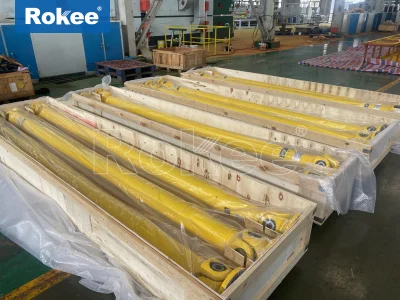
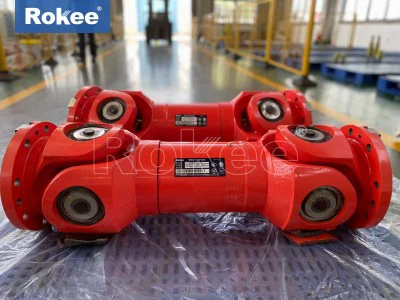
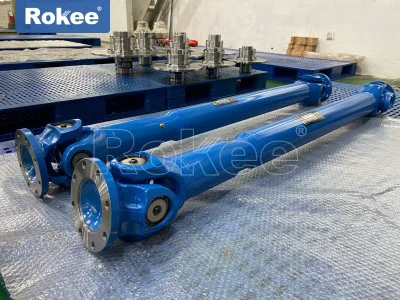
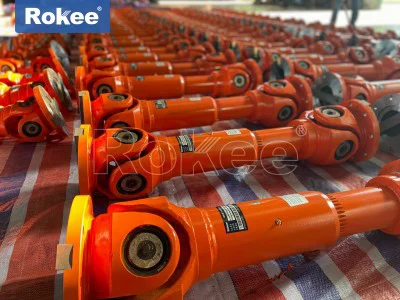
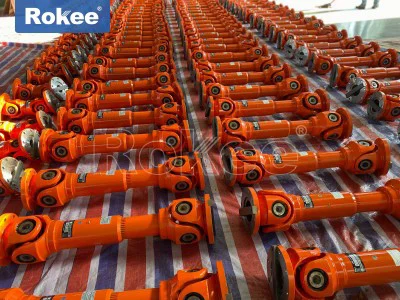
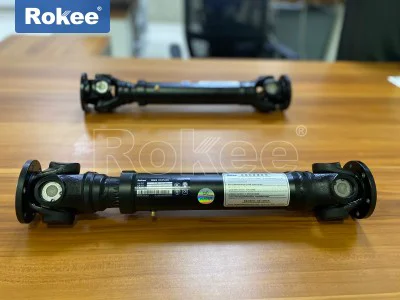
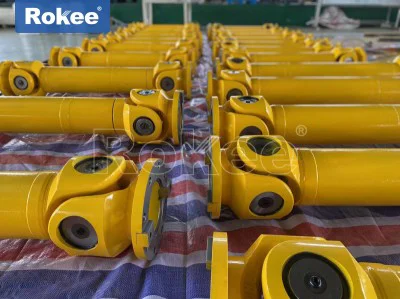
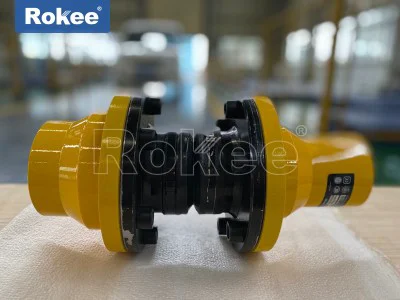
Heavy Duty Cardan Drive Shaft
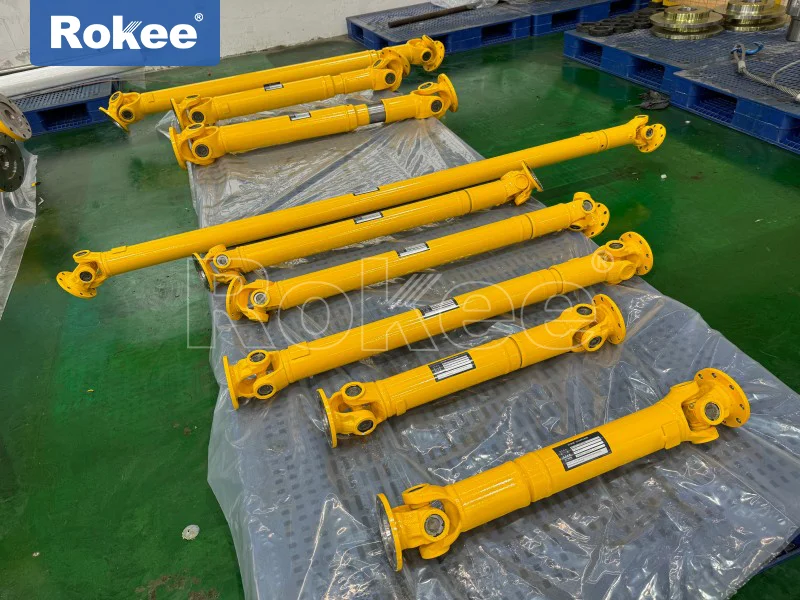
Heavy duty cardan drive shafts stand as indispensable mechanical transmission components in modern industrial and engineering fields, serving as the core link for power delivery between disjointed driving and driven equipment. Unlike ordinary transmission shafts limited to linear and fixed-axis power transfer, these specialized drive shafts are engineered to tackle complex operating conditions involving angular misalignment, axial displacement, and radial offset between power sources and load equipment, achieving continuous, stable, and high-efficiency torque transmission under heavy-load working scenarios. Their unique flexible transmission structure and robust load-bearing capacity make them widely applicable in heavy machinery, engineering equipment, industrial production lines, and large transportation systems, becoming a key guarantee for the normal operation of various heavy-duty mechanical systems.
The basic structural composition of a heavy duty cardan drive shaft is sophisticated and functionally targeted, with every component optimized for heavy-load operation. The core transmission unit consists of precision universal joint assemblies, which are composed of cross-shaped spider shafts, high-strength bearing sets, and rigid yoke connectors. Matched with seamless integral shaft tubes and telescopic spline structures, these parts form a complete flexible transmission system. The cross spider shaft acts as the central hinge component of the universal joint, enabling multi-angle rotational deflection while bearing huge torque and shear force. The high-precision bearing assemblies fitted on the four ends of the spider shaft effectively reduce friction resistance during rotation, avoid rigid wear between metal components, and ensure smooth power output even in long-term continuous operation. The yoke connectors, processed through integral forging and precision machining, tightly connect the universal joint with the shaft tube and equipment flanges, providing reliable structural rigidity and anti-deformation performance under extreme loads.
A key functional feature of heavy duty cardan drive shafts lies in their adaptive compensation capability for mechanical displacement. In actual mechanical operation, the relative position between the driving end and driven end often changes dynamically due to equipment vibration, structural deformation, load impact, and installation errors. Ordinary rigid transmission shafts are unable to adapt to such deviations, which easily causes transmission jitter, component abrasion, and even structural damage. In contrast, the universal joint hinge structure of heavy duty cardan drive shafts can adapt to angular deflection within a certain range, while the built-in telescopic spline structure effectively compensates for axial distance changes between shafts. This dual compensation mechanism integrates angular, axial, and radial deviation adaptation, ensuring that power transmission remains continuous and stable even when the relative position of the connected equipment changes dynamically, eliminating transmission dead zones and mechanical stress concentration caused by misalignment.
The working principle of heavy duty cardan drive shafts follows the spatial linkage motion mechanism of mechanical transmission. When the power source drives the input end of the drive shaft to rotate, torque and rotational motion are first transmitted to the input universal joint through the connecting flange. The cross spider shaft converts the fixed-axis rotation of the driving end into flexible multi-angle rotation, and stably transmits the power to the intermediate shaft tube. The shaft tube, as the main load-bearing and force-transmitting component, delivers the torque to the output universal joint, which further adjusts the rotation angle and outputs synchronous power to the driven equipment. In the whole transmission process, the cooperative operation of double universal joints effectively offsets the periodic speed fluctuation of single universal joint transmission, achieving constant-speed and high-precision power output. This mature mechanical motion principle enables heavy duty cardan drive shafts to maintain excellent transmission efficiency under complex dynamic working conditions, with power loss controlled at an extremely low level even during long-distance and large-deviation transmission.
What distinguishes heavy duty cardan drive shafts from ordinary cardan shafts is their extreme emphasis on load-bearing performance and durability. Heavy-duty working scenarios are often accompanied by instantaneous impact loads, long-term continuous heavy loads, and harsh operating environments, which put forward higher requirements for material selection and processing technology. High-strength alloy steel materials are commonly adopted for core components, which undergo multiple heat treatment processes such as quenching and tempering to improve overall hardness, toughness, and fatigue resistance. The shaft tube adopts thick-walled seamless tube structure or integral forging molding, which avoids structural defects such as welding gaps and ensure uniform force bearing. The bearing parts use wear-resistant and high-temperature resistant alloy materials, with optimized structural design to enhance impact resistance and anti-fatigue ability, effectively coping with frequent load changes and mechanical vibration in heavy industrial production. Through rigorous material optimization and precision processing, these drive shafts can stably bear large torque loads for a long time, resisting deformation, abrasion, and fatigue damage, greatly extending the service life of the transmission system.
The application scenarios of heavy duty cardan drive shafts cover almost all fields requiring heavy-load flexible power transmission. In engineering machinery, they are applied to large excavators, loaders, bulldozers, and road construction equipment, undertaking power transmission between engines, gearboxes, and walking or working devices. The complex terrain and variable load characteristics of engineering operations require drive shafts to have strong anti-vibration and adaptive capacity, which fully matches the performance advantages of heavy duty cardan drive shafts. In industrial manufacturing, they serve large metallurgical equipment, mining machinery, cement production lines, and port handling machinery. These devices often operate continuously for 24 hours under heavy-load conditions, and the stable transmission performance of cardan drive shafts ensures the continuity and efficiency of industrial production, reducing equipment downtime caused by transmission failure.
In the field of special transportation and heavy equipment, heavy duty cardan drive shafts also play an irreplaceable role. Large agricultural machinery, heavy transport vehicles, and industrial crane equipment all rely on these drive shafts to realize power transmission between multi-stage mechanical structures. In these scenarios, the drive shafts need to adapt to frequent start-stop, instantaneous overload, and multi-angle position changes, and their excellent flexible transmission and impact resistance can effectively avoid mechanical failure caused by rigid power transmission. In addition, in marine engineering equipment and large wind power equipment, heavy duty cardan drive shafts adapt to humid, high-vibration and high-load harsh environments, providing reliable power connection guarantees for the normal operation of large-scale energy and marine equipment.
Daily maintenance and scientific operation are crucial to giving full play to the performance of heavy duty cardan drive shafts and extending their service life. Although the equipment has high structural strength and durability, long-term heavy-load operation will inevitably cause normal wear of moving parts. Regular lubrication maintenance is the most basic and key link. Filling high-performance lubricating grease into universal joint bearings and spline structures can effectively reduce friction and wear between moving parts, avoid dry friction damage caused by insufficient lubrication, and also play a role in heat dissipation and noise reduction. It is necessary to regularly check the tightness of connecting flanges and fasteners to prevent bolt loosening caused by long-term vibration, which may lead to transmission jitter and component dislocation. Meanwhile, regular inspection of shaft tube deformation, bearing wear, and universal joint flexibility can help discover potential faults in advance and avoid small defects evolving into major equipment failures.
In actual operation, standardized use can effectively reduce the loss of heavy duty cardan drive shafts and improve operational stability. Avoiding long-term overload operation is essential, as instantaneous over-torque and long-term heavy load will cause irreversible fatigue damage to shaft tubes and universal joint structures, reducing transmission accuracy and service life. At the same time, it is necessary to avoid long-term high-speed rotation under large deflection angles, which will intensify bearing wear and cause abnormal vibration and noise. For equipment that operates intermittently, regular idle running and component inspection after shutdown can effectively remove internal dust and impurities, keep the transmission structure flexible, and prevent component rust and clamping stagnation caused by long-term static placement.
With the continuous upgrading of modern industrial equipment towards large-scale, high-efficiency, and intelligent development, the performance requirements for heavy duty cardan drive shafts are also constantly improving. The current development trend of heavy duty cardan drive shafts focuses on high torque density, lightweight structure, long service life, and low maintenance cost. Through the application of new high-strength and wear-resistant materials and the optimization of structural design, the overall weight of the drive shaft is reduced while ensuring load-bearing performance, which helps reduce the overall energy consumption of mechanical equipment and improve transmission response speed. The optimized internal structure of universal joints and bearings further reduces friction coefficient and improves transmission efficiency, realizing energy-saving and efficient power transmission. In addition, the integrated and modular design makes the installation, disassembly, and maintenance of the drive shaft more convenient, greatly improving equipment maintenance efficiency and reducing later operation costs.
In terms of operational stability improvement, modern heavy duty cardan drive shafts adopt more precise dynamic balance processing technology. High-speed rotating equipment has extremely high requirements for the dynamic balance of transmission components. Unbalanced rotation will cause severe mechanical vibration, accelerate component wear, and even affect the overall operation accuracy of equipment. Through precision dynamic balance calibration, the drive shaft can maintain stable rotation under high-speed and heavy-load conditions, effectively reducing vibration and noise, improving the overall stability and comfort of mechanical operation, and creating better operating conditions for industrial production and engineering operations.
In conclusion, heavy duty cardan drive shafts, as core flexible transmission components, rely on their unique structural design, excellent adaptive compensation capability, and super heavy-load performance to solve various difficult problems in heavy-duty mechanical power transmission. They can adapt to complex working conditions such as multi-angle misalignment, dynamic displacement, heavy load impact, and harsh environments, providing stable, efficient, and durable power transmission support for various large mechanical equipment. With the continuous progress of industrial technology and the continuous upgrading of mechanical equipment, heavy duty cardan drive shafts will continue to carry out technological innovation and performance optimization, adapt to higher-standard industrial operation requirements, and maintain their irreplaceable core position in the field of mechanical transmission, escorting the stable and efficient operation of modern heavy industry, engineering construction, and special equipment systems.