Low Torque Universal Shaft
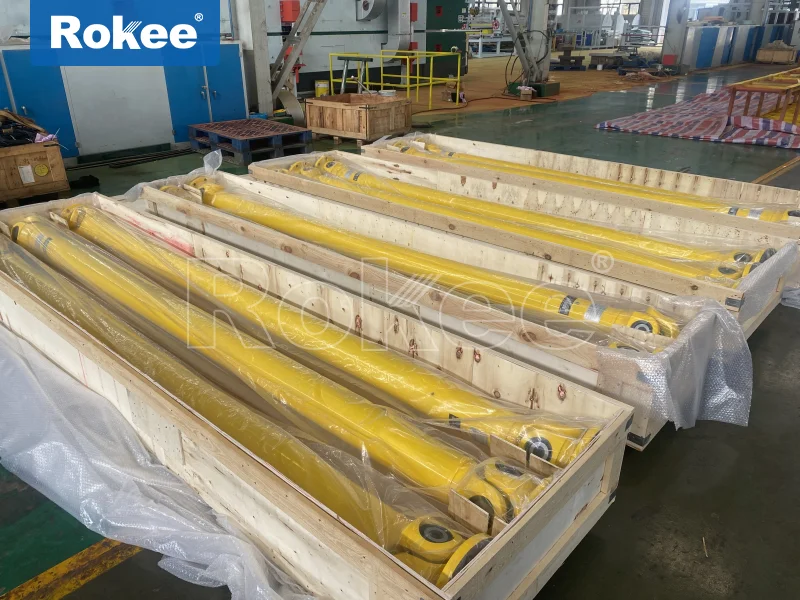
In the intricate ecosystem of mechanical power transmission, low torque universal shafts stand out as indispensable foundational components, serving as critical connecting media for motion and power transfer in lightweight and medium-precision mechanical systems. Unlike heavy-duty transmission shafts engineered for high-load industrial scenarios, this type of universal shaft is specifically optimized for low-torque operating conditions, balancing flexible transmission performance, structural compactness, and stable operational efficiency to meet the diverse and refined connection demands of modern precision machinery, automated equipment, and light-duty mechanical devices. Its unique structural design and operational characteristics make it a core element for ensuring smooth power output and precise motion coordination in numerous low-load transmission scenarios, delivering reliable mechanical linkage support for equipment operation.
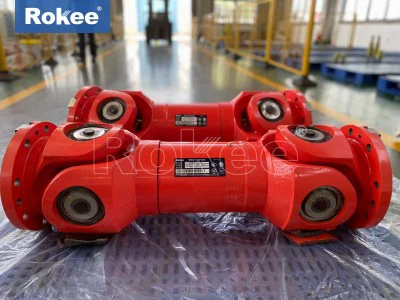
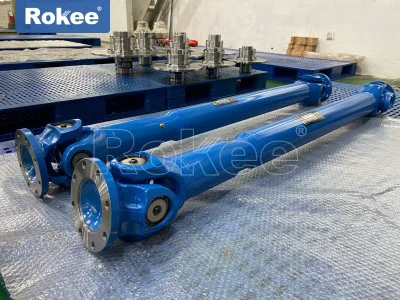
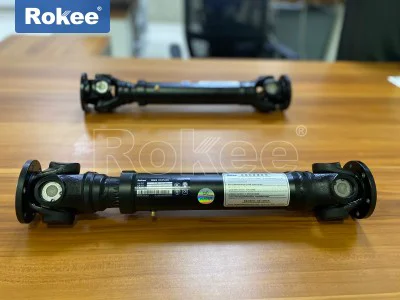
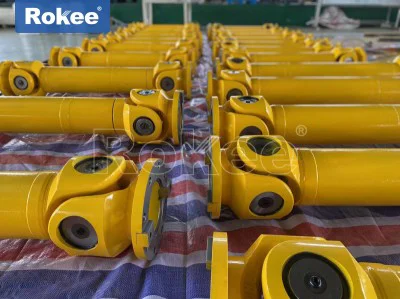
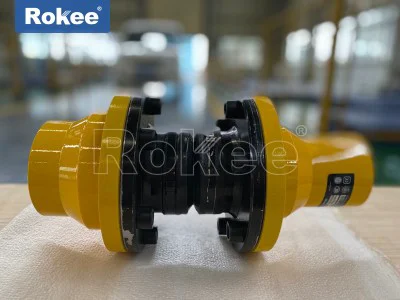
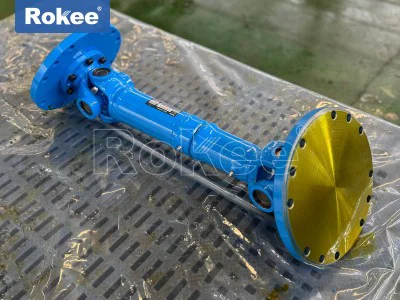
The basic structural composition of low torque universal shafts inherits the mature spatial linkage mechanism of traditional universal transmission components, while undergoing targeted lightweight and refined optimization to adapt to low-torque working environments. The core structure consists of symmetric fork-shaped yokes arranged at both ends, a central cross-shaped spindle component, and matched precision bearing assemblies, with some models equipped with telescopic shaft structures to compensate for axial displacement during equipment operation. The two end yokes are respectively fixed to the driving shaft and driven shaft of mechanical equipment, and the intermediate cross spindle connects the two yokes through vertically distributed bearing groups, forming a flexible spatial rotation structure. This structural layout abandons the bulky reinforced design of high-torque transmission shafts, adopting streamlined component sizing and optimized assembly gaps, which effectively reduces overall weight and rotational inertia while retaining the basic angular compensation function of universal transmission structures. Such structural characteristics enable the component to respond sensitively to low-power rotation signals and avoid transmission lag or motion jitter common in oversized transmission parts during low-torque operation.
The working principle of low torque universal shafts follows the fundamental laws of spatial mechanical motion and power transmission, realizing stable torque and motion transfer under the premise of allowing angular offset and minor axial displacement between connected shafts. When the driving end outputs rotational power, the driving yoke rotates synchronously with the power shaft and drives the central cross spindle to perform composite spatial motion including rotation and swing. The cross spindle adjusts its spatial attitude in real time according to the rotation phase, transmitting rotational motion and low-intensity torque to the driven yoke, which further drives the driven shaft to complete synchronous rotation. In this process, the precision bearings matched with the cross spindle effectively reduce friction resistance during relative motion, ensuring that low torque input can be efficiently converted into stable output power without excessive energy loss. More importantly, the flexible connection formed by the cross spindle and yokes can automatically adapt to minor angular misalignment between the driving and driven shafts, eliminating transmission dead zones and rigid mechanical stress caused by installation deviations or equipment operation vibration. This adaptive transmission capability is particularly critical for low-torque systems, as low-load transmission structures are more sensitive to rigid stress and position deviation, and slight misalignment may lead to obvious transmission efficiency decline or component wear.
One of the most prominent performance advantages of low torque universal shafts is their excellent transmission stability in low-load operating states. Conventional universal shafts designed for high-torque scenarios often have large structural gaps and high rotational inertia, which are prone to periodic speed fluctuation and vibration during low-torque operation, affecting the precision and stability of equipment motion. In contrast, low torque universal shafts adopt refined manufacturing and assembly processes to control component matching gaps within a tiny range, effectively suppressing speed fluctuation during rotation. The optimized bearing coordination and lightweight structural design minimize rotational resistance and inertial resistance, enabling the component to maintain uniform and continuous power transmission even under extremely low torque input conditions. This stable transmission performance ensures that precision mechanical equipment can achieve accurate motion positioning and consistent operating rhythm, avoiding operational errors or functional abnormalities caused by unstable power transmission. In addition, the flexible transmission mode of the universal shaft can absorb minor vibration and impact generated during equipment operation, reducing vibration conduction between power components and improving the overall operational smoothness of the mechanical system.
Material selection is a key factor determining the comprehensive performance of low torque universal shafts, and the material configuration is always matched with low-load, high-frequency, and high-precision service characteristics. Most mainstream low torque universal shafts adopt high-strength lightweight alloy materials or refined carbon steel after special heat treatment processes. These materials have moderate hardness and good toughness, not only meeting the strength requirements of low-torque transmission and avoiding structural deformation or fatigue damage during long-term operation, but also having excellent wear resistance to reduce abrasion loss of friction pairs such as bearings and spindle contact surfaces during frequent high-speed rotation. Meanwhile, the surface of components is usually treated with anti-corrosion and anti-oxidation processes, which can effectively resist the erosion of conventional atmospheric environments and mild humid environments, expand the applicable service scenarios, and extend the service life of components. Different from high-torque universal shafts that pursue ultra-high strength and impact resistance, the material design of low torque models focuses more on balanced performance, taking into account lightweight, low friction, wear resistance and dimensional stability, ensuring that components will not produce dimensional deviation or performance attenuation after long-term continuous operation.
Low torque universal shafts have a wide range of application scenarios, mainly covering all kinds of light-duty mechanical equipment and precision transmission systems that require low-power, high-stability, and flexible connection. In the field of automated precision equipment, they are widely used in small transmission mechanisms of automated assembly lines, precision sorting equipment, and miniature transmission modules of intelligent testing instruments, providing accurate and stable power linkage for high-frequency and low-load repetitive motion. In light industrial machinery, the components serve small processing equipment, packaging machinery, and printing equipment, adapting to the continuous and stable power transmission demand of light industrial production with low load and stable operation. In agricultural and garden machinery, they are applied to small mobile machinery such as miniature tillage equipment and pruning machinery, realizing flexible power connection between power devices and working components, and adapting to minor position changes and angular deviations during field operation. In addition, they also play an important role in household intelligent equipment, experimental testing equipment, and small transportation machinery, providing reliable basic transmission support for various low-torque mechanical operation scenarios.
In terms of installation and use adaptability, low torque universal shafts have outstanding flexibility and convenience. Their compact and lightweight structure makes the installation process more flexible, suitable for narrow internal space of precision equipment and compact mechanical layout, and can realize multi-angle spatial connection without occupying excessive installation space. The universal angular compensation function allows for certain installation deviation tolerance, reducing the difficulty of equipment assembly and debugging, and avoiding the need for extremely high-precision positioning installation like rigid transmission components. Meanwhile, the telescopic structural design of partial models can adapt to minor axial distance changes between shafts caused by equipment thermal expansion and contraction or mechanical vibration in the working state, ensuring that the transmission connection remains tight and stable during long-term equipment operation. This strong adaptability enables low torque universal shafts to maintain stable working performance in complex and changeable small-space mechanical environments, greatly improving the overall environmental adaptability of mechanical systems.
Daily maintenance and service life performance are also important advantages of low torque universal shafts. Benefiting from the low-load working state and optimized structural design, the friction loss and stress load of each component during operation are maintained at a low level, so the overall wear speed is slow and the failure rate is low in daily operation. The simple and compact structural form avoids the complex transmission structure of high-load components, reducing the types and quantity of vulnerable parts, making daily maintenance more convenient and reducing the maintenance cost and time cost of mechanical equipment. In conventional working environments, regular cleaning of surface dust and fine debris and regular inspection of bearing flexibility are sufficient to maintain good operating performance. For equipment operating in high-frequency scenarios, appropriate lubrication maintenance can further reduce friction loss, delay component aging, and ensure long-term stable transmission performance. Compared with other flexible transmission components such as elastic couplings, low torque universal shafts have better angular compensation ability and structural stability, and will not produce elastic fatigue or deformation failure after long-term high-frequency operation, showing more durable service performance.
With the continuous upgrading of modern mechanical equipment towards precision, miniaturization, and high-frequency operation, the market demand and technical requirements for low torque universal shafts are also constantly improving. More refined structural optimization, more high-performance material application, and more precise manufacturing processes are gradually integrated into the production and manufacturing of such components, further improving their transmission precision, operational stability and service life. In the future development of precision machinery and light industrial equipment, low torque universal shafts will continue to play an irreplaceable basic role, continuously adapting to the updated transmission requirements of intelligent and miniaturized mechanical systems, and providing more reliable and efficient power transmission solutions for various low-torque mechanical operation scenarios. As a basic transmission component tailored for low-load scenarios, its structural advantages and performance characteristics will always match the development trend of modern lightweight and precision mechanical equipment, bringing stable and efficient operational guarantee for the operation of various mechanical systems.