Low Speed Universal Shaft
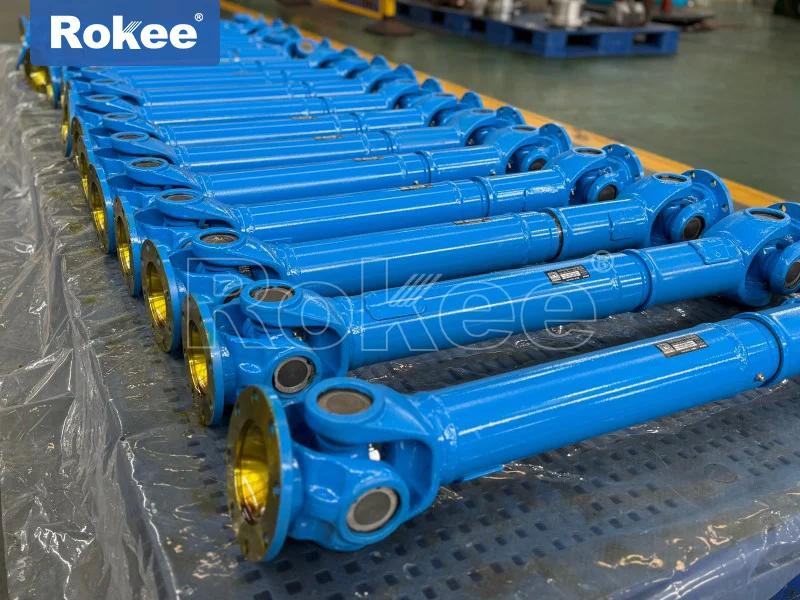
In the complex and interconnected system of modern mechanical transmission equipment, low speed universal shafts stand out as a fundamental and indispensable component that undertakes the core task of power and torque transmission between misaligned mechanical shafts. Unlike high-speed transmission components that prioritize rotational efficiency and dynamic balance, low speed universal shafts are uniquely optimized for low rotational speed, high load, and complex operating condition scenarios, perfectly solving the transmission pain points that rigid coupling structures cannot adapt to in traditional mechanical design. As a flexible transmission component with highly adaptable structural characteristics, it breaks through the limitation of strict coaxial alignment required by conventional transmission shafts, enabling stable and continuous power output between driving and driven shafts with angular deviation, parallel offset and compound displacement, and has become a key supporting part in heavy-duty, industrial and engineering machinery fields.
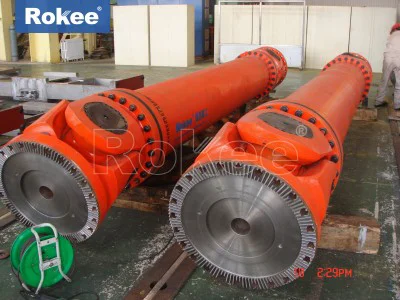
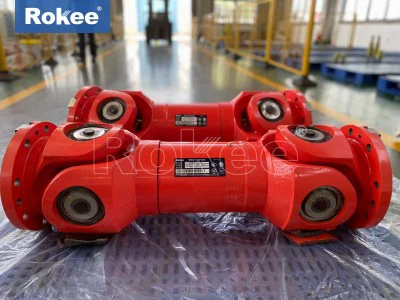
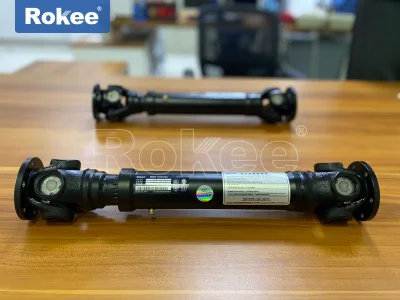
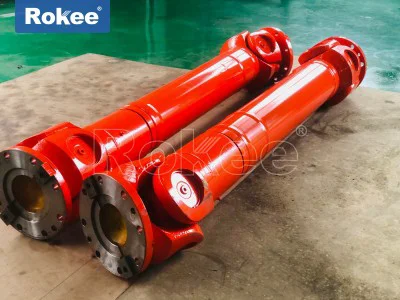
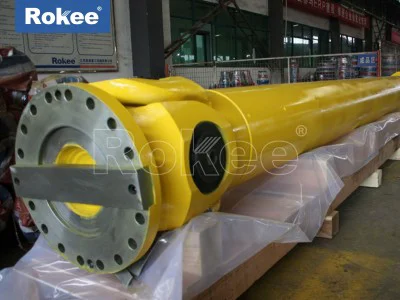
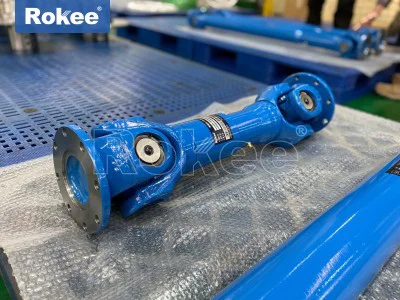
The basic structural composition of low speed universal shafts follows the mature spatial linkage mechanism design, with a simple, robust and highly reliable overall layout that lays a solid foundation for long-term stable operation under low-speed and heavy-load working conditions. The core structure is composed of cross pins, precision bearings, fork heads and telescopic shaft bodies, and each component cooperates closely to complete the conversion and transmission of rotational motion. The cross pin serves as the central hinge core of the entire transmission structure, undertaking the dual tasks of bearing torsional load and adjusting spatial angles. The matched bearings can effectively reduce friction resistance during the swinging and rotating process of the cross pin, avoiding rigid friction and wear between metal structures. The fork heads on both sides are connected to the driving shaft and driven shaft respectively, fixing the spatial position of the cross pin and ensuring that the torque can be stably transmitted from the input end to the output end. The telescopic shaft body retains a certain axial displacement allowance, which can automatically compensate for the axial position deviation caused by mechanical vibration, equipment operation deformation and installation errors in the working process, further improving the fault tolerance of the transmission system.
The working principle of low speed universal shafts is derived from the kinematic law of spatial rotational motion, realizing efficient torque transmission under non-coaxial operating conditions through the composite motion adjustment of internal structures. When the driving shaft starts to rotate and output power, the rotational motion is first transmitted to the fork head at the input end, driving the cross pin to generate composite motion of spatial swinging and rotating. Benefiting from the flexible hinge characteristics of the cross pin structure, the universal shaft can adapt to the fixed angle deviation between the two shafts, and continuously adjust the motion trajectory in each rotation cycle to ensure that the output shaft can maintain synchronous rotational operation. It is worth noting that a single universal joint has the characteristic of periodic velocity fluctuation during operation. When there is a certain included angle between the input and output shafts, the output angular velocity will slightly fluctuate twice in each rotation cycle, with the fluctuation range positively correlated with the operating angle. However, in low-speed operating scenarios, this subtle velocity fluctuation will not affect the overall operating stability of the equipment. On the contrary, the low-speed operating state can effectively weaken the vibration and impact caused by velocity changes, making the transmission process smoother and more stable compared with high-speed universal shafts.
The unique performance advantages of low speed universal shafts make them irreplaceable in low-speed and heavy-load transmission scenarios, distinguishing them from other types of transmission coupling components. First of all, it has excellent heavy-load bearing capacity. The thickened and reinforced structural design of core components enables it to bear large torque and torsional impact, and can maintain stable transmission performance for a long time under continuous heavy-load working conditions without deformation or damage. Secondly, it has outstanding misalignment adaptability, which can flexibly cope with angular misalignment, parallel misalignment and mixed misalignment generated during equipment installation and operation, and does not require extremely high installation precision like rigid couplings, greatly reducing the difficulty of equipment assembly and debugging. In addition, the overall structure of the low speed universal shaft is simple and compact, with fewer vulnerable parts, which brings significant advantages in daily use and later maintenance. The simple assembly structure allows staff to complete disassembly, inspection and assembly operations in a short time, and the durable metal materials enable it to adapt to various harsh working environments including dust, humidity and low temperature, with long service life and low comprehensive use cost.
In terms of practical application scenarios, low speed universal shafts are widely used in various mechanical equipment that requires low-speed, high-torque and stable transmission, covering multiple industrial production and engineering fields. In heavy engineering machinery, they are applied to the power transmission structures of loading equipment, lifting equipment and crushing machinery. These equipments usually work under heavy load and complex terrain conditions, with frequent mechanical vibration and shaft position deviation, and the flexible transmission performance of low speed universal shafts can well adapt to such harsh working conditions to ensure continuous power output. In industrial production equipment, they are used in supporting transmission parts of conveyor systems, mixing equipment and rolling machinery. Most of these production equipments need to run continuously for a long time, and the low-speed and stable transmission characteristics of universal shafts can avoid equipment failure and production pause caused by transmission jitter, ensuring the continuity and stability of industrial production.
In agricultural machinery and municipal engineering equipment, the application value of low speed universal shafts is also fully reflected. Field operation machinery and road maintenance equipment often work in variable and complex working environments, with large equipment vibration and easy displacement of internal transmission shafts. The good displacement compensation and anti-vibration performance of low speed universal shafts can effectively buffer the impact of external environmental changes on the transmission system, reduce mechanical loss, and improve the overall operation stability and service life of the equipment. Different from high-speed universal shafts which focus on lightweight and high dynamic balance performance, low-speed universal shafts take structural stability and load-bearing capacity as the core design indicators, which is more in line with the operation characteristics of heavy machinery that pursues stability and torque output efficiency rather than high rotational speed.
Daily maintenance and reasonable use management are key factors to ensure the long-term stable operation of low speed universal shafts and give full play to their transmission performance. Although the product itself has high durability and stability, long-term heavy-load operation and harsh environmental erosion will still cause normal wear of internal components. The most conventional and effective maintenance measure is regular lubrication maintenance. Filling high-quality lubricating oil into the internal bearing and hinge parts can reduce metal friction and wear, avoid dry friction damage caused by long-term operation, and at the same time play a certain role in vibration reduction and noise reduction. In the process of equipment operation, it is necessary to avoid long-term overload operation as much as possible. Excessive torque load will cause irreversible deformation of the cross pin and shaft body, affecting the transmission precision and service life of the universal shaft.
Regular visual inspection and disassembly inspection are also essential links in daily maintenance. Staff need to regularly check whether the shaft body has cracks, deformation and surface wear, whether the connecting parts are loose, and whether the telescopic structure can stretch freely. Once abnormal wear, loose connection or structural jamming is found, timely maintenance and replacement should be carried out to avoid small faults evolving into large equipment failures and affecting the overall operation efficiency of mechanical equipment. In addition, during equipment installation and debugging, it is necessary to control the operating angle of the universal shaft within a reasonable range. Excessively large deflection angle will increase the velocity fluctuation amplitude and operating friction, accelerate component wear, and reduce transmission efficiency and stability.
With the continuous upgrading of modern mechanical equipment towards high load, high stability and long service life, the technical optimization and performance improvement of low speed universal shafts are also advancing continuously. In recent years, with the innovation of metal processing technology and material science, the structural design of low speed universal shafts has been further optimized. High-strength wear-resistant alloy materials are widely used in the processing of core components, which effectively improves the overall hardness, wear resistance and torsional resistance of the product. The optimized hinge structure and bearing matching design further reduce internal friction resistance, improve transmission efficiency, and weaken the vibration and noise generated during operation. At the same time, the integrated processing technology makes the overall structure of the universal shaft more compact, with higher structural stability and stronger displacement compensation ability, which can adapt to more complex and diverse mechanical working conditions.
In the entire mechanical transmission system, low speed universal shafts, as a mature and reliable flexible transmission component, undertake the important task of connecting power output and execution components. Its unique low-speed heavy-load adaptation performance, excellent misalignment tolerance and simple and reliable structural characteristics make it an indispensable core part of heavy machinery and industrial equipment. Compared with other transmission components, it has obvious comprehensive advantages in adaptability, stability and maintenance cost, and can effectively solve various transmission problems easily encountered in low-speed and heavy-load mechanical operation. With the continuous development of industrial mechanization and engineering intelligence, the market demand for low speed universal shafts with high stability, long life and strong environmental adaptability will continue to grow, and the related structural optimization and performance upgrading will also provide more solid technical support for the stable operation of modern mechanical equipment. In the future industrial development process, this classic transmission component will continue to exert its unique value and play an irreplaceable role in various fields of mechanical power transmission.