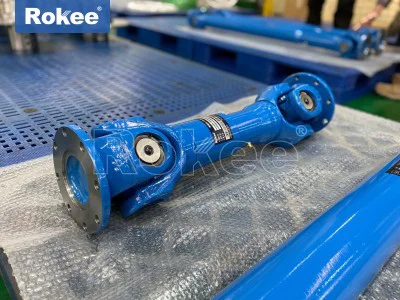
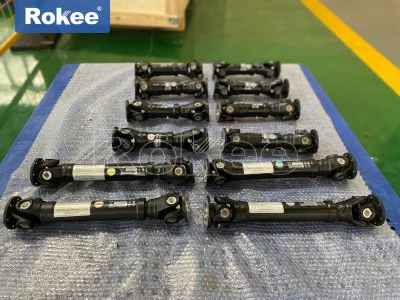
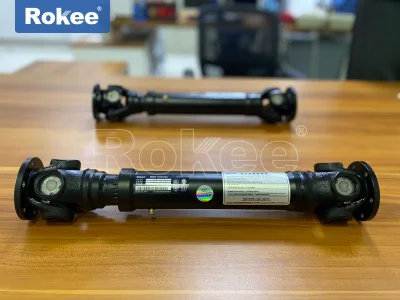
Drive Shaft Coupling
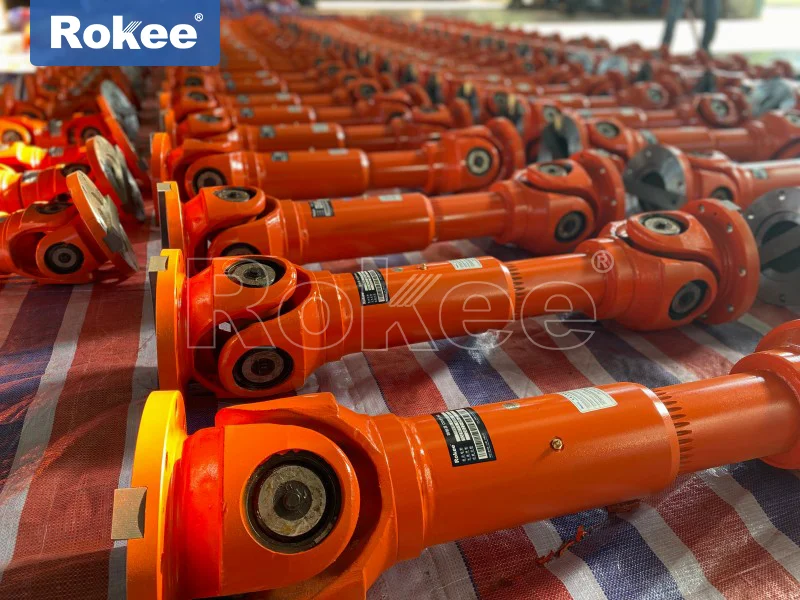
In the realm of mechanical power transmission, drive shaft couplings stand as indispensable components that bridge two rotating shafts, enabling the seamless transfer of torque and rotational motion from a driving source to a driven mechanism. Unlike fixed shaft connections that demand perfect alignment and offer no flexibility, these couplings are engineered to address the inherent challenges of real-world mechanical systems, including shaft misalignment, vibration, thermal expansion, and shock loads, while maintaining consistent power delivery across diverse operating conditions. A drive shaft coupling is not merely a connecting piece but a precision-engineered assembly tailored to balance structural rigidity, flexibility, torque capacity, and durability, with its design directly dictating its performance parameters and suitability for specific industrial, automotive, aerospace, and precision machinery applications. Every aspect of its structure, from the material selection to the internal connection mechanism and hub design, is optimized to fulfill distinct functional requirements, making the classification of couplings a critical step in matching component capabilities to operational needs.
At its core, the fundamental structure of a standard drive shaft coupling consists of two hub sections that attach securely to the driving and driven shafts, respectively, and a central connecting element that links the two hubs. The hub design varies widely based on the coupling type and intended use, with common mounting methods including keyway connections, clamp-style fastening, set screws, and keyless compression fitting, each chosen to prevent slippage, ensure concentricity, and accommodate different shaft diameters and surface conditions. The central connecting element is the heart of the coupling, as it defines whether the unit is rigid or flexible, and determines its ability to compensate for misalignment, absorb vibration, and transmit torque. Rigid couplings feature a solid, one-piece or bolted connecting structure with no movable or elastic components, creating a fixed, unified connection between the two shafts. Flexible couplings, by contrast, incorporate elastic materials, metallic flex elements, or movable mechanical joints within the central assembly, allowing controlled relative movement between the hubs while still transmitting rotational force. Material selection for coupling components is equally vital to overall performance: high-strength alloy steel is commonly used for heavy-duty hubs and rigid structural parts to withstand high torque and shear forces; aluminum alloys are favored for lightweight, low-inertia applications in precision machinery; and elastomers such as rubber, polyurethane, and synthetic polymers are utilized for flexible elements to provide vibration damping and misalignment compensation, alongside non-conductive properties for electrical isolation when needed. The structural integrity of a coupling is also shaped by its manufacturing precision, with tight tolerances ensuring smooth rotation, minimal backlash, and balanced operation, which directly reduces wear on connected shafts, bearings, and other drivetrain components over the service life.
Performance characteristics of drive shaft couplings are intrinsically tied to their structural design, with key metrics including torque transmission capacity, misalignment compensation range, torsional stiffness, vibration damping ability, backlash, operating speed range, and resistance to environmental factors such as temperature, moisture, and mechanical fatigue. Torque capacity, the maximum rotational force a coupling can transmit without deformation or failure, is determined by the cross-sectional area of the load-bearing components, material strength, and the contact area between hubs and shafts. Rigid couplings boast nearly 100% torque transmission efficiency with zero power loss, as they eliminate flex or movement, making them ideal for high-torque, high-speed applications where precision alignment is achievable. Flexible couplings sacrifice a small degree of efficiency to gain functional versatility, with their torque capacity balanced against flexibility and misalignment tolerance. Misalignment compensation is a defining performance trait, with three primary types of misalignment addressed: angular misalignment (where shafts form a slight angle), parallel misalignment (where shafts are offset horizontally), and axial misalignment (where shafts shift longitudinally due to thermal expansion or mechanical movement). Rigid couplings offer zero misalignment tolerance, requiring perfect shaft alignment during installation to avoid premature wear and component damage; any deviation in alignment creates excessive stress on shafts and bearings, leading to system failure. Flexible couplings, however, are designed to accommodate varying degrees of all three misalignment types, with the range dependent on the specific flexible element used. Torsional stiffness refers to the coupling’s resistance to twisting under torque load: high torsional stiffness is critical for precision motion control applications where positional accuracy is paramount, while low torsional stiffness paired with high elasticity is preferred for systems prone to shock loads and vibration, as it absorbs and dissipates impact energy. Backlash, the small amount of free movement between coupling components during direction reversal, is minimized in precision couplings through tight machining and zero-backlash design, while standard industrial couplings may allow minimal backlash to reduce friction and wear. Operating speed range is another crucial performance factor, with dynamically balanced couplings engineered to handle high rotational speeds without generating vibration or radial force, while heavy-duty industrial couplings are optimized for lower speeds and higher torque loads.
Drive shaft couplings are broadly classified into two primary categories: rigid couplings and flexible couplings, with each category encompassing numerous specialized subtypes designed for unique performance profiles and applications. Rigid couplings, the simplest and most robust type, are constructed as solid sleeves, flanged assemblies, or clamped shells that create a fixed, non-movable connection between shafts. Flanged rigid couplings consist of two flanged hubs bolted together face-to-face, with precise mating surfaces to ensure perfect alignment, and are widely used for heavy-duty, high-torque applications where shaft alignment remains consistent. Sleeve or muff couplings are single-piece hollow cylinders that fit over the abutting ends of two shafts, secured with keys or set screws, offering a compact, cost-effective solution for light to medium torque loads in stationary machinery. Clamp-style rigid couplings feature a split sleeve design that tightens around the shaft using bolts, eliminating the need for keyways and providing a uniform grip to prevent damage to delicate shaft surfaces. Despite their lack of flexibility, rigid couplings excel in applications requiring maximum torque transfer, minimal maintenance, and long-term dimensional stability, as they have no wearable elastic components and can operate reliably in harsh industrial environments with proper installation.
Flexible couplings represent the larger and more diverse category, further divided into metallic flexible couplings and elastomeric flexible couplings based on the type of flex element used. Metallic flexible couplings rely on thin, malleable metal components, gear teeth, or grid springs to provide flexibility, offering high torque capacity, temperature resistance, and long service life with minimal maintenance. Gear couplings, a prominent metallic subtype, feature external gear teeth on the hubs that mesh with internal gear teeth on a connecting sleeve, allowing slight angular and parallel misalignment through the clearance between gear teeth; these couplings are engineered for heavy-duty, high-torque applications in industrial machinery, offering exceptional durability and the ability to handle shock loads. Disc couplings utilize thin, flexible metal discs stacked between the hubs, transmitting torque through tension and compression of the discs while accommodating misalignment via elastic deformation; they offer zero backlash, high torsional stiffness, and precise motion control, making them ideal for servo systems, CNC machinery, and other precision automation equipment. Grid couplings incorporate a curved metal grid spring that fits into slots on the two hubs, absorbing shock loads and reducing vibration by flexing under torque, while still providing high torque density for heavy industrial equipment such as pumps, compressors, and conveyors. Elastomeric flexible couplings, by contrast, use rubber, polyurethane, or synthetic polymer elements between the hubs to deliver superior vibration damping, noise reduction, and misalignment compensation, along with electrical isolation properties. Jaw couplings, the most common elastomeric subtype, feature two hub jaws with a resilient elastomeric spider inserted between them, cushioning shock loads, reducing vibration, and accommodating moderate misalignment; they are widely used in general industrial machinery, motor-pump assemblies, and small to medium power transmission systems. Oldham couplings consist of two outer hubs and a central sliding disc, with perpendicular tongue-and-groove connections that allow high parallel misalignment compensation while maintaining zero backlash, making them suitable for precision positioning systems and applications where shaft offset is significant. Bellows couplings feature a thin, corrugated metal bellows as the flexible element, offering ultra-high precision, zero backlash, and excellent torsional stiffness, with the ability to compensate for all three types of misalignment in high-precision instruments, medical devices, and aerospace actuators. Other specialized flexible subtypes include beam couplings, which are single-piece machined units with spiral cuts to create flexibility, ideal for light-duty precision applications, and highly flexible elastomeric couplings designed for high vibration damping in large industrial drives, such as fans, blowers, and marine propulsion systems.
The selection of a specific drive shaft coupling is directly tied to its intended application, with performance requirements and operating conditions dictating the optimal type and design. Rigid couplings are exclusively used in scenarios where shaft alignment is perfectly maintained and no flexibility is needed, such as in fixed industrial gearboxes, precision spindle assemblies, and high-speed rotary machinery where maximum power transfer efficiency and positional accuracy are critical. These couplings are also preferred in applications with extreme operating temperatures or harsh chemical environments where elastomeric components would degrade rapidly. Flexible couplings, however, dominate most real-world applications due to their ability to adapt to imperfect alignment and dynamic operating conditions. In general industrial settings, such as manufacturing plants, processing facilities, and material handling systems, elastomeric jaw couplings and gear couplings are the go-to choices, balancing cost, durability, and performance for pumps, fans, conveyors, mixers, and compressors. Gear couplings are specifically favored in heavy industrial machinery, including steel rolling mills, paper processing equipment, and large hydraulic drives, where high torque and shock load resistance are essential. For precision motion control and automation applications, such as CNC machine tools, robotic arms, servo motor drives, and rotary encoders, zero-backlash disc couplings, bellows couplings, and beam couplings are selected for their exceptional positional accuracy, high torsional stiffness, and minimal backlash, ensuring consistent and repeatable motion in automated production lines. In automotive and transportation systems, specialized flexible couplings are integrated into drive trains and steering mechanisms to compensate for chassis movement, engine vibration, and shaft misalignment, enhancing ride comfort and component longevity. Marine applications require couplings that can withstand moisture, salt exposure, and mechanical stress, with rugged metallic flexible couplings used in propulsion systems and auxiliary machinery to maintain reliable power transfer in challenging marine environments. Aerospace and defense applications demand lightweight, high-strength couplings with precise performance characteristics, often utilizing custom-designed metallic and composite flexible couplings to meet strict weight, durability, and precision standards in aircraft actuators, engine systems, and avionics equipment. Medical and laboratory machinery relies on compact, precision couplings with zero backlash and smooth operation, such as miniature bellows and beam couplings, to ensure accuracy in diagnostic equipment, surgical robots, and laboratory instrumentation where even minor vibration or positional error is unacceptable.
Beyond their core function of power transmission, drive shaft couplings play a critical role in protecting entire mechanical systems from damage, extending the service life of connected components, and reducing maintenance costs. By absorbing shock loads and dampening vibration, flexible couplings prevent excessive stress on shafts, bearings, gears, and motor components, minimizing wear and reducing the frequency of repairs and replacements. The ability to compensate for misalignment also eliminates the need for ultra-precise installation in many applications, simplifying assembly and alignment processes while reducing the risk of premature system failure. Proper selection and installation of a drive shaft coupling, based on a thorough analysis of torque requirements, operating speed, misalignment potential, environmental conditions, and precision needs, are essential to maximizing system efficiency and reliability. Even the most well-designed coupling will underperform or fail prematurely if mismatched to the application, highlighting the importance of understanding the structural and performance differences between coupling types. As mechanical systems continue to evolve toward higher speeds, greater precision, and more demanding operating conditions, drive shaft coupling designs are also advancing, with new materials, optimized structural geometries, and enhanced flex element technologies expanding their performance capabilities and application range. From small-scale precision instruments to heavy industrial machinery and high-performance transportation systems, the drive shaft coupling remains a foundational component that enables the reliable, efficient operation of modern mechanical power transmission systems, with its structural design, performance traits, and classification serving as key pillars of mechanical engineering design and system integration.