Flexible Cardan Coupling

In the field of mechanical power transmission, flexible cardan couplings stand as one of the most versatile and indispensable components, designed to address the inherent challenges of transmitting torque and rotational motion between shafts that are not perfectly aligned. Unlike rigid couplings that demand precise shaft coaxiality and offer no tolerance for misalignment, these flexible variants combine articulated mechanical structures with adaptive design principles, enabling them to accommodate angular, parallel, and axial misalignments while maintaining consistent power delivery across diverse operating conditions. Their widespread adoption across nearly every industrial sector stems from a unique balance of structural simplicity, load-bearing capacity, and operational flexibility, making them a foundational element in machinery ranging from heavy industrial equipment to precision-driven mechanical systems.
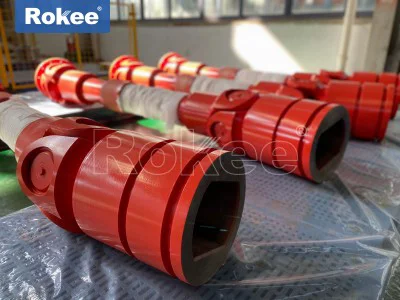
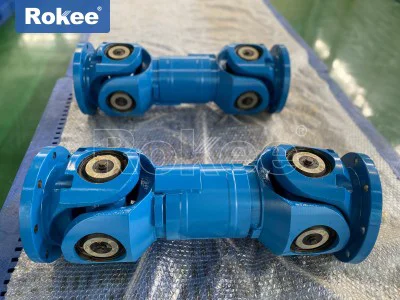
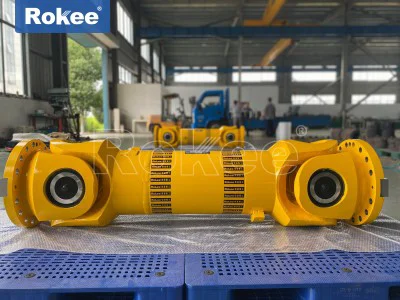
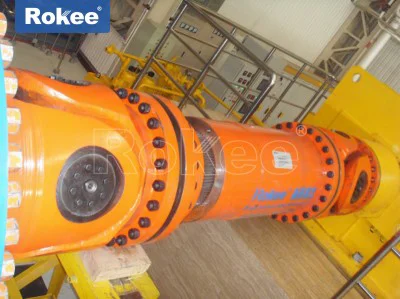
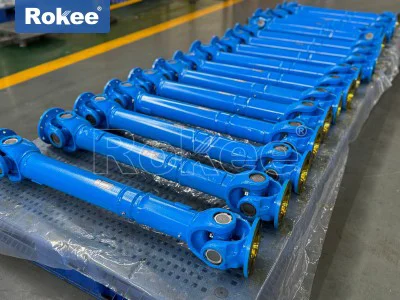
At its core, the fundamental structure of a standard flexible cardan coupling revolves around an articulated joint mechanism that allows for multi-directional movement without compromising torque transmission. The most conventional and widely used configuration features two fork-shaped yokes, one attached to the driving shaft and the other to the driven shaft, connected by a central cross-shaped intermediate member commonly referred to as a cross shaft or spider. This cross shaft is equipped with precision bearings at each of its four ends, typically needle roller bearings or plain sliding bearings, which facilitate smooth articulation between the yokes and the cross member. The bearing components are encased in durable housings to protect against contamination from dust, debris, and lubricant loss, while also ensuring stable load distribution during rotation. Unlike fixed couplings, the flexible design of this joint creates a pivot point that permits the two connected shafts to operate at varying angles relative to one another, a critical feature for systems where shaft alignment cannot be maintained due to installation errors, thermal expansion, mechanical wear, or dynamic movement during operation. Beyond the basic cross and yoke assembly, advanced flexible cardan couplings integrate additional elements to enhance flexibility and performance, such as telescopic shaft sections to accommodate axial displacement, damping inserts to reduce vibration and shock loads, and reinforced bearing surfaces to handle heavy torque demands. The materials used in manufacturing these couplings are carefully selected to match operational requirements: high-strength alloy steels are commonly employed for the yokes and cross shafts to withstand tensile, compressive, and shear forces, while heat-treated components boost wear resistance and extend service life; in some lightweight or low-load applications, engineered alloys or reinforced composite materials may be used to reduce overall weight without sacrificing structural integrity. Every structural component is engineered to work in harmony, with tight manufacturing tolerances ensuring smooth rotation, minimal backlash, and consistent performance even under continuous operating stress.
The performance characteristics of flexible cardan couplings are directly derived from their structural design, setting them apart from other types of shaft couplings and defining their suitability for specific operational environments. One of the most prominent performance advantages is their exceptional ability to compensate for multiple forms of shaft misalignment, including angular misalignment (where the two shafts intersect at an angle), parallel misalignment (where the shafts run parallel but are offset from one another), and axial misalignment (where the shafts shift longitudinally during operation). Standard flexible cardan couplings can typically accommodate angular misalignments ranging from a few degrees up to 45 degrees, depending on the specific design and size, while telescopic variants can handle axial displacements of several millimeters to centimeters, eliminating the need for perfect shaft alignment during installation and reducing the risk of mechanical failure caused by forced alignment. Another key performance trait is their high torque transmission capacity, with designs available to handle light, medium, and heavy-duty torque loads across a wide spectrum of industrial machinery. The articulated joint structure distributes torque evenly across the coupling components, preventing localized stress concentrations that can lead to premature wear or fracture. Additionally, these couplings offer reliable operational stability across a broad range of rotational speeds, from low-speed heavy-duty machinery to high-speed precision systems, with optimized bearing designs minimizing friction and heat generation during continuous rotation. Unlike some flexible coupling types that rely on elastic elements which can degrade over time, the mechanical articulation of cardan couplings provides consistent performance with minimal loss of torque efficiency, typically achieving power transmission efficiency rates above 95% under proper lubrication and maintenance. Vibration damping and shock absorption are also notable performance features; the flexible joint design absorbs minor vibrations and shock loads generated during machine startup, sudden load changes, or uneven operation, protecting both the driving and driven equipment from excessive stress and extending the service life of bearings, gears, and other critical transmission components. Furthermore, flexible cardan couplings exhibit strong durability and resistance to harsh operating conditions, including temperature fluctuations, moisture, and moderate exposure to industrial contaminants, making them suitable for both indoor controlled environments and rugged outdoor industrial settings. Proper lubrication of the bearing joints further enhances performance by reducing friction, preventing corrosion, and ensuring smooth articulation, with maintenance requirements that are straightforward and manageable for most industrial operations.
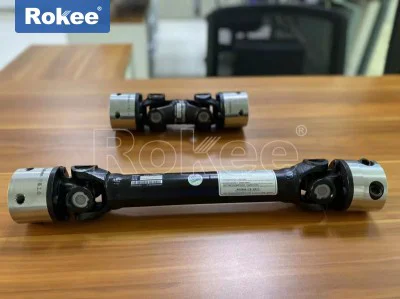
Flexible cardan couplings are categorized into several distinct types based on structural variations, performance specifications, and intended applications, each tailored to address specific engineering needs and operational challenges. The most common classification is based on joint design and flexibility capabilities, starting with the single cardan joint coupling, the simplest and most widely used variant. This type features a single cross shaft and two yokes, offering reliable angular misalignment compensation and high torque capacity, ideal for applications with moderate misalignment requirements and low to medium rotational speeds. While highly durable and cost-effective to manufacture, single cardan joints may produce minor rotational speed fluctuations at larger angles, making them more suitable for heavy-duty, low-speed equipment where smoothness of rotation is less critical than torque delivery. The double cardan joint coupling, also known as a constant velocity joint variant, is an advanced design that addresses the speed fluctuation limitation of single joints by integrating two single cardan joints connected in series via an intermediate shaft. This dual-joint configuration cancels out the velocity variations caused by angular misalignment, delivering consistent, smooth rotational motion even at significant shaft angles, making it perfect for high-speed applications where precision and vibration-free operation are essential. Another distinct type is the offset cardan joint coupling, engineered to handle both angular and parallel misalignment simultaneously, with a modified cross shaft and yoke design that accommodates lateral shaft offset without compromising torque transmission. This type is particularly useful in systems where shaft positioning is subject to dynamic shifts during operation. Additionally, flexible cardan couplings can be classified by load capacity, ranging from lightweight miniature couplings for precision instruments and small-scale mechanical devices to heavy-duty industrial couplings for large-scale mining, construction, and manufacturing equipment. Telescopic flexible cardan couplings feature an extendable shaft section that allows for variable axial length, making them ideal for applications where shaft distance may change due to thermal expansion or mechanical movement, such as in conveyor systems or mobile machinery. There are also dampened flexible cardan couplings that incorporate elastic or rubberized inserts between the joint components to enhance vibration absorption and noise reduction, suitable for equipment that operates in noise-sensitive environments or requires extra protection against shock loads. Each type retains the core articulated joint principle but is modified with specialized structural features to optimize performance for its intended use case, ensuring that engineers can select the exact coupling variant to match the unique demands of their mechanical system.
The versatility of flexible cardan couplings translates to an extensive range of industrial and commercial applications, spanning nearly every sector that relies on mechanical power transmission. In heavy industrial machinery, these couplings are a staple in metallurgical equipment, including rolling mills, metal processing machines, and steel production lines, where they transmit high torque between misaligned shafts and withstand the harsh conditions of continuous heavy-duty operation. The ability to compensate for thermal expansion and mechanical wear in these high-stress environments makes them indispensable for maintaining consistent production flow and reducing downtime. In the construction and mining industries, flexible cardan couplings are integrated into excavators, cranes, bulldozers, conveyor systems, and drilling equipment, where they handle the extreme torque loads and dynamic shaft misalignment caused by uneven terrain and heavy material handling. The rugged construction and high load-bearing capacity of heavy-duty cardan couplings ensure reliable performance in outdoor, dusty, and high-impact conditions that would quickly damage less robust coupling types. In the automotive and transportation sector, these couplings play a vital role in vehicle drivetrains, connecting gearboxes to drive axles, and in commercial vehicle systems such as trucks, buses, and agricultural machinery, where they accommodate the movement of suspension components and varying shaft angles during operation. Constant velocity double cardan couplings are particularly prevalent in passenger vehicles and high-performance machinery, delivering smooth power transfer and reducing vibration for improved operational comfort and efficiency. In precision engineering and manufacturing, lightweight and miniature flexible cardan couplings are used in machine tools, robotic arms, packaging machinery, and textile equipment, where precise torque transmission and minimal backlash are critical for maintaining production accuracy. These small-scale couplings handle high-speed rotation with minimal friction, ensuring the precision required for intricate manufacturing processes and automated production lines. The agricultural industry relies heavily on flexible cardan couplings for farming equipment such as tractors, harvesters, and irrigation systems, where they transmit power between engine components and working parts while adapting to the uneven movement and vibration of field operations. In marine and aerospace applications, specialized corrosion-resistant and lightweight cardan couplings are used in propulsion systems, control mechanisms, and auxiliary equipment, where they provide reliable power transmission in confined spaces and under dynamic operating conditions. Additionally, these couplings find use in pump and compressor systems, material handling equipment, printing machinery, and power generation units, highlighting their universal adaptability to diverse mechanical systems. The key reason for their widespread use across these sectors is their ability to solve a universal engineering problem: maintaining reliable power transmission when perfect shaft alignment is unachievable, while also enhancing equipment durability, reducing maintenance needs, and improving overall operational efficiency.
Beyond their immediate functional benefits, flexible cardan couplings contribute to broader industrial efficiency by reducing the need for complex shaft alignment procedures during equipment installation and maintenance. Their flexible design minimizes the risk of premature bearing failure, gear wear, and shaft breakage that commonly occurs with rigid couplings in misaligned systems, leading to lower long-term maintenance costs and extended equipment service life. As mechanical engineering continues to evolve, the design of flexible cardan couplings has also advanced, with improvements in bearing technology, material science, and manufacturing precision enhancing their performance, durability, and adaptability. Modern variants feature optimized cross shaft geometries, low-friction bearing materials, and sealed lubrication systems that reduce maintenance frequency and improve performance in extreme conditions. Despite the emergence of new transmission components, flexible cardan couplings remain a preferred choice for engineers worldwide due to their proven reliability, simple structure, and ability to adapt to the dynamic demands of modern machinery. Their enduring relevance lies in their perfect balance of simplicity and functionality, offering a practical, cost-effective solution to the persistent challenge of shaft misalignment in mechanical power transmission. Whether in heavy industrial settings, precision manufacturing environments, mobile machinery, or specialized technical systems, flexible cardan couplings continue to play a critical role in ensuring smooth, efficient, and reliable mechanical operation, solidifying their status as an essential component in the global industrial landscape.