Universal Shaft Coupling Upgrade For Sandwich Panel Machine To Further Improve Efficiency

The continuous production of sandwich panels relies entirely on the stable and coordinated operation of every transmission link within the sandwich panel machine production line, where power transmission accuracy, operational stability and mechanical power transfer efficiency directly determine the overall production throughput, product molding consistency and long-term operational reliability of the entire manufacturing system. In the actual industrial production environment, most traditional sandwich panel production lines have been equipped with basic transmission connection components for a long time, and these conventional connecting structures can only meet the most basic power transmission requirements under ideal operating conditions, lacking effective adaptability to complex working conditions such as long-term continuous operation, frequent load changes, and slight axis deviation caused by mechanical vibration and equipment aging. As market demand for sandwich panel products continues to expand and production enterprises gradually raise requirements for automated continuous production, energy consumption control and product yield optimization, the hidden drawbacks of traditional transmission connecting parts in long-term operation have become increasingly prominent, gradually becoming a key bottleneck restricting the further improvement of the comprehensive operating efficiency of sandwich panel machines. Conducting targeted upgrade and optimization of the universal shaft coupling specially used for the core transmission part of sandwich panel machines has therefore become an essential and effective technical measure to break through production efficiency limitations, reduce unnecessary mechanical energy loss, stabilize continuous production rhythm, and extend the overall service life of production line equipment, bringing multiple practical improvements to the daily production operation and long-term operational management of sandwich panel manufacturing enterprises.
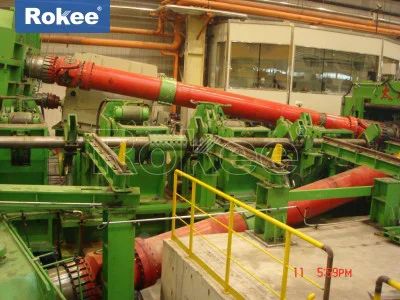
Sandwich panel machines belong to typical continuous automated production and processing equipment, integrating raw material unwinding, surface layer material conveying, core material filling and compounding, high-pressure thermal pressing, fixed-length cutting, finished product conveying and stacking processes into one complete assembly line production system. Each functional module in the production line needs to maintain precise synchronous operating speed and stable torque output during operation, and all power output and equipment linkage actions depend on the reliable connection and efficient power transmission of the shaft transmission system between driving motors, reduction gearboxes, driving rollers and driven operating components. In the actual production and operation process, the sandwich panel machine will inevitably generate continuous mechanical vibration due to long-term high-load continuous operation, and the mechanical base will produce slight deformation and displacement after years of operation, resulting in different degrees of angular deviation, axial displacement and radial offset between the connecting shafts of different transmission components. For a long time, many production lines have adopted relatively simple rigid connecting structures or ordinary low-compensation transmission couplings to connect various transmission shafts. Although these traditional connecting components have simple structures and basic installation convenience, they cannot effectively compensate for the various shaft deviations generated during equipment operation. On the contrary, they will directly transmit vibration and impact generated by the operation of a single component to the entire transmission system, causing additional friction and mechanical resistance between internal transmission parts, forming obvious power transmission loss, and making it impossible for the power output by the driving motor to be fully converted into effective production power for material conveying and panel compounding. This not only leads to increased invalid energy consumption in the production process, but also easily causes inconsistent operating speeds of different functional sections of the production line, affects the compounding accuracy and molding quality of sandwich panels, and increases the probability of defective products in the production process.
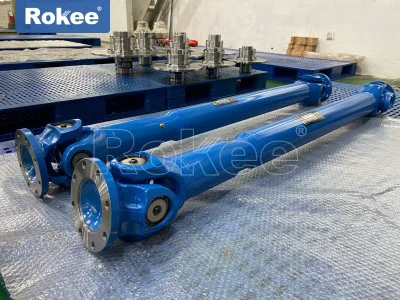
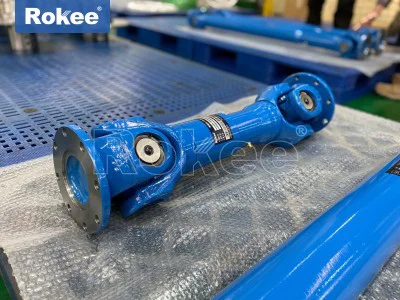
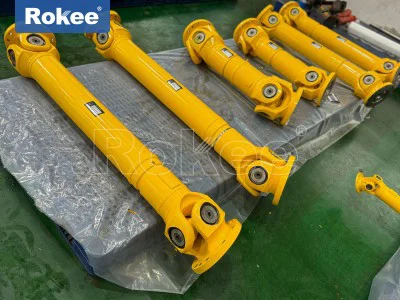
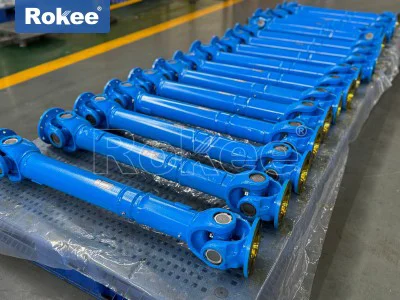
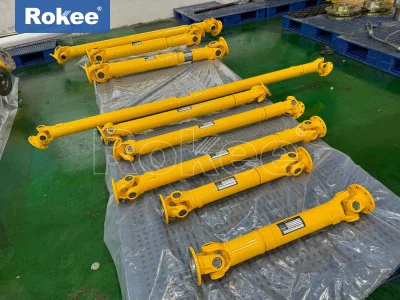
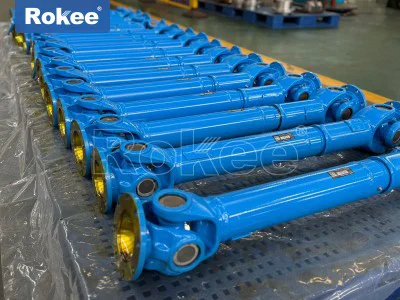
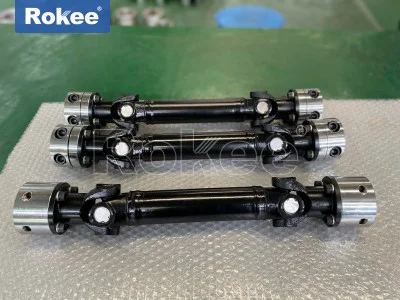
The universal shaft coupling is a professional mechanical transmission component specially designed to connect two shafts with non-collinear axes and realize stable torque and rotational motion transmission. Its core structural design is centered on a cross shaft connecting structure, matched with flexible articulated yokes and low-friction rotating bearing components, which can effectively realize three-dimensional displacement compensation for angular deviation, axial movement and radial offset between connected shafts during the power transmission process. Different from rigid connecting structures that lack displacement compensation capability and ordinary flexible couplings with limited bearing capacity, the standard universal shaft coupling has excellent vibration absorption and impact buffering performance while maintaining efficient and direct torque transmission. It can isolate the mechanical vibration generated by individual operating parts in a single transmission link and prevent vibration resonance from spreading to the entire production line transmission system, ensuring that each transmission shaft always maintains a stable operating state even under complex working conditions of long-term continuous operation and frequent load fluctuation. In the original supporting configuration of most sandwich panel machines, the equipped traditional couplings often have single functional structure, poor wear resistance of internal rotating parts, insufficient displacement compensation range, and weak vibration absorption effect. After a period of operation, internal bearings are prone to wear and aging, the connecting gap between components increases significantly, resulting in obvious jitter and speed fluctuation during shaft rotation. These subtle mechanical changes will gradually evolve into large-scale transmission deviation in the long-term continuous production process, leading to asynchronous operation speed between the thermal pressing compounding section and the front and rear conveying sections of the sandwich panel machine, unstable pressure control during panel thermal pressing, uneven bonding between core materials and surface materials, and a series of product quality problems. At the same time, increased internal friction and unstable transmission operation will also cause the driving motor to need more power output to maintain normal production speed, resulting in increased unnecessary energy waste and rising production and operation costs for enterprises.
The core purpose of upgrading the universal shaft coupling for sandwich panel machine is to optimize the core transmission connection link from the source, eliminate various adverse factors affecting power transmission efficiency and equipment operation stability in the transmission process, and maximize the effective utilization rate of mechanical power while adapting to the actual complex operating conditions of continuous production lines. The upgraded universal shaft coupling retains the mature and reliable basic working principle of the cross shaft transmission structure, and carries out targeted optimization and upgrading in structural matching design, internal component material configuration, overall displacement compensation range, vibration buffering performance and long-term wear resistance. In terms of structural design optimization, the upgraded universal shaft coupling adopts a more reasonable integrated fork head modular structure design, which makes the connection between the coupling and the transmission shaft more compact and fits more closely, effectively reducing the assembly gap generated during long-term operation. The optimized internal cross shaft and bearing matching structure can expand the range of angular displacement compensation and axial displacement compensation, fully adapting to the slight shaft deviation and mechanical displacement inevitably generated during the long-term operation of sandwich panel machines, ensuring that the torque transmission process is always kept smooth and stable without additional mechanical resistance caused by shaft misalignment. At the same time, the internal rotating bearing components of the upgraded coupling are optimized with low-friction and high-wear-resistance structural configuration, which can greatly reduce the friction coefficient during the rotation operation, minimize the mechanical energy loss converted into heat energy due to friction in the power transmission process, and enable most of the power output by the driving motor to be efficiently transmitted to each operating component of the production line for effective production operations.
After the universal shaft coupling upgrade is completed and put into actual operation on the sandwich panel production line, the most intuitive operational improvement is the significant enhancement of the overall operation stability of the equipment transmission system. The vibration and jitter phenomenon that often occurred during the high-speed operation of the original production line is effectively alleviated, the rotational speed of each transmission shaft remains uniform and stable throughout the long-term continuous production process, and the synchronous coordination between the material unwinding conveying section, the core material filling section, the thermal pressing compounding section and the finished product cutting and conveying section of the production line is more precise and consistent. The stable transmission state eliminates the speed fluctuation and operation pause caused by transmission connection problems in the production process, realizing truly uninterrupted continuous production operation of the sandwich panel machine. The effective improvement of transmission stability directly optimizes the molding quality and production consistency of sandwich panel products, the bonding compactness between the core material and the surface material of each batch of panels is more uniform, the dimensional accuracy of fixed-length cutting is more stable, and the proportion of unqualified products caused by equipment transmission jitter and asynchronous operation is significantly reduced. For production enterprises, the reduction in defective product rate not only reduces the waste of raw material resources, but also saves the time cost and labor cost caused by product rework and waste disposal, indirectly improving the effective output and qualified product yield of the entire production line.
In terms of energy utilization and production operating cost control, the efficiency improvement brought by the universal shaft coupling upgrade is also very significant. The traditional couplings used in old equipment have large internal friction and serious power transmission loss, and a considerable part of the electric energy consumed by the driving motor is dissipated in the form of friction heat and mechanical vibration instead of being used for the actual production and processing of sandwich panels. The upgraded universal shaft coupling reduces internal friction loss to the greatest extent through low-friction structural optimization and high-precision component matching, realizing more direct and efficient torque transmission. Under the same production output and operating speed conditions, the motor load required to maintain the normal operation of the sandwich panel machine is significantly reduced, the invalid electric energy consumption of the production line is effectively saved, and the overall energy utilization efficiency of the production equipment is improved year by year in long-term continuous operation. In addition, the upgraded universal shaft coupling has better overall structural firmness and long-term wear resistance, and the internal key vulnerable parts have longer service life under high-load continuous operating conditions. Compared with the traditional couplings that are prone to rapid wear and frequent failure and need regular disassembly, replacement and maintenance, the upgraded coupling reduces the frequency of equipment shutdown maintenance and component replacement. The production line no longer needs to stop production frequently for transmission connection maintenance and debugging, the effective continuous production time is greatly increased, and the production efficiency per unit time is steadily improved. At the same time, the reduction in the number of maintenance replacements also lowers the daily equipment maintenance cost and labor maintenance workload for enterprises, realizing dual optimization of production efficiency and operating cost.
In the long-term equipment operation and production line upgrading and iteration process, the upgrade of universal shaft coupling, as a small but core key component optimization project, plays a vital underlying supporting role for the high-efficiency and high-quality operation of the entire sandwich panel machine. Many production enterprises often focus on the upgrade and transformation of large core equipment such as thermal pressing systems and automation control systems in the process of improving production efficiency, while ignoring the important impact of basic transmission connecting components on the overall operating efficiency of the equipment. In fact, all large-scale production equipment relies on the stable operation of each basic transmission link, and the performance of small transmission components directly restricts the operating state and production potential of large equipment. The practical application effect of the universal shaft coupling upgrade on sandwich panel machines fully proves that targeted optimization and upgrading of basic transmission components can effectively solve many subtle but long-standing operational pain points in production equipment, tap the inherent production potential of existing equipment without large-scale transformation and replacement of main equipment, and achieve the goal of significantly improving comprehensive production efficiency with relatively targeted technical optimization measures.
With the continuous development of the sandwich panel manufacturing industry towards large-scale production, automated operation and refined management, the requirements for the continuity, stability and high efficiency of production line equipment will continue to increase, and the importance of high-performance universal shaft couplings in supporting the stable operation of sandwich panel machines will become more prominent. Subsequent production operation and equipment management work can further combine the actual production load characteristics and long-term operation data of the production line, carry out regular inspection and reasonable maintenance of the upgraded universal shaft couplings, maintain the optimal operating state of the transmission connection link, and ensure that the efficiency improvement advantages brought by the component upgrade can be sustained for a long time. Through this series of targeted component upgrade and stable operation guarantee measures, sandwich panel production enterprises can continuously optimize the production operation mode, give full play to the maximum production capacity of existing equipment, realize stable improvement of production efficiency, stable reduction of operating costs and stable upgrading of product quality, and lay a solid foundation for the long-term stable development and market competitiveness improvement of the enterprise in the fierce industry competition.