Universal Coupling Is Indispensable For Optimization Of Transmission System Of Sandwich Panel Production Line
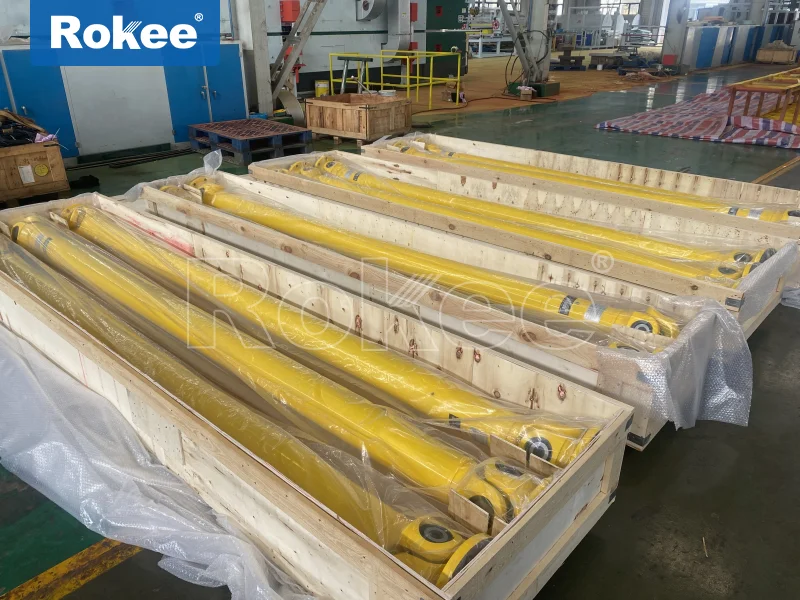
The sandwich panel production line stands as a core integrated mechanical equipment in the modern building material manufacturing industry, undertaking the continuous and efficient production of lightweight, heat-insulating and structurally stable composite building panels that are widely applied in industrial factory buildings, cold storage facilities, modular construction projects and various architectural enclosure engineering scenarios. The entire production workflow of sandwich panels involves multiple consecutive and interlocked processing procedures, including raw material unwinding, surface layer leveling, core material filling and bonding, continuous rolling forming, high-pressure compound pressing, constant-temperature curing, fixed-length cutting and finished product conveying, and every single production link relies on the stable and coordinated operation of the internal transmission system of the production line. The transmission system serves as the power core of the entire sandwich panel production line, responsible for transmitting rotational torque and operating power from power drive components such as motors and gearboxes to various functional execution shafts and processing equipment units, ensuring that each production station maintains synchronized operating speed, consistent running rhythm and stable processing precision during long-term continuous production. In the actual industrial production operation process, the transmission system of the sandwich panel production line often faces multiple adverse interference factors, including inevitable installation deviation of mechanical shafts, structural deformation of equipment frames caused by long-term heavy-load operation, thermal expansion and contraction of metal components generated by continuous processing heat, and slight position offset of key transmission shafts under frequent start-stop and variable-load working conditions. These objective working condition characteristics will lead to different degrees of angular misalignment, parallel offset and axial displacement between the driving shaft and driven shaft of each transmission link, and if these shaft position deviations cannot be effectively compensated and adjusted in a timely and reliable manner, they will directly trigger a series of operational problems such as unsmooth power transmission, obvious mechanical vibration, intensified component friction and wear, unstable running speed of processing equipment, and even frequent production line shutdowns and unqualified finished product processing quality in the transmission system. As a key and professional mechanical transmission component with excellent multi-directional deviation compensation capability and stable high-torque transmission performance, the universal coupling has become an indispensable core part for the overall performance optimization, operational stability improvement and long-term reliable operation maintenance of the sandwich panel production line transmission system, and its structural characteristics and functional advantages perfectly fit the complex and harsh actual working condition requirements of sandwich panel continuous production equipment.
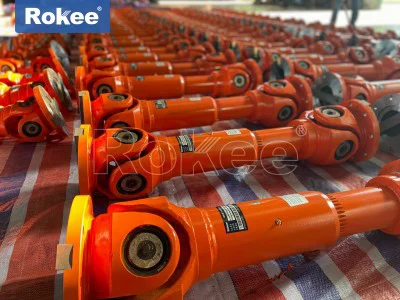
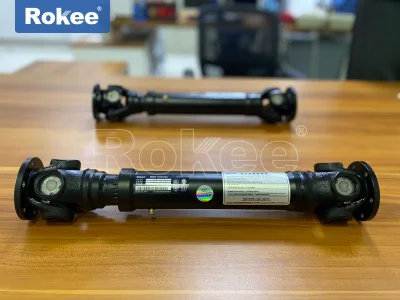
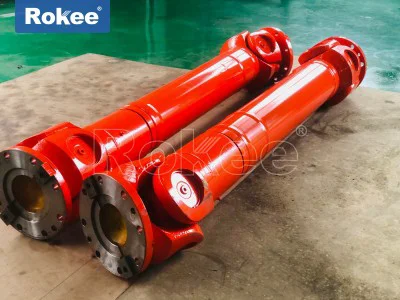
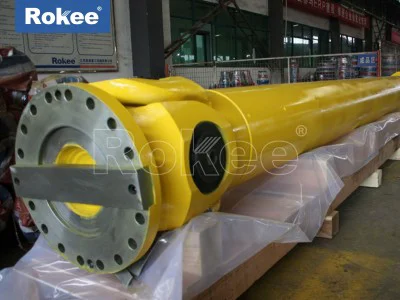
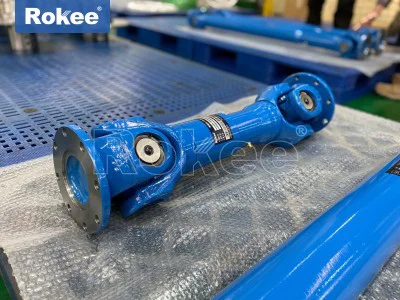
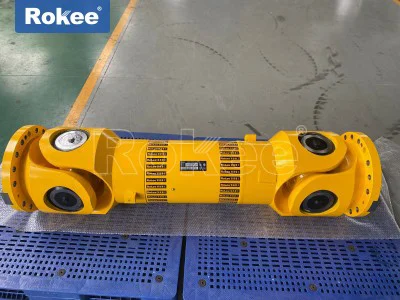
The basic structural design and working principle of universal coupling lay a solid mechanical foundation for its excellent adaptability to the complex transmission environment of sandwich panel production lines. Different from ordinary rigid couplings and common flexible couplings with single compensation function, the universal coupling adopts a unique structural combination composed of two symmetrical yoke components and a cross-shaped intermediate connecting spider, and this ingenious mechanical structure design enables the coupling to break through the transmission limitation of traditional couplings that can only work normally under the condition of strict coaxial alignment of connecting shafts. In the actual power transmission process, the cross-shaped intermediate part of the universal coupling can realize flexible rotational deflection and angle adjustment in multiple directions, which not only can efficiently and stably transmit continuous rotational motion and high mechanical torque between the driving shaft and the driven shaft, but also can automatically and dynamically compensate for various shaft position deviations generated during the operation of the equipment in real time. This core working characteristic enables the universal coupling to maintain consistent and efficient power transmission efficiency even when the connected transmission shafts have large angular deflection, parallel radial offset and axial telescopic displacement, avoiding the power transmission loss and mechanical operation jitter caused by shaft misalignment. For the sandwich panel production line, which requires long-term uninterrupted cyclic operation and high synchronous coordination of multiple transmission shafts, this basic performance advantage of universal coupling is particularly critical. The production line needs to keep running continuously for dozens of hours every day to meet the large-scale market demand for sandwich panels, and the long-term continuous operation will inevitably lead to slight structural fatigue deformation of the equipment base and frame, as well as thermal deformation of transmission shafts and mechanical parts after long-time friction and heat generation. Without the flexible compensation protection of universal couplings, even tiny shaft misalignment will gradually amplify mechanical stress and transmission vibration during high-speed and long-term operation, eventually leading to accelerated aging and damage of transmission bearings, gears and other vulnerable parts, increasing equipment maintenance frequency and affecting production continuity. The structural particularity of universal coupling makes it have stronger mechanical bearing capacity and impact resistance compared with ordinary elastic couplings, and it can cope with the variable load impact generated by the frequent switching of processing procedures and the instantaneous load change during material feeding and pressing in the sandwich panel production process, ensuring that the transmission system will not have torque transmission interruption or mechanical structural damage due to sudden load fluctuations.
The optimization value of universal coupling for the transmission system of sandwich panel production line is first reflected in effectively reducing the adverse impact of installation and operation errors on transmission stability and lowering the overall operation failure rate of the equipment. In the equipment assembly and installation stage of the sandwich panel production line, due to the limitations of mechanical processing accuracy of equipment components, on-site installation construction conditions and assembly operation errors, it is almost impossible to achieve absolute strict coaxial alignment between all matched driving shafts and driven shafts of the transmission system. Traditional rigid transmission couplings have extremely high requirements for shaft alignment accuracy during installation, and any slight installation deviation will cause additional radial force and torsional stress on the transmission shaft during operation, resulting in severe mechanical vibration and abnormal noise of the production line during operation. In contrast, the universal coupling has excellent angular and parallel misalignment compensation performance, which can greatly relax the installation accuracy requirements of the transmission shaft group of the sandwich panel production line, effectively tolerating the installation deviation generated in the actual assembly process without affecting the normal power transmission effect. This not only simplifies the on-site equipment installation and commissioning process, shortens the equipment installation and debugging cycle, but also avoids the additional mechanical damage caused by forced alignment installation of transmission components. More importantly, during the long-term production and operation of the sandwich panel production line, the equipment will be subjected to continuous mechanical load, processing thermal effect and environmental temperature change, resulting in slow structural deformation and shaft position offset of the transmission system over time. The universal coupling can dynamically adjust the connection angle and relative position in real time according to the actual operation state of the transmission shaft, automatically compensating for the shaft position changes caused by thermal expansion, mechanical deformation and equipment aging, always maintaining the flexible and reliable connection state between the driving end and the driven end of the transmission system. This continuous dynamic compensation function fundamentally eliminates the transmission jitter and power attenuation caused by shaft misalignment, ensures that each transmission shaft of the production line runs at a constant and stable speed, avoids the production rhythm fluctuation caused by unstable transmission, and provides a reliable mechanical guarantee for the consistent processing quality of sandwich panels in each production batch.
The application of universal coupling in the transmission system of sandwich panel production line also significantly improves the overall transmission efficiency of the equipment and reduces the energy consumption loss in the production and operation process. The transmission efficiency of the production line transmission system directly determines the energy utilization rate of the entire production process and the production operation cost of the enterprise, and any unstable transmission link and mechanical friction loss will lead to unnecessary waste of power energy. Traditional transmission couplings are prone to rigid friction and torque hysteresis when dealing with shaft misalignment, resulting in a large amount of power energy being converted into mechanical friction heat and vibration energy instead of being used for the normal driving of production and processing equipment, resulting in low transmission efficiency and increased energy consumption. The universal coupling adopts a rigid metal linkage transmission structure with flexible deflection coordination, which not only has high structural rigidity and torque transmission rigidity, but also can avoid rigid friction and mechanical collision between transmission components through flexible angle adjustment. In the power transmission process, the universal coupling can realize almost lossless torque transmission while compensating for shaft deviation, ensuring that most of the power output by the motor and power components is accurately transmitted to each processing execution equipment of the sandwich panel production line, reducing the invalid energy loss in the transmission link. For the sandwich panel production line that needs long-term continuous operation, the long-term high-efficiency transmission performance brought by the universal coupling can accumulate considerable energy-saving effects, effectively reducing the comprehensive energy consumption per unit product in the production process. At the same time, the stable and efficient transmission state also avoids the power waste caused by equipment operation failure, repeated start-stop and production shutdown maintenance, further optimizing the energy utilization structure of the production line transmission system and improving the economic operation benefit of the entire production equipment.
Furthermore, universal coupling plays a vital role in extending the service life of transmission system components and reducing the daily maintenance and replacement cost of sandwich panel production line equipment. The transmission system of the sandwich panel production line is composed of a large number of precision mechanical parts, including transmission shafts, bearings, gears, reducers and other core vulnerable components. These parts have high requirements for the stability of the operating environment, and long-term mechanical vibration, eccentric wear and impact load will greatly accelerate their wear and aging speed, shortening the service life of parts and increasing the frequency of equipment maintenance and parts replacement. When the transmission shaft is misaligned, ordinary couplings cannot effectively buffer and compensate, resulting in long-term eccentric force and periodic impact load acting on bearings and gear components, causing abnormal wear of bearing inner and outer rings, gear tooth surface abrasion and mechanical fatigue damage. The universal coupling can effectively isolate and buffer the eccentric force and impact stress generated by shaft misalignment through its flexible deflection compensation function, avoiding the long-term eccentric load operation of bearings, gears and other precision parts, reducing the friction and wear degree of key transmission components in the working process. By maintaining the stable operating state of the entire transmission system, the universal coupling greatly prolongs the service cycle of various mechanical parts in the transmission system, reduces the frequency of equipment failure shutdown maintenance and vulnerable parts replacement. For building material production enterprises, this not only saves a lot of parts procurement costs and equipment maintenance labor costs, but also avoids the production capacity loss and order delivery delay caused by frequent equipment shutdown maintenance, ensuring the continuity and stability of enterprise production and operation activities.
In the actual operation and production management of sandwich panel production lines, the optimization effect of universal coupling on the transmission system is also reflected in improving the synchronization accuracy of each production station and stabilizing the overall processing quality of finished sandwich panels. The production and processing of sandwich panels is a highly coordinated continuous production process, and each link from raw material feeding, composite pressing to finished product cutting and conveying requires strict synchronization of operating speed and running rhythm between different transmission equipment. Once the transmission system has unstable speed and asynchronous operation due to poor transmission connection, it will directly lead to problems such as uneven bonding of sandwich panel core material and surface material, inconsistent panel thickness, irregular cutting size and unqualified surface flatness, resulting in a large number of defective products and reducing the qualified rate of finished products. The excellent transmission stability and dynamic compensation performance of universal coupling ensure that all transmission shafts and processing equipment of the production line can maintain synchronous and constant-speed operation under various working conditions, eliminating the speed fluctuation and operation asynchronization caused by transmission link failure. The stable transmission rhythm makes the feeding speed of raw materials, the pressing pressure of composite equipment and the cutting speed of fixed-length cutting equipment always keep in the optimal matching state, ensuring that the bonding compactness, overall thickness and dimensional accuracy of each batch of sandwich panels meet the production processing standards. With the increasing market demand for high-quality and high-precision sandwich building panels, the processing quality stability of production lines has become a key factor affecting the market competitiveness of enterprises, and the universal coupling provides reliable basic mechanical support for the high-precision and high-quality production of sandwich panels through optimizing the transmission synchronization performance of the production line.
With the continuous upgrading of building material production technology and the increasing market requirements for the production efficiency and automation level of sandwich panel production lines, the transmission system of production lines is developing towards high power, high automation and long-term continuous operation. In this development trend, the functional advantages and application value of universal coupling in transmission system optimization will become more prominent and irreplaceable. Modern new-type sandwich panel production lines have higher requirements for transmission system stability, energy-saving performance and low failure rate, and the traditional ordinary couplings can no longer meet the complex working condition requirements of high-load, long-cycle and high-precision production operation. The universal coupling, with its excellent multi-directional deviation compensation capability, high-efficiency torque transmission performance, strong impact resistance and long service life, can fully adapt to the upgrading and development needs of modern sandwich panel production line transmission systems. It can effectively solve various transmission pain points existing in the operation of traditional production line transmission systems, realize the overall performance optimization of the transmission system in terms of stability, efficiency, durability and synchronization, and help building material production enterprises realize efficient production, stable operation and cost reduction and efficiency improvement of sandwich panel production lines. In conclusion, the universal coupling is not only a basic connecting part in the mechanical structure of the sandwich panel production line, but also a core key component indispensable for the overall optimization and long-term reliable operation of the production line transmission system. Its unique mechanical performance and practical application value run through the whole process of equipment installation, daily operation, maintenance and upgrading of sandwich panel production lines, and play an irreplaceable positive role in promoting the stable production and high-quality development of the sandwich panel manufacturing industry.