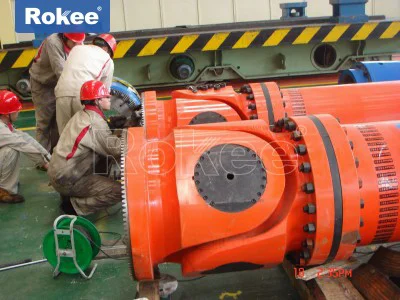
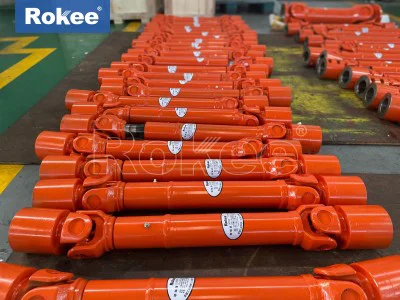
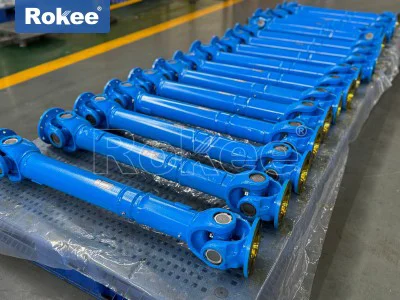
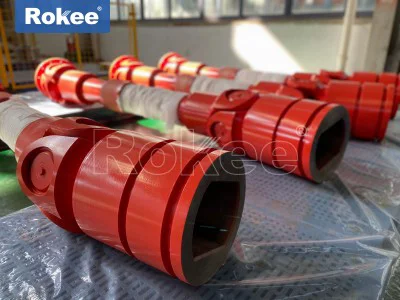
Universal Coupling Improves The Transmission Accuracy Of Sandwich Panel Manufacturing Line
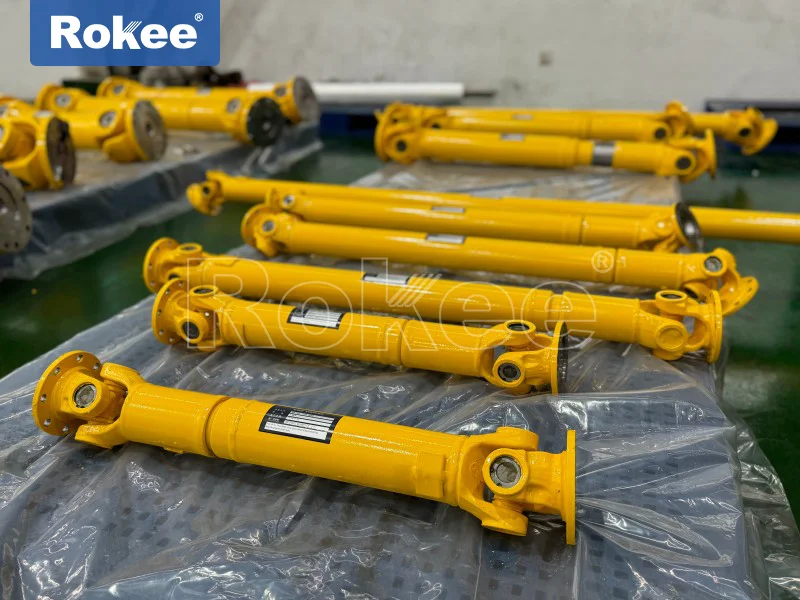
The continuous advancement of modern building material manufacturing technology has placed increasingly stringent requirements on the operational stability and production precision of automated production lines, and sandwich panel production, as a core link in the production of energy-saving and thermal insulation building materials, relies heavily on the coordinated and precise operation of every transmission node in the entire production process. Sandwich panels are composite building materials formed by compounding metal surface layers with lightweight thermal insulation core materials through continuous rolling, bonding, pressing and cutting processes, and the overall forming quality of the panels, including surface flatness, bonding uniformity, dimensional consistency and cutting edge neatness, is directly determined by the synchronization accuracy and rotational stability of various transmission shafts, rollers and processing equipment in the manufacturing line. In the actual long-term operation of traditional sandwich panel production lines, transmission systems often face common mechanical problems such as shaft misalignment caused by equipment installation deviation, thermal deformation during continuous high-load operation, mechanical vibration and component wear, which easily lead to uneven torque transmission, inconsistent rotational speed between adjacent processing units, and subtle displacement deviations in the transmission process. These tiny transmission errors will be continuously amplified in the continuous cyclic production process, eventually causing a series of product quality defects such as inconsistent panel thickness, uneven core material filling, misalignment of surface layer and core material lamination, and irregular cutting sizes, seriously affecting the qualified rate of finished products and the overall production efficiency of the line. As a key flexible transmission component in mechanical transmission systems, universal couplings have unique structural advantages in compensating for angular deviation, parallel offset and axial displacement between connected shafts, and can effectively solve the transmission instability problems caused by various misalignment factors in the operation of sandwich panel manufacturing lines. By optimizing the connection mode of each transmission link in the production line and replacing rigid transmission parts with high-performance universal couplings, the entire transmission system can maintain stable and consistent torque and rotational speed transmission under long-term continuous operation and complex working conditions, fundamentally reduce transmission errors and mechanical vibration, and comprehensively improve the overall transmission accuracy of the sandwich panel manufacturing line, thereby stabilizing product processing quality, reducing production loss caused by transmission failure, and extending the service life of the entire production line equipment.
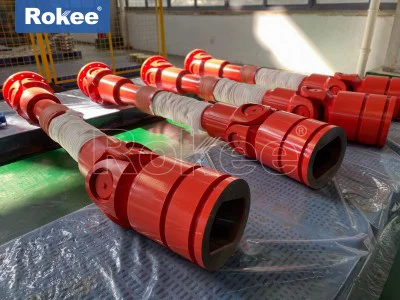
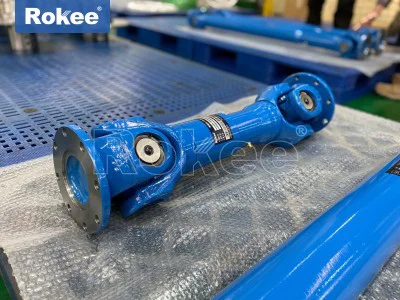
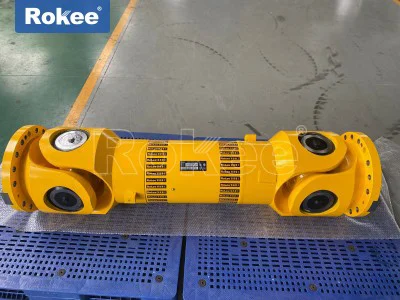
The basic working principle of universal couplings is based on the spatial linkage mechanism theory, and the most widely used cross-axis universal coupling in industrial production is composed of two symmetrical fork heads, a cross-shaped intermediate shaft and supporting bearing components, forming a flexible connection structure that can adapt to multi-directional angular deflection between transmission shafts. Different from rigid transmission connectors that require precise coaxial arrangement of connected shafts and cannot bear any installation deviation or operational deformation, the core structural characteristic of universal couplings is that they can realize continuous and reliable torque and rotational motion transmission between two shafts with a certain angular deviation and parallel offset. When the driving shaft of the sandwich panel production line rotates and outputs power, the fork head at one end of the universal coupling follows the driving shaft to perform circular rotational motion, and drives the cross shaft to perform adaptive swinging and rotating movement through the matching bearing structure; the cross shaft then transmits the power and rotational motion to the fork head at the other end, and further drives the driven shaft to operate synchronously. In this working process, the cross shaft and bearing components of the universal coupling can automatically adjust the rotation angle and stress distribution according to the actual misalignment state between the driving shaft and the driven shaft, effectively offsetting the non-uniform velocity fluctuation and torque loss caused by shaft misalignment, and ensuring that the power input and output of each transmission node in the production line remain stable and consistent. For the sandwich panel manufacturing line with multiple continuous processing procedures, which involves the coordinated operation of feeding transmission, rolling forming transmission, bonding pressing transmission, traction conveying transmission and fixed-length cutting transmission links, each independent transmission unit has strict synchronization requirements in rotational speed and operating rhythm. Any small misalignment between the connecting shafts of motors, reducers, transmission rollers and traction equipment will cause asynchronous operation of the front and rear processing units, leading to jitter and deviation in the conveying and forming process of sandwich panel raw materials. The application of universal couplings perfectly solves this inherent defect of rigid transmission. Whether it is slight angular misalignment caused by initial equipment installation, parallel offset generated by long-term mechanical vibration and component fatigue, or axial displacement caused by thermal expansion and contraction of equipment during high-temperature bonding and pressing processes, universal couplings can carry out real-time flexible compensation without generating additional mechanical stress and transmission resistance, ensuring that each transmission link always maintains accurate power output and synchronous operating state.
In the actual operation process of sandwich panel manufacturing line, the low transmission accuracy caused by unreasonable transmission connection configuration will bring multiple adverse effects on production processing and product quality, and these hidden problems are often difficult to be detected in the short-term equipment operation, but will gradually become prominent with the extension of production time and the increase of production load. Most traditional sandwich panel production lines originally adopt rigid flange connection or fixed coupling connection between various power components and transmission execution components. This rigid connection mode has high requirements for the coaxiality of shaft installation. Once there is a slight deviation in the installation process, or the equipment foundation sinks slightly and the mechanical structure deforms after long-term operation, obvious additional radial force and axial force will be generated at the transmission connection parts. These additional forces will not only cause severe mechanical vibration and noise during the operation of the transmission system, but also lead to uneven wear of transmission bearings, shafts and gear components, accelerating the aging and damage of key equipment parts. More importantly, the unbalanced force and unstable torque transmission caused by rigid connection will directly lead to periodic speed fluctuation of the transmission rollers and traction mechanisms in the production line. In the sandwich panel rolling and compounding process, even a tiny instantaneous speed difference between the upper and lower forming rollers or the front and rear traction rollers will cause the metal surface layer and the internal thermal insulation core material to produce relative sliding and displacement during the bonding and pressing process. This subtle relative displacement cannot be eliminated by subsequent pressing and shaping processes, and will directly lead to insufficient bonding strength between the panel layers, local delamination and bulging of finished panels, and inconsistent overall thickness of the same batch of products. In the fixed-length cutting process at the later stage of production, the unstable transmission accuracy will cause the traction conveying speed to fluctuate irregularly, resulting in inaccurate cutting positioning, inconsistent length specifications of finished sandwich panels, and irregular cutting edges, which not only reduces the appearance quality and performance stability of the products, but also generates a large amount of waste materials and rework products, increasing the comprehensive production cost of enterprises. In addition, the continuous vibration and impact caused by low transmission accuracy will also shorten the maintenance cycle of production line equipment, increase the frequency of equipment shutdown maintenance, reduce the overall operational efficiency of the production line, and bring unnecessary economic losses to continuous industrial production. The fundamental reason for all these problems lies in the lack of effective flexible compensation links in the transmission system, which makes the transmission process unable to adapt to the inevitable mechanical deformation and installation deviation in industrial production, resulting in the continuous decline of transmission accuracy and the gradual deterioration of production operating conditions.
The application of universal couplings in each key transmission section of the sandwich panel manufacturing line can targeted solve the transmission accuracy problems existing in rigid connection modes, and bring comprehensive optimization effects on equipment operation stability, production processing precision and product quality consistency. In the raw material feeding transmission link of the production line, universal couplings are used to connect the feeding motor reducer and the raw material conveying roller shaft, which can effectively compensate for the shaft misalignment caused by the frequent start and stop vibration of the feeding equipment and the slight deformation of the conveying frame. This ensures that the conveying speed of metal coil and thermal insulation core material raw materials remains uniform and stable, avoiding the material accumulation and tension fluctuation caused by unstable feeding transmission, so that the raw materials can be smoothly and continuously fed into the subsequent rolling forming process in a fixed posture and fixed speed. In the core rolling and compounding forming link, which is the core processing link determining the internal structure and surface quality of sandwich panels, the synchronous coordination of multiple groups of upper and lower forming rollers and pressing rollers is the key to ensuring uniform composite bonding of panels. The installation of universal couplings between the power transmission shafts of each group of forming rollers can eliminate the speed difference and transmission jitter caused by the coaxiality deviation of the roller shafts, realize the precise synchronization of the rotational speed and operating torque of all forming rollers, make the metal surface layer and core material fully and evenly bonded under constant pressure and stable conveying state, avoid quality defects such as panel thickness deviation, local hollowing and surface wrinkling, and greatly improve the structural compactness and appearance flatness of finished sandwich panels. In the traction and conveying link after panel compounding and forming, the stable and consistent traction speed directly determines the dimensional accuracy of the final product. The universal coupling used in the traction transmission system can resist the transmission fluctuation caused by mechanical vibration and thermal deformation during continuous high-load operation, maintain the constant-speed conveying of the formed sandwich panels, ensure that the panels are transported steadily to the cutting position at a uniform speed, and lay a foundation for the precise fixed-length cutting process.
In the final fixed-length cutting and finished product output link of the sandwich panel manufacturing line, the improvement of transmission accuracy brought by universal couplings is particularly critical. The cutting process requires the traction conveying mechanism and the cutting execution mechanism to achieve precise rhythm coordination and position synchronization. Any small transmission error will lead to cutting position deviation and unqualified product size. The flexible compensation performance of universal couplings ensures that the traction transmission system will not have sudden speed changes and position deviations due to mechanical stress and component wear during operation, so that each panel can be accurately positioned according to the set specifications before cutting, and the cutting size error is controlled within a very small range. At the same time, the stable transmission state reduces the mechanical vibration during the operation of the cutting equipment, avoids the problems of burrs and edge cracks on the cutting surface of the panel caused by equipment jitter, and further improves the overall qualification rate of finished products. In addition to the direct improvement of production and processing accuracy, the application of universal couplings also optimizes the overall operating state of the sandwich panel manufacturing line in many aspects. The flexible connection structure reduces the rigid impact and mechanical stress between transmission components, greatly reduces the wear and fatigue damage of shafts, bearings and reducers, extends the service life of key equipment components, reduces the frequency of equipment failure and shutdown maintenance, and improves the continuous operation efficiency of the production line. The stable transmission environment also reduces the vibration and noise generated during the operation of the production line, improves the on-site production operation environment, and meets the basic requirements of modern industrial production for energy saving, consumption reduction and environmental protection.
In the long-term production and operation practice of sandwich panel manufacturing enterprises, the practical effect of universal couplings improving transmission accuracy and production efficiency has been fully verified. Production lines that have adopted universal coupling transmission optimization have obvious changes in equipment operation state and product quality compared with traditional production lines with rigid transmission connection. The speed fluctuation range of each transmission link in the optimized production line is significantly reduced, the synchronization coordination degree between front and rear processing units is greatly improved, the dimensional error and bonding quality problems of finished sandwich panels are basically eliminated, the product qualification rate is significantly increased, and the waste and rework losses generated in the production process are effectively reduced. At the same time, due to the reduction of equipment wear and failure probability, the daily maintenance workload and maintenance cost of the production line are reduced, the effective operating time of the equipment is increased, and the overall production capacity and economic benefits of the enterprise are effectively improved. With the continuous upgrading of the building material industry and the continuous improvement of market requirements for the quality and performance of energy-saving sandwich panel products, the precision production and stable operation of manufacturing production lines have become the core competitiveness of related production enterprises. As a simple, efficient and reliable mechanical transmission component, universal couplings do not need complex transformation and high investment in the application process of sandwich panel manufacturing lines, and only need to carry out reasonable matching and installation replacement according to the actual transmission shaft specifications and operating working conditions of the production line, which can realize the rapid improvement of the transmission accuracy of the entire production line. In the future, with the continuous development of automated and intelligent sandwich panel production technology, universal couplings, as an important basic component to ensure the stable and accurate operation of transmission systems, will be more widely used in various types of building material composite production lines, providing solid basic mechanical guarantee for high-precision, high-efficiency and low-consumption modern building material manufacturing production.