Daily Maintenance Misunderstandings And Corrections Of Industrial Cardan Shaft In PU Sandwich Panel Line
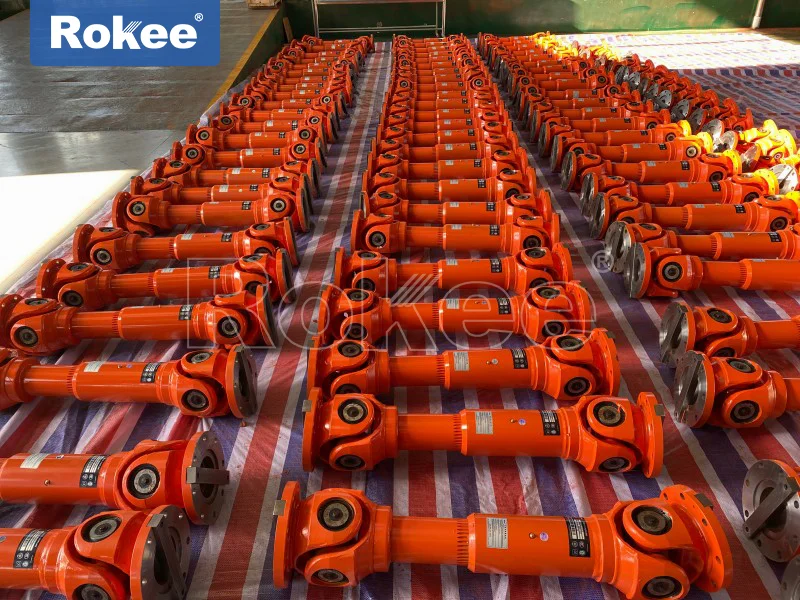
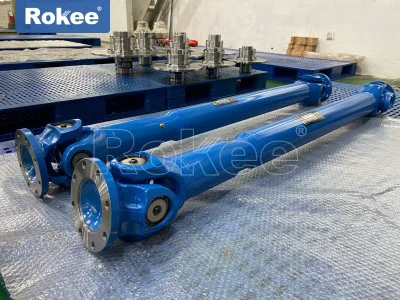
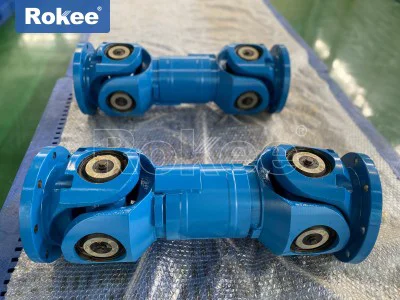
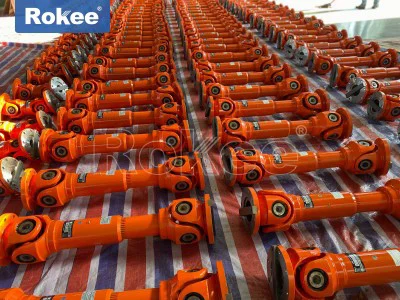
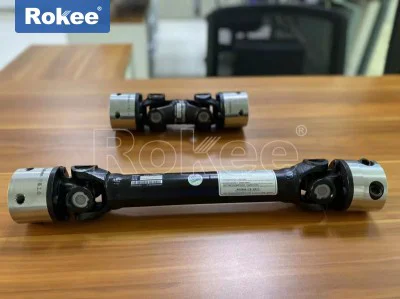
In the continuous and high-load production operation of PU sandwich panel production lines, industrial cardan shafts serve as the core power transmission component, undertaking the key task of transmitting rotational torque between driving and driven equipment. The stable operation of cardan shafts directly determines the continuity of panel pressing, foaming, cutting and forming processes, and also affects the overall operating efficiency and operational stability of the entire production line. However, in daily on-site equipment management and maintenance work, most front-line operators and maintenance personnel have formed many habitual and unscientific maintenance methods due to insufficient understanding of the structural characteristics and operating principles of industrial cardan shafts. These subtle maintenance misunderstandings will not only fail to achieve the purpose of protecting equipment, but also easily cause accelerated wear of cardan shaft components, increased operational vibration, abnormal noise, and even sudden shaft breakage and power transmission failure, leading to unplanned downtime of the production line and unnecessary production losses. Combined with the actual operating environment of PU sandwich panel production lines, which is characterized by long-term continuous operation, fine dust accumulation, and alternating load impact, this paper systematically sorts out the most common daily maintenance misunderstandings of industrial cardan shafts, analyzes the hazard mechanisms of wrong operations, and puts forward standardized and targeted correction maintenance methods to provide reliable technical guidance for daily equipment maintenance and long-term stable operation of production lines.
Lubrication maintenance is the most basic and frequent daily maintenance item for industrial cardan shafts, and it is also the link with the most concentrated misunderstandings in on-site operation. A large number of on-site maintenance practices show that unreasonable lubrication operations are the primary cause of premature failure of cardan shafts in PU sandwich panel line. The first typical misunderstanding is the blind pursuit of high-frequency lubrication and excessive grease filling. Many maintenance personnel believe that the more lubricating grease is filled in the universal joint bearings and spline pairs of the cardan shaft, the better the lubrication effect, so they carry out excessive grease injection during daily maintenance and fill the internal cavity of the universal joint almost completely. In fact, the cardan shaft will generate continuous frictional heat during high-speed rotating power transmission. Excessively filled lubricating grease cannot form an effective lubricating oil film. Instead, it will cause internal grease accumulation and stirring resistance, resulting in poor heat dissipation of the rotating parts. Under the long-term high-temperature operating environment of the PU sandwich panel production line, the accumulated grease is prone to oxidation, carbonization and deterioration, which will block the tiny gaps of the needle roller bearings, aggravate component wear, and even cause bearing jamming and shaft body deformation in severe cases. The correct lubrication operation is to control the filling amount of lubricating grease reasonably according to the structural parameters and operating load of the cardan shaft. During daily maintenance, only one-third to one-half of the internal cavity volume of the universal joint and spline pair needs to be filled with grease, which can ensure the formation of a stable lubricating oil film between friction pairs and reserve enough space for heat dissipation and grease circulation, avoiding grease deterioration failure caused by heat accumulation.
Another common lubrication misunderstanding is irregular and empirical lubrication instead of standardized periodic lubrication. Most on-site personnel rely on subjective judgment and daily experience to carry out lubrication work. They only inject grease when abnormal noise or obvious vibration occurs in the cardan shaft, and lack regular lubrication plans based on equipment operating time and working conditions. The PU sandwich panel production line usually operates continuously for a long time with alternating dynamic loads. The universal joint bearings and cross shaft components of the cardan shaft are in a long-term friction state. If lubrication is not replenished in time, the surface oil film will be worn and exhausted, resulting in dry friction between metal components. Long-term dry friction will cause rapid wear of bearing rollers and cross shaft journals, increase the matching gap of transmission parts, and lead to increased vibration and impact during equipment operation. In addition, some maintenance personnel randomly replace different types of lubricating grease according to on-site inventory, ignoring the adaptability between grease performance and equipment operating conditions. Different types of lubricating greases have great differences in high-temperature resistance, wear resistance and oxidation resistance. The cardan shaft of the PU sandwich panel production line needs to adapt to the ambient temperature changes in the production workshop and the instantaneous impact load during equipment start-stop. Random replacement of grease will lead to poor lubrication adaptability, grease thinning and loss at high temperature, or grease hardening and failure at low temperature, which cannot play a continuous protective role. The corrected maintenance method is to formulate a scientific lubrication cycle according to the actual operating intensity of the production line. For cardan shafts operating under conventional continuous load conditions, regular grease replenishment and inspection should be carried out every two weeks; for equipment operating under heavy load and high-frequency start-stop conditions, the lubrication cycle should be appropriately shortened. At the same time, fixed-type lubricating grease with stable high-temperature resistance and extreme pressure wear resistance should be selected uniformly, and mixed use of different types of grease is strictly prohibited to ensure the stability and durability of the lubrication protection effect.
Shaft body alignment and installation fixation maintenance is another key link prone to misunderstandings in daily operation. In the daily inspection and maintenance of PU sandwich panel production lines, after equipment disassembly, assembly and overhaul, many operators often ignore the precision alignment of the cardan shaft, and only complete the bolt fastening work according to the visual flatness, believing that the tight fixation of the shaft body can ensure normal power transmission. This rough installation and maintenance method is extremely harmful to the long-term operation of the cardan shaft. The cardan shaft relies on the universal joint structure to realize angular power transmission, but it has strict requirements on the coaxiality and parallelism of the driving end and driven end. If the shaft body is not aligned accurately, offset deflection will occur during rotation, resulting in additional bending stress and shear stress on the shaft body and universal joint components. In the continuous cyclic operation of the production line, the long-term action of alternating stress will cause fatigue wear of the shaft body, cracks at the root of the universal joint fork, and accelerated loosening of fastening bolts. In actual production, most of the sudden fracture faults of cardan shafts in PU sandwich panel production lines are caused by long-term misalignment operation. In addition, there is a common misunderstanding that excessive bolt fastening force can improve the fixation stability. Maintenance personnel often use super torque to fasten the connecting bolts of the cardan shaft in order to prevent loose connection. Excessively tight bolts will cause local stress concentration at the flange connection position, leading to deformation of the flange surface and thread damage. During high-speed rotation, the deformed flange will produce uneven force, which further aggravates the vibration and deflection of the shaft body, and accelerates the damage of transmission components.
The standardized correction method for alignment and fixation maintenance is to take precise alignment measures every time after the cardan shaft is disassembled and assembled. Professional level gauges and alignment tools should be used to calibrate the coaxiality and angular deviation of the driving and driven ends to ensure that the deflection error of the shaft body is controlled within the allowable range of equipment operation. For the fastening of connecting bolts, the torque should be controlled evenly and moderately in strict accordance with the mechanical parameters of the bolts. Symmetrical cross fastening should be adopted to ensure uniform stress on the flange connection surface, avoid local deformation and stress concentration, and maintain the stable connection state of the cardan shaft during high-speed operation. In daily inspection work, it is necessary to regularly check the fastening state of bolts and the alignment accuracy of the shaft body, timely correct the slight deviation generated by long-term operation, and eliminate potential faults caused by installation deviation in advance.
Daily appearance inspection and fault judgment also have many typical maintenance misunderstandings that affect the operating state of the cardan shaft. Most on-site maintenance personnel have a single inspection standard for cardan shaft daily inspection, and they only focus on checking whether the shaft body has obvious deformation, cracks and bolt looseness, while ignoring the inspection of subtle wear and sealing performance. The PU sandwich panel production workshop has a complex working environment, with a large amount of fine foam dust, raw material powder and water vapor generated in the production process. These fine impurities are easy to adhere to the surface of the cardan shaft and penetrate into the internal matching gaps of the universal joint through the aging and damaged sealing ring. Most operators ignore the inspection of sealing components in daily maintenance, and only replace the sealing ring when obvious grease leakage occurs. In fact, slight aging, cracking and deformation of the sealing ring will cause dust and moisture to invade the interior of the universal joint, resulting in grease emulsification, deterioration and metal component rust. Long-term dust accumulation and internal rust will increase the friction resistance of the bearing and cross shaft, cause abnormal noise and vibration during operation, and gradually reduce the power transmission efficiency of the cardan shaft.
Another prominent misunderstanding in fault judgment is taking post-fault maintenance as the main means and ignoring early warning signal identification. In daily production, many subtle abnormal states of the cardan shaft, such as slight vibration, low-frequency abnormal noise and minor grease seepage, are often ignored by maintenance personnel and are not dealt with in time until obvious faults such as severe vibration, loud noise and grease leakage occur. In fact, all severe cardan shaft failures are evolved from early subtle abnormal signals. Slight vibration during operation usually indicates that the internal bearing has slight wear or the shaft body has minor alignment deviation; intermittent abnormal friction noise means that the internal lubricating oil film is insufficient or there is dust particle friction; minor grease seepage indicates that the sealing performance has declined. Timely detection and treatment of these early abnormal signals can effectively avoid the deterioration of faults and extend the service life of the cardan shaft. The corrected daily inspection mode is to establish a comprehensive and detailed inspection system, covering shaft body appearance, sealing component state, bolt fastening, operating vibration and noise, and grease state. Special attention should be paid to the inspection of sealing ring aging and micro damage, and regular replacement of aging sealing components should be carried out according to the service cycle to prevent external impurities from invading the interior of the shaft body. At the same time, maintenance personnel should be trained to accurately identify various early abnormal operating signals, carry out targeted disassembly inspection and maintenance in time when subtle abnormalities are found, and realize predictive maintenance instead of passive post-fault maintenance.
Idle equipment maintenance misunderstanding is also a easily overlooked link affecting the service life of cardan shafts in PU sandwich panel production lines. In actual production management, the production line may be shut down for maintenance, raw material replacement and production scheduling adjustment, resulting in long-term idle state of individual equipment and supporting cardan shafts. Most maintenance personnel believe that the cardan shaft will not wear during idle period, so they do not carry out targeted maintenance for idle equipment, resulting in various hidden dangers after equipment restart. The most common problem is long-term static placement leading to local rust and adhesion of internal friction pairs. After the cardan shaft stops running, the internal lubricating grease will gradually settle and lose fluidity, resulting in partial loss of the oil film protection on the metal friction surface. Under the influence of workshop moisture and dust, the exposed metal parts are prone to oxidation and rust. Long-term static pressure will also cause slight plastic deformation of the bearing roller and local adhesion between friction pairs. If the equipment is started directly without maintenance after long-term idle, rigid friction and impact will occur inside the cardan shaft, resulting in sudden wear and even component jamming. In addition, long-term idle cardan shafts are prone to accumulated dust and dirt on the surface. If the surface dirt is not cleaned in time, it will absorb moisture and corrode the shaft body surface, and the hardened dirt will also affect the heat dissipation effect during subsequent operation.
The standardized correction measure for idle maintenance is to formulate special maintenance specifications for idle cardan shafts. For equipment that is idle for more than one week, the surface dust and dirt of the cardan shaft should be thoroughly cleaned regularly to keep the shaft body clean and dry. Before long-term shutdown, supplement an appropriate amount of high-performance lubricating grease to ensure comprehensive coverage of internal friction pairs by the oil film, and rotate the shaft body manually for several circles to make the grease evenly distributed. During the idle period, regular rotation inspection should be carried out every week to avoid static adhesion and local rust of internal components. Before the restart of idle equipment, comprehensive inspection and secondary lubrication maintenance should be carried out to check the sealing state, shaft body deformation and internal lubrication effect, and eliminate all potential hidden dangers before putting into formal operation.
In summary, the daily maintenance misunderstandings of industrial cardan shafts in PU sandwich panel production lines are mainly reflected in unscientific lubrication operation, inaccurate installation and alignment, incomplete daily inspection and neglected idle maintenance. These habitual wrong operations seem trivial in daily work, but they will continuously damage the structural performance of the cardan shaft under the long-term high-load and continuous operating environment of the production line, greatly shorten the service life of equipment components, and increase the failure rate and maintenance cost of the production line. In the daily equipment management work of PU sandwich panel production, it is necessary to completely abandon empirical maintenance methods, establish standardized and systematic maintenance specifications, correct various maintenance misunderstandings in a targeted manner, standardize every maintenance operation link, attach importance to early warning inspection and predictive maintenance, and effectively ensure the long-term stable and efficient operation of industrial cardan shafts. Scientific and standardized daily maintenance can not only reduce equipment failure rate and unplanned downtime losses, but also maximize the service life of cardan shaft components, reduce equipment operation and maintenance costs, and provide solid equipment guarantee for the stable and efficient production of PU sandwich panels.