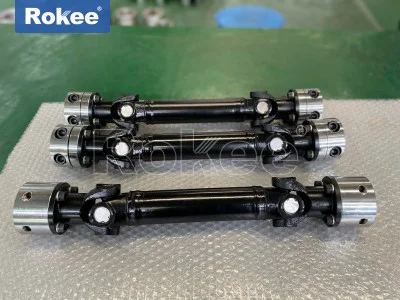
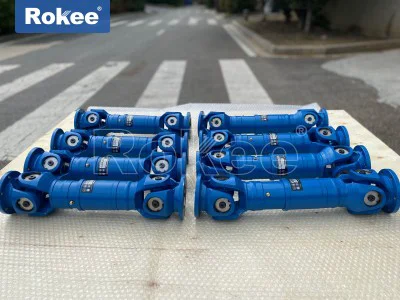
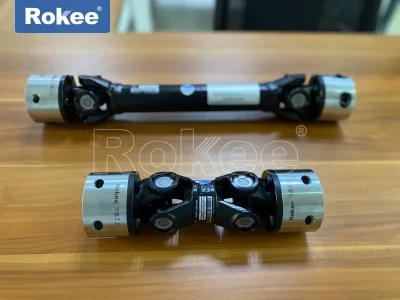
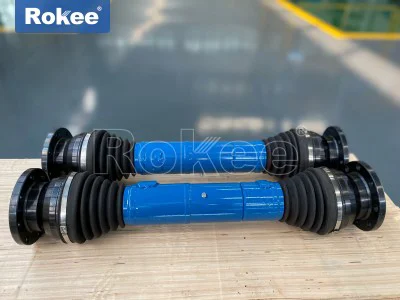
Adaptability Optimization Strategy Of Universal Coupling And PU Sandwich Panel Line
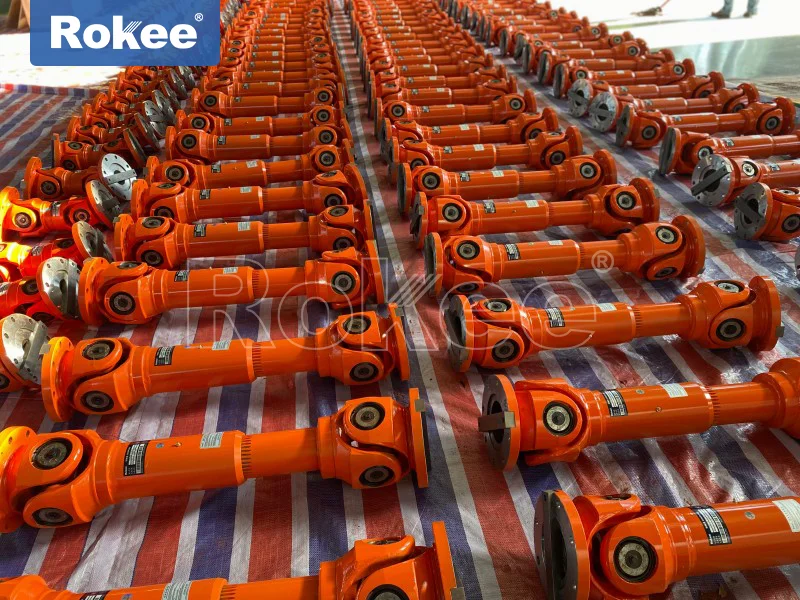
The continuous upgrading of lightweight building material manufacturing technology has put forward higher requirements for the operational stability and flexible adaptability of automated production lines. PU sandwich panels, as core lightweight composite building materials, are widely applied in industrial construction, cold chain facilities and modular building fields due to their excellent thermal insulation, pressure resistance and weather resistance properties. The production process of PU sandwich panels involves multi-stage continuous operations including raw material feeding, polyurethane foaming, composite pressing, constant-temperature curing and fixed-length cutting, forming a highly integrated linkage production system. In this multi-equipment collaborative operation system, the transmission connection components between production units directly determine the overall operating efficiency and product molding quality of the production line. As a key flexible transmission component, universal couplings undertake the task of torque transmission and speed synchronization between adjacent production equipment, and their adaptive coordination performance with the overall production line operation state is the key to solving problems such as unstable transmission, equipment vibration and inconsistent product processing accuracy in traditional production lines. Exploring scientific and systematic adaptability optimization strategies for universal couplings and PU sandwich panel production lines can effectively break through the operational limitations of traditional transmission systems, improve the overall operational flexibility and stability of the production line, and lay a solid technical foundation for the diversified and high-precision production of PU sandwich panels.
The operational characteristics of PU sandwich panel line determine the special adaptability requirements for universal coupling transmission systems. Different from single-mode mechanical production lines, PU sandwich panel production lines have typical characteristics of multi-process linkage, dynamic load fluctuation and multi-specification product switching. In the actual production process, the switching of panel thickness, raw material formula and production speed will cause real-time changes in the operating load of pressing equipment, conveying equipment and curing transmission equipment. Traditional rigid connection structures rely on precise coaxial alignment of transmission shafts and lack the ability to compensate for dynamic displacement, which is prone to generate additional bending stress and shear stress on the transmission shaft during long-term operation. Minor installation errors, mechanical vibration during equipment operation and thermal deformation caused by long-time high-temperature curing operation will further aggravate shaft misalignment, resulting in unbalanced torque transmission, inconsistent operating speed of each production unit, and eventually leading to problems such as uneven foaming thickness of PU sandwich panels, surface indentation and dimensional deviation of finished products. Ordinary flexible couplings that rely solely on elastic material deformation for compensation have limited displacement adjustment capacity and poor fatigue resistance, which cannot adapt to the long-cycle and continuous operation state of sandwich panel production lines, and are easy to age and fail after long-term load operation, increasing equipment maintenance frequency and production downtime loss. Universal couplings, with their unique spatial hinge connection structure, can simultaneously compensate for angular displacement, axial displacement and radial displacement between transmission shafts, and maintain stable torque output under dynamic shaft position changes, which perfectly matches the flexible transmission needs of PU sandwich panel production lines. However, the mismatch between coupling structural parameters, installation state and production line operating parameters in actual application still restricts the full play of its adaptive performance, making adaptability optimization an essential technical link in production line operation and upgrading.
The core of the adaptability mismatch between traditional universal couplings and PU sandwich panel production lines lies in the one-way matching design of transmission parameters and the lack of dynamic adaptive adjustment capability. Most of the universal couplings configured in early-built PU sandwich panel production lines adopt fixed parameter design schemes, which are only matched with single production speed and fixed load conditions. When the production line switches product specifications and adjusts operating parameters, the coupling torque transmission range, deflection angle adaptation limit and response speed cannot keep up with the dynamic changes of the production line, resulting in reduced transmission efficiency and increased operational vibration. In terms of installation and debugging, the traditional installation process mostly adopts empirical alignment methods, lacking precise parameter calibration for the matching angle and displacement tolerance between the coupling and the production line transmission shaft. Minor alignment deviations that are ignored in the installation stage will gradually expand with the accumulation of operating time, causing periodic vibration of the transmission system, affecting the synchronization accuracy of foaming and pressing processes, and reducing the yield of finished sandwich panels. In addition, the long-term continuous operation mode of PU sandwich panel production lines puts forward high requirements for the fatigue resistance and structural stability of couplings, but the conventional maintenance mode only focuses on regular component replacement and lacks real-time monitoring and adaptive adjustment of coupling operating state. The wear gap generated by long-term friction and the structural fatigue deformation will change the original matching state between the coupling and the production line, leading to gradual deterioration of transmission stability and frequent occurrence of minor production failures in the later operation stage of the equipment.
Parameter matching optimization is the basic core strategy to improve the adaptive coordination between universal couplings and PU sandwich panel production lines. The optimization needs to be carried out based on the full analysis of the full-cycle operating parameters of the production line, covering multi-dimensional parameter matching such as torque transmission range, deflection angle adaptation, operating speed response and load resistance. First of all, it is necessary to conduct a comprehensive statistical analysis on the operating load of each key transmission node of the PU sandwich panel production line, including the no-load operating torque of conveying equipment, the peak load torque of pressing and composite equipment, and the torque fluctuation range during product specification switching. On this basis, select and adjust the structural parameters of universal couplings to ensure that the rated torque range covers the full load fluctuation interval of the production line, avoiding transmission lag or component overload wear caused by insufficient torque bearing capacity during high-load operation, and reducing energy waste caused by excessive torque margin during low-load operation. Secondly, according to the spatial layout characteristics and dynamic operation displacement data of the production line, optimize the deflection angle adaptation parameters of the universal coupling. Different from general mechanical transmission scenarios, the PU sandwich panel production line will produce regular axial and radial displacement during the reciprocating operation of pressing components and the variable-speed operation of conveying components. Optimizing the maximum allowable deflection angle of the coupling and the flexible swing range of the hinge structure can effectively adapt to the dynamic displacement of the transmission shaft in the production process, eliminate the additional stress generated by shaft misalignment, and ensure continuous and stable torque transmission.
Speed synchronization adaptation optimization is a key link to improve product molding consistency in PU sandwich panel production. The production quality of PU sandwich panels is highly dependent on the precise synchronization of each process unit. The matching error of operating speed between foaming feeding equipment, composite pressing equipment and finished product conveying equipment will directly lead to uneven foaming density, inconsistent panel thickness and edge warping of finished products. The non-constant velocity transmission characteristic of a single universal coupling may produce minor speed fluctuation when the deflection angle is large, which will affect the overall speed synchronization accuracy of the production line. To solve this problem, the adaptive optimization of combined coupling transmission structure can be adopted. By adopting double-section universal coupling matching arrangement at key transmission nodes, the speed fluctuation generated by single coupling deflection is offset through complementary angle adjustment, so as to realize constant-speed synchronous transmission of the transmission system. At the same time, combined with the speed adjustment law of the production line during product switching, optimize the response sensitivity of the universal coupling, ensure that the coupling can complete rapid torque adjustment and speed follow-up in the process of production line speed increase and decrease, avoid transmission delay caused by parameter hysteresis, and maintain the dynamic balance of synchronous operation of each production link. This optimization strategy can effectively solve the problem of process mismatching caused by speed asynchrony in the production of multi-specification PU sandwich panels, and significantly improve the dimensional accuracy and appearance consistency of finished products.
Installation and debugging process optimization is an important guarantee to give full play to the adaptive performance of universal couplings. The adaptive capacity of universal couplings is highly dependent on the installation accuracy and debugging state, and standardized and refined installation operation can maximize the displacement compensation advantage of the structure. In the optimization of installation process, it is necessary to abandon the traditional empirical alignment mode and establish a precise parameter alignment standard system suitable for PU sandwich panel production lines. Before installation, carry out comprehensive detection on the straightness, coaxiality and installation spacing of the production line transmission shaft, eliminate the initial installation deviation of the equipment itself, and lay a foundation for coupling adaptive matching. In the formal installation link, strictly calibrate the initial deflection angle and assembly gap of the universal coupling, control the assembly tolerance within the optimal adaptation range, avoid excessive initial gap leading to operating vibration, and prevent excessive pretightening force from restricting the flexible adjustment function of the coupling hinge structure. After installation, conduct graded debugging and operation verification, including no-load trial operation, low-load operation and full-load production operation. By monitoring the vibration amplitude, torque stability and speed synchronization of the transmission system under different operating states, fine-tune the coupling assembly parameters to ensure that it can maintain the best adaptive state under all working conditions. In addition, strengthen the standardized operation management of installation and debugging, formulate targeted operation specifications for the transmission characteristics of PU sandwich panel production lines, and improve the professional operation level of operators, so as to avoid performance attenuation caused by irregular installation and debugging.
Operational state monitoring and dynamic adaptive adjustment optimization is an effective means to maintain long-term stable matching between universal couplings and production lines. In the long-term continuous production process, the structural wear, fatigue deformation and lubrication state change of universal couplings will lead to the attenuation of adaptive performance, which is the main cause of gradual failure of production line transmission system. To realize full-cycle adaptive optimization, it is necessary to build a dynamic monitoring and adjustment mechanism for coupling operating state. By arranging vibration sensors and torque monitoring components at key transmission nodes, real-time collect operating data such as transmission vibration amplitude, torque fluctuation range and speed deviation of universal couplings during production line operation. Through data analysis and comparison with standard operating parameters, timely judge the wear state and performance attenuation degree of the coupling. When minor parameter deviation is found, complete dynamic adjustment of coupling pretightening force and flexible gap through online fine-tuning to restore its adaptive compensation capacity. For performance attenuation caused by long-term wear, formulate scientific maintenance and replacement cycle according to operating data, replace aging components in a targeted manner, and avoid sudden production failure caused by component failure. This real-time monitoring and dynamic adjustment mode changes the passive maintenance mode of traditional equipment, realizes active adaptation of coupling performance to production line operating state, and effectively extends the service life of transmission components while ensuring production stability.
Load adaptive matching optimization can further improve the operational flexibility of PU sandwich panel production lines for multi-specification production. Modern PU sandwich panel manufacturing needs to meet the production requirements of different thicknesses, densities and structural specifications, and the production line will face frequent load switching and process parameter adjustment in actual operation. The fixed structural design of traditional couplings makes it difficult to adapt to large-range load changes, resulting in poor production line flexibility. The load adaptive optimization strategy realizes flexible matching between coupling performance and variable load working conditions through structural optimization and parameter adjustable design. By optimizing the hinge structure and contact stress distribution of the universal coupling, improve its variable load resistance, ensure that it can maintain stable transmission under low-load precision production and high-load heavy-duty operation, and avoid transmission jitter and parameter deviation caused by load changes. At the same time, optimize the structural compatibility of the coupling, make it adapt to the spatial layout and transmission stroke changes of the production line in the process of product specification switching, reduce the equipment debugging time caused by component mismatch, and significantly improve the production flexibility and production efficiency of the production line for multi-specification products.
The systematic implementation of the above adaptability optimization strategies can bring comprehensive performance improvement to the linkage operation of universal couplings and PU sandwich panel production lines. In terms of production stability, the optimized coupling transmission system can effectively compensate for various dynamic displacements and operating deviations in the production process, eliminate equipment vibration and transmission unbalance problems caused by shaft misalignment, ensure the stable operation of each process link, and reduce the defective rate of PU sandwich panels caused by transmission system failures. In terms of production efficiency, the speed synchronization accuracy and load response speed of the transmission system are significantly improved, the process matching degree of each production link is enhanced, the production line downtime caused by equipment debugging and component failure is reduced, and the continuous production capacity of the production line is effectively improved. In terms of equipment operation cost, the adaptive optimization reduces the additional stress and abnormal wear of transmission components, extends the service life of universal couplings and matching transmission equipment, reduces the frequency of equipment maintenance and component replacement, and effectively saves the daily operation and maintenance cost of the production line. In terms of production flexibility, the optimized transmission system has stronger adaptive capacity for working condition changes and product specification switching, which can better meet the diversified production needs of modern PU sandwich panels and improve the market competitiveness of production enterprises.
In conclusion, the adaptability matching between universal couplings and PU sandwich panel production lines is a systematic engineering involving parameter matching, structural coordination, installation debugging and operational maintenance. A single optimization method can only solve partial operational problems, and only through multi-dimensional and full-cycle systematic optimization strategies can we realize the deep adaptive coordination between transmission components and the overall production line. With the continuous development of intelligent and flexible manufacturing technology of building materials, the production mode of PU sandwich panels is developing towards multi-variety, high-precision and high-efficiency direction. The adaptability optimization of universal coupling transmission systems will become an important technical means to promote the upgrading of PU sandwich panel production lines. By continuously optimizing parameter matching standards, improving installation and debugging levels, building dynamic monitoring and adaptive adjustment mechanisms, enterprises can effectively solve the transmission stability problems in the production process, realize the efficient and stable operation of production lines, and provide strong technical support for the high-quality development of the lightweight building material manufacturing industry.