Universal Shaft Coupling Improves Performance Of PU Sandwich Panel Machine
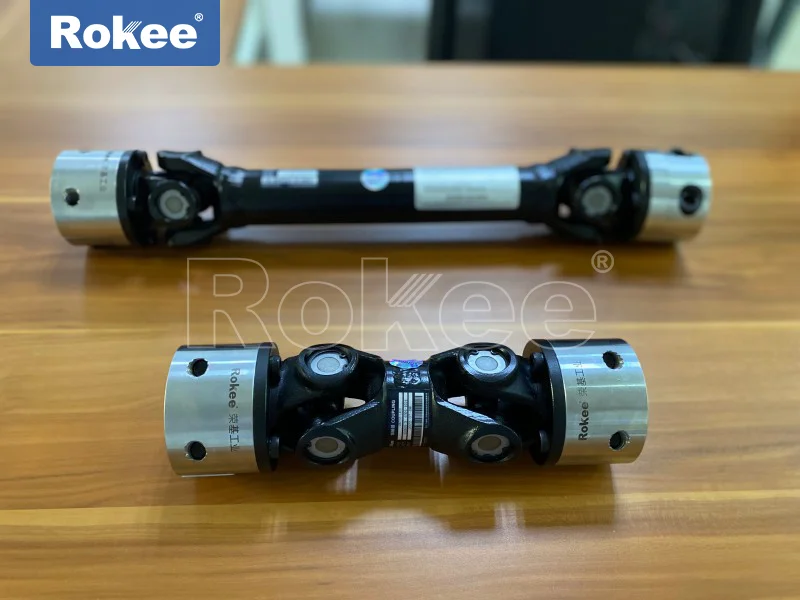
In the modern manufacturing industry, the production efficiency and product quality of PU sandwich panel machines are crucial factors that determine the competitiveness of enterprises. These machines integrate multiple mechanical processes, including uncoiling, preheating, foaming, compounding, forming, and cutting, requiring precise coordination between various components to ensure stable and efficient operation. Among the numerous mechanical parts that make up a PU sandwich panel machine, the universal shaft coupling plays an indispensable role as a key transmission component. Unlike ordinary rigid couplings, the universal shaft coupling has unique structural characteristics that enable it to compensate for axial, radial, and angular deviations between connected shafts, thereby effectively improving the overall performance of the PU sandwich panel machine, reducing operational failures, and enhancing production efficiency and product quality.
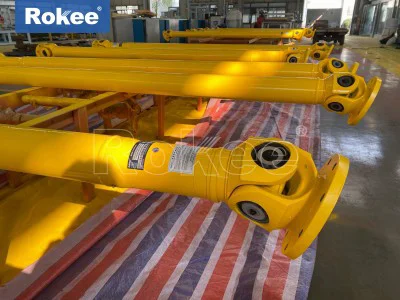
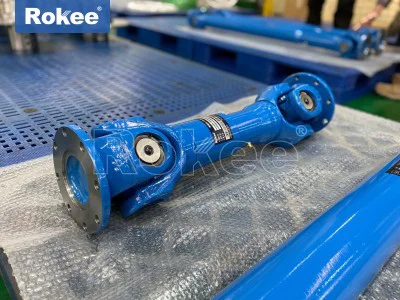
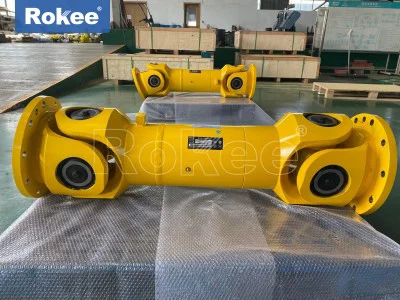
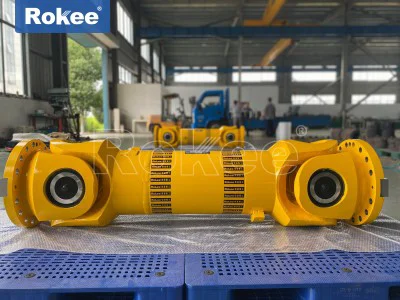
To understand the role of universal shaft couplings in PU sandwich panel machines, it is first necessary to clarify the basic working principle and structural characteristics of universal shaft couplings. A universal shaft coupling is a mechanical device designed to connect two shafts with different axes or angular deviations to achieve reliable power transmission. Its core working principle is based on the theory of spatial linkage mechanisms, and the most common cross-axis universal shaft coupling is composed of key components such as a cross shaft, bearings, and fork-shaped heads. When the driving shaft rotates, it drives the connected fork-shaped head to rotate, and the fork-shaped head transmits the rotational motion to another fork-shaped head through the cross shaft, which then drives the driven shaft to rotate. During this process, the cross shaft can freely swing with changes in the angle between the two shafts, ensuring continuous power transmission even when there is an angular deviation between the driving and driven shafts. It is worth noting that a single universal shaft coupling may experience periodic speed fluctuations during transmission, which may affect the stability of precision transmission. Therefore, in practical applications, a double-joint structure is usually adopted, which ensures the synchronization of the driving and driven shafts by reasonably arranging the spatial geometric relationship between the two universal shaft couplings, thereby eliminating the impact of speed fluctuations and ensuring stable transmission performance.
In terms of material selection, universal shaft couplings are usually made of high-quality alloy steels such as 45 steel, 45 forged steel, and 40 chromium. After appropriate heat treatment, these materials have high strength, wear resistance, and fatigue resistance, which can meet the high-torque transmission requirements of PU sandwich panel machines during long-term operation. For heavy-duty working conditions, alloy cast steel or forged steel parts are also used to further enhance the bearing capacity of the universal shaft coupling. With the advancement of material science, new materials such as high-strength stainless steel and special alloys have also been gradually applied to universal shaft couplings in special working environments, further expanding their application scope and service life. The structural design of universal shaft couplings is compact and reasonable, and the modular design makes daily maintenance and replacement of vulnerable parts such as cross shafts and bearings more convenient, reducing maintenance costs and downtime.
PU sandwich panel machines are complex mechanical systems that require precise coordination between multiple functional units to complete the production process of PU sandwich panels. From the uncoiling of surface materials to the foaming and solidification of the core material, and then to the final cutting and shaping, each link relies on stable power transmission. In the past, many PU sandwich panel machines used rigid couplings for power transmission, which had strict requirements on the coaxiality of the connected shafts. However, due to manufacturing errors, installation deviations, and thermal expansion and contraction during equipment operation, it is difficult to maintain absolute coaxiality between the shafts of various components, which often leads to problems such as uneven power transmission, increased equipment vibration, excessive wear of components, and even equipment failure. These problems not only affect the production efficiency of the machine but also reduce the quality of the produced PU sandwich panels, such as uneven thickness, poor surface flatness, and insufficient bonding strength between the surface material and the core material.
The application of universal shaft couplings effectively solves the above problems and brings significant performance improvements to PU sandwich panel machines. One of the most prominent advantages is the strong angle compensation capability of universal shaft couplings. Different types of universal shaft couplings can adapt to angular deviations between two shafts in the range of 5° to 45°, which can effectively compensate for the coaxiality errors caused by manufacturing and installation of PU sandwich panel machines, as well as the axial and radial displacements caused by thermal expansion and contraction during operation. This ensures that even when there is a certain deviation between the shafts of each component, the power can be transmitted stably and uniformly, avoiding the impact of shaft misalignment on the operation of the machine. For example, in the uncoiling link of the PU sandwich panel machine, the uncoiler and the preheating device are often installed with a certain spatial angle due to the limitation of the equipment layout. The universal shaft coupling can reliably transmit the power of the motor to the uncoiler and the preheating roller under such conditions, ensuring that the surface material is uncoiled and preheated stably, and avoiding problems such as material deviation and uneven preheating caused by unstable power transmission.
Another important role of universal shaft couplings in improving the performance of PU sandwich panel machine is their excellent shock absorption and noise reduction capabilities. During the operation of PU sandwich panel machines, the motor, reducer, and other power components will generate a certain amount of vibration, and these vibrations will be transmitted to other components through the transmission system, affecting the stability of the machine and the quality of the products. The universal shaft coupling can absorb part of the vibration and impact during the power transmission process through its flexible structural design, reduce the transmission of vibration between components, and thereby reduce the noise generated during the operation of the machine. This not only improves the working environment of the operators but also reduces the wear of components caused by vibration, extending the service life of the equipment. For example, in the foaming link of the PU sandwich panel machine, the high-pressure foaming machine needs to work stably to ensure the uniform mixing and spraying of the foaming material. The vibration generated by the foaming machine can be effectively absorbed by the universal shaft coupling, avoiding the impact of vibration on the precision of the foaming material spraying, ensuring that the core material of the PU sandwich panel has uniform density and good thermal insulation performance.
The high transmission efficiency of universal shaft couplings also plays a key role in improving the production efficiency of PU sandwich panel machines. The structural design of universal shaft couplings is compact and reasonable, with low energy loss during power transmission. The transmission efficiency can reach 98% to 99.8%, which is significantly higher than that of some traditional flexible couplings. In the long-term continuous operation of PU sandwich panel machines, the high transmission efficiency of universal shaft couplings can effectively reduce energy consumption, reduce production costs, and at the same time ensure that the power is transmitted to each functional unit in a timely and effective manner, improving the overall operation speed of the machine. For example, in the compounding and forming link of the PU sandwich panel machine, the double-track machine needs to run at a stable speed to ensure that the surface material and the core material are fully bonded and formed. The universal shaft coupling can transmit the power of the motor to the double-track machine efficiently and stably, ensuring that the machine runs at the set speed, improving the production efficiency of the PU sandwich panel, and ensuring that the thickness and flatness of the panel meet the requirements.
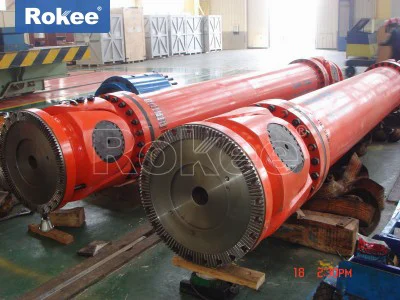
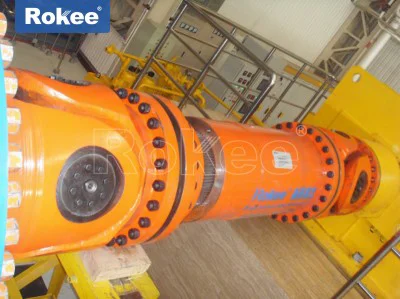
The strong bearing capacity of universal shaft couplings also adapts to the high-load working environment of PU sandwich panel machines. During the production process of PU sandwich panel machines, especially when producing thick panels or high-density core materials, the transmission system needs to bear a large torque. The universal shaft coupling, made of high-strength alloy steel, has a strong torque-bearing capacity, and some heavy-duty models can transmit torque up to 8000-10000 kN·m, which can fully meet the high-load transmission needs of PU sandwich panel machines. This avoids the problem of coupling damage caused by insufficient bearing capacity during the operation of the machine, reduces the frequency of equipment failure and maintenance, and ensures the continuity of production. For example, in the cutting link of the PU sandwich panel machine, the cutting saw needs to bear a large torque when cutting thick panels. The universal shaft coupling can stably transmit the power of the motor to the cutting saw, ensuring that the cutting process is smooth and efficient, avoiding problems such as saw blade jamming and uneven cutting caused by insufficient power transmission.
In addition to the above advantages, the flexible installation performance of universal shaft couplings also brings great convenience to the installation and debugging of PU sandwich panel machines. The universal shaft coupling can adapt to various complex installation environments and can be installed at different angles and positions according to the layout of the machine components, which simplifies the installation process and reduces the difficulty of installation and debugging. During the installation of the PU sandwich panel machine, due to the large volume of the equipment and the complex layout of the components, it is often difficult to ensure that all shafts are perfectly coaxial. The universal shaft coupling can adapt to this situation, allowing a certain degree of deviation during installation, reducing the installation accuracy requirements of the equipment, and improving the installation efficiency. At the same time, during the later maintenance and maintenance of the equipment, the universal shaft coupling can be easily disassembled and replaced, reducing the maintenance time and labor intensity of the operators.
The practical application effect of universal shaft couplings in PU sandwich panel machines has been fully verified in actual production. Many manufacturers have found that after replacing the traditional rigid coupling with a universal shaft coupling, the failure rate of the PU sandwich panel machine has been significantly reduced, the average downtime has been shortened by more than 30%, and the production efficiency has been increased by 15% to 20%. At the same time, the quality of the produced PU sandwich panels has also been greatly improved. The thickness error of the panels has been reduced from the original ±0.5mm to ±0.2mm, the surface flatness has been significantly improved, and the bonding strength between the surface material and the core material has been increased by more than 25%. These data fully show that the application of universal shaft couplings can effectively improve the performance of PU sandwich panel machines, bring significant economic benefits to enterprises, and enhance the market competitiveness of enterprises.
It should be noted that to give full play to the role of universal shaft couplings in improving the performance of PU sandwich panel machines, reasonable selection and correct use and maintenance are also very important. When selecting a universal shaft coupling, it is necessary to comprehensively consider the working conditions of the PU sandwich panel machine, such as the transmission torque, rotating speed, angular deviation, and installation space, and select the appropriate type and specification of the universal shaft coupling. For example, in the high-speed transmission link of the machine, a ball cage type universal shaft coupling with constant speed transmission performance should be selected to avoid the impact of speed fluctuations on the equipment operation; in the heavy-load transmission link, a cross-axis type universal shaft coupling with strong bearing capacity should be selected. In terms of use and maintenance, it is necessary to regularly lubricate the bearings and cross shafts of the universal shaft coupling to reduce wear; regularly check the wear of the components, and replace the vulnerable parts in time when wear is found; ensure that the installation of the universal shaft coupling is correct, and adjust the angle and position in time when deviation occurs to avoid affecting the transmission performance.
With the continuous development of the PU sandwich panel industry, the requirements for the performance of PU sandwich panel machines are getting higher and higher. As a key transmission component, the universal shaft coupling will play a more important role in improving the performance of PU sandwich panel machines. In the future, with the advancement of mechanical manufacturing technology and material science, the structural design of universal shaft couplings will be more optimized, the performance will be more excellent, and the application range will be more extensive. For example, the application of new materials will further improve the wear resistance and fatigue life of universal shaft couplings; the integration of intelligent technology will enable real-time monitoring of the operation status of universal shaft couplings, timely warning of potential failures, and further reduce the failure rate of equipment. These improvements will further promote the performance upgrading of PU sandwich panel machines, promote the healthy and sustainable development of the PU sandwich panel industry, and bring more economic benefits and social value to the manufacturing industry.
In conclusion, the universal shaft coupling, with its unique structural advantages and excellent performance, has become an indispensable key component in PU sandwich panel machines. It effectively solves the problems of shaft misalignment, unstable power transmission, and high equipment failure rate existing in traditional PU sandwich panel machines through its strong angle compensation capability, good shock absorption and noise reduction performance, high transmission efficiency, and strong bearing capacity. The application of universal shaft couplings not only improves the production efficiency and product quality of PU sandwich panel machines but also reduces production costs and equipment maintenance costs, bringing significant economic benefits to enterprises. In the context of the continuous development of the manufacturing industry, the role of universal shaft couplings in improving the performance of PU sandwich panel machines will become more prominent, and it will continue to provide strong support for the technological progress and industrial upgrading of the PU sandwich panel industry.