Custom Cardan Shaft

In the complex and interconnected system of modern mechanical power transmission, custom cardan shafts stand out as a highly adaptable and essential mechanical component, serving as a critical linkage for rotational motion and torque transfer between non-coaxial mechanical parts. Unlike standardized shaft components that follow fixed dimensional and structural specifications, custom cardan shafts are engineered and manufactured based on the unique operational conditions, structural layouts, and load requirements of different mechanical equipment, achieving precise matching with diverse industrial scenarios. This personalized design and production mode makes up for the limitations of general-purpose transmission shafts, which often fail to adapt to special installation spaces, variable operating angles, and extreme load environments, thus becoming an indispensable core part in high-precision, heavy-duty, and special mechanical transmission systems.
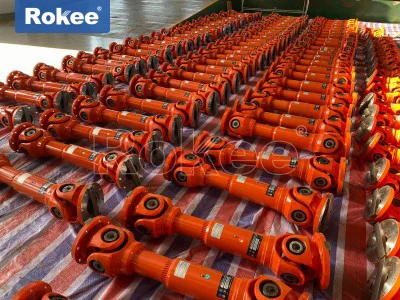
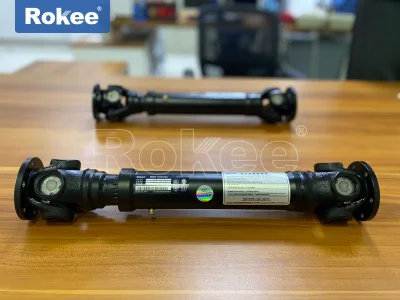
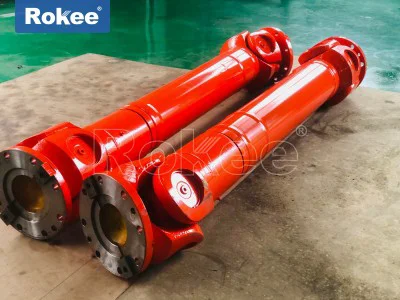
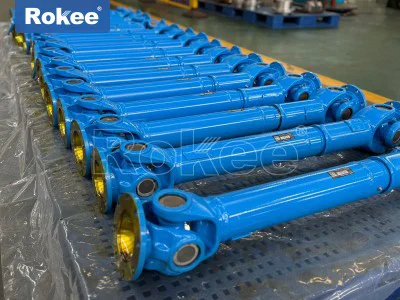
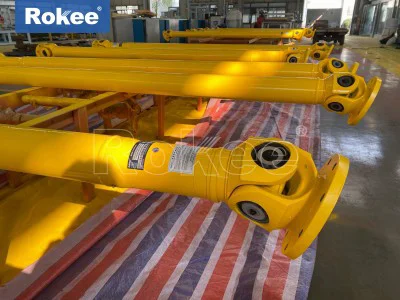
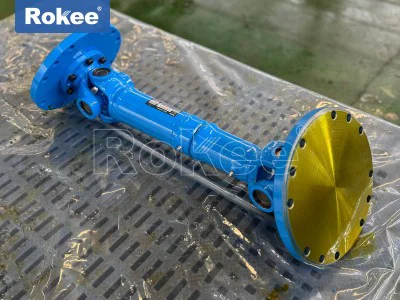
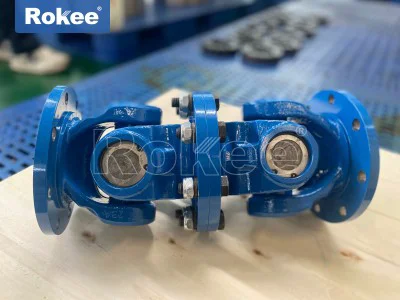
The basic structural composition of a custom cardan shaft inherits the classic mechanical principle of universal joint transmission, mainly consisting of universal joints, cross assemblies, connecting yokes, and intermediate shaft tubes. Each component can be independently optimized and adjusted in the customization process to meet differentiated usage needs. The universal joint structure is the core functional unit of the cardan shaft, enabling effective transmission of rotational torque between two shafts with angular, axial, and radial misalignment. The cross assembly acts as the pivot of the universal joint, bearing alternating shear and torsion forces during equipment operation, while the connecting yokes fix the joint structure to the driving and driven ends of the equipment to ensure stable power output. The intermediate shaft tube undertakes the main connection and force transmission task, and its length, wall thickness, and structural rigidity can be flexibly adjusted according to the actual spacing and load demands of mechanical equipment.
The core value of custom cardan shafts lies in their extreme adaptability to complex working conditions, which cannot be matched by standard transmission shafts. In actual industrial production and mechanical operation, most transmission systems cannot maintain absolute coaxiality of driving and driven parts due to installation errors, equipment vibration, structural deformation under load, and dynamic displacement during operation. Minor misalignment may cause increased transmission resistance, abnormal component wear, and reduced operational efficiency, while severe misalignment will lead to shaft body deformation, torque transmission failure, and even overall equipment shutdown. Custom cardan shafts are designed to solve such problems. Through targeted structural optimization, they can adapt to different angular deflection ranges and axial displacement changes, continuously and stably transmit rotational power during dynamic equipment operation, and effectively compensate for various installation and operation deviations.
Material customization is one of the most critical links in the production of custom cardan shafts, directly determining the service life, load-bearing capacity, and environmental adaptability of the equipment. According to different application scenarios, manufacturers select different high-strength alloy steels and carry out targeted heat treatment processes. For conventional light and medium-load mechanical transmission scenarios, optimized carbon structural steels are usually adopted to balance mechanical performance and structural stability, ensuring stable daily operation while controlling reasonable structural rigidity and toughness. For heavy-duty industrial equipment that needs to bear high torque and long-term alternating loads, high-strength alloy structural steels are selected, and processes such as quenching and tempering are applied to improve the overall tensile strength, fatigue resistance, and impact resistance of the shaft body. In special working environments such as high humidity, dust pollution, and corrosive gas exposure, the surface of custom cardan shafts can be treated with anti-corrosion and wear-resistant coatings, which isolate the shaft body from external harsh media, avoid oxidation rust and chemical corrosion, and greatly extend the service cycle of components.
Dimensional and structural customization covers all key parameters of the cardan shaft, realizing full-scene personalized matching. The overall length of the shaft, the inner and outer diameter of the intermediate tube, the spline size of the connecting part, and the structural size of the universal joint can all be adjusted according to the equipment installation space and transmission distance. For long-span transmission scenarios, a double universal joint structure can be adopted to disperse structural stress, reduce the vibration amplitude of the shaft body during high-speed operation, and ensure the smoothness of torque transmission. For limited and narrow installation spaces, compact optimized structural designs are used to reduce the overall volume of the shaft body while ensuring load-bearing performance, avoiding structural interference with other mechanical components. In addition, the matching precision of the connecting interface can be finely customized according to the assembly accuracy requirements of the equipment, improving the fit tightness between the cardan shaft and the driving and driven parts, reducing assembly gaps, and minimizing vibration and noise during operation.
Custom cardan shafts have extremely wide application coverage, penetrating almost all fields that require flexible power transmission. In engineering machinery and heavy equipment, they are applied to large transmission systems that bear heavy loads and frequent start-stop operations, stably transmitting power while adapting to the structural displacement and angle changes of equipment during walking and working. In industrial production lines, custom cardan shafts are used in automated transmission equipment, adapting to the dynamic operation of assembly lines and ensuring the synchronization and stability of power transmission between multiple mechanical units. In metallurgy, mining, and chemical industries, equipment often operates in harsh environments with high dust, high vibration, and corrosive media, and customized anti-wear, anti-corrosion, and high-load cardan shafts can effectively adapt to these extreme working conditions and reduce the frequency of component replacement and equipment maintenance. In precision mechanical equipment and automated instrumentation, micro-custom cardan shafts with high precision and low vibration are adopted to meet the strict requirements of precision transmission and ensure the accuracy and stability of equipment operation.
In terms of operational performance, custom cardan shafts have significant advantages in transmission efficiency and operational stability after targeted optimization. The precisely designed universal joint structure can maintain efficient torque transmission even under variable angle deflection, avoiding power loss caused by structural jamming and misalignment. The optimized shaft body structure and balanced processing technology effectively reduce the centrifugal force and vibration generated during high-speed rotation, making the operation of the entire transmission system more stable. Compared with standard shafts, customized products can avoid performance redundancy or insufficient performance. For low-load and low-speed equipment, simplified structural design reduces unnecessary energy consumption and structural weight; for high-load and high-speed operating scenarios, enhanced structural rigidity and fatigue resistance ensure long-term stable operation and avoid equipment failure caused by component fatigue damage.
The production and processing of custom cardan shafts follow rigorous mechanical design logic and processing technology, combining mechanical principle calculation, three-dimensional structural simulation, and precision machining. In the design stage, engineers first conduct in-depth analysis of the equipment's operating parameters, including maximum transmission torque, operating speed, deflection angle range, operating environment, and installation dimensions. Through mechanical simulation calculation, they predict the stress distribution, deformation degree, and fatigue life of the shaft body and each component, so as to determine the optimal material selection, structural size, and processing technology scheme. In the processing stage, precision cutting, forging, and finishing processes are adopted to ensure the dimensional accuracy and surface finish of each component. The cross assembly and universal joint parts undergo fine grinding and matching detection to ensure flexible rotation without jamming and uniform force on each stress point during operation. After processing, dynamic balance detection and performance simulation tests are carried out to eliminate unbalanced defects of the shaft body and ensure that the finished product fully meets the customized performance requirements.
Maintenance and adaptability advantages of custom cardan shafts are also prominent in long-term equipment operation. The personalized structural design can be matched with the disassembly and maintenance cycle of the target equipment, and the modular component structure is convenient for daily inspection, lubrication maintenance, and partial component replacement, reducing the difficulty and cost of equipment later maintenance. For mechanical equipment that needs structural upgrading and functional transformation, custom cardan shafts can be synchronously optimized and adjusted according to the new structural parameters and operating requirements, realizing the adaptive upgrade of the transmission system and avoiding the overall replacement of transmission components caused by equipment upgrading. This flexible matching feature greatly improves the service value of mechanical equipment and reduces the overall operation cost of industrial production.
With the continuous upgrading of modern mechanical equipment towards high precision, high load, and high intelligence, the market demand for custom cardan shafts is also constantly improving and diversifying. Traditional standardized transmission components can no longer meet the personalized and refined operation requirements of emerging mechanical systems. More and more mechanical equipment needs exclusive customized transmission solutions to adapt to unique structural designs and complex working conditions. In the future, the design and production of custom cardan shafts will further develop towards high precision, high durability, and lightweight optimization. Through more refined mechanical simulation design and advanced processing technology, the structural performance of products will be further improved, while the structural weight will be reduced, helping mechanical equipment achieve higher operational efficiency and lower energy consumption.
In summary, custom cardan shafts, as flexible, efficient, and highly adaptable power transmission components, solve the pain points of poor matching and limited performance of standard transmission shafts in complex mechanical systems. Through personalized customization of materials, dimensions, structures, and performance parameters, they can accurately adapt to various special installation environments and operating working conditions, provide stable and efficient power transmission support for different types of mechanical equipment, and play an irreplaceable role in ensuring the stable operation, improving transmission efficiency, and extending the service life of industrial equipment. As an important basic component in modern mechanical transmission systems, custom cardan shafts will continue to support the iterative upgrading and stable operation of various industrial mechanical equipment with their unique customized advantages.