Agricultural Cardan Shaft
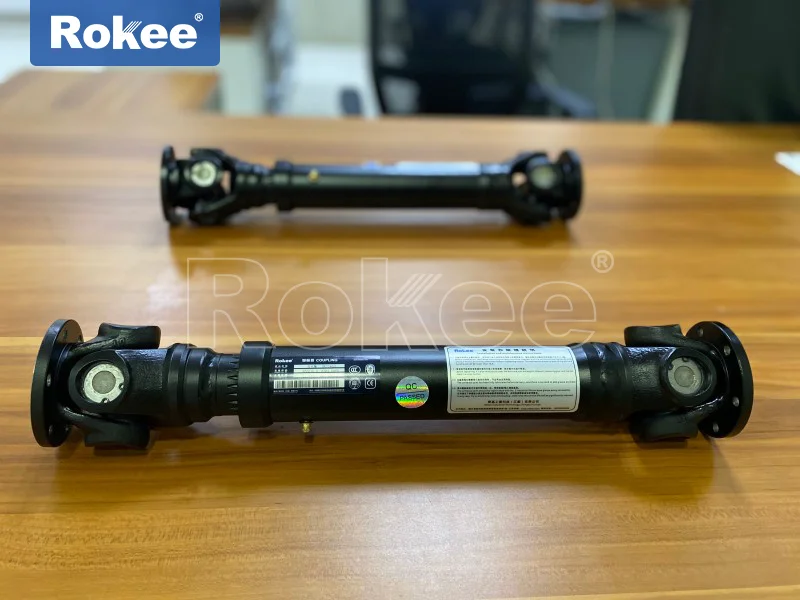
In the realm of agricultural machinery, the cardan shaft stands as an indispensable mechanical component, serving as the critical link for transmitting rotational power and torque between non-collinear shafts. Unlike rigid couplings that demand perfect alignment between driving and driven components, agricultural cardan shafts are engineered to accommodate angular, parallel, and axial misalignments, making them essential for the dynamic and variable working conditions of modern farming. These shafts, also commonly referred to as universal joint shafts or power take-off (PTO) shafts in agricultural contexts, are designed to withstand the harsh environments of farm operations—including dust, moisture, vibration, and sudden impact loads—while ensuring efficient and reliable power transmission. From small-scale family farms to large-scale commercial agricultural operations, the agricultural cardan shaft plays a pivotal role in powering a wide range of farm implements, enabling tasks such as plowing, planting, harvesting, and material handling to be completed with greater efficiency and precision.
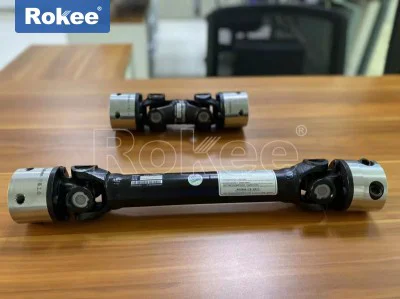
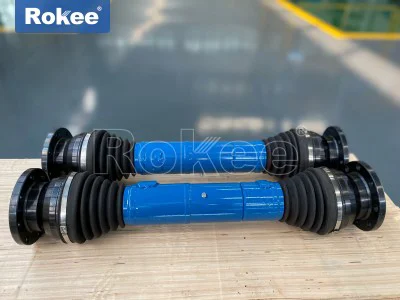
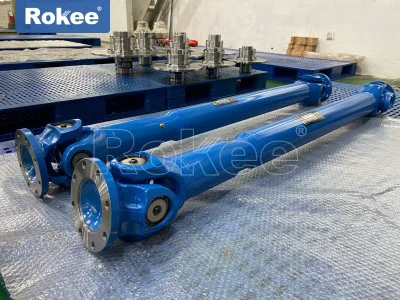
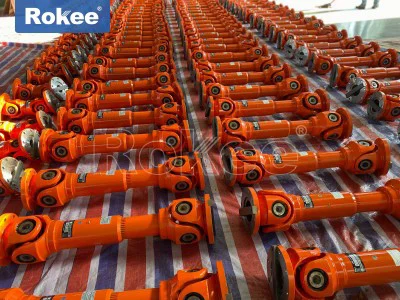
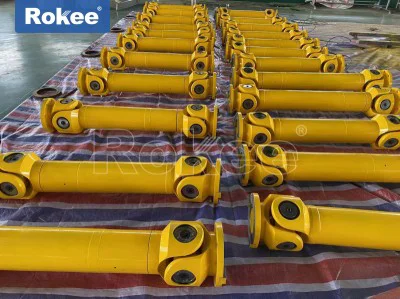
The structure of an agricultural cardan shaft is a sophisticated assembly of interconnected components, each designed to work in harmony to handle torque loads, angular deflection, and rotational stress. At its core, a standard agricultural cardan shaft consists of two universal joints (also known as U-joints), a central shaft body, yoke assemblies, bearing components, splined connections for axial adjustment, and locking or fastening elements to secure the entire structure. The universal joint, which is the heart of the cardan shaft, enables the transmission of rotational power between shafts that are not aligned, allowing for flexibility in movement as agricultural machinery operates over uneven terrain. The most common type of universal joint used in agricultural cardan shafts is the Hooke’s joint, which features two fork-shaped yokes—one attached to the input driving shaft (typically from a tractor’s PTO) and the other to the output driven shaft (connected to farm implements)—and a central cross-shaped component called a spider or cross shaft. This cross shaft fits into precision-machined bearing seats within each yoke, allowing for smooth rotational and oscillatory movement while minimizing friction and wear. The bearings within the universal joint are crucial for reducing friction between the moving parts, ensuring that the shaft can operate smoothly even under high torque loads and continuous use. In many agricultural cardan shafts, these bearings are sealed to protect against dust, dirt, and moisture, which are prevalent in farm environments and can cause premature wear and failure.
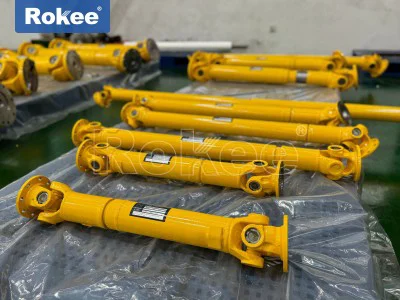
The central shaft body, which connects the two universal joints, is available in two main configurations: solid and tubular. Solid shafts are typically used for light-duty applications where torque requirements are lower, as they offer simplicity and cost-effectiveness. However, for heavy-duty agricultural tasks that require higher torque transmission, tubular shafts are preferred due to their superior strength-to-weight ratio. Tubular shafts are hollow, which reduces their overall weight while maintaining the necessary structural integrity to withstand high torque loads and resist bending or deformation. The choice between solid and tubular shafts depends on the specific application, with larger and more powerful farm implements requiring the robustness of tubular central shafts. Additionally, many agricultural cardan shafts feature splined connections, which allow for axial adjustment to compensate for changes in distance between the driving and driven shafts. These splined connections enable the shaft to extend or retract as needed, accommodating the movement of agricultural machinery as it operates over uneven ground or when implements are raised or lowered. The yoke assemblies, which connect the universal joints to the central shaft and the respective driving/driven components, are typically made from high-strength materials to ensure they can transmit torque without bending or breaking. Locking elements, such as bolts or clamps, secure the various components together, preventing slippage or disconnection during operation, which is critical for safety and reliability in agricultural settings.
The performance of an agricultural cardan shaft is defined by a set of key characteristics that determine its suitability for different agricultural applications. One of the most important performance metrics is torque capacity, which refers to the maximum amount of torque the shaft can transmit without failure. Agricultural cardan shafts are designed to handle a wide range of torque loads, from low levels for light-duty implements like small seeders to extremely high levels for heavy-duty equipment such as large tillers, chisel plows, and combine harvesters. The torque capacity of a cardan shaft is influenced by several factors, including the material used, the diameter and thickness of the central shaft, the design of the universal joints, and the quality of the bearings. Another critical performance characteristic is angular deflection capability, which is the maximum angle at which the shaft can operate while still transmitting power efficiently. Agricultural cardan shafts typically have an angular deflection range of 5° to 45°, with some specialized designs capable of handling even larger angles—up to 80° in the case of double universal joints or constant velocity joints. This flexibility is essential for agricultural machinery, as the alignment between the tractor’s PTO and the implement’s input shaft frequently changes as the machinery moves over uneven terrain or as the implement is adjusted during operation.
Transmission efficiency is another key performance factor, referring to the percentage of power that is successfully transmitted from the driving shaft to the driven shaft without loss. High transmission efficiency is critical in agricultural applications, as it ensures that the energy generated by the tractor’s engine is effectively utilized by the farm implement, minimizing fuel consumption and reducing operational costs. Agricultural cardan shafts are designed to achieve high transmission efficiency—typically above 95%—by minimizing friction between moving parts through the use of high-quality bearings, precise machining, and proper lubrication. Durability and wear resistance are also essential performance characteristics, given the harsh operating conditions of agricultural environments. Farm machinery operates in dusty, muddy, and corrosive environments, with shafts exposed to dirt, moisture, and sudden impact loads (such as hitting rocks during plowing). To withstand these conditions, agricultural cardan shafts are made from high-strength materials and undergo specialized treatments to enhance their wear and corrosion resistance. Additionally, the ability to dampen vibration is an important performance feature, as excessive vibration can cause premature wear of the shaft and other connected components, as well as reduce the comfort of the operator. Many agricultural cardan shafts are designed with vibration-damping features, such as flexible couplings or shock-absorbing bearings, to minimize vibration and ensure smooth operation.
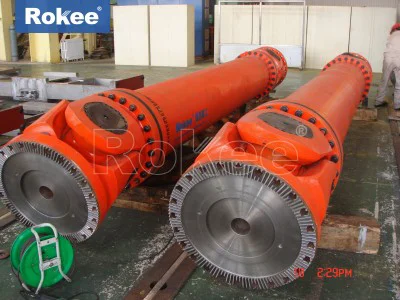
The types of agricultural cardan shafts are diverse, with classifications based on several criteria, including load capacity, joint type, structural design, working environment, and application-specific requirements. One of the most common classifications is based on load capacity, which divides cardan shafts into light-duty, medium-duty, and heavy-duty categories. Light-duty cardan shafts are designed for small agricultural implements such as small seeders, hand-held sprayers, and light tillers, which require low torque transmission. These shafts are typically smaller in diameter, made from lightweight materials, and feature simple universal joint designs. Medium-duty cardan shafts are used for moderate torque applications, such as medium-sized tillers, planters, and hay balers. They are more robust than light-duty shafts, with larger diameters and stronger universal joints to handle higher torque loads. Heavy-duty cardan shafts are designed for the most demanding agricultural tasks, such as large-scale plowing, harvesting with combine harvesters, and pulling heavy implements. These shafts feature large-diameter tubular central shafts, heavy-duty universal joints, and reinforced yoke assemblies to withstand extremely high torque loads and harsh operating conditions.
Another common classification is based on the type of universal joint used. The most widely used type is the single universal joint (Hooke’s joint), which is suitable for applications where the angular misalignment between the driving and driven shafts is relatively small. Single universal joints are simple in design, cost-effective, and easy to maintain, making them ideal for many light to medium-duty agricultural applications. However, they have a limitation: when operating at non-zero angles, the instantaneous output speed can differ from the input speed, leading to slight fluctuations in power transmission. To address this issue, double universal joints (also known as constant velocity joints) are used in applications where precise and uniform power transmission is required, even at large angular misalignments. Double universal joints consist of two single universal joints connected by an intermediate shaft, with the angles of the two joints balanced to ensure that the output speed matches the input speed. These joints are commonly used in heavy-duty agricultural equipment, such as large combine harvesters and high-horsepower tractors, where smooth and consistent power transmission is critical.
Agricultural cardan shafts can also be classified based on their structural design, including telescopic and non-telescopic types. Telescopic cardan shafts feature a splined connection that allows the central shaft to extend or retract, accommodating changes in distance between the driving and driven shafts. This flexibility is essential for agricultural machinery, as the distance between the tractor’s PTO and the implement’s input shaft can change when the implement is raised or lowered, or when the tractor moves over uneven terrain. Telescopic shafts are the most common type used in agricultural applications, as they provide the necessary adaptability for dynamic operating conditions. Non-telescopic cardan shafts, on the other hand, have a fixed length and are used in applications where the distance between the driving and driven shafts is constant. These shafts are simpler in design and are typically used in stationary agricultural equipment or in cases where the alignment between shafts is fixed.
Additionally, cardan shafts can be classified based on the material used in their construction. The most common materials include alloy steel, carbon steel, stainless steel, and in some cases, carbon fiber reinforced composites. Alloy steel is widely used for agricultural cardan shafts due to its excellent strength, toughness, and wear resistance. For example, 40Cr alloy steel, which contains chromium, can be heat-treated to achieve high strength and toughness, making it ideal for handling the torque and impact loads encountered in agricultural operations. Carbon steel is used for light-duty shafts, as it is cost-effective and has sufficient strength for low-torque applications. Stainless steel is preferred for applications where the shaft is exposed to humid or corrosive environments, such as paddy fields or irrigation equipment, as it forms a dense passivation film that resists corrosion. Carbon fiber reinforced composites are used in specialized high-end applications where weight is a critical factor, as they offer a high strength-to-weight ratio, reducing the overall weight of the machinery and improving fuel efficiency. However, the high cost of these composites limits their widespread use in the agricultural sector.
The applications of agricultural cardan shafts are extensive, covering nearly all aspects of modern farming operations, as they are essential for transmitting power from tractors to a wide range of farm implements. One of the most common applications is in power take-off (PTO) systems, where the cardan shaft connects the tractor’s PTO stub shaft to the input shaft of farm implements. This allows the tractor’s engine power to be transmitted to the implement, enabling it to perform its intended function. For example, in plowing operations, the cardan shaft transmits power from the tractor to the plow, driving the plow blades to turn over the soil. In planting operations, it powers seeders, ensuring that seeds are planted at the correct depth and spacing. In harvesting operations, cardan shafts are used to power combine harvesters, driving the cutting blades, threshing mechanisms, and conveyors that separate grain from the stalks.
Agricultural cardan shafts are also used in material handling equipment, such as grain augers and conveyors, where they transmit power to move grain, hay, or other agricultural products from one location to another. Grain augers, for example, rely on cardan shafts to drive the rotating auger, which lifts and moves grain into storage bins or transport vehicles. Conveyors use cardan shafts to power the rollers or belts that move materials along the conveyor line, improving efficiency in handling large quantities of agricultural products. Additionally, cardan shafts are used in irrigation systems, where they transmit power to water pumps, enabling the distribution of water to crops. In this application, stainless steel cardan shafts are often preferred due to their corrosion resistance, as they are exposed to water and humid conditions.
Another important application of agricultural cardan shafts is in heavy-duty agricultural equipment, such as chisel plows, disk harrows, and large seeders. These implements require high torque transmission to handle tough soil conditions and large working widths, and heavy-duty cardan shafts are designed to meet these demands. For example, chisel plows, which are used to break up compacted soil, rely on cardan shafts to transmit high torque from the tractor to the plow shanks, ensuring that they can penetrate hard soil effectively. Large seeders, which plant seeds over wide areas, use cardan shafts to power the seed distribution mechanisms, ensuring uniform seed placement across the field. Combine harvesters, which are among the most complex agricultural machines, use multiple cardan shafts to power various components, including the cutting header, threshing drum, and cleaning system, all of which require precise and reliable power transmission.
In addition to these primary applications, agricultural cardan shafts are also used in specialized agricultural equipment, such as municipal tractors, forestry vehicles, and greenhouse machinery. Municipal tractors, which are used for tasks such as mowing, snow removal, and landscaping, rely on cardan shafts to power attachments such as mowers and snow blowers. Forestry vehicles, which are used in agricultural operations that involve tree planting or logging, use cardan shafts to power cutting and hauling equipment. Greenhouse machinery, such as automated irrigation systems and planting machines, also use cardan shafts to transmit power, ensuring that operations within the greenhouse are efficient and precise.
The importance of agricultural cardan shafts in modern farming cannot be overstated, as they enable the efficient and reliable operation of a wide range of agricultural machinery. Without these shafts, many farm tasks would be significantly more labor-intensive and time-consuming, reducing productivity and increasing operational costs. As agricultural technology continues to advance, the design and performance of agricultural cardan shafts are also evolving. Manufacturers are incorporating advanced materials and manufacturing techniques to improve the durability, efficiency, and flexibility of these shafts, making them better suited to the changing needs of the agricultural sector. For example, the use of advanced heat treatment processes has improved the strength and wear resistance of cardan shafts, while the development of specialized sealing systems has enhanced their ability to withstand harsh environmental conditions. Additionally, the integration of precision machining techniques has improved the accuracy and performance of universal joints, ensuring smoother power transmission and longer service life.
In conclusion, the agricultural cardan shaft is a vital component in modern agricultural machinery, with a sophisticated structure that enables it to transmit power efficiently between non-collinear shafts. Its key performance characteristics—including torque capacity, angular deflection capability, transmission efficiency, and durability—make it suitable for a wide range of agricultural applications. The diverse types of cardan shafts, classified based on load capacity, joint type, structural design, and material, ensure that there is a suitable shaft for every agricultural task, from light-duty planting to heavy-duty harvesting. As the agricultural industry continues to grow and evolve, the agricultural cardan shaft will remain an essential component, playing a critical role in improving productivity, reducing labor costs, and enabling the efficient operation of modern farm machinery. Its versatility, reliability, and adaptability make it an indispensable part of the global agricultural supply chain, supporting the production of food and other agricultural products for communities around the world.