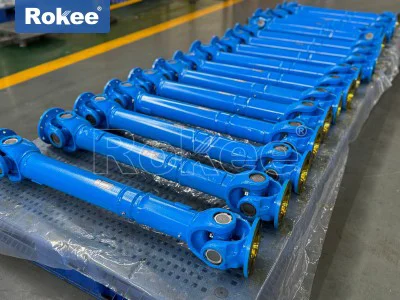
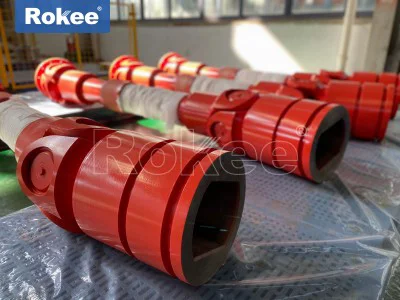
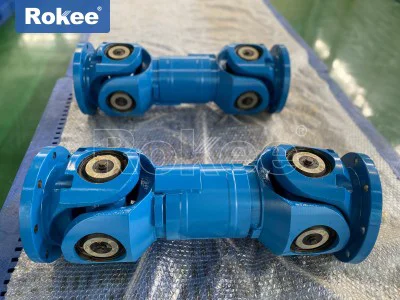
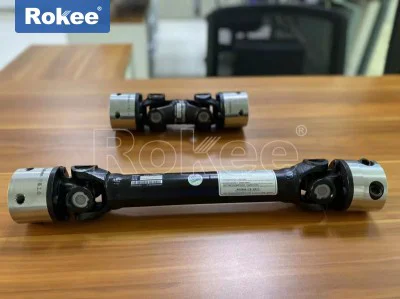
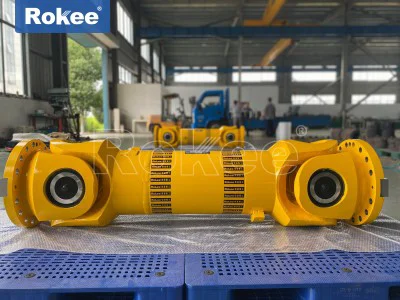
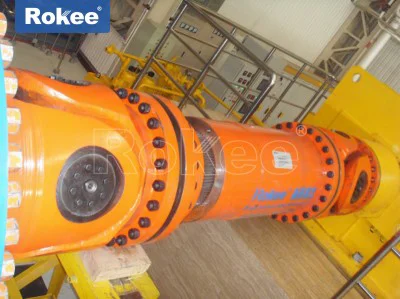
Cardan Shaft For Heavy Industry

In the vast and intricate ecosystem of heavy industry, where machinery operates under extreme loads, harsh environmental conditions, and relentless operational demands, every mechanical component plays a pivotal role in sustaining productivity, reliability, and operational continuity. Among these critical components, the cardan shaft stands out as an unsung hero, a versatile and robust power transmission device that bridges the gap between driving and driven machinery, even when shafts are misaligned, offset, or subject to constant movement. Unlike lightweight power transmission parts designed for standard industrial or automotive use, heavy-duty cardan shafts engineered for heavy industry are built to endure the most punishing operating scenarios, delivering consistent torque transfer, minimizing mechanical stress, and supporting the seamless functioning of core industrial equipment across mining, metallurgy, construction, marine, cement manufacturing, and heavy machinery production sectors. This piece delves into the intrinsic value, structural design, material selection, operational performance, application scenarios, maintenance considerations, and evolutionary trajectory of cardan shafts tailored for heavy industry, highlighting their irreplaceable role in powering the backbone of modern heavy industrial operations.
At its core, the cardan shaft, also widely referred to as a universal joint shaft, operates on a fundamental mechanical principle that enables the transmission of rotational motion and torque between two shafts that are not collinear—whether due to angular misalignment, axial displacement, or radial offset. This unique functionality is made possible by its integrated universal joint assembly, which typically consists of a cross-shaped pivot, bearing assemblies, yoke connectors, and a central shaft tube, all working in tandem to accommodate dynamic shifts in shaft positioning while maintaining uninterrupted power flow. For heavy industry applications, this basic design is reimagined and reinforced to handle exponentially higher loads, greater torque outputs, and more severe misalignment tolerances compared to standard cardan shafts. The universal joints in heavy-duty variants are crafted with oversized bearing surfaces and reinforced pivot points, eliminating the risk of premature failure under shock loads, continuous heavy torque, or repetitive angular movement that is commonplace in heavy industrial machinery. The central shaft tube, too, is engineered with enhanced rigidity and torsional strength, resisting bending, warping, or fatigue cracking even during prolonged, high-intensity operation that defines heavy industrial workflows.
Material selection is a cornerstone of designing effective cardan shafts for heavy industry, as the choice of materials directly dictates the component’s durability, load-bearing capacity, resistance to wear and corrosion, and overall service life. Manufacturers prioritize high-grade alloy steels and hardened carbon steels for the core structural components, including the cross pivot, yokes, and shaft tube, as these materials offer exceptional tensile strength, toughness, and resistance to mechanical fatigue—traits that are non-negotiable in heavy industrial settings. The bearing surfaces are often treated with specialized heat treatments, such as quenching and tempering, to boost surface hardness and wear resistance, reducing friction between moving parts and extending the lifespan of critical internal components. For heavy industrial environments characterized by high humidity, abrasive dust, chemical exposure, or extreme temperature fluctuations, additional protective coatings and surface finishes are applied to guard against corrosion, rust, and abrasive wear. This meticulous material curation ensures that the cardan shaft can withstand not only the mechanical stresses of heavy-duty operation but also the corrosive and abrasive forces present in mines, steel mills, cement plants, and marine engineering projects, where equipment is constantly exposed to unforgiving external conditions.
The operational performance of heavy-duty cardan shafts is defined by three core attributes: high torque transmission capacity, exceptional misalignment compensation, and stable, low-vibration operation—all of which are tailored to meet the unique demands of heavy industry. In terms of torque handling, these shafts are engineered to transmit massive rotational forces efficiently, without energy loss or mechanical failure, making them suitable for heavy machinery such as rolling mills, crushing equipment, conveyor systems, large-scale pumps, and marine propulsion units. Unlike rigid shaft couplings that fail to accommodate even minor shaft misalignment, heavy-duty cardan shafts can compensate for significant angular, axial, and radial offsets, a critical feature in heavy industrial machinery where shaft positioning often shifts due to equipment vibration, thermal expansion, or structural settling. This ability to adapt to dynamic misalignment reduces stress on connected gearboxes, motors, and driven equipment, preventing premature wear and tear on entire drive systems and minimizing costly unplanned downtime. Additionally, precision engineering and dynamic balancing of heavy-duty cardan shafts ensure smooth, low-vibration operation even at varying rotational speeds. Excessive vibration is a major threat to heavy industrial equipment, leading to component fatigue, loose fasteners, and reduced operational accuracy; the balanced design of industrial-grade cardan shafts mitigates this risk, promoting stable equipment performance and extending the service life of the entire drive train.
The versatility of heavy-duty cardan shafts is evident across every corner of heavy industry, where they serve as indispensable links in power transmission systems for a diverse array of core equipment. In the mining industry, for example, cardan shafts are integrated into crushing machines, grinding mills, conveyor belts, and excavators, operating around the clock in dusty, rocky, and high-impact conditions. These shafts must handle sudden shock loads from raw material processing and constant movement of heavy mining equipment, all while maintaining reliable torque transfer to keep mining operations running efficiently. In the metallurgical and steelmaking sector, cardan shafts play a vital role in rolling mills, continuous casting machines, and forging equipment, where they endure extreme heat, heavy continuous loads, and high levels of mechanical stress. The ability to transmit consistent torque in high-temperature environments is critical here, as even minor disruptions to power transmission can halt entire steel production lines and result in significant operational losses. For the cement manufacturing industry, cardan shafts power rotary kilns, crushers, and material handling systems, operating in highly abrasive and dusty conditions that demand exceptional wear resistance and structural durability.
Beyond mining, metallurgy, and cement production, heavy-duty cardan shafts find extensive use in construction machinery, marine engineering, and large-scale industrial manufacturing. In construction, they are fitted into cranes, bulldozers, concrete mixers, and pile drivers, supporting the heavy lifting and earth-moving operations that form the basis of infrastructure development. The shafts’ ability to accommodate misalignment is particularly valuable in mobile construction equipment, where shaft positioning shifts constantly during operation. In marine engineering, cardan shafts are adapted for use in ship propulsion systems, offshore drilling equipment, and port handling machinery, where they must resist saltwater corrosion, humid marine air, and heavy dynamic loads while maintaining reliable performance in harsh offshore environments. In large-scale industrial manufacturing facilities, such as heavy machinery assembly plants and power generation plants, cardan shafts connect motors, generators, and large processing equipment, ensuring efficient power distribution and supporting the continuous operation of critical industrial processes. Across every application, the cardan shaft’s role remains consistent: to enable reliable, flexible power transmission that keeps heavy industrial equipment operational, productive, and resilient in the face of extreme operating conditions.
While heavy-duty cardan shafts are built for exceptional durability, proactive maintenance and proper operational management are essential to maximize their service life, optimize performance, and avoid unexpected failures in heavy industrial settings. The harsh operating conditions that these components endure—including heavy loads, abrasive contaminants, and extreme temperatures—can accelerate wear on internal parts such as bearings and cross pivots, making regular maintenance a non-negotiable aspect of industrial equipment management. One of the key maintenance practices is routine lubrication, which reduces friction between moving components, prevents overheating, and minimizes wear. The lubrication regimen must be tailored to the specific operating conditions of the heavy industrial environment, with specialized lubricants used for high-temperature, high-dust, or corrosive settings to ensure optimal lubricating performance. Regular visual inspections are equally critical, allowing maintenance teams to detect early signs of wear, corrosion, or structural damage, such as cracked yokes, worn bearings, or misaligned components, before these issues escalate into catastrophic failures.
In addition to lubrication and inspections, proper alignment of connected machinery during installation and periodic readjustment are vital to preserving cardan shaft performance. Even the most robust heavy-duty cardan shaft will experience accelerated wear if installed with excessive misalignment beyond its designed capacity, placing unnecessary stress on universal joints and shaft components. Maintenance teams should also monitor vibration levels and operational noise during equipment runtime, as unusual vibrations or abnormal sounds often indicate underlying issues with the cardan shaft or connected drive components. Timely replacement of worn parts, such as bearings and seals, is another critical maintenance step, as delaying replacements can lead to further damage to the entire shaft assembly and connected equipment. By implementing a structured, proactive maintenance schedule tailored to heavy industrial operating conditions, businesses can significantly extend the service life of cardan shafts, reduce maintenance costs, minimize unplanned downtime, and ensure the continuous, reliable operation of core heavy industrial machinery.
As heavy industry continues to evolve, driven by advancements in automation, digitalization, and sustainable manufacturing practices, the design and functionality of heavy-duty cardan shafts are also undergoing continuous innovation to meet emerging industry demands. Manufacturers are leveraging advanced engineering technologies, such as computer-aided design (CAD) and finite element analysis (FEA), to optimize the structural design of cardan shafts, enhancing load-bearing capacity, reducing weight without compromising strength, and improving overall transmission efficiency. These technological advancements allow for more precise customization of cardan shafts to fit the unique specifications of specialized heavy industrial equipment, ensuring a perfect balance between performance, durability, and operational efficiency. There is also a growing focus on developing eco-friendly, low-friction materials and lubricants that reduce energy consumption and minimize environmental impact, aligning with the global push for sustainable heavy industrial operations.
Furthermore, the integration of smart monitoring technologies is transforming the way cardan shafts are managed in heavy industry. Embedded sensors can track real-time operational data, including temperature, vibration, wear levels, and torque output, enabling predictive maintenance rather than reactive repairs. This data-driven approach allows maintenance teams to anticipate potential failures before they occur, optimizing maintenance schedules, reducing downtime, and improving overall equipment reliability. As heavy industrial processes become more automated and interconnected, the demand for smart, high-performance cardan shafts will continue to rise, as these components are essential for building efficient, resilient, and future-ready industrial drive systems. This ongoing innovation ensures that cardan shafts will remain at the forefront of heavy industry power transmission, adapting to the evolving needs of modern manufacturing, resource extraction, and infrastructure development.
Looking at the broader landscape of heavy industry, the cardan shaft represents far more than just a mechanical component; it is a critical enabler of operational efficiency, productivity, and reliability. In an industry where equipment downtime can result in massive financial losses, supply chain disruptions, and delayed project timelines, the ability of heavy-duty cardan shafts to withstand extreme conditions and deliver consistent power transmission is invaluable. They connect disparate pieces of heavy machinery, compensate for mechanical imperfections, and ensure that rotational power is transferred efficiently across entire production lines, from raw material processing to finished product output. Without robust, high-performance cardan shafts, the core operations of mining, steelmaking, cement production, construction, and marine engineering would grind to a halt, underscoring their status as a foundational element of the global heavy industrial supply chain.
In conclusion, the cardan shaft tailored for heavy industry is a masterpiece of mechanical engineering, blending robust design, premium materials, and precision manufacturing to meet the unique and extreme demands of heavy industrial operations. Its ability to transmit high torque, accommodate shaft misalignment, resist wear and corrosion, and operate reliably in harsh environments makes it an indispensable component across every major heavy industrial sector. From the deep mines extracting raw materials to the steel mills shaping industrial infrastructure, and from construction sites building modern cities to marine vessels powering global trade, heavy-duty cardan shafts work silently and relentlessly to keep industrial progress moving forward. As heavy industry continues to advance and embrace new technologies, the cardan shaft will evolve alongside it, maintaining its critical role as a reliable, efficient, and adaptable power transmission solution. Investing in high-quality heavy-duty cardan shafts and implementing proactive maintenance practices is not just a matter of equipment upkeep; it is a strategic decision that enhances operational resilience, reduces long-term costs, and drives sustainable growth in the competitive and demanding world of heavy industry.