Universal Shaft For Motor

In the intricate web of mechanical power transmission, the universal shaft for motor stands as a quiet yet indispensable workhorse, bridging the gap between motor output and driven machinery while overcoming the inherent challenges of misalignment, spatial constraints, and dynamic operational demands. Unlike rigid shaft connections that demand perfect axial alignment and offer zero tolerance for positional shifts, this specialized component redefines flexibility in power delivery, enabling motors to efficiently transfer rotational force and torque to connected equipment even when the driving and driven shafts are not collinear, offset, or subject to constant movement during operation. Its design marries simplicity with engineering ingenuity, making it a staple across countless industrial, commercial, and mobile mechanical systems where motors serve as the primary power source, and seamless, reliable power transmission is non-negotiable for operational continuity and equipment longevity.
At its core, the universal shaft for motor is engineered to solve one of the most persistent problems in mechanical drive systems: the transmission of motion and torque between two shafts that are not aligned on a single axis. Every motor, whether electric, hydraulic, or internal combustion, generates rotational energy along a fixed central axis, but real-world installations rarely allow for perfect alignment between the motor shaft and the input shaft of the machinery it powers. Factors such as manufacturing tolerances, structural settling, thermal expansion and contraction, and dynamic load shifts all contribute to axial misalignment, angular deflection, or radial offset between these two critical shafts. A rigid connection in such scenarios would lead to catastrophic consequences: excessive vibration, accelerated wear on bearings and seals, premature motor failure, increased energy consumption, and even catastrophic shaft breakage under load. The universal shaft eliminates these risks by accommodating multiple forms of misalignment simultaneously, ensuring that power flows smoothly from the motor to the driven component without imposing destructive stress on either the motor or the connected machinery.
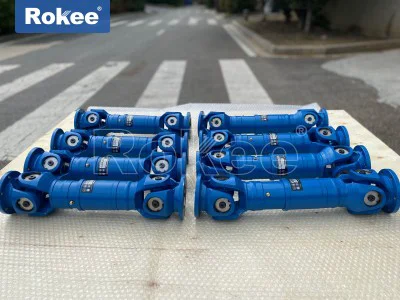
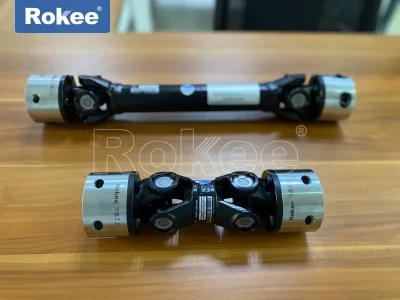
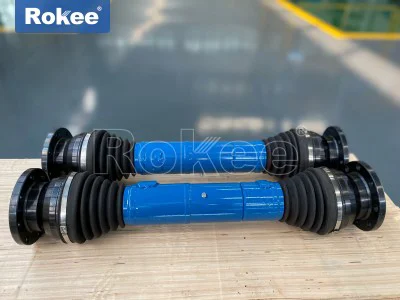
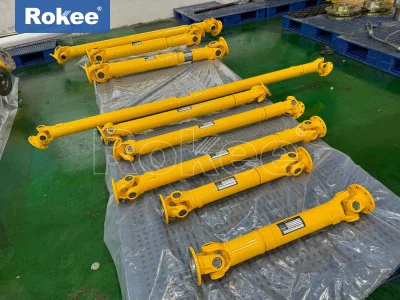
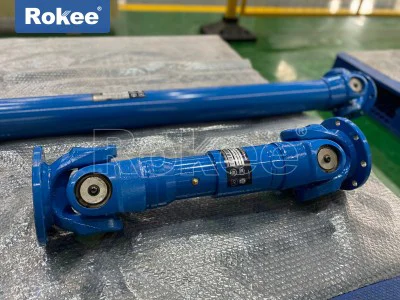
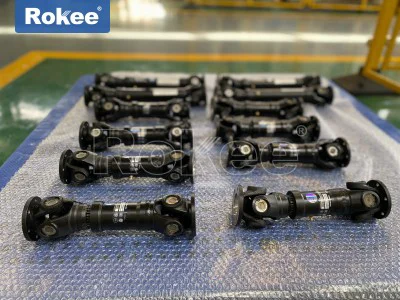
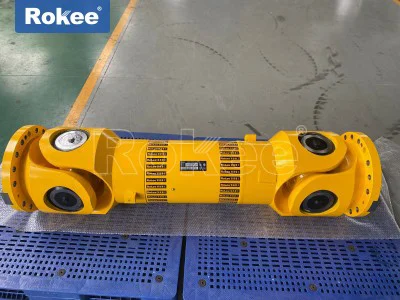
The fundamental structure of a motor universal shaft is crafted to deliver this misalignment tolerance without compromising torque transmission efficiency. While designs vary based on load capacity, speed ratings, and application requirements, most standard universal shafts for motors feature a modular construction centered around universal joints, also known as Cardan joints, at either end, connected by a central shaft body. The universal joint itself is a marvel of mechanical design, typically consisting of a cross-shaped spider, four bearing caps, and precision bearings that allow the joint to articulate freely in multiple planes. This articulation enables the shaft to handle angular misalignment up to significant degrees, depending on the specific design, as well as limited axial movement to accommodate minor length variations during operation. For heavy-duty applications involving high torque loads or extreme misalignment, double joint configurations or telescopic universal shafts are often employed, enhancing flexibility and extending the range of misalignment compensation while maintaining robust torque delivery. The central shaft body is typically constructed from high-strength, durable materials engineered to withstand torsional stress, bending forces, and the rigors of continuous operation, balancing rigidity for torque transfer with enough resilience to absorb minor shocks and vibrations generated by the motor or driven equipment.
Material selection plays a pivotal role in the performance and durability of universal shafts for motors, with manufacturers prioritizing materials that offer exceptional tensile strength, torsional resistance, fatigue life, and resistance to wear and corrosion. The choice of material is directly tied to the intended operating environment and load profile: shafts designed for light-duty, low-speed motor applications may utilize hardened alloy steels with balanced ductility and strength, while heavy-duty, high-torque industrial applications demand ultra-high-strength forged steels that can withstand extreme rotational forces without deformation or failure. Bearing components within the universal joints are crafted from precision-ground, heat-treated alloys to minimize friction and wear, even under high-speed motor operation, while sealing elements are integrated to protect internal bearings and lubricants from dust, moisture, debris, and contaminants present in harsh working environments. Proper material pairing and heat treatment processes are critical to ensuring that the universal shaft can match the operational lifespan of the motor it serves, reducing downtime and maintenance costs over the long term. Unlike generic shaft components, motor-specific universal shafts are engineered to harmonize with the rotational speed, torque output, and vibration characteristics of standard motor models, creating a cohesive drive system that operates at peak efficiency.
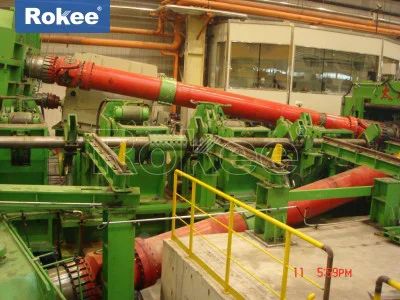
One of the most defining advantages of the universal shaft for motor is its unparalleled versatility, adapting seamlessly to an extensive array of applications across diverse sectors. In industrial manufacturing, these shafts are integral to motor-driven machinery such as conveyor systems, pumps, compressors, mixers, and processing equipment, where they enable motors to power production lines even when spatial constraints prevent direct, aligned mounting. In heavy industrial settings, including mining, construction, and metallurgy, universal shafts connect high-power motors to crushers, rolling mills, excavators, and material handling equipment, enduring extreme torque loads, continuous operation, and harsh environmental conditions while maintaining reliable power transmission. In mobile machinery, from agricultural equipment to commercial vehicles, motor universal shafts facilitate power transfer between engines or electric motors and wheel assemblies, hydraulic pumps, and auxiliary components, accommodating the constant movement and misalignment that occurs during operation over uneven terrain. They are also widely used in marine applications, linking motor drives to propeller shafts and auxiliary marine equipment, where they resist corrosion and handle the dynamic misalignment caused by vessel movement. Even in precision engineering and commercial applications, such as printing presses, textile machinery, and HVAC systems, compact universal shafts for small to medium-sized motors ensure smooth, quiet power delivery, minimizing vibration and preserving the precision of sensitive equipment.
Beyond misalignment compensation, universal shafts for motors deliver a host of secondary benefits that enhance overall drive system performance. Firstly, they act as a natural vibration dampener, absorbing and isolating the minor vibrations generated by motor operation from the driven machinery, and vice versa. This vibration reduction not only improves the smoothness of operation but also extends the service life of adjacent components, such as bearings, gears, and electronic controls, by reducing fatigue stress. Secondly, they simplify equipment installation and layout, allowing engineers and technicians to mount motors in optimal positions for space efficiency, accessibility, and safety, without being constrained by the need for perfect shaft alignment. This design flexibility streamlines manufacturing and assembly processes, reduces installation time, and simplifies equipment maintenance and replacement over time. Thirdly, high-quality universal shafts minimize power loss during transmission, ensuring that the vast majority of the rotational energy generated by the motor is transferred to the driven equipment rather than being wasted as friction or heat. This improved energy efficiency translates to lower operational costs, reduced motor strain, and a smaller environmental footprint, aligning with modern industry demands for sustainable, energy-efficient machinery.
Proper operation and routine maintenance are essential to maximizing the performance and lifespan of universal shafts for motors, ensuring they continue to function reliably alongside the motor throughout its service life. One of the primary maintenance considerations is lubrication, as the precision bearings within the universal joints require consistent, adequate lubrication to reduce friction, prevent overheating, and minimize wear. The lubrication schedule and type of lubricant are dictated by the operating speed, load, and environment; shafts operating in high-speed motor systems or dusty, high-temperature environments require more frequent lubrication to maintain optimal performance. Regular visual inspections are also critical, allowing operators to detect early signs of wear, such as unusual noise, excessive vibration, play in the joints, or lubricant leakage. Addressing these minor issues promptly prevents minor wear from escalating into major failures that could damage the motor or connected equipment. Additionally, ensuring proper alignment during installation and periodic realignment checks help reduce unnecessary stress on the universal shaft, even though it is designed to tolerate misalignment. Avoiding overloading the shaft beyond its rated torque capacity is equally important, as excessive loads can cause permanent deformation, joint failure, or shaft breakage, disrupting operations and posing safety risks.
As mechanical engineering and motor technology continue to evolve, the design and functionality of universal shafts for motors have advanced in tandem, adapting to meet the demands of modern industrial and commercial applications. Modern iterations feature refined joint designs for reduced friction and smoother operation, enhanced sealing technologies for superior contamination protection in harsh environments, and lightweight yet high-strength materials that improve efficiency without sacrificing durability. Engineers have also optimized the dynamic balance of universal shafts to accommodate higher motor speeds, reducing vibration and noise in high-performance drive systems. Customization options have expanded as well, with manufacturers offering tailored universal shaft designs to meet unique application requirements, such as extended length, specialized load capacities, extreme misalignment tolerance, or compatibility with niche motor types. These advancements ensure that the universal shaft remains a relevant and critical component in modern motor drive systems, even as motors become more compact, powerful, and energy-efficient, and as machinery operates under increasingly demanding conditions.
Despite its relatively simple design compared to complex electronic or hydraulic components, the universal shaft for motor holds a vital position in the global mechanical landscape, underpinning the operation of countless motor-driven systems that power industry, commerce, and daily life. Its ability to turn the fixed rotational output of a motor into flexible, adaptable power transmission solves a fundamental engineering challenge, enabling the creation of efficient, practical, and durable machinery that can operate reliably in real-world conditions. Without this unassuming component, motors would be limited to rigid, perfectly aligned installations, severely restricting equipment design, functionality, and operational flexibility. Every time a motor powers a conveyor belt moving goods, a pump circulating fluids, a construction machine handling heavy loads, or a vehicle traversing uneven terrain, a universal shaft is working silently to ensure that power is transferred smoothly and efficiently, highlighting its irreplaceable role in modern mechanical systems.
In summary, the universal shaft for motor is far more than a simple connecting component; it is a critical engineering solution that enhances the versatility, reliability, and efficiency of motor-driven equipment. By accommodating misalignment, reducing vibration, simplifying installation, and ensuring efficient torque transmission, it addresses key pain points in drive system design and operation, delivering tangible benefits in terms of equipment longevity, operational continuity, and cost savings. Its widespread adoption across diverse industries is a testament to its practical value and timeless engineering relevance, and ongoing advancements in materials and design will only strengthen its position as a cornerstone of mechanical power transmission. As motors continue to evolve and drive the next generation of industrial and mobile machinery, the universal shaft will remain an essential companion, adapting to new challenges and ensuring that rotational power is delivered where it is needed, reliably and efficiently, no matter the operational constraints.
Looking ahead, the role of universal shafts for motors is set to grow even more significant as industries push for greater automation, energy efficiency, and equipment durability. The integration of smart monitoring technologies, such as vibration sensors and wear indicators, is poised to transform these passive components into active elements of predictive maintenance systems, allowing operators to monitor shaft health in real time and schedule maintenance before failures occur. This shift towards smart, maintenance-friendly designs will further reduce downtime and optimize the performance of motor-driven systems, aligning with the rise of Industry 4.0 and smart manufacturing principles. Additionally, the development of eco-friendly, long-life lubricants and sustainable materials will enhance the environmental credentials of universal shafts, matching the sustainability goals of modern motor technology and industrial operations. In every iteration, the core purpose of the universal shaft for motor remains unchanged: to enable seamless, reliable power transmission between motors and driven equipment, proving that even the most fundamental mechanical components can have a profound impact on the efficiency and functionality of the entire industrial ecosystem.