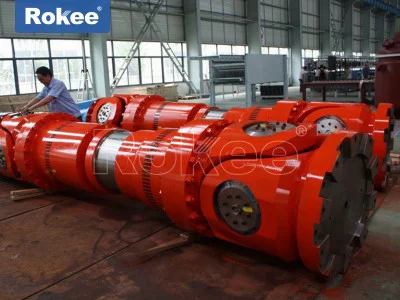
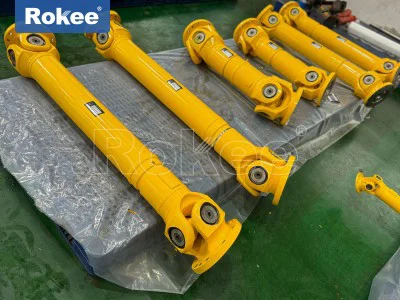
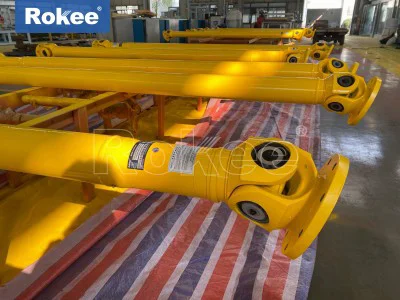
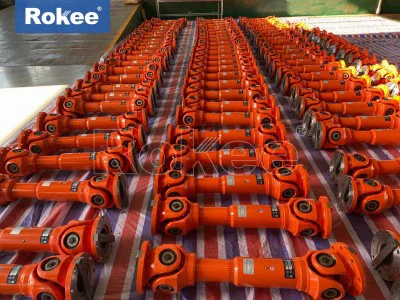
High Flexibility Universal Shaft
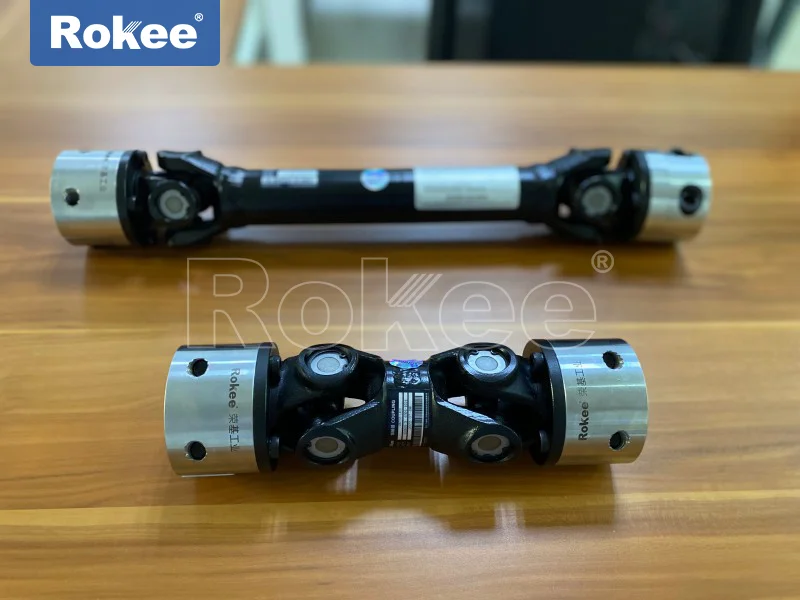
High flexibility universal shafts stand as indispensable mechanical components in modern power transmission systems, engineered to bridge the gap between non-coaxial rotating shafts while delivering consistent torque transfer and accommodating diverse forms of misalignment. Unlike rigid transmission shafts that demand precise axial alignment to function effectively, these flexible variants are purpose-built to adapt to angular, radial, and axial deviations that arise from installation errors, thermal expansion, mechanical vibration, or dynamic operational movements. Their unique design marries structural robustness with exceptional pliability, making them a cornerstone of efficient, reliable power delivery across countless industrial, automotive, aerospace, and marine scenarios. By delving into their intricate structural composition, core performance attributes, distinct classifications, and wide-ranging practical uses, one can fully grasp the pivotal role these shafts play in optimizing the functionality and longevity of complex mechanical assemblies, as well as their ability to solve common transmission challenges that plague rigid shaft systems.
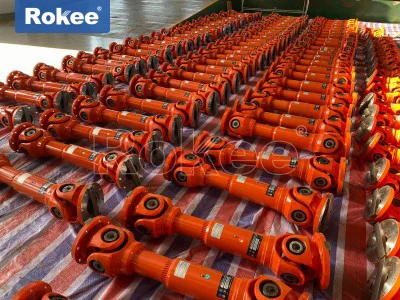
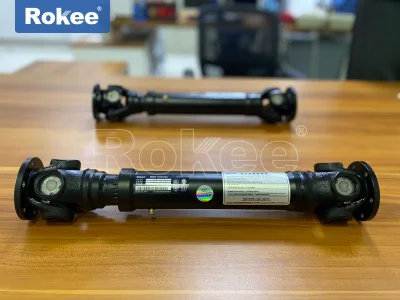
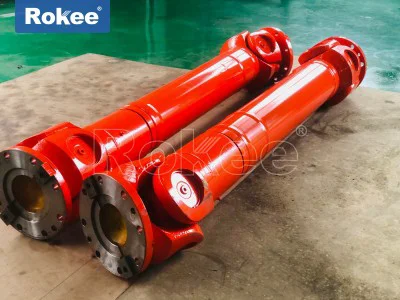
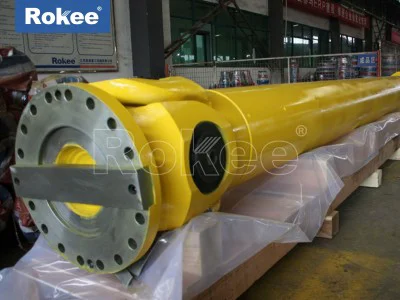
At the heart of every high flexibility universal shaft lies a meticulously crafted structural framework that balances flexibility and load-bearing capacity, with variations in design tailored to specific operational demands. The fundamental configuration typically consists of two end yokes, a central articulating core, bearing assemblies, and supplementary components that enhance sealing, lubrication, and durability. The end yokes serve as the connection points between the universal shaft and the driving and driven machinery, engineered with precision to ensure secure, stable attachment without compromising rotational balance. The central articulating core is the defining element that enables flexibility: in the most prevalent cross-type design, this core takes the form of a cross-shaped spider, fitted with precision needle bearings at each arm to minimize friction during angular movement. This cross-spider setup allows the shaft to bend and pivot within a defined angular range, facilitating smooth power transfer even when the connected shafts are significantly out of alignment. For enhanced flexibility and constant velocity performance, alternative designs incorporate ball-and-socket joints or cage-style constant velocity mechanisms, which replace the cross spider with a spherical core and ball bearings to enable multi-directional articulation and eliminate rotational speed fluctuations that can occur with single cross-type joints. Many high flexibility universal shafts also feature an intermediate shaft section, which can be fixed or telescopic, to adjust the overall length and accommodate axial displacement between the driving and driven components. Sealing elements, such as rubber boots or metal gaskets, are integrated into the structure to shield internal bearings and lubrication from dust, moisture, grease leakage, and abrasive contaminants, preserving operational integrity in harsh working environments. The materials used in construction further define the shaft’s structural capabilities: high-grade alloy steels are favored for heavy-duty applications due to their exceptional tensile strength, fatigue resistance, and load-bearing capacity, while lightweight composite materials and hardened carbon steels are utilized for medium and light-duty scenarios to reduce weight without sacrificing flexibility and durability. Every structural component is precision-machined and balanced to minimize rotational vibration, ensuring stable performance even at elevated operating speeds.
The performance characteristics of high flexibility universal shafts are what set them apart from conventional transmission components, with a suite of attributes tailored to meet the rigorous demands of dynamic mechanical systems. Foremost among these is exceptional angular and radial misalignment compensation, a defining trait that allows the shafts to maintain seamless power transmission even when the connected shafts deviate significantly from a coaxial position. Depending on the specific design, these shafts can accommodate angular misalignments ranging from 15 degrees to over 45 degrees, alongside moderate radial and axial displacements, eliminating the need for ultra-precise installation and reducing stress on connected machinery components. This flexibility also translates to superior shock absorption and vibration damping capabilities, as the articulating structure can cushion sudden torque spikes, impact loads, and operational vibrations that would otherwise damage rigid shafts or connected equipment. This not only prevents premature wear and tear but also reduces operational noise, creating a smoother, quieter working environment for both machinery and operators. High torque transmission efficiency is another key performance metric, with well-designed high flexibility universal shafts boasting efficiency rates of up to 98-99% in optimal operating conditions. This minimal energy loss ensures that the vast majority of rotational power generated by the driving unit is transferred to the driven equipment, boosting overall system energy efficiency and reducing operational costs over time. Durability and fatigue resistance are equally critical, as these shafts are engineered to withstand repeated cyclic loading, high rotational speeds, and prolonged operational stress without deformation, cracking, or performance degradation. The precision bearing systems and high-quality materials work in tandem to extend service life, even in heavy-use industrial settings or extreme environmental conditions, from high-temperature manufacturing facilities to corrosive marine environments. Additionally, many modern high flexibility universal shafts offer adaptable length configurations, with telescopic intermediate shafts that can adjust to varying installation spaces and axial movements, enhancing versatility across different equipment setups. Unlike rigid shafts that require custom fabrication for specific lengths, these flexible variants can be adjusted on-site, simplifying installation and replacement processes. Maintenance requirements are also optimized, with sealed, pre-lubricated designs reducing the need for frequent upkeep, while accessible lubrication points allow for easy servicing in heavy-duty applications, further bolstering long-term performance reliability.
High flexibility universal shafts are categorized into distinct types based on their structural design, operational capabilities, and intended use cases, each engineered to excel in specific transmission scenarios. The most common classification is based on the articulating joint design, with three primary variants dominating the market: cross-type universal shafts, constant velocity universal shafts, and double joint universal shafts. Cross-type universal shafts, also known as Hooke’s joints, represent the classic and most widely used design, featuring a single cross-spider core and needle bearing assemblies. These shafts are valued for their simple, robust construction, high torque capacity, and cost-effectiveness, making them suitable for a broad range of medium to heavy-duty applications where moderate angular misalignment is present. While they may exhibit minor rotational speed fluctuations at larger misalignment angles, their reliability and load-bearing capabilities make them a staple in general industrial machinery and automotive systems. Constant velocity (CV) universal shafts are engineered to eliminate speed variations during operation, utilizing ball-and-socket or cage-style joint designs that maintain a consistent rotational speed between the input and output shafts regardless of misalignment angle. This makes them ideal for high-speed, high-precision applications where smooth, vibration-free power transfer is critical, such as automotive front-wheel drive systems, aerospace control mechanisms, and precision industrial automation equipment. Double joint universal shafts feature two cross-type joints connected by an intermediate shaft, combining the high torque capacity of cross-type designs with improved misalignment compensation and reduced speed fluctuations. This dual-joint configuration allows for greater angular flexibility and smoother operation than single cross-type shafts, making them well-suited for heavy-duty applications with extreme misalignment, such as construction machinery, marine propulsion systems, and large-scale industrial processing equipment. Beyond joint design, these shafts are also classified by load capacity, ranging from light-duty shafts for small-scale precision instruments and portable machinery to medium-duty shafts for general industrial equipment and automotive components, and heavy-duty shafts for mining machinery, steel rolling mills, and large marine vessels. They can also be categorized by structural configuration, including fixed-length shafts for permanent installations, telescopic shafts for adjustable length requirements, and integrated damping shafts for enhanced vibration reduction in sensitive equipment. Each type is meticulously engineered to balance flexibility, strength, and efficiency, ensuring a tailored solution for every unique power transmission challenge.
The versatility of high flexibility universal shafts has led to their widespread adoption across nearly every industry that relies on rotational power transmission, with each sector leveraging their unique performance traits to overcome specific operational hurdles. In the automotive industry, these shafts are integral components of vehicle drivetrains, connecting the transmission system to the drive axles in both two-wheel and four-wheel drive vehicles. They accommodate the constant angular and radial movements caused by suspension travel, road unevenness, and chassis flex, ensuring smooth power delivery to the wheels and enhancing vehicle handling, stability, and ride comfort. Constant velocity variants are particularly crucial in front-wheel drive and high-performance vehicles, where seamless, vibration-free power transfer at varying steering angles is essential for optimal performance. The industrial manufacturing sector relies heavily on high flexibility universal shafts for a diverse array of machinery, including conveyor systems, pumps, compressors, mixers, and printing presses. In these applications, the shafts compensate for misalignment caused by thermal expansion during continuous operation, mechanical wear, and imperfect installation, preventing equipment damage and reducing downtime. Heavy-duty cross-type and double joint shafts are widely used in steel mills, mining equipment, and material handling machinery, where they transmit high torque levels while withstanding extreme loads, vibration, and harsh operating conditions. The aerospace and aviation industry utilizes precision-engineered high flexibility universal shafts in critical systems such as aircraft control surfaces, landing gear mechanisms, and auxiliary power units. These shafts are crafted from lightweight, high-strength materials to minimize weight while delivering exceptional flexibility and reliability, adapting to the dynamic structural movements of aircraft during flight and ensuring the precise, consistent operation of vital flight systems. In the marine and shipbuilding industry, these shafts are employed in propulsion systems, connecting ship engines to propeller shafts and accommodating the misalignment caused by hull flexing, wave impact, and thermal changes. Corrosion-resistant variants are used to withstand the harsh saltwater environment, ensuring durable performance in both commercial vessels and recreational watercraft. Agricultural machinery also benefits immensely from high flexibility universal shafts, which are used in tractors, harvesters, and other farm equipment to transmit power between engine components and working attachments. These shafts endure the rugged, dusty, and vibration-heavy conditions of agricultural operations, adapting to uneven terrain and heavy load fluctuations while maintaining reliable power transfer. Other specialized applications include robotic automation systems, where flexible universal shafts enable precise multi-axis movement in robotic arms and assembly lines; construction machinery such as excavators, loaders, and cranes, where they handle extreme misalignment and heavy loads; and even medical equipment, where lightweight, precision flexible shafts support the smooth, accurate operation of diagnostic and surgical devices. Across every application, the core value of high flexibility universal shafts remains consistent: they solve the inherent challenges of non-coaxial power transmission, enhance equipment durability, reduce maintenance needs, and improve overall system efficiency.
As mechanical engineering continues to advance and equipment designs become more complex, the demand for high flexibility universal shafts with enhanced performance capabilities continues to grow. Ongoing innovations in material science, bearing technology, and precision manufacturing are further refining these shafts, boosting their misalignment compensation, load capacity, and service life while reducing weight and maintenance requirements. The adaptability, reliability, and efficiency of high flexibility universal shafts solidify their status as a foundational component in modern power transmission systems, bridging the gap between mechanical design limitations and real-world operational demands. Whether in heavy industrial machinery, high-performance vehicles, critical aerospace systems, or everyday agricultural equipment, these shafts play a silent yet vital role in ensuring seamless, reliable rotational power transfer. By understanding their structural nuances, performance attributes, classification nuances, and diverse applications, engineers, technicians, and equipment designers can make informed decisions when selecting and implementing these components, maximizing the performance, durability, and efficiency of their mechanical assemblies. In an era where operational efficiency, equipment longevity, and adaptability are paramount, high flexibility universal shafts remain an essential, irreplaceable solution for the ever-evolving challenges of mechanical power transmission.