Universal Joint Coupling Helps PUR Sandwich Panel Production Line Break Through Transmission Bottlenecks
In the modern construction and industrial fields, PUR sandwich panels have become an indispensable core material due to their excellent thermal insulation, flame retardancy, structural stability, and environmental friendliness. Composed of two outer facing materials and a rigid PUR foam core, these panels are widely used in external walls, roofs, cold storage facilities, prefabricated buildings, and various industrial workshops, driving the continuous development and upgrading of their production technology. The PUR sandwich panel production line is a complex integrated system that involves multiple continuous processes, including uncoiling of facing materials, roll forming, preheating, PUR foaming, lamination, curing, and cutting. Each link requires precise, stable, and efficient power transmission to ensure the consistency of product quality, the continuity of the production process, and the improvement of production efficiency. However, in the long-term operation of traditional production lines, the transmission system often faces various bottlenecks, such as angular deviations between shafts, unstable power transmission, high equipment wear, and frequent shutdowns, which severely restrict the production capacity and product quality of the production line. As a key component in the mechanical transmission system, the universal joint coupling has gradually become a core solution to break through these transmission bottlenecks, relying on its unique structural design, excellent transmission performance, and strong adaptability, effectively optimizing the operation efficiency of the PUR sandwich panel production line and promoting the high-quality development of the entire industry.
To understand how the universal joint coupling helps the PUR sandwich panel production line break through transmission bottlenecks, it is first necessary to clarify the working characteristics of the production line and the core challenges faced by its transmission system. A modern PUR sandwich panel production line is a high-speed, continuous, and automated production system that integrates mechanical, electrical, hydraulic, and chemical reaction technologies. It requires the coordinated operation of multiple subsystems, such as the uncoiling system, roll forming system, foaming system, double-belt lamination system, cutting system, and conveying system. Each subsystem is driven by an independent power source, and the power needs to be accurately and stably transmitted to various executive components to ensure that the entire production line operates in a synchronized manner. The transmission system of the production line is the "nerve center" of the entire production process, and its stability and efficiency directly determine the overall operation effect of the production line. However, due to the limitations of the production process, equipment layout, and working environment, the transmission system of traditional PUR sandwich panel production lines often faces three key bottlenecks.
The first bottleneck is the angular deviation between the driving shaft and the driven shaft. In the actual installation and layout of the PUR sandwich panel production line, due to the different installation positions of each subsystem and the limitations of the overall structure of the equipment, the driving shaft and the driven shaft of each transmission link are often not on the same axis, resulting in a certain angular deviation. Traditional coupling components have poor angular compensation capacity and can only adapt to a very small range of angular deviations. When the angular deviation exceeds the bearing range, the power transmission will become unstable, resulting in vibration and noise of the equipment, and even wear of the shaft and coupling, which affects the normal operation of the production line. For example, in the roll forming and lamination links of the production line, the transmission shafts of the roll forming machine and the lamination machine need to maintain synchronous operation, but due to the installation deviation, the traditional coupling cannot effectively compensate for the angular difference, leading to uneven pressure on the panel surface, uneven thickness of the PUR foam core, and other quality problems, which not only increases the product scrap rate but also reduces the production efficiency.
The second bottleneck is the poor adaptability to dynamic changes in the production process. During the long-term continuous operation of the PUR sandwich panel production line, the equipment will generate a lot of heat due to friction and power consumption, resulting in thermal expansion of the transmission shaft; at the same time, the vibration generated during the operation of the equipment will cause small changes in the relative position of the shaft. Traditional coupling components have poor flexibility and cannot adapt to these dynamic changes in a timely manner, leading to loose connections, unstable power transmission, and even sudden shutdowns. In addition, the PUR foaming process has strict requirements on the stability of the production line speed. If the transmission system is unstable due to dynamic changes, it will lead to uneven foaming of the PUR core, inconsistent density, and affect the thermal insulation and structural performance of the final product. For example, when the transmission shaft expands due to heat, the traditional coupling will be subjected to excessive axial force, leading to deformation of the coupling and the shaft, resulting in equipment failure and production interruption. The maintenance and replacement of damaged components not only takes a lot of time but also increases the production cost.
The third bottleneck is the high wear and short service life of the transmission components. The PUR sandwich panel production line usually needs to operate continuously for a long time, and the transmission system bears a large torque and load. Traditional coupling components are often made of common materials and have simple structural design, which are prone to wear, fatigue, and damage under long-term heavy load operation. The frequent replacement of coupling components not only increases the maintenance cost but also interrupts the continuous production process, reducing the overall production efficiency. For example, in the cutting link of the production line, the cutting machine needs to obtain stable power transmission to ensure the smoothness and accuracy of the cutting surface. If the coupling is worn and loose, it will lead to uneven cutting, burrs on the panel edge, and other problems, which affect the product quality and increase the subsequent processing workload.
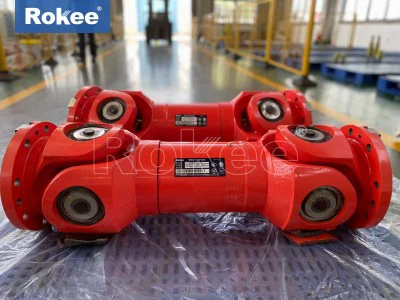
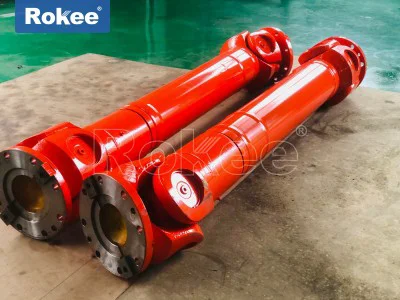
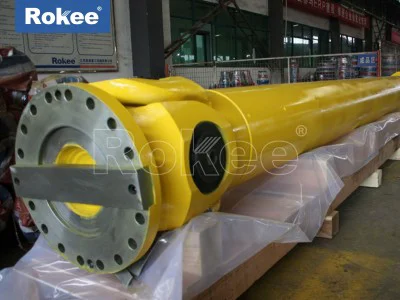
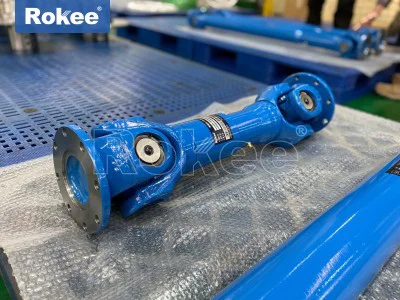
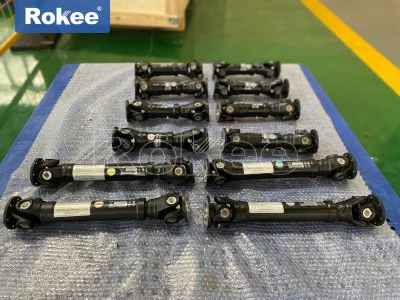
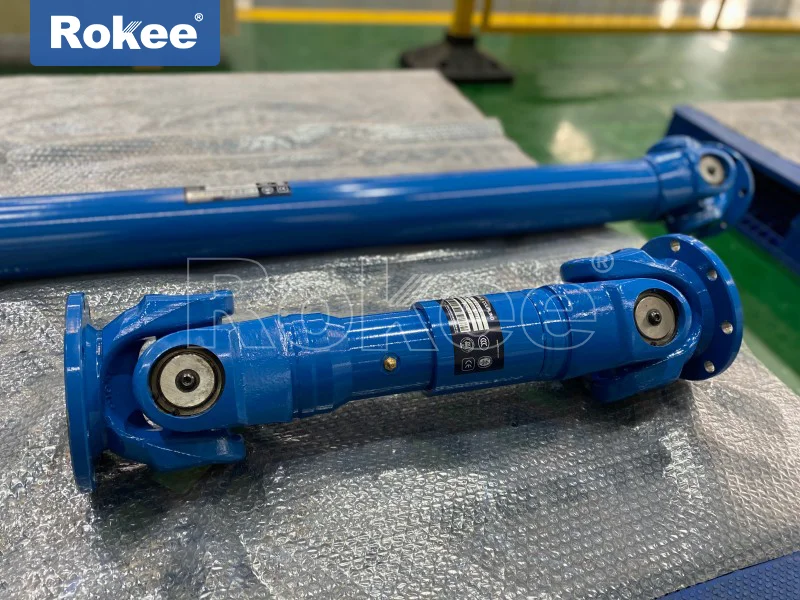
Faced with the above transmission bottlenecks, the universal joint coupling has shown unique advantages and become an ideal choice for optimizing the transmission system of the PUR sandwich panel production line. The universal joint coupling, also known as the universal joint, is a mechanical component that realizes the transmission of power between shafts with variable angles. Its core structure is composed of a driving end connector, a driven end connector, an intermediate force transmission structure, and auxiliary fastening components. The two ends of the coupling are usually fork-shaped structures, which are firmly connected to the driving shaft and the driven shaft. The intermediate force transmission structure realizes the铰接 between the two ends of the fork, which can not only ensure the synchronous rotation of the shafts but also flexibly adapt to the angular deviation between the two shafts. This unique structural design enables the universal joint coupling to effectively solve the transmission bottlenecks faced by the PUR sandwich panel production line and improve the overall operation stability and efficiency of the production line.
The strong angular compensation capacity of the universal joint coupling is the key to solving the problem of angular deviation between shafts in the PUR sandwich panel production line. Unlike traditional coupling components that can only adapt to a small range of angular deviations, the universal joint coupling can adapt to a certain range of angular deviations between the driving shaft and the driven shaft, and some special structural products can even adapt to larger angular deviations. In the PUR sandwich panel production line, whether it is the uncoiling system and the roll forming system, or the lamination system and the curing system, the universal joint coupling can effectively compensate for the angular deviation caused by installation and layout, ensuring the stable transmission of power. For example, in the connection between the roll forming machine and the transmission motor, due to the installation position limitation, there is an angular deviation of 3-5 degrees between the motor shaft and the roll forming machine shaft. The traditional coupling will cause unstable transmission and equipment vibration in this case, while the universal joint coupling can flexibly adapt to this angular deviation, ensuring that the roll forming machine operates at a constant speed, so that the facing material can be formed evenly, and the thickness and flatness of the panel meet the standard requirements. This not only improves the product quality but also reduces the wear of the equipment, extending the service life of the transmission system.
The excellent flexibility and adaptability of the universal joint coupling can effectively solve the problem of poor adaptability to dynamic changes in the production process. During the operation of the PUR sandwich panel production line, the thermal expansion of the transmission shaft and the vibration of the equipment will cause small changes in the relative position of the shaft. The universal joint coupling can adapt to these dynamic changes through its own structural flexibility, ensuring that the power transmission is not interrupted and remains stable. The intermediate force transmission structure of the universal joint coupling can slide and rotate within a certain range, which can effectively absorb the vibration generated during the operation of the equipment, reduce the impact of vibration on the transmission system, and avoid loose connections and equipment failures caused by vibration. At the same time, the universal joint coupling can also adapt to the axial displacement caused by thermal expansion of the shaft, avoiding excessive axial force on the coupling and the shaft, and preventing component deformation and damage. For example, in the PUR foaming link, the temperature of the production line is relatively high, and the transmission shaft will expand due to heat. The universal joint coupling can automatically adjust the axial position to adapt to the thermal expansion, ensuring that the foaming machine operates stably, the PUR foam is evenly mixed and foamed, and the density and uniformity of the foam core meet the technical requirements. This effectively avoids the quality problems caused by unstable transmission and improves the qualification rate of products.
The high wear resistance and long service life of the universal joint coupling effectively solve the problem of high wear and short service life of traditional transmission components. The universal joint coupling is usually made of high-strength alloy steel, which is processed through forging, heat treatment, precision cutting, and other multiple processes, greatly improving the overall hardness, wear resistance, and fatigue resistance of the component. The precision of the internal matching parts is high, which can reduce the friction during operation, reduce the wear of the component, and extend the service life. In addition, the structure of the universal joint coupling is compact, the number of components is small, and the maintenance is simple. It does not need frequent lubrication and maintenance during long-term operation, which reduces the maintenance cost and the downtime caused by maintenance. In the PUR sandwich panel production line, which needs continuous operation for a long time, the use of universal joint coupling can reduce the frequency of component replacement, ensure the continuity of the production process, and improve the overall production efficiency. For example, in the cutting link, the cutting machine needs to bear a large torque during operation, and the traditional coupling is prone to wear and damage under long-term heavy load. The universal joint coupling made of high-strength alloy steel can withstand large torque and load, and is not easy to wear and fatigue, which can ensure the stable operation of the cutting machine for a long time, improve the cutting accuracy and efficiency, and reduce the product scrap rate.
In addition to solving the above three core transmission bottlenecks, the universal joint coupling also has the advantages of high transmission efficiency and low energy consumption, which further optimizes the operation effect of the PUR sandwich panel production line. The power transmission path of the universal joint coupling is direct, with low transmission loss, which can effectively transmit the power of the motor to each executive component, improving the utilization rate of energy. Compared with traditional coupling components, the universal joint coupling has higher transmission efficiency, which can reduce the energy consumption of the production line while ensuring the production capacity, achieving the effect of energy saving and emission reduction. In the context of increasing emphasis on energy conservation and environmental protection, this advantage of the universal joint coupling is particularly important, which can help enterprises reduce production costs and improve market competitiveness.
The application of universal joint coupling in the PUR sandwich panel production line is not only limited to a single link but runs through the entire production process, bringing comprehensive optimization effects to the production line. In the uncoiling link, the universal joint coupling connects the uncoiling machine and the motor, ensuring that the uncoiling speed is synchronized with the subsequent process, avoiding the problem of uneven uncoiling of the facing material, which affects the subsequent forming quality. In the roll forming link, the universal joint coupling compensates for the angular deviation between the motor and the roll forming machine, ensuring that the roll forming speed is stable, the forming effect is good, and the flatness and thickness of the panel are consistent. In the PUR foaming link, the universal joint coupling ensures the stable operation of the foaming machine, making the foam core evenly foamed, with consistent density and good thermal insulation performance. In the lamination and curing links, the universal joint coupling ensures the synchronous operation of the lamination machine and the curing equipment, ensuring that the panel is evenly pressed and fully cured, improving the structural strength and durability of the product. In the cutting link, the universal joint coupling provides stable power for the cutting machine, ensuring the smoothness and accuracy of the cutting surface, reducing the burrs and uneven cutting problems of the panel.
The practical application effect shows that the application of universal joint coupling can effectively help the PUR sandwich panel production line break through the transmission bottlenecks, and the improvement effect in production efficiency, product quality, and equipment service life is very significant. Before the application of the universal joint coupling, a certain PUR sandwich panel production enterprise often encountered problems such as unstable transmission, frequent equipment failures, and high product scrap rate. The production efficiency was low, and the maintenance cost was high. After replacing the traditional coupling with the universal joint coupling, the angular deviation between the shafts was effectively solved, the equipment vibration was reduced, the frequency of equipment failures was significantly reduced, and the downtime was shortened by more than 30%. At the same time, the product scrap rate was reduced by 15-20%, the production efficiency was increased by 25-30%, and the maintenance cost was reduced by nearly 40%. The enterprise's production capacity and market competitiveness were significantly improved, which fully reflects the important role of the universal joint coupling in optimizing the transmission system of the PUR sandwich panel production line.
With the continuous development of the PUR sandwich panel industry, the requirements for the production line are getting higher and higher, and the transmission system, as the core part of the production line, needs to be continuously optimized and upgraded. The universal joint coupling, with its unique structural advantages and excellent performance, will play a more important role in the future development of the PUR sandwich panel production line. With the continuous progress of processing technology, the structure of the universal joint coupling will be more optimized, the performance will be more excellent, and it will be able to adapt to more complex working conditions and higher production requirements. For example, the development of new materials and precision processing technology will further improve the wear resistance and service life of the universal joint coupling; the optimization of structural design will further improve its angular compensation capacity and transmission efficiency, making it better adapt to the high-speed and high-precision development trend of the PUR sandwich panel production line.
In conclusion, the universal joint coupling, as a key component in the mechanical transmission system, has effectively solved the core transmission bottlenecks faced by the PUR sandwich panel production line through its strong angular compensation capacity, excellent flexibility and adaptability, high wear resistance, and high transmission efficiency. It has improved the production efficiency, product quality, and equipment service life of the production line, reduced the production and maintenance costs, and promoted the high-quality development of the PUR sandwich panel industry. In the future, with the continuous innovation and development of technology, the application of universal joint coupling in the PUR sandwich panel production line will be more extensive and in-depth, bringing more benefits to enterprises and promoting the sustainable development of the entire industry.