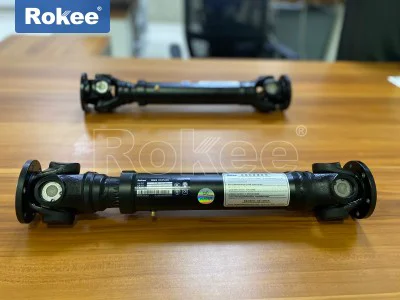
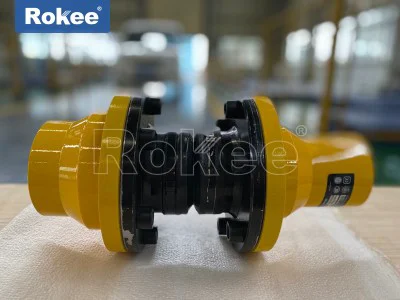
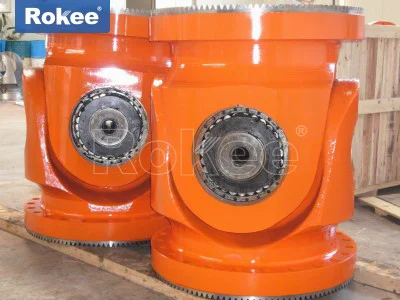
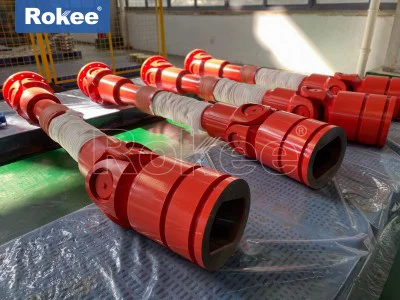
Universal Joint Drive Shaft
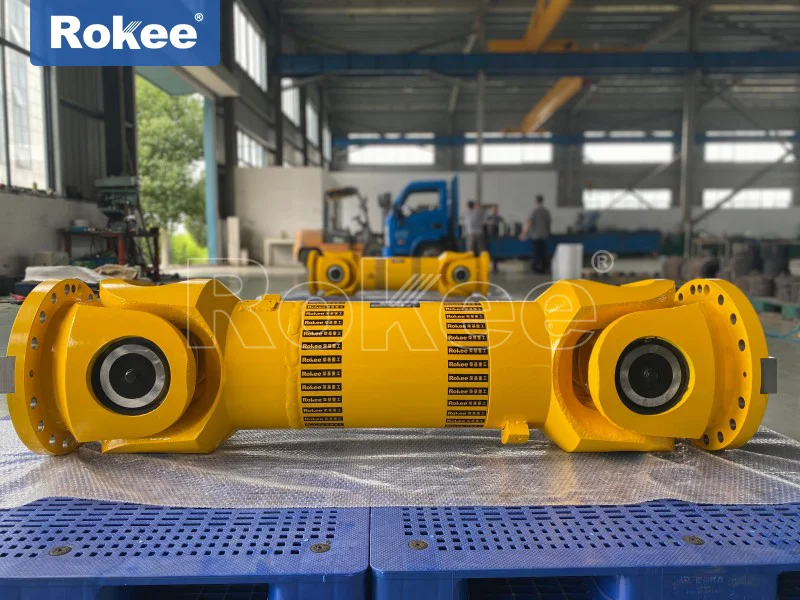
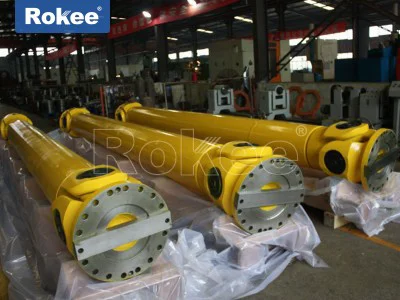
A universal joint drive shaft, often simply referred to as a drive shaft with universal joints, is a critical mechanical component designed to transmit rotational power and torque between two shafts that are not aligned coaxially, allowing for angular misalignment and relative movement between the connected components. This versatile mechanism plays an indispensable role in a wide range of mechanical systems, from automotive and agricultural machinery to industrial equipment and aerospace applications, enabling smooth and efficient power transfer even when the input and output shafts are positioned at different angles or experience changes in distance during operation. The ability to accommodate misalignment while maintaining consistent power transmission makes the universal joint drive shaft a cornerstone of modern mechanical design, as it solves the fundamental challenge of connecting moving or offset components without sacrificing performance, durability, or efficiency.
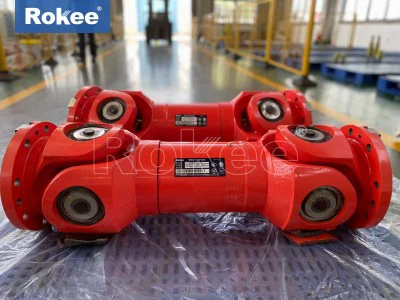
The structure of a universal joint drive shaft is composed of several key components that work together seamlessly to achieve its core function, each contributing to the overall strength, flexibility, and reliability of the assembly. At the heart of the system are the universal joints, also known as U-joints, which serve as the flexible connection points between the drive shaft and the input/output shafts. A typical universal joint consists of a cross-shaped metal component, called a cross or spider, with four cylindrical trunnions extending from its center at right angles to each other. Each trunnion is fitted with a bearing, usually a needle roller bearing, which reduces friction and allows for smooth rotation between the cross and the yokes. The bearings are enclosed within bearing caps or sleeves, which are secured to the yokes—fork-shaped components that connect the universal joint to the drive shaft and the input/output shafts. The yokes are designed to wrap around the trunnions of the cross, creating a hinged connection that permits rotational movement around multiple axes, thus enabling angular misalignment between the connected shafts.
The drive shaft itself, the central component of the assembly, is typically a hollow tubular structure made from high-strength materials such as steel, aluminum alloy, or composite materials. The hollow design is preferred because it provides a high strength-to-weight ratio, reducing the overall mass of the shaft while maintaining the structural rigidity required to withstand the high torques and rotational speeds encountered during operation. A solid drive shaft would be heavier and more prone to vibration, making the hollow design more efficient for most applications. In some cases, especially for heavy-duty applications, the drive shaft may be constructed from multiple sections connected by additional universal joints or center support bearings. The center support bearing, when used, is mounted on the vehicle or equipment frame and supports the middle section of a long drive shaft, reducing deflection and vibration and ensuring stable rotation at high speeds. Another important component in many universal joint drive shaft assemblies is the slip yoke, also known as a sliding yoke. The slip yoke is located at one end of the drive shaft, usually where it connects to the transmission or differential, and features a splined connection that allows for telescopic movement of the drive shaft. This movement compensates for changes in the distance between the input and output shafts caused by suspension travel, thermal expansion, or other dynamic movements of the mechanical system, ensuring that the universal joints are not subjected to excessive stress or wear due to axial displacement.
In addition to these core components, the universal joint drive shaft assembly may include protective features such as dust boots or seals, which cover the universal joints and bearings to prevent the ingress of dirt, debris, and moisture. These contaminants can damage the bearings and corrode the metal components, reducing the service life of the assembly. The seals also help retain lubricant, which is essential for minimizing friction between the moving parts and preventing premature wear. Lubrication is a critical aspect of the assembly’s maintenance, as the universal joints and bearings rely on a consistent supply of grease or oil to operate smoothly and withstand the high loads and temperatures encountered during use.
The performance of a universal joint drive shaft is defined by several key characteristics that determine its suitability for specific applications, including torque capacity, angular misalignment capability, rotational speed range, vibration control, and durability. Torque capacity refers to the maximum amount of rotational force that the drive shaft and universal joints can transmit without suffering damage or deformation. This is determined by the strength of the materials used, the design of the cross, yokes, and drive shaft, and the size of the bearings. Heavy-duty applications, such as commercial trucks, construction machinery, and industrial equipment, require drive shafts with high torque capacity, often achieved through the use of thicker-walled tubing, larger trunnions, and more robust bearings. Light-duty applications, such as passenger cars or small agricultural equipment, can use smaller, lighter drive shafts with lower torque capacity.
Angular misalignment capability is another critical performance parameter, referring to the maximum angle between the input and output shafts that the universal joint can accommodate while maintaining smooth power transmission. A single universal joint can typically handle angular misalignments ranging from 0° to 45°, depending on the design and size of the joint. However, when a single universal joint is used with significant angular misalignment, it exhibits a phenomenon known as unequal speed transmission, where the output shaft rotates at a varying angular velocity even if the input shaft rotates at a constant speed. This speed variation, which increases with the angle of misalignment, can cause vibration, noise, and increased wear on the components. To address this issue, many applications use a double universal joint assembly, which consists of two universal joints connected by an intermediate shaft. When the two universal joints are properly aligned—with the angles of misalignment equal and the crosses of the joints positioned in the same plane—the speed variation from the first universal joint is canceled out by the second, resulting in constant speed transmission between the input and output shafts. This makes double universal joint drive shafts ideal for applications where significant angular misalignment is required without sacrificing smooth operation.
Rotational speed range is another important performance characteristic, as the drive shaft must be able to rotate at the speeds required by the application without experiencing excessive vibration, resonance, or failure. The maximum rotational speed is determined by the balance of the drive shaft, the strength of the materials, and the design of the bearings. A poorly balanced drive shaft will vibrate excessively at high speeds, causing noise, discomfort (in automotive applications), and damage to other components of the mechanical system. To ensure smooth operation, drive shafts are dynamically balanced during manufacturing, a process that involves adding or removing small amounts of material to ensure that the center of mass coincides with the axis of rotation. This balance minimizes vibration and allows the drive shaft to operate at high speeds without issues.
Vibration control is closely related to rotational speed and balance, as excessive vibration can reduce the efficiency of the power transmission, increase wear on the components, and cause discomfort or damage to the surrounding equipment. In addition to dynamic balancing, the design of the drive shaft and universal joints contributes to vibration control. The use of high-quality bearings reduces friction-induced vibration, while the hollow tubular design of the drive shaft helps dampen resonant vibrations. In some applications, vibration dampeners or isolators may be added to further reduce vibration transmission to the rest of the mechanical system.
Durability and service life are key performance considerations for any mechanical component, and the universal joint drive shaft is no exception. The durability of the assembly depends on the materials used, the quality of the manufacturing process, the level of lubrication, and the operating conditions. High-strength steel is commonly used for the drive shaft and yokes in heavy-duty applications, as it offers excellent resistance to fatigue and deformation. Aluminum alloy is used in lighter applications to reduce weight, while composite materials are increasingly being used in high-performance applications where weight reduction and corrosion resistance are critical. The bearings, being the most wear-prone components, are made from hardened steel or other wear-resistant materials, and their service life is extended through proper lubrication and protection from contaminants. The service life of a universal joint drive shaft can vary significantly depending on the application—from several years in passenger cars to decades in well-maintained industrial equipment— but regular maintenance, including lubrication and inspection for wear and damage, is essential to maximize durability.
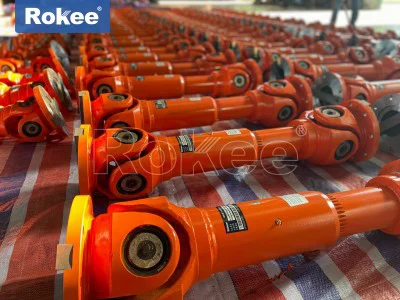
Universal joint drive shafts are available in a variety of types, each designed to meet the specific requirements of different applications. The classification of these drive shafts is typically based on the type of universal joint used, the number of sections, the design of the drive shaft, and the intended application. One of the most common types is the single universal joint drive shaft, which consists of a single drive shaft with a universal joint at each end. This type is used in applications where the angular misalignment between the input and output shafts is small to moderate (usually less than 20°) and where unequal speed transmission is not a significant concern. Examples include some light-duty trucks, agricultural machinery, and small industrial equipment.
The double universal joint drive shaft, also known as a cardan shaft, is another widely used type, consisting of two universal joints connected by an intermediate shaft. As mentioned earlier, this design eliminates the unequal speed transmission associated with a single universal joint, making it suitable for applications where significant angular misalignment (up to 45° or more) is required while maintaining constant speed. Double universal joint drive shafts are commonly used in passenger cars, especially those with rear-wheel drive or four-wheel drive, where the transmission and differential are positioned at different angles and distances. They are also used in heavy-duty trucks, construction machinery, and industrial equipment where smooth power transmission is essential.
Constant velocity (CV) joint drive shafts are a specialized type of universal joint drive shaft that uses CV joints instead of traditional U-joints. CV joints are designed to transmit power at a constant angular velocity regardless of the angle of misalignment, eliminating the speed variation entirely. Unlike traditional U-joints, which rely on a cross and yokes, CV joints use a set of balls or rollers that run in grooved tracks, allowing for smooth rotation at any angle. There are two main types of CV joints: fixed CV joints and plunging CV joints. Fixed CV joints are used at the wheel end of the drive shaft in front-wheel drive vehicles, as they can accommodate large angular misalignments (up to 45° or more) without speed variation. Plunging CV joints, which allow for both angular misalignment and axial movement, are used at the transmission end, compensating for changes in the distance between the transmission and the wheel as the suspension moves. CV joint drive shafts are primarily used in front-wheel drive, all-wheel drive, and four-wheel drive passenger cars and light trucks, where smooth, constant-speed power transmission to the wheels is essential for vehicle performance and comfort.
Another classification of universal joint drive shafts is based on their structure: open-type and closed-type. Open-type drive shafts are the most common, consisting of an exposed drive shaft with universal joints at each end and, in some cases, a center support bearing. This design is lightweight and simple, making it suitable for most automotive and light-duty applications. Closed-type drive shafts, on the other hand, have the drive shaft enclosed within a protective tube or casing. The casing is connected to the vehicle or equipment frame via ball joints, allowing for limited movement, and serves as a structural component that can transmit longitudinal forces, acting as a longitudinal control arm in the suspension system. Closed-type drive shafts are often used in vehicles with rear-wheel drive and spiral spring suspensions, where the casing provides additional support and stability.
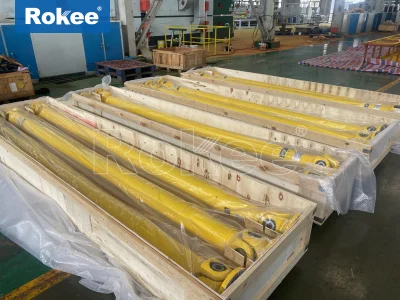
Heavy-duty universal joint drive shafts are designed for applications that require high torque capacity and durability, such as commercial trucks, buses, construction machinery (excavators, loaders, cranes), and industrial equipment (pumps, compressors, generators). These drive shafts are typically constructed from thick-walled steel tubing, with large, robust universal joints and bearings capable of withstanding extreme torques and harsh operating conditions. They may also feature multiple sections with center support bearings to handle long lengths and reduce vibration. Light-duty universal joint drive shafts, by contrast, are smaller and lighter, designed for applications such as passenger cars, small trucks, and small agricultural equipment (lawnmowers, tractors, harvesters). These drive shafts use lighter materials such as aluminum alloy and smaller universal joints, as they do not need to transmit the high torques of heavy-duty applications.
The applications of universal joint drive shafts are vast and diverse, spanning multiple industries and types of machinery, due to their unique ability to transmit power between misaligned shafts. The automotive industry is one of the largest users of universal joint drive shafts, where they are used in rear-wheel drive, four-wheel drive, and all-wheel drive vehicles. In rear-wheel drive vehicles, the drive shaft connects the transmission (located at the front of the vehicle) to the differential (located at the rear axle), transmitting power from the engine to the rear wheels. The universal joints at each end of the drive shaft accommodate the angular misalignment between the transmission and differential, which changes as the vehicle travels over uneven terrain and the suspension moves. In four-wheel drive and all-wheel drive vehicles, additional drive shafts are used to connect the transfer case to the front and rear differentials, with universal joints ensuring smooth power transmission to all four wheels regardless of the vehicle’s orientation or suspension movement.
In the agricultural industry, universal joint drive shafts are used in a wide range of equipment, including tractors, harvesters, combines, and irrigation systems. Tractors, for example, use drive shafts to transmit power from the engine to attachments such as mowers, plows, and balers, which are often positioned at different angles relative to the tractor. The universal joints allow for the movement of the attachments during operation, ensuring that power is transmitted smoothly even when the attachment is raised, lowered, or tilted. Harvesters and combines use drive shafts to power the cutting blades, augers, and other moving components, which are often located at various positions on the machine, requiring angular misalignment between the drive shafts.
The construction and heavy machinery industry relies heavily on universal joint drive shafts for equipment such as excavators, loaders, cranes, bulldozers, and concrete mixers. These machines operate in harsh, dynamic environments, with moving components that are often misaligned and subjected to high torques. Excavators, for example, use drive shafts to transmit power from the engine to the hydraulic pumps, which are mounted at different angles, and to the tracks, which require constant power transmission even as the excavator moves and the tracks adjust to uneven terrain. Cranes use drive shafts to power the hoisting mechanism and the boom, allowing for smooth rotation and movement of heavy loads. The durability and high torque capacity of heavy-duty universal joint drive shafts make them ideal for these demanding applications.
Industrial applications also make extensive use of universal joint drive shafts, particularly in machinery where power needs to be transmitted between misaligned components. Pumps and compressors, for example, use drive shafts to connect the motor to the pump or compressor head, which may be mounted at an angle due to space constraints or design requirements. Generators, both stationary and mobile, use drive shafts to transmit power from the engine to the generator rotor, ensuring that the rotor rotates at a constant speed to produce electricity. Conveyor systems, used in manufacturing, mining, and logistics, use drive shafts to power the conveyor belts, with universal joints accommodating the misalignment between the motor and the conveyor rollers. Other industrial applications include machine tools (lathes, milling machines), printing presses, and textile machinery, where precise and smooth power transmission is essential for optimal performance.
The aerospace and marine industries also utilize universal joint drive shafts, although in more specialized applications. In aerospace, drive shafts may be used in aircraft systems such as landing gear mechanisms, where they transmit power to actuate the landing gear, and in engine accessory drives, where they connect the engine to components such as pumps and generators. These drive shafts must be lightweight, high-strength, and capable of operating in extreme conditions, including high temperatures and vibrations. In the marine industry, universal joint drive shafts are used in boats and ships to transmit power from the engine to the propeller. The drive shaft connects the engine, which is usually mounted horizontally in the hull, to the propeller shaft, which may be angled downward to the propeller. The universal joints accommodate the angular misalignment between the engine and propeller shaft, ensuring smooth power transmission even as the boat moves through the water and the hull flexes.
In addition to these major industries, universal joint drive shafts are used in a variety of other applications, including recreational vehicles (ATVs, snowmobiles, motorcycles), where they transmit power from the engine to the wheels or tracks, and in household appliances such as washing machines and dryers, where they connect the motor to the drum. Even in small-scale applications, such as remote-controlled vehicles and model machinery, miniature universal joint drive shafts are used to transmit power between misaligned components. The versatility of the universal joint drive shaft, combined with its ability to adapt to different angles, speeds, and torque requirements, makes it an essential component in modern mechanical systems across virtually every industry.
In conclusion, the universal joint drive shaft is a versatile and critical mechanical component that enables the transmission of rotational power between misaligned shafts. Its structure, consisting of universal joints, a drive shaft, yokes, bearings, and other supporting components, is designed to provide flexibility, strength, and durability, while its performance characteristics—including torque capacity, angular misalignment capability, rotational speed range, and vibration control—make it suitable for a wide range of applications. The various types of universal joint drive shafts, from single and double universal joint designs to CV joint and heavy-duty models, are tailored to meet the specific requirements of different industries and machinery. From automotive and agricultural equipment to industrial machinery, aerospace, and marine systems, the universal joint drive shaft plays an indispensable role in ensuring smooth, efficient, and reliable power transmission, contributing to the optimal performance and functionality of countless mechanical systems around the world. As technology advances, materials and design techniques continue to improve, leading to more efficient, lightweight, and durable universal joint drive shafts that can meet the evolving needs of modern industry.