Sealing Performance Of Cardan Shaft Coupling Ensures The Stability Of Mineral Wool Sandwich Panel Production Line
In the field of modern industrial production, the stability and continuity of production lines directly determine the quality of products, production efficiency, and overall operational costs. Mineral wool sandwich panels, widely used in construction, industrial facilities, and residential buildings due to their excellent thermal insulation, soundproofing, and fire-resistant properties, rely heavily on the stable operation of their production lines to ensure consistent product performance and dimensional accuracy. Among the numerous mechanical components that constitute a mineral wool sandwich panel production line, the cardan shaft coupling plays an irreplaceable role as a core power transmission device. It is responsible for connecting different functional units, such as the decoiling system, roll forming system, mineral wool feeding system, and laminating system, transmitting torque and rotational motion stably even when there are angular, radial, or axial deviations between the connected shafts. However, the performance of the cardan shaft coupling is not only determined by its structural design and material quality but also largely depends on its sealing performance. A well-sealed cardan shaft coupling can effectively prevent the intrusion of external contaminants, retain internal lubricants, reduce component wear, and avoid unexpected failures, thereby ensuring the long-term stable operation of the entire mineral wool sandwich panel production line. Conversely, poor sealing performance will lead to a series of problems, such as lubricant leakage, component corrosion, increased friction, and even coupling failure, which will disrupt the normal operation of the production line, cause product defects, and increase maintenance costs and production downtime.
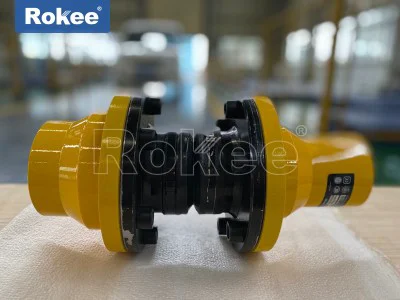
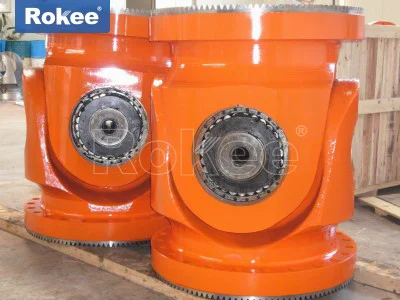
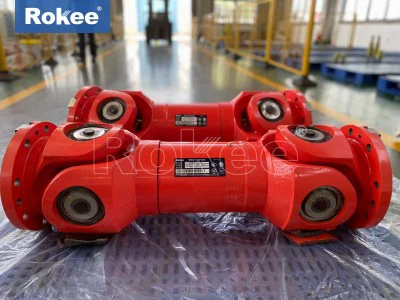
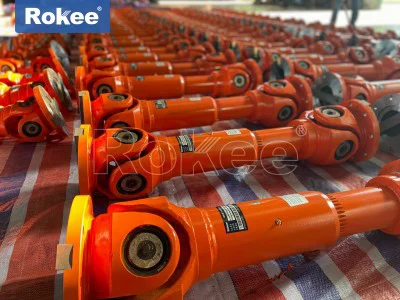
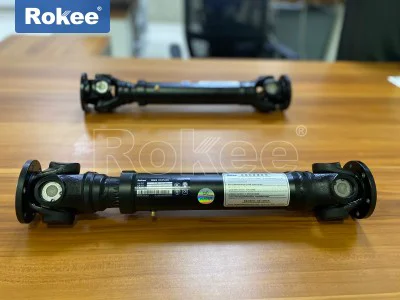
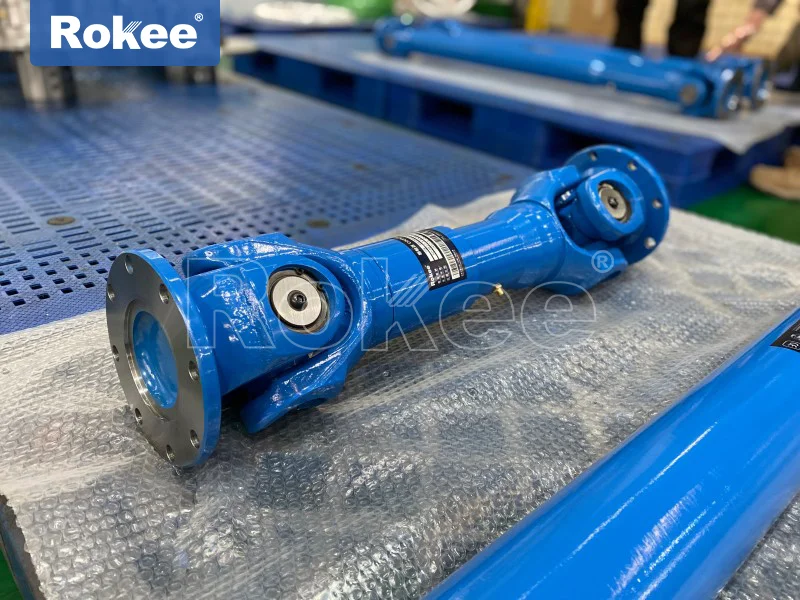
To fully understand the critical role of the cardan shaft coupling's sealing performance in ensuring the stability of the mineral wool sandwich panel production line, it is first necessary to clarify the working principle of the cardan shaft coupling and its application characteristics in the production line. The cardan shaft coupling, also known as a universal joint coupling, is a mechanical transmission component designed to transmit rotational power between two shafts that are not perfectly aligned spatially. Its core structure usually includes two yokes, a cross-shaped member (commonly referred to as the spider), and bearings, which work together to allow angular deviation between the driving shaft and the driven shaft within a certain range—typically 5° to 45°—while maintaining continuous and stable torque transmission. This flexibility is particularly important in mineral wool sandwich panel production lines, as the various functional units are often installed with slight misalignments due to manufacturing errors, installation deviations, or structural deformation during operation. The cardan shaft coupling compensates for these misalignments, ensuring that power is transmitted smoothly from the motor to each working unit, such as the roll forming machine that shapes the metal surface of the panels, the mineral wool feeding device that accurately conveys the insulation core, and the laminating system that bonds the metal sheets and mineral wool together under constant pressure and temperature.
The mineral wool sandwich panel production line operates in a relatively harsh environment compared to many other industrial production scenarios. During the production process, a large amount of mineral wool dust, metal debris, and other particulates are generated, especially in the mineral wool cutting and feeding links. These fine particles are lightweight and easy to float in the air, and they can easily enter the internal structure of mechanical components if not effectively isolated. Additionally, the production line often uses cooling water and lubricants, which may form moisture or oil mist that can corrode metal components over time. In this context, the sealing performance of the cardan shaft coupling becomes a key barrier to protecting its internal components. The seal of the cardan shaft coupling is mainly installed at the connection between the yoke and the bearing, as well as the gap between the cross shaft and the bearings, forming a closed space that isolates the internal moving parts from the external environment. A high-quality sealing system can effectively block the intrusion of mineral wool dust, metal debris, and moisture, preventing these contaminants from entering the bearing clearance and the contact surface between the cross shaft and the yoke.
The impact of sealing performance on the operation of the cardan shaft coupling is reflected in multiple aspects, all of which are closely related to the stability of the mineral wool sandwich panel production line. Firstly, effective sealing ensures the retention of internal lubricants. Lubrication is essential for the smooth operation of the cardan shaft coupling, as it reduces friction between the moving parts (such as the cross shaft and bearings), dissipates heat generated during operation, and prevents wear and tear. The seal prevents lubricants from leaking out due to centrifugal force during high-speed rotation or vibration, ensuring that all internal moving parts are adequately lubricated. If the sealing performance is poor, lubricants will leak continuously, leading to insufficient lubrication, increased friction between components, and accelerated wear of the cross shaft, bearings, and yoke. In severe cases, this can cause the components to seize or break, resulting in sudden failure of the cardan shaft coupling. When the coupling fails, the power transmission to the corresponding functional unit of the production line is interrupted: for example, if the coupling driving the roll forming system fails, the metal sheet cannot be shaped correctly, leading to irregular panel edges or uneven thickness; if the coupling connected to the mineral wool feeding system malfunctions, the mineral wool core may be fed unevenly or even blocked, resulting in gaps or uneven density in the sandwich panels. These problems not only affect product quality but also require the production line to be shut down for maintenance, causing significant losses in production efficiency.
Secondly, good sealing performance prevents the intrusion of external contaminants, which is crucial for extending the service life of the cardan shaft coupling and reducing maintenance frequency. As mentioned earlier, the mineral wool sandwich panel production line generates a large amount of dust and debris. If these contaminants enter the internal structure of the coupling, they will act as abrasives, scratching the surface of the cross shaft and bearings, increasing friction, and accelerating component wear. For example, mineral wool dust particles, which are hard and sharp, can easily embed themselves in the bearing clearance, causing "abrasive wear" between the bearing rollers and the raceway, leading to increased bearing clearance, vibration, and noise. Over time, this wear will affect the accuracy of torque transmission, resulting in unstable rotational speed of the connected equipment. In the roll forming process, unstable rotational speed will cause the metal sheet to be shaped unevenly, leading to inconsistencies in the width and thickness of the mineral wool sandwich panels, which do not meet the required standards. Additionally, moisture intrusion due to poor sealing can cause corrosion of the cross shaft, yoke, and bearings, especially if the components are made of carbon steel. Corrosion will weaken the structural strength of the components, making them prone to cracking or breaking under torque load, which poses a serious threat to the safe and stable operation of the production line.
Furthermore, the sealing performance of the cardan shaft coupling directly affects the overall operational stability and reliability of the mineral wool sandwich panel production line by reducing vibration and noise. A well-sealed coupling can maintain stable lubrication, ensuring that the internal moving parts operate smoothly without excessive friction or impact. This helps to reduce the vibration generated during the operation of the coupling, which in turn reduces the vibration transmitted to other components of the production line. Vibration is a major factor affecting the stability of the production line: excessive vibration can cause loose connections between equipment components, misalignment of the production line, and even damage to precision parts, such as the cutting system and the PLC control system. For example, if the cardan shaft coupling vibrates excessively due to poor sealing and insufficient lubrication, the vibration will be transmitted to the laminating system, resulting in uneven pressure application during the bonding process of the mineral wool sandwich panels. This can lead to poor adhesion between the metal sheets and the mineral wool core, causing the panels to delaminate easily during use. In addition, excessive vibration and noise can also affect the working environment of the operators, increasing fatigue and reducing work efficiency.
To ensure that the sealing performance of the cardan shaft coupling can effectively support the stable operation of the mineral wool sandwich panel production line, it is necessary to consider multiple factors in the design, selection, installation, and maintenance of the coupling's sealing system. In terms of design, the seal structure should be optimized according to the specific working environment of the production line. Common seal structures for cardan shaft couplings include lip seals, labyrinth seals, and mechanical seals. Lip seals are widely used due to their simple structure, low cost, and good sealing effect for dust and moisture; they rely on the elastic force of the lip to fit closely with the rotating shaft, forming a sealing barrier. Labyrinth seals are suitable for environments with high dust and high temperature, as they use a series of staggered grooves to form a labyrinth structure, which can effectively prevent the intrusion of contaminants while allowing the discharge of a small amount of lubricant. Mechanical seals have the best sealing performance, suitable for high-speed, high-pressure, and harsh environments, but their structure is more complex and the cost is higher. For mineral wool sandwich panel production lines, which are mainly contaminated by dust and moisture, a combination of lip seals and labyrinth seals can be adopted to achieve both sealing effect and cost-effectiveness. Additionally, the design of the seal should consider the angular deviation and rotational speed of the coupling, ensuring that the seal can maintain good sealing performance even when the coupling is operating at maximum misalignment and speed.
Material selection is another key factor affecting the sealing performance of the cardan shaft coupling. The seal material should have good wear resistance, oil resistance, high-temperature resistance, and elasticity to adapt to the working environment of the production line. Common seal materials include nitrile rubber, fluororubber, and polyurethane. Nitrile rubber has good oil resistance and elasticity, suitable for medium and low temperature environments, but its high-temperature resistance and aging resistance are relatively poor. Fluororubber has excellent high-temperature resistance, corrosion resistance, and aging resistance, suitable for high-temperature and harsh environments, but its elasticity is relatively poor and the cost is higher. Polyurethane has excellent wear resistance and elasticity, but its oil resistance is insufficient. In the mineral wool sandwich panel production line, where the operating temperature is generally between 0°C and 80°C, and the seal is in contact with lubricants and dust, nitrile rubber or a blend of nitrile rubber and fluororubber can be selected as the seal material to balance sealing performance and cost. Additionally, the surface of the rotating shaft in contact with the seal should be treated with chrome plating or nitriding to improve its hardness and surface finish, reducing wear of the seal and extending its service life.
Proper installation and maintenance of the seal are also essential to ensure its long-term effective operation. During installation, the seal should be installed correctly according to the specifications, avoiding damage to the seal lip due to improper operation, such as scratching or squeezing. The seal should be installed with a certain preload to ensure that it fits closely with the rotating shaft. Additionally, the installation surface should be clean and free of burrs, dust, or oil stains, which can affect the sealing effect. In terms of maintenance, regular inspection of the seal's condition is necessary, including checking for wear, deformation, or damage of the seal lip, and replacing the seal in a timely manner if any problems are found. At the same time, the lubricant should be replaced regularly to ensure its lubricating effect and prevent the lubricant from deteriorating and damaging the seal. In the mineral wool sandwich panel production line, it is recommended to check the seal of the cardan shaft coupling every 15 to 30 days, and replace the seal and lubricant every 3 to 6 months, depending on the operating intensity and environment. Additionally, the surrounding area of the coupling should be kept clean, reducing the accumulation of dust and debris, which can help extend the service life of the seal.
In practical application, there are many cases where the instability of the mineral wool sandwich panel production line is caused by poor sealing performance of the cardan shaft coupling. For example, a production line producing mineral wool sandwich panels experienced frequent shutdowns due to the failure of the cardan shaft coupling driving the mineral wool feeding system. After inspection, it was found that the seal of the coupling was severely worn, leading to the leakage of lubricant and the intrusion of mineral wool dust. The dust entered the bearing clearance, causing severe wear of the bearings and the cross shaft, resulting in the coupling jamming during operation. After replacing the seal, adding new lubricant, and cleaning the internal components of the coupling, the production line resumed normal operation, and the downtime was reduced by more than 80%. Another case involved a production line where the cardan shaft coupling of the roll forming system had poor sealing performance, leading to moisture intrusion and corrosion of the cross shaft. This caused the coupling to transmit torque unevenly, resulting in uneven thickness of the metal sheets and unqualified product dimensions. After optimizing the seal structure, replacing the corroded components, and strengthening maintenance, the product qualification rate increased by 15%, and the maintenance cost of the coupling was reduced by 20%.
With the continuous development of the mineral wool sandwich panel industry, the requirements for production line stability and product quality are becoming higher and higher. As a core power transmission component, the cardan shaft coupling's sealing performance has attracted more and more attention. Manufacturers are constantly optimizing the seal design and material selection of cardan shaft couplings to adapt to the harsh working environment of mineral wool sandwich panel production lines. For example, some manufacturers have developed a new type of composite seal, which combines the advantages of lip seals and labyrinth seals, improving the sealing effect against dust and moisture while extending the service life of the seal. Additionally, the use of advanced processing technology, such as precision machining and surface treatment, has improved the dimensional accuracy and surface quality of the coupling components, ensuring that the seal fits more closely with the rotating shaft, further enhancing the sealing performance.
In conclusion, the sealing performance of the cardan shaft coupling is a key factor ensuring the stability of the mineral wool sandwich panel production line. It not only protects the internal components of the coupling from external contaminants, retains lubricants, and reduces component wear but also reduces vibration and noise, ensuring the smooth operation of each functional unit of the production line. To maintain good sealing performance, it is necessary to optimize the seal design, select appropriate seal materials, and strengthen the installation and maintenance of the seal. Only in this way can the cardan shaft coupling operate stably and reliably for a long time, providing strong support for the efficient and high-quality production of mineral wool sandwich panels. As the mineral wool sandwich panel industry continues to develop, the research and improvement of the cardan shaft coupling's sealing performance will also play a more important role in promoting the stability and sustainability of the production line.