Efficient Transmission Scheme Of Polyurethane Sandwich Panel Production Line Led By Universal Shaft Coupling

In the modern construction industry, polyurethane sandwich panels have become an indispensable building material due to their excellent thermal insulation, flame retardancy, environmental friendliness, and structural stability. Composed of two outer facing materials and a rigid polyurethane foam core, these panels are widely used in external walls, roofs, cold storage facilities, and various prefabricated buildings, driving the continuous development and innovation of their production technology. The polyurethane sandwich panel production line is a complex integrated system that involves multiple continuous processes, including uncoiling of facing materials, roll forming, preheating, polyurethane foaming, lamination, curing, and cutting. Each link requires precise and stable power transmission to ensure the consistency of product quality and the efficiency of the entire production process. Among the numerous components that make up the transmission system of the production line, the universal shaft coupling, also known as the cardan joint coupling, stands out as a core driving component. Its unique structural design and excellent transmission performance have significantly promoted the upgrading and transformation of the polyurethane sandwich panel production line, becoming an indispensable part of the efficient transmission scheme.
To understand the important role of the universal shaft coupling in the efficient transmission of the polyurethane sandwich panel production line, it is first necessary to clarify the working characteristics of the production line and the core challenges faced by its transmission system. A modern polyurethane sandwich panel production line is a continuous and automated production system that integrates mechanical, electrical, hydraulic, and chemical reaction technologies. It requires the coordinated operation of multiple subsystems, such as the uncoiling system, roll forming system, foaming system, double-belt lamination system, cutting system, and conveying system. Each subsystem is driven by a separate power source, and the power needs to be transmitted to various executing components accurately and stably to ensure that the entire production line operates in a synchronized manner. The transmission system of the production line is faced with several key challenges: first, the installation and layout of each subsystem are often not on the same axis due to the limitations of the production process and the overall structure of the equipment, resulting in angular deviations between the driving shaft and the driven shaft; second, during the long-term continuous operation of the production line, the equipment will generate vibration and thermal expansion, leading to changes in the relative position of the shafts, which requires the transmission component to have a certain compensation capacity; third, the production process of polyurethane sandwich panels has strict requirements on the stability of power transmission, and any fluctuation in transmission speed or torque will directly affect the uniformity of the foam core, the bonding effect between the core and the facing materials, and ultimately the quality of the finished panels; fourth, the production line needs to adapt to different production specifications and process adjustments, which requires the transmission system to have good flexibility and adaptability.
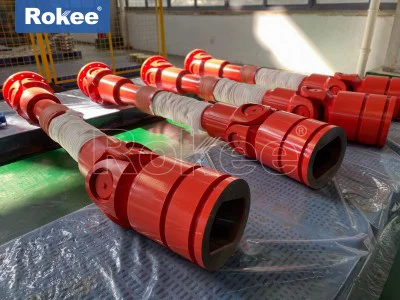
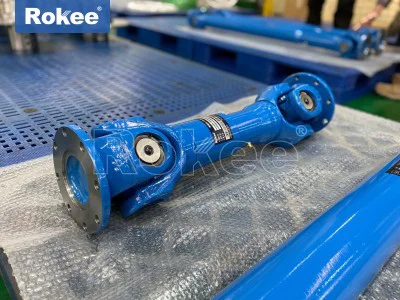
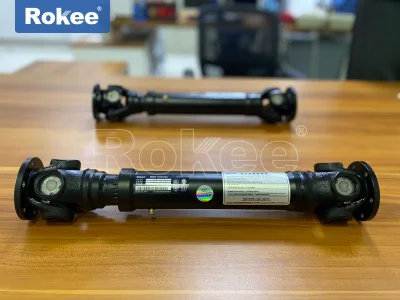
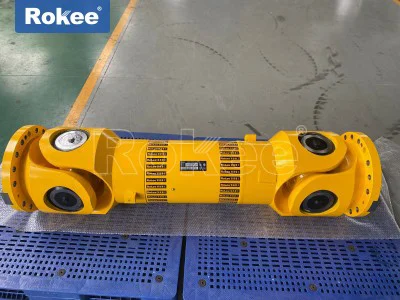
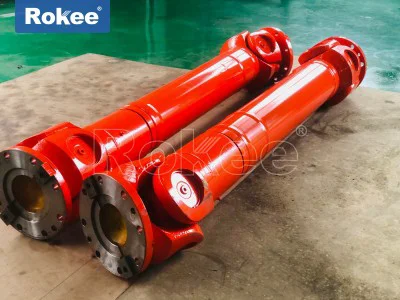
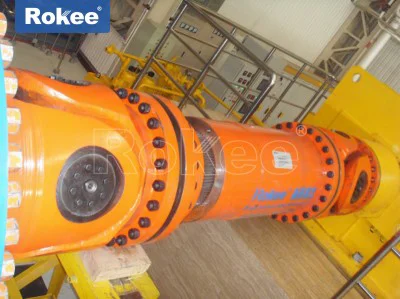
The universal shaft coupling is a common variable-angle power transmission mechanism, which can effectively solve the above-mentioned challenges of the transmission system of the polyurethane sandwich panel production line with its unique structural advantages. The biggest feature of the universal shaft coupling is its large angular compensation capacity, compact structure, and high transmission efficiency. Different structural forms of universal shaft couplings have different angles between the two axes, generally ranging from 5° to 45°, which can realize the continuous rotation of the two connected shafts and reliably transmit torque and motion even when the two shafts are not on the same axis and there is an angular deviation. This characteristic is particularly important for the polyurethane sandwich panel production line, where the subsystems are scattered and the axes of each transmission shaft are difficult to be strictly aligned. For example, the uncoiling system and the roll forming system are often arranged in different positions due to the limitation of the production line layout, resulting in a certain angular deviation between the driving shaft of the motor and the driven shaft of the roll forming equipment. The universal shaft coupling can effectively compensate for this angular deviation, ensure the stable transmission of power, and avoid the occurrence of transmission jamming or wear caused by misalignment.
In addition to the excellent angular compensation capacity, the universal shaft coupling also has good adaptability to the changes in the relative position of the shafts caused by vibration and thermal expansion. During the long-term continuous operation of the polyurethane sandwich panel production line, the motor, reducer, and other equipment will generate a certain amount of vibration due to high-speed operation, and the temperature rise during operation will also cause thermal expansion of the transmission shafts, resulting in changes in the axial and radial positions of the shafts. The universal shaft coupling can adapt to these small position changes through its own structural flexibility, avoid the additional load caused by the position change on the transmission system, reduce the wear of the transmission components, and extend the service life of the equipment. At the same time, the universal shaft coupling has the characteristics of high transmission efficiency, which can minimize the loss of power during the transmission process. For the polyurethane sandwich panel production line, which requires continuous and high-power transmission, the high transmission efficiency of the universal shaft coupling can effectively reduce energy consumption, improve production efficiency, and reduce production costs.
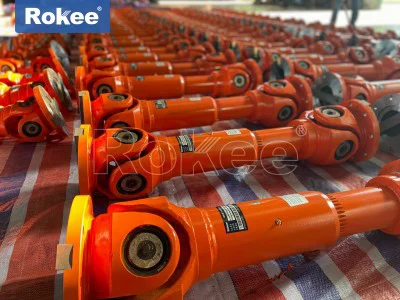
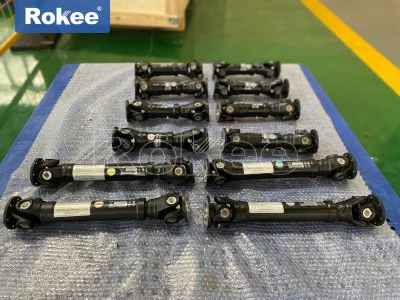
The efficient transmission scheme of the polyurethane sandwich panel production line led by the universal shaft coupling is not only reflected in the selection of the universal shaft coupling itself but also in the rational matching and optimization of the entire transmission system. To maximize the transmission efficiency and stability of the production line, it is necessary to carry out targeted selection and configuration of the universal shaft coupling according to the working conditions of each subsystem of the production line. First of all, according to the torque, speed, and angular deviation requirements of each transmission link, the appropriate type and specification of the universal shaft coupling are selected. The common types of universal shaft couplings include cross-shaft type, ball cage type, ball fork type, etc., among which the cross-shaft type is the most widely used in the polyurethane sandwich panel production line due to its simple structure, high torque-bearing capacity, and good angular compensation performance. When selecting, it is necessary to calculate the theoretical torque according to the power of the motor and the transmission speed, and then select the universal shaft coupling with appropriate nominal torque and fatigue torque to ensure that it can meet the transmission requirements under different working conditions.
Secondly, the connection mode between the universal shaft coupling and the transmission shaft is optimized to ensure the reliability and stability of the connection. The universal shaft coupling is usually composed of two halves, which are respectively connected to the driving shaft and the driven shaft. The connection modes include key connection, flange connection, and shrink fit connection. In the polyurethane sandwich panel production line, flange connection is often used for the transmission links with large torque, such as the roll forming system and the double-belt lamination system, because of its high connection strength and good centering performance. For the transmission links with small torque and frequent disassembly and assembly, key connection is adopted, which is convenient for installation and maintenance. At the same time, attention should be paid to the processing accuracy of the connection part to avoid the eccentricity caused by the installation error, which affects the transmission stability. In addition, the installation of the universal shaft coupling should be carried out in strict accordance with the technical requirements, ensuring that the angular deviation between the two shafts is within the allowable range, and the lubrication of the coupling is done well to reduce friction and wear during operation.
In the uncoiling system of the polyurethane sandwich panel production line, the universal shaft coupling plays a key role in ensuring the stable uncoiling of the facing materials. The uncoiling system is responsible for uncoiling the coiled facing materials (such as color steel plates) and conveying them to the next process at a uniform speed. The uncoiling speed needs to be strictly synchronized with the speed of the roll forming system to avoid the problem of material wrinkling or stretching caused by inconsistent speed. The motor of the uncoiling system is usually installed at a certain angle relative to the uncoiling shaft due to the layout limitation, and the universal shaft coupling is used to connect the motor shaft and the uncoiling shaft, which can effectively compensate for the angular deviation between the two shafts and ensure the uniform transmission of power. At the same time, the universal shaft coupling can adapt to the slight vibration generated during the uncoiling process, avoid the impact on the uncoiling speed, and ensure that the facing materials are uncoiled smoothly and evenly. In addition, when the production line needs to replace different specifications of facing materials, the universal shaft coupling can be quickly disassembled and assembled, improving the efficiency of equipment adjustment.
The roll forming system is one of the core subsystems of the polyurethane sandwich panel production line, which is responsible for forming the facing materials into the required shape through the roll forming machine. The roll forming process requires stable and uniform power transmission, and any fluctuation in torque or speed will affect the forming accuracy of the facing materials, resulting in unqualified products. The roll forming machine is usually driven by a motor through a reducer and a transmission shaft, and the universal shaft coupling is used to connect the reducer output shaft and the roll forming shaft. Due to the large number of rolls in the roll forming machine, the transmission shafts are often arranged in a staggered manner, resulting in angular deviations between the shafts. The universal shaft coupling can effectively compensate for these angular deviations, ensure that each roll rotates synchronously, and transmit the torque stably to the rolls. At the same time, the high transmission efficiency of the universal shaft coupling can reduce the energy loss during the transmission process, ensure that the roll forming machine operates at a stable speed, and improve the forming quality and efficiency of the facing materials. In addition, when the roll forming machine needs to adjust the forming parameters (such as the shape and size of the facing materials), the universal shaft coupling can adapt to the adjustment of the transmission shaft position, ensuring the flexibility of the production line.
The double-belt lamination system is another key link in the polyurethane sandwich panel production line, which is responsible for laminating the foamed polyurethane core with the upper and lower facing materials and curing them into finished panels. The double-belt lamination system requires the two conveyor belts to run synchronously at a uniform speed, and the pressure between the belts needs to be stable to ensure the bonding quality between the core and the facing materials. The motor of the double-belt lamination system drives the conveyor belts through the transmission shaft, and the universal shaft coupling is used to connect the motor shaft and the conveyor belt driving shaft. Due to the long length of the conveyor belts, the transmission shafts are often affected by thermal expansion during operation, resulting in changes in the axial position. The universal shaft coupling can adapt to these axial changes through its own structural characteristics, avoid the tension of the conveyor belts caused by the axial displacement, and ensure the stable operation of the conveyor belts. At the same time, the universal shaft coupling can compensate for the angular deviation between the motor shaft and the conveyor belt driving shaft, ensure the synchronous operation of the two conveyor belts, and improve the lamination quality of the panels.
The cutting system of the polyurethane sandwich panel production line is responsible for cutting the cured continuous panels into finished products of the required length. The cutting process requires high precision and stability, and the cutting speed needs to be strictly synchronized with the speed of the production line to avoid the problem of uneven cutting or dimensional deviation. The cutting machine is usually driven by a motor through a transmission system, and the universal shaft coupling is used to connect the motor shaft and the cutting blade shaft. The universal shaft coupling can ensure the stable transmission of torque, make the cutting blade rotate at a uniform speed, and improve the cutting precision. At the same time, when the production line needs to adjust the cutting length, the universal shaft coupling can adapt to the adjustment of the transmission speed, ensuring the flexibility of the cutting system. In addition, the universal shaft coupling has good shock absorption performance, which can reduce the vibration generated during the cutting process, avoid the damage to the cutting blade and the panel, and extend the service life of the cutting equipment.
In addition to the rational selection and configuration of the universal shaft coupling, the efficient transmission scheme of the polyurethane sandwich panel production line also needs to strengthen the daily maintenance and management of the transmission system. The universal shaft coupling, as a key transmission component, needs to be regularly inspected, lubricated, and maintained to ensure its normal operation. During the operation of the production line, it is necessary to regularly check the connection status of the universal shaft coupling, check whether there is looseness, wear, or damage to the components, and timely tighten or replace the damaged components. At the same time, it is necessary to regularly add lubricating oil to the universal shaft coupling to reduce friction between the components, prevent wear and tear, and improve the transmission efficiency and service life. In addition, the transmission shafts, reducers, and other components connected with the universal shaft coupling also need to be regularly maintained to ensure the overall stability of the transmission system.
The application of the universal shaft coupling in the polyurethane sandwich panel production line not only solves the key problems of the transmission system but also brings significant economic and technical benefits. From the technical point of view, the universal shaft coupling improves the stability and reliability of the transmission system, reduces the failure rate of the production line, ensures the consistency of product quality, and reduces the number of unqualified products. The angular compensation and vibration absorption performance of the universal shaft coupling reduce the wear of the transmission components, extend the service life of the equipment, and reduce the maintenance cost of the production line. From the economic point of view, the high transmission efficiency of the universal shaft coupling reduces the energy consumption of the production line, improves the production efficiency, shortens the production cycle, and reduces the production cost. At the same time, the flexibility and adaptability of the universal shaft coupling enable the production line to adapt to different production specifications and process adjustments, improving the versatility and market competitiveness of the production line.
With the continuous development of the construction industry, the demand for polyurethane sandwich panels is increasing, and the requirements for the production efficiency and product quality of the production line are also getting higher and higher. The efficient transmission scheme led by the universal shaft coupling provides an effective solution for the upgrading and transformation of the polyurethane sandwich panel production line. In the future, with the continuous progress of mechanical manufacturing technology, the structure and performance of the universal shaft coupling will be further optimized, and its application in the polyurethane sandwich panel production line will be more extensive and in-depth. For example, the combination of the universal shaft coupling with intelligent monitoring technology can realize real-time monitoring of the transmission status, timely find potential faults, and carry out predictive maintenance, which further improves the reliability and efficiency of the transmission system. At the same time, the development of lightweight and high-strength universal shaft couplings can further reduce the weight of the transmission system, improve the transmission efficiency, and adapt to the development trend of high-speed and automated production lines.
In conclusion, the universal shaft coupling, with its unique structural advantages and excellent transmission performance, plays an irreplaceable role in the transmission system of the polyurethane sandwich panel production line. The efficient transmission scheme led by the universal shaft coupling, through the rational selection, configuration, and optimization of the universal shaft coupling, effectively solves the challenges of angular deviation, vibration, and thermal expansion faced by the transmission system, improves the stability, reliability, and efficiency of the production line, ensures the consistency of product quality, and reduces the production cost. With the continuous innovation and development of technology, the application of the universal shaft coupling in the polyurethane sandwich panel production line will be more perfect, providing strong support for the sustainable development of the polyurethane sandwich panel industry.