Cardan Coupling for Heavy Commercial
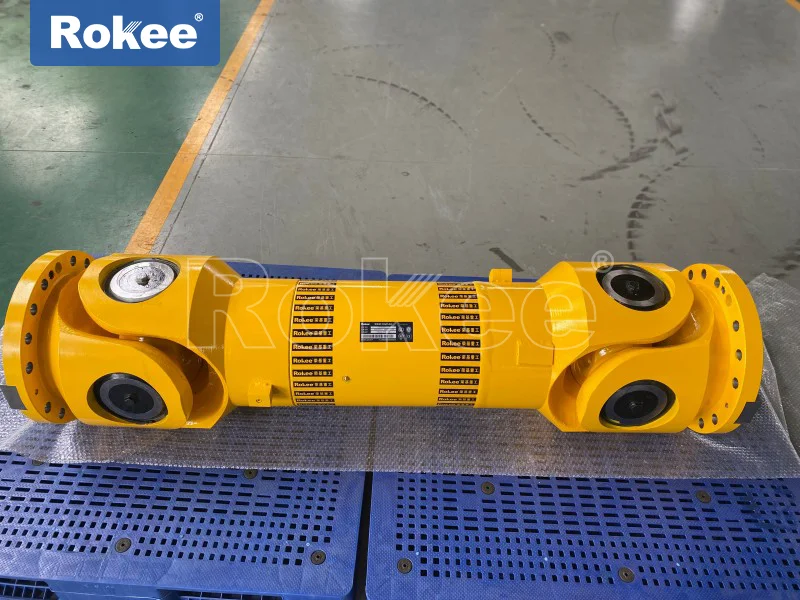
As a core power transmission component in heavy commercial vehicle driveline systems, cardan coupling serves as a critical flexible connection unit that bridges non-collinear rotating shafts and ensures continuous and stable torque output under complex operating conditions. Unlike rigid coupling structures that rely on precise shaft alignment, the unique articulated mechanical design of cardan coupling enables it to adapt to dynamic angular, axial and radial deviations generated during vehicle operation, making it irreplaceable in heavy-duty transportation scenarios such as cargo trucks, engineering vehicles and large passenger commercial vehicles. Heavy commercial equipment operates for long hours with heavy loads, frequent start-stop actions and constantly changing road conditions, which put forward extremely high requirements on the load resistance, fatigue durability and motion compensation capability of power transmission components, and cardan coupling is precisely engineered to match these rigorous operational demands.
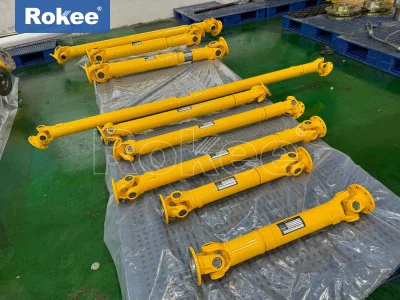
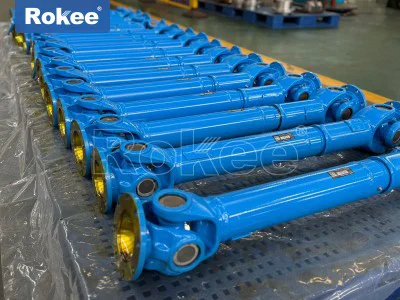
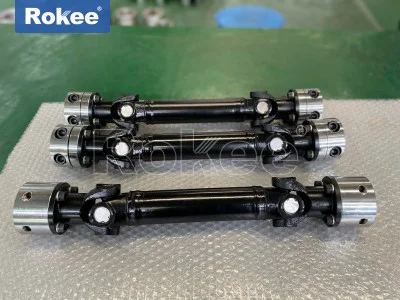
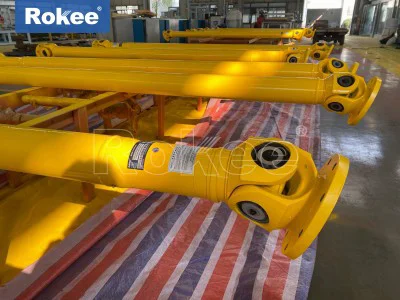
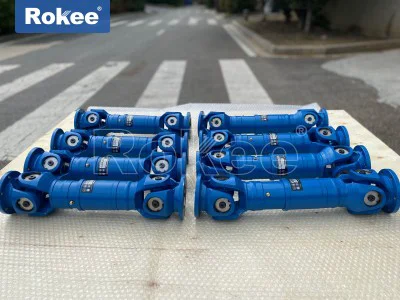
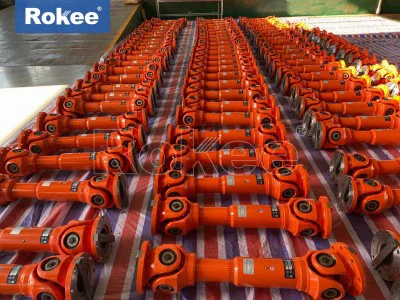
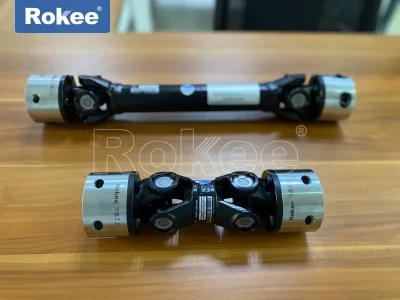
The basic mechanical composition of cardan coupling follows a mature and optimized structural logic, mainly consisting of double fork-shaped yokes, a cross-shaped spider and precision bearing assemblies. The cross spider acts as the central connecting core, with four symmetrically arranged shaft heads hinged to the bearings installed inside the two yokes respectively. This structural layout allows the two connected shafts to form a flexible rotational connection without rigid positional restraint. In the actual assembly of heavy commercial vehicles, cardan couplings are mostly used in paired combinations, effectively overcoming the inherent speed fluctuation defect of single universal joint operation. When a single cardan coupling works at an operating angle exceeding five to seven degrees, it will produce periodic angular velocity changes, triggering driveline vibration and additional mechanical stress. The paired installation mode balances the motion deviation generated by a single coupling through reverse angle compensation, realizing approximate constant-speed torque transmission between the driving shaft and the driven shaft, which is the key structural design to adapt to heavy-load stable operation.
The working principle of cardan coupling is based on spatial kinematic motion conversion, which can maintain uninterrupted power transmission within a wide deflection angle range. During the operation of heavy commercial vehicles, the relative position of the engine, transmission and rear axle is not fixed. Bumpy roads, vehicle load changes and suspension jitter will cause real-time changes in the angle and distance between the front and rear drive shafts. The articulated structure of cardan coupling can flexibly adapt to these dynamic displacements, with an adaptable deflection angle ranging from small fine adjustments to a maximum of forty-five degrees in extreme working conditions. While transmitting rotational torque, it absorbs the installation errors of mechanical components and the dynamic displacement generated during vehicle driving, avoiding the mechanical jamming and torque loss caused by rigid shaft connection. This excellent displacement compensation capability ensures the continuity of power output even when the vehicle body and chassis produce irregular vibrations and deformations under heavy loads.
In the field of heavy commercial transportation, the operational advantages of cardan coupling are fully reflected in extreme working condition adaptability. Heavy commercial vehicles often carry large loads and operate on complex road surfaces including mountain roads, rural unpaved roads and construction site roads, where the driveline system needs to bear instantaneous impact loads and long-term alternating loads. Compared with other flexible transmission components, cardan coupling has higher structural rigidity and shear resistance, and its integral cross spider and thickened yoke structure can bear large torque impact without permanent deformation or structural damage. Meanwhile, the simple and compact mechanical structure reduces the number of vulnerable parts, effectively lowering the failure rate in long-cycle and high-intensity operation. For long-distance freight vehicles that operate continuously for thousands of kilometers and engineering commercial vehicles that work uninterruptedly on construction sites, this high reliability directly improves the overall operational stability of the equipment and reduces unexpected downtime caused by transmission component failure.
The dynamic operating characteristics of cardan coupling determine its unique application value in heavy commercial driveline matching. In the driving process of heavy vehicles, the driveline will generate torsional vibration and impact torque during acceleration, deceleration, gear shifting and crossing uneven road surfaces. The flexible hinge of cardan coupling can buffer and dissipate part of the impact energy, reduce the rigid torsion of the drive shaft, and protect core components such as the transmission and rear axle from instantaneous impact damage. In addition, the axial telescopic matching mechanism cooperating with the cardan coupling system can adapt to the chassis telescopic displacement caused by suspension compression and rebound, ensuring that the power transmission path is always smooth and stable. This multi-dimensional adaptive capability enables the entire driveline system to maintain efficient power transmission efficiency under variable working conditions, avoiding power attenuation and mechanical abrasion caused by shaft position deviation.
Despite its mature structural design, cardan coupling still faces wear and fatigue aging problems in long-term heavy-duty operation, which are the main factors affecting the service life of commercial vehicle drivelines. The bearing assembly between the cross spider and the yoke is the most vulnerable working part. Long-term high-load rotation will cause friction and wear of bearing rollers and raceways, resulting in increased clearance, loose hinge and reduced motion compensation accuracy. When the wear clearance accumulates to a certain extent, the driveline will produce obvious abnormal noise and vibration during operation, and the instantaneous torque transmission will be unstable, which will further aggravate the wear of adjacent transmission components. In addition, long-term alternating torque load will cause micro-fatigue cracks on the surface of the cross spider and yoke. Under the continuous action of heavy load and impact, the micro-cracks will expand gradually, eventually leading to structural fatigue damage and affecting the driving safety of heavy commercial vehicles.
External environmental factors also accelerate the performance attenuation of cardan coupling in commercial scenarios. Heavy commercial vehicles often work in harsh environments with dust, mud, rain and even corrosive media. Poor working conditions make it easy for impurities to enter the internal hinge structure of the coupling, destroying the lubrication state of the friction pairs. Insufficient lubrication or lubricant failure will directly increase the friction coefficient of the moving parts, resulting in accelerated abrasive wear and high-temperature oxidation of metal surfaces. In low-temperature working environments, the viscosity of lubricating grease increases, the fluidity decreases, and the flexibility of the coupling hinge is reduced, which easily causes rigid impact during start-up and operation. In high-temperature and high-load working states, the lubricant is prone to thermal decomposition and failure, losing its anti-wear and buffering effects, thus shortening the service cycle of the cardan coupling assembly.
Reasonable maintenance and structural optimization are essential to maintain the stable performance of cardan coupling for heavy commercial use. Daily maintenance focuses on lubrication management and structural inspection. Regular replacement of special high-temperature and wear-resistant lubricating grease can ensure the long-term stable lubrication of internal friction pairs, isolate external impurities, and reduce metal direct friction and wear. Meanwhile, regular inspection of the hinge clearance of the coupling, the surface integrity of the cross spider and the fastening state of the connecting parts can effectively avoid hidden troubles caused by loose assembly and fatigue wear. In terms of structural optimization, modern heavy commercial cardan coupling designs adopt integrated forging process to improve the overall structural strength and fatigue resistance of parts. The surface strengthening treatment process is used to improve the hardness and corrosion resistance of the metal surface, enhancing the adaptability of the coupling to harsh working environments. The optimized bearing structure design reduces rotational friction resistance while improving load-bearing capacity, realizing the balance between high efficiency transmission and long service life.
The matching design of cardan coupling is closely linked with the overall performance of heavy commercial vehicles. In the vehicle design stage, engineers need to scientifically calculate the maximum operating angle, torque transmission range and displacement compensation demand of the coupling according to the vehicle's load level, chassis structure, suspension travel and conventional operating road conditions. Excessively large operating angles will increase the vibration and wear of the driveline system, while excessively conservative parameter matching will lead to insufficient motion compensation capability and poor vehicle driving stability. For heavy engineering commercial vehicles with larger load tonnage and more complex working conditions, the coupling structure needs to be further strengthened in terms of torque resistance and impact resistance to adapt to the extreme torque impact generated during heavy-load start-up and climbing. For long-distance logistics transport vehicles, the design focuses more on smooth transmission and low wear performance to reduce long-term operation loss and improve vehicle transportation efficiency.
With the continuous upgrading of heavy commercial vehicle technology, the performance requirements for cardan coupling are also constantly improving. Modern commercial vehicle driveline systems are developing towards high efficiency, low energy consumption and high intelligence, which puts forward higher standards for the transmission accuracy, wear resistance and lightweight design of cardan coupling. The traditional single structural form is gradually optimized and upgraded through material innovation and structural improvement. New high-strength alloy materials are applied to coupling parts to reduce the self-weight of the assembly on the premise of ensuring load-bearing performance, helping to reduce vehicle energy consumption. The optimized spatial structure design further reduces torque transmission loss and driveline vibration, improving the overall running smoothness of heavy commercial vehicles. At the same time, the standardized and modular design of cardan coupling simplifies the assembly and later maintenance process of commercial vehicles, improving the overall manufacturing and operation efficiency of heavy commercial equipment.
In the entire heavy commercial equipment industry chain, cardan coupling, as a basic key transmission component, undertakes the important task of connecting power output and walking execution. Its performance stability directly affects the driving reliability, transportation efficiency and operation safety of heavy vehicles. Different from light-duty mechanical transmission scenarios, the heavy-load and high-intensity working characteristics of commercial vehicles make cardan coupling need to balance strength, flexibility, durability and efficiency in an all-round way. Excellent cardan coupling matching can effectively reduce the failure rate of the driveline system, extend the service life of vehicle chassis parts, and reduce the comprehensive operation and maintenance cost of commercial vehicles. In the field of modern heavy commercial transportation and engineering operations, the continuous optimization and iteration of cardan coupling technology will always be an important part of improving the overall performance of commercial vehicles, providing stable and reliable power transmission guarantee for various heavy-duty commercial operation scenarios.