Cardan Shaft for Light Commercial
In the dynamic operation of light commercial vehicles, the smooth transmission of power across the entire powertrain system serves as the core guarantee for stable transportation and operational efficiency. As an indispensable core component of the vehicle drive train, the cardan shaft undertakes the critical task of transmitting torque between the gearbox and the drive axle, adapting to the complex and variable working states of light commercial vehicles in daily travel and cargo transportation. Unlike passenger vehicles that focus on comfortable driving experience, light commercial vehicles prioritize load-bearing capacity, operational stability and environmental adaptability, which puts forward more stringent and targeted technical requirements for the design, structure and performance of cardan shafts. This component does not merely act as a simple power connection medium, but a flexible power transmission system that integrates deformation compensation, vibration suppression and load adaptation, directly determining the vehicle’s driving stability, power output efficiency and long-term service reliability.
The fundamental working logic of the cardan shaft originates from the structural characteristics of light commercial vehicle chassis. The gearbox of a light commercial vehicle is fixed on the vehicle frame, while the drive axle is suspended under the frame through elastic suspension components. During the driving process, especially when passing through bumpy roads, uneven road surfaces or during load changes, the relative position and angle between the gearbox and the drive axle will produce real-time dynamic deviations. Small vertical displacement, horizontal offset and angular deflection are common in the daily operation of such vehicles. If rigid connecting structures are adopted for power transmission, the alternating mechanical stress generated by position changes will cause severe wear of transmission components, power transmission lag, and even structural deformation and damage of key parts. The cardan shaft perfectly solves this industry pain point by virtue of its unique flexible connection structure, realizing continuous and stable torque transmission under the condition of non-fixed alignment of power input and output ends.
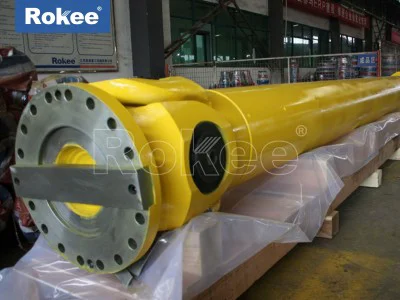
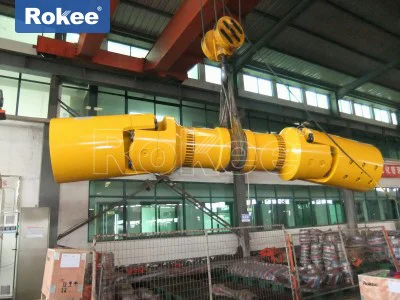
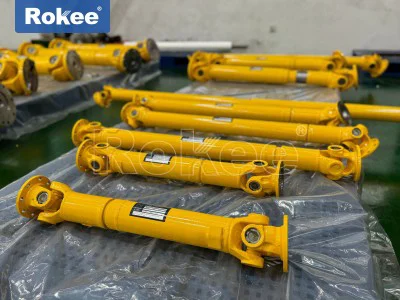
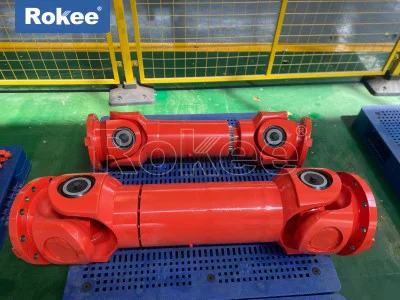
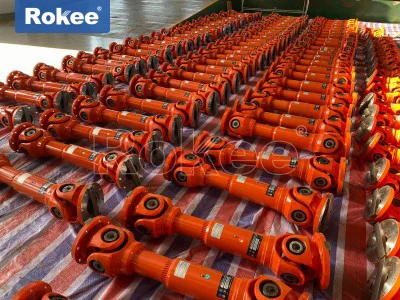
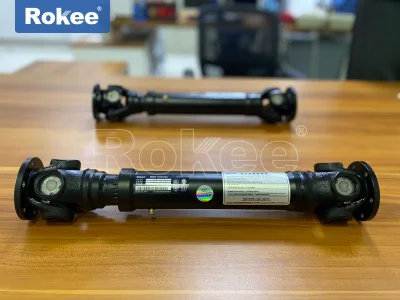
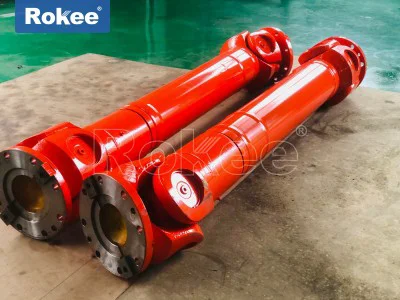
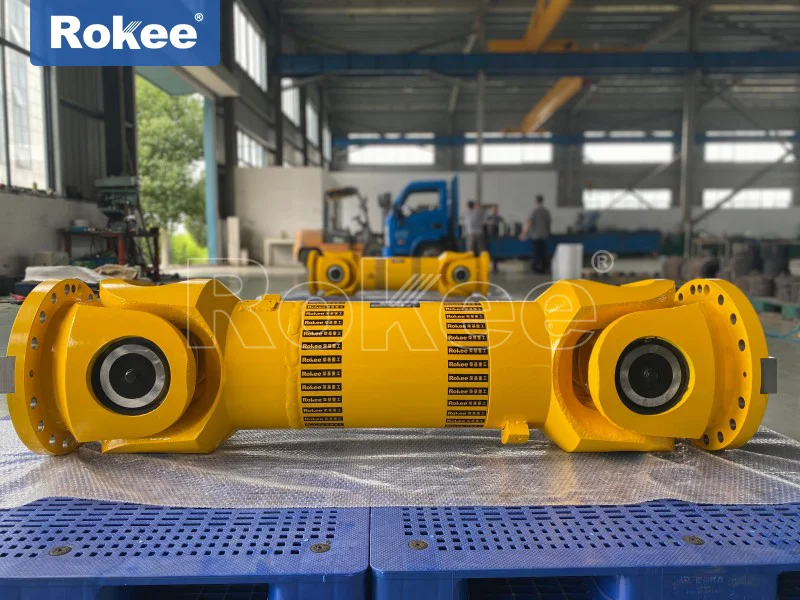
The overall structure of the cardan shaft for light commercial use adopts a modular and integrated design, with multiple core components cooperating and restricting each other to form a complete power transmission unit. The main body consists of universal joint assemblies, intermediate shaft body, telescopic spline structures, fork joints and auxiliary bearing components. The universal joint is the most core functional unit of the entire system, relying on the cross shaft and bearing matching structure to realize multi-angle flexible rotation. The fork-shaped joints distributed at both ends of the cross shaft can be connected with the power input and output ends respectively, forming a movable hinge structure. This structure allows the shaft body to maintain stable rotational power output within a certain angular deflection range, effectively compensating for the angular misalignment caused by chassis vibration and suspension jitter during vehicle operation.
The telescopic spline structure installed on the shaft body is another key design adapted to the working characteristics of light commercial vehicles. In the process of vehicle acceleration, deceleration, load bearing and road condition switching, the distance between the gearbox and the drive axle will produce tiny axial changes. The spline pair structure can realize free telescopic adjustment of the shaft body length within a reasonable range, avoiding compression and tension stress inside the component caused by axial distance changes. While ensuring the continuity of torque transmission, it eliminates the mechanical fatigue problem caused by rigid extrusion, greatly improving the structural adaptability of the component. For medium and long wheelbase light commercial vehicles, an intermediate support structure is usually added in the middle of the cardan shaft. This design effectively reduces the vibration amplitude of the long shaft body during high-speed rotation, suppresses resonance noise, and improves the overall rigidity and operational stability of the transmission system.
Material selection and manufacturing process determine the basic performance and service life of the light commercial cardan shaft. Considering the comprehensive working conditions of frequent start-stop, variable load and complex road conditions of light commercial vehicles, high-strength alloy structural materials are mostly adopted for the shaft body. Such materials have excellent tensile strength, torsional resistance and fatigue resistance, and can withstand long-term alternating torque impact without permanent deformation. The surface of the shaft body is treated with fine processing and anti-corrosion treatment, which effectively resists the erosion of rainwater, dust, sediment and other environmental factors in daily driving, and avoids rust, oxidation and surface wear that may affect the rotation accuracy. The cross shaft and bearing parts of the universal joint adopt precision grinding and heat treatment processes to ensure high dimensional accuracy and surface hardness, reduce internal friction during relative movement, and maintain flexible and stable rotation state for a long time.
The performance advantages of cardan shafts are fully reflected in the diversified working scenarios of light commercial vehicles. Light commercial vehicles cover multiple usage scenarios such as urban cargo distribution, suburban transportation, short-distance logistics and daily commercial operation, with highly variable working conditions. When the vehicle is running smoothly on flat urban roads, the cardan shaft maintains high-efficiency concentric rotation, with low power loss and stable torque output, ensuring the vehicle’s economical driving performance. When driving on bumpy rural roads, slope roads or gravel roads, the suspension frequently compresses and rebounds, and the relative position of the drive train components changes drastically. At this time, the universal joint and telescopic structure of the cardan shaft work synchronously, flexibly adapting to various angular and axial displacements, ensuring uninterrupted power transmission and avoiding power jitter or power interruption that affects driving safety.
In the full-load working state that light commercial vehicles often face, the cardan shaft needs to bear large instantaneous torque and impact load. The optimized structural design enables the component to evenly disperse the torsional stress generated by heavy-load operation, avoid local stress concentration and structural damage, and maintain stable power output under heavy-load conditions. Compared with fixed transmission structures, the flexible transmission characteristic of the cardan shaft also plays a good role in buffering and damping. It can absorb part of the vibration and impact generated by road surface fluctuations and load changes, reduce the vibration transmission from the chassis to the vehicle body, improve the overall driving smoothness of the vehicle, and reduce the loss of other adjacent powertrain components.
The operational stability of the cardan shaft directly affects the comprehensive performance of light commercial vehicles in multiple dimensions. In terms of power performance, high-precision structural matching and low-friction operation characteristics ensure high transmission efficiency, minimize power loss in the transmission process, and enable the vehicle’s power output to respond more sensitively, which is conducive to improving the vehicle’s climbing performance and acceleration performance under load. In terms of driving safety, the reliable deformation compensation capability ensures that the power transmission system will not fail or jam due to chassis displacement during complex driving, avoiding potential safety hazards such as vehicle stalling and power out of control. In terms of component protection, the flexible connection mode buffers the rigid impact between the gearbox and the drive axle, effectively reducing the wear and failure rate of gearbox gears, drive axle bearings and other vulnerable parts, and extending the service life of the entire powertrain system.
Daily maintenance and rational use are crucial to maintaining the long-term stable performance of light commercial cardan shafts. In the daily operation of vehicles, the cardan shaft is in a high-speed rotating working state for a long time, and the universal joint bearings and spline pairs are prone to wear and lubricant attenuation after long-term operation. Regular maintenance can effectively delay component aging and avoid early failure. The core maintenance content includes regular inspection of the connection tightness of each fastening part to prevent component loosening and abnormal vibration caused by long-term vibration; regular replacement and supplementation of special lubricating grease for universal joints and spline structures to ensure low-friction operation of movable parts and reduce wear loss; and regular cleaning of the shaft body surface to remove attached dust, sediment and oil stains to avoid long-term corrosion and surface damage.
At the same time, standardized driving habits also help reduce the operating load of the cardan shaft. Frequent violent start-up, sudden acceleration and sudden braking will generate huge instantaneous torque impact on the shaft body, causing accelerated fatigue wear of internal structures. Overloading for a long time will also make the shaft body bear excessive torsional load, which is easy to cause structural deformation and performance attenuation. Maintaining stable driving speed and reasonable load range can effectively reduce the alternating stress of the cardan shaft and maintain its optimal working state for a long time. In the daily inspection process, attention should be paid to identifying abnormal feedback such as abnormal vibration, abnormal noise and power jitter during vehicle operation, which are usually early warning signals of cardan shaft wear, lubrication failure or structural deviation, and timely inspection and adjustment can avoid minor faults evolving into major damage.
With the continuous upgrading of light commercial vehicle technology towards energy conservation, high efficiency and lightweight, the design and manufacturing technology of supporting cardan shafts are also constantly optimized and iterated. In recent years, the lightweight design of cardan shafts has become an important development direction. By optimizing the structural layout and adopting new high-strength and low-density materials, the overall weight of the component is reduced on the premise of ensuring load-bearing and torsional resistance performance. The lightweight design effectively reduces the unsprung mass of the vehicle, improves the vehicle’s handling flexibility and fuel economy, and meets the current industry’s requirements for energy-saving and low-consumption commercial vehicles.
In addition, the optimization of dynamic balance performance is also a key research direction for upgrading cardan shafts for light commercial use. High-precision dynamic balance calibration technology is adopted in the manufacturing process to minimize the unbalanced error of the shaft body during high-speed rotation, suppress high-speed vibration and resonance noise, and further improve the stability and comfort of vehicle operation. The optimized sealing structure design effectively improves the dustproof and waterproof performance of the universal joint and spline moving parts, avoids the failure of internal lubrication system caused by the invasion of external impurities, and enhances the environmental adaptability and service durability of the component in complex working conditions.
As a key connecting component of the light commercial vehicle powertrain, the cardan shaft has inconspicuous but irreplaceable functional value. It does not directly determine the vehicle’s maximum power and load parameters, but it runs through the entire vehicle operation process, guarding the stability, efficiency and safety of power transmission all the time. From urban road cruising to complex road condition driving, from no-load light operation to full-load heavy transportation, the cardan shaft can always adapt to variable working conditions through its flexible structural characteristics and stable mechanical performance, ensuring the efficient and reliable operation of light commercial vehicles. With the continuous development of the light commercial vehicle industry towards high efficiency, durability and low energy consumption, the technical optimization of cardan shafts will continue to advance, providing more solid basic component support for the iterative upgrading of the entire light commercial vehicle industry, and continuously adapting to the increasingly diverse and high-standard commercial transportation scenarios.