Cardan Shaft Performance
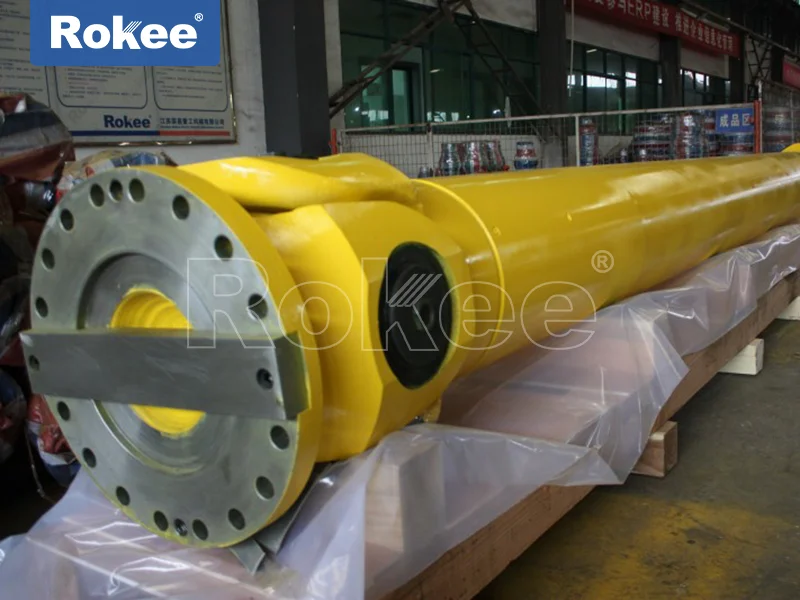
As a core power transmission component in mechanical systems, the cardan shaft undertakes the critical task of transferring rotational torque and motion between non-collinear shafts, and its comprehensive performance directly determines the operational stability, transmission accuracy and service life of the entire mechanical equipment. Unlike rigid transmission components that only adapt to linear and coaxial working conditions, the cardan shaft relies on its unique articulated structural design to realize flexible power transmission under angular, axial and radial misalignment conditions, making it widely applicable in complex and variable mechanical operation scenarios across various industrial fields. The performance of the cardan shaft is a systematic embodiment covering transmission efficiency, dynamic stability, deformation compensation capacity, fatigue resistance and environmental adaptability, and each performance index restricts and complements each other to jointly define the overall working state and application value of the component.
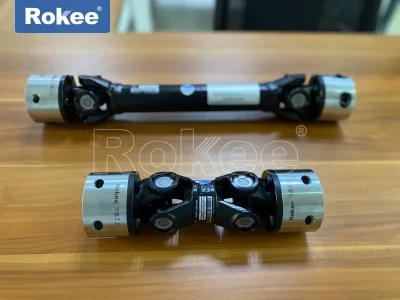
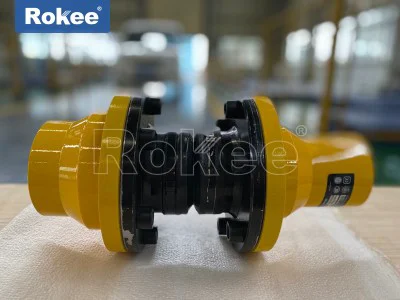
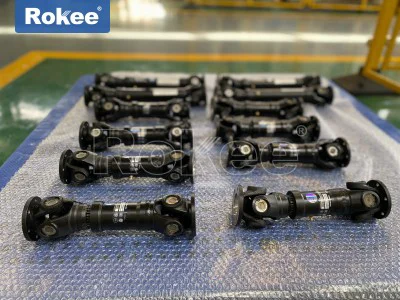
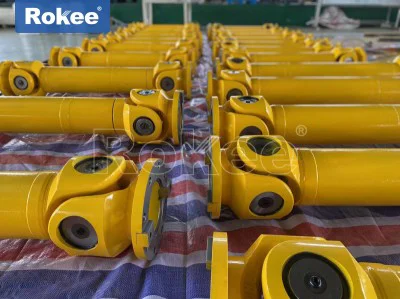
The fundamental performance advantage of the cardan shaft lies in its excellent misalignment compensation capability, which is the core reason why it cannot be replaced by ordinary rigid transmission shafts. In actual mechanical assembly and operation, it is difficult to achieve absolute coaxiality between the driving shaft and the driven shaft due to installation errors, structural deformation of equipment under load, thermal expansion and contraction of components, and subtle displacement during mechanical operation. These inevitable deviations will cause rigid transmission parts to bear additional shear force and torsional stress, leading to transmission jitter, power loss and even structural damage. The cardan shaft adopts a combined structure of universal joints and intermediate shaft body, and the cross shaft hinge structure inside the universal joint can flexibly rotate and deflect within a certain angle range. This structural characteristic enables the component to effectively compensate for angular deviation, axial displacement and radial offset between the connected shafts during high-speed rotation and torque transmission. The adaptable deflection angle varies with different structural designs, and reasonable structural optimization can expand the effective compensation range while maintaining stable transmission, ensuring continuous and reliable power output even when the relative position of the two shafts changes dynamically during equipment operation.
Transmission efficiency is one of the most intuitive indicators to measure cardan shaft performance, reflecting the utilization rate of mechanical energy in the power transmission process. In the working process of the cardan shaft, power loss mainly comes from the friction between the hinge kinematic pairs, micro-deformation of the shaft body under torque load, and slight vibration caused by dynamic misalignment. High-performance cardan shafts are designed with optimized kinematic pair matching and smooth contact structures, which can effectively reduce sliding friction and rolling resistance between internal components. Under rated working conditions, the optimized structural design can maintain a high level of transmission efficiency, and the energy loss generated during long-term continuous operation is controlled within a low range. What distinguishes the cardan shaft from other flexible coupling components is that it can maintain stable transmission efficiency under variable torque and variable angle working conditions. Many flexible transmission parts will have a sharp decline in energy utilization rate when the misalignment angle increases or the load fluctuates, while the cardan shaft can still maintain efficient power transmission within the allowable working angle and load range, avoiding excessive energy waste caused by position deviation of the transmission system. This stable high-efficiency transmission performance provides reliable power support for the continuous operation of mechanical equipment and reduces the overall operating energy consumption of the system.
Dynamic operational stability is a key performance that determines the safety and smoothness of mechanical equipment during high-speed operation. The cardan shaft is a typical rotating flexible component, and its dynamic performance is affected by structural symmetry, machining accuracy, material rigidity and assembly precision. In high-speed rotating working conditions, unbalanced mass distribution of the shaft body, inconsistent clearance of universal joint hinges, and asymmetric structural deformation will cause periodic vibration and impact load. These dynamic disturbances will not only reduce transmission accuracy, but also induce resonance of the entire mechanical system in severe cases, resulting in component wear and equipment failure. Excellent-performance cardan shafts adopt precise structural calibration and dynamic balance optimization in the manufacturing process. The overall structural symmetry of the shaft body is improved, the internal matching clearance of the universal joint is uniformly controlled, and the dynamic unbalanced quantity is minimized. During high-speed rotation, the component can maintain stable rotational posture, effectively suppress periodic jitter and axial and radial vibration, and avoid additional dynamic load caused by self-rotation deviation. Even in the working state of simultaneous change of rotating speed and transmission angle, it can still maintain smooth power output, ensure the synchronization of the rotating speed of the driving and driven shafts, and avoid motion lag and torque fluctuation.
Load-bearing performance defines the upper limit of the working capacity of the cardan shaft, including static torque bearing capacity and dynamic impact resistance. In industrial application scenarios, mechanical equipment often faces complex load conditions such as stable rated load, instantaneous overload and alternating impact load. The cardan shaft needs to bear continuous torsional load during operation, and also needs to resist instantaneous impact torque generated by equipment start-stop, load mutation and external vibration. The load-bearing performance of the cardan shaft depends on the material mechanical properties and structural dimensional design. High-strength structural materials endow the shaft body and cross shaft hinge with excellent torsional rigidity and compressive resistance, which can resist large torque load without plastic deformation. At the same time, the optimized transition structure of the shaft body and hinge joint avoids stress concentration caused by sudden changes in structural size, and evenly distributes the torsional stress and shear stress generated during load transmission on the component surface and interior. This structural optimization enables the cardan shaft to maintain structural integrity and transmission accuracy under long-term heavy load conditions, and can withstand instantaneous overload impact within a certain range, effectively adapting to the complex and variable load characteristics of mechanical operation.
Fatigue resistance and long-term operational stability are important indicators to evaluate the service life and comprehensive cost performance of cardan shafts. Most mechanical transmission equipment works continuously for a long time, and the cardan shaft is in a state of repeated torsional deformation, cyclic friction and alternating stress for a long time. Long-term cyclic load will easily cause fatigue wear of kinematic pairs and fatigue cracks of structural components, which will gradually reduce the transmission performance until failure. High-quality cardan shafts are optimized in material fatigue resistance and structural stress distribution. The overall structure is designed to avoid local long-term concentrated stress, and the surface of the kinematic pair is treated with wear resistance and anti-fatigue optimization to reduce friction loss and fatigue aging rate. In the long-term continuous operation process, the component can maintain stable structural performance, slow down the wear speed of internal matching parts, and avoid performance degradation problems such as reduced transmission accuracy and increased vibration noise caused by component aging. This excellent fatigue resistance ensures that the cardan shaft can maintain consistent working performance during the whole service cycle, reduce the frequency of component replacement and equipment maintenance, and improve the continuous working efficiency of mechanical systems.
Environmental adaptability is a comprehensive performance that expands the application boundary of cardan shafts, enabling them to work stably in various complex working environments. Different industrial scenarios have different environmental interference factors, including temperature change, dust erosion, humid corrosion and mechanical impact. Ordinary transmission components are prone to performance degradation and structural damage in harsh environments, while high-performance cardan shafts have good environmental tolerance through structural optimization and material adaptation. In high-temperature working environments, the selected materials can maintain stable rigidity and dimensional accuracy, avoiding structural deformation and transmission failure caused by thermal expansion. In low-temperature environments, the materials can maintain good toughness, preventing brittle fracture under torsional load. At the same time, the reasonable structural sealing design can effectively isolate external dust, moisture and corrosive media, reduce the wear and corrosion of internal kinematic pairs, and avoid the problem of transmission jitter and torque loss caused by foreign matter invasion. Whether in open-air operating equipment, closed industrial production systems or harsh working conditions with variable temperature and humidity, the cardan shaft can maintain stable transmission performance and adapt to diversified environmental working requirements.
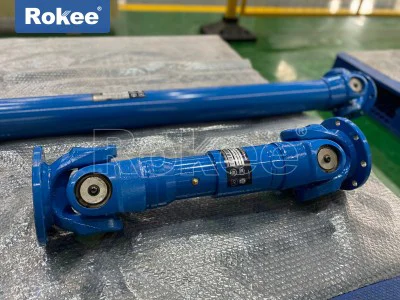
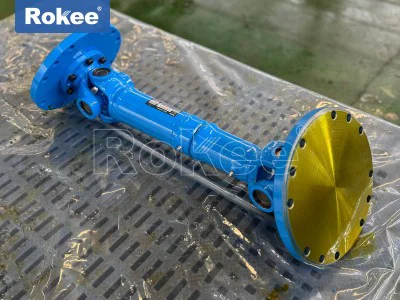
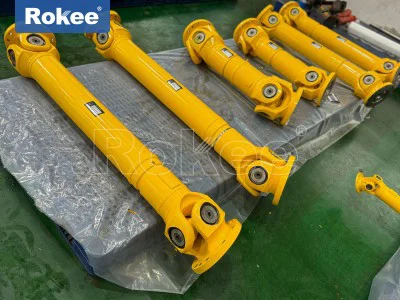
The structural adjustability of the cardan shaft also constitutes an important part of its comprehensive performance, reflecting its flexible adaptability to different mechanical layout requirements. Different mechanical equipment has different transmission distance and installation space requirements, and the cardan shaft can adapt to different installation sizes and transmission stroke needs through the adjustable matching structure of the intermediate shaft body. The telescopic structural design allows the shaft body to adapt to the axial distance change between the driving and driven shafts during equipment operation, avoiding additional tensile and compressive stress caused by fixed transmission distance. This adjustable performance makes the cardan shaft not limited by fixed installation parameters, and can be flexibly matched with various mechanical transmission systems, realizing efficient docking and stable power transmission under different structural layouts. Compared with fixed-size transmission components, the adjustable performance greatly improves the universality of the cardan shaft and reduces the structural matching difficulty of mechanical equipment design and assembly.
In practical application, the comprehensive performance of the cardan shaft is also reflected in its low maintenance characteristics and stable output consistency. Due to its simple and reasonable structural design, fewer vulnerable parts and stable internal matching relationship, the cardan shaft will not have sudden performance attenuation in the process of long-term operation. The wear of internal components is uniform and controllable, and the daily maintenance work is relatively simple. Different from complex transmission structures that are prone to sudden failure, the performance degradation of the cardan shaft is gradual and predictable, which is convenient for equipment operation and maintenance personnel to carry out regular inspection and maintenance, and avoid sudden equipment shutdown caused by component failure. At the same time, under the condition of normal maintenance, the cardan shaft can always maintain consistent transmission efficiency, dynamic stability and load-bearing capacity in the whole working cycle, ensuring the long-term stable and reliable operation of the mechanical transmission system.
In conclusion, the excellent comprehensive performance of the cardan shaft is the result of the organic combination of reasonable structural design, excellent material characteristics and precise manufacturing technology. Its core advantages such as efficient misalignment compensation, stable power transmission, excellent load resistance, fatigue durability and strong environmental adaptability make it an indispensable key component in modern mechanical transmission systems. With the continuous upgrading of mechanical equipment towards high speed, high load and high precision, the performance optimization of cardan shafts is also constantly advancing. Through continuous structural innovation, material upgrading and dynamic performance optimization, the cardan shaft will further improve its transmission accuracy, operational stability and service life, and adapt to more complex and high-standard mechanical working scenarios, providing more reliable basic support for the efficient operation of various industrial mechanical systems. The unique performance advantages of the cardan shaft determine its irreplaceable position in the field of mechanical power transmission, and also lay a solid foundation for the continuous development of modern mechanical transmission technology.