Cardan Shaft Efficiency
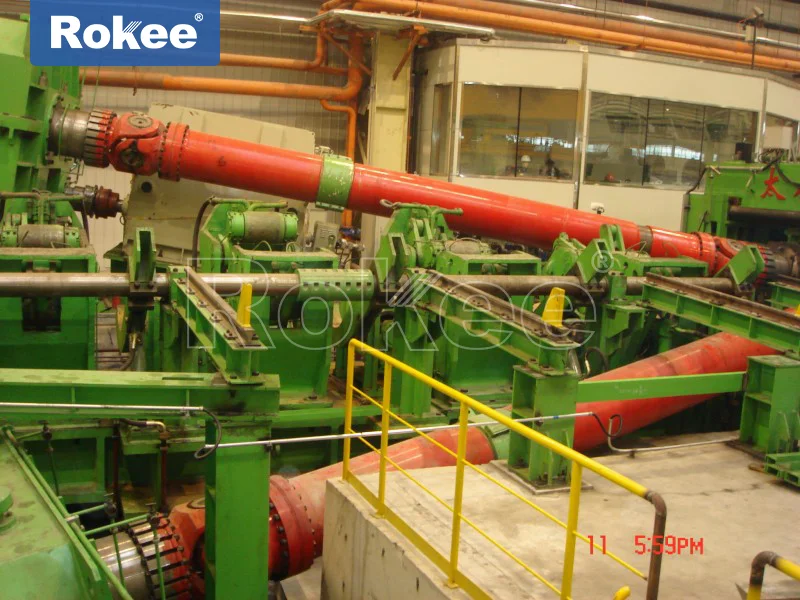
Cardan shafts serve as a core mechanical transmission component widely applied in industrial machinery, transportation equipment and heavy engineering systems, undertaking the critical task of transmitting rotational torque and motion between non-collinear shafts. The efficiency of cardan shafts directly determines the overall energy utilization level, operational stability and service cycle of mechanical transmission systems, making it a key indicator for evaluating the comprehensive performance of power transmission structures. Unlike rigid shaft transmission structures that only adapt to linear alignment, cardan shafts rely on flexible articulated structures to compensate for angular, axial and radial deviations between driving and driven shafts, enabling continuous and stable power transmission under complex installation and dynamic operating conditions. However, the unique flexible connection characteristics that bring structural adaptability also introduce inherent power loss factors, which restrict the upper limit of transmission efficiency. In practical engineering operation, cardan shaft efficiency is not a fixed static value but a dynamic parameter affected by structural design, operating conditions, component wear, lubrication state and assembly precision, and maintaining high-efficiency operation throughout the service cycle is the core goal of structural optimization, daily maintenance and system matching design.
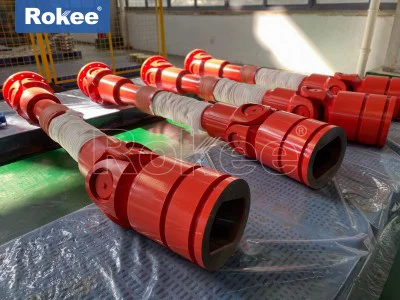
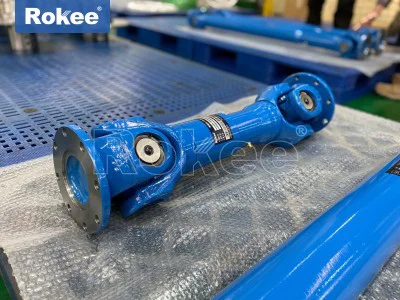
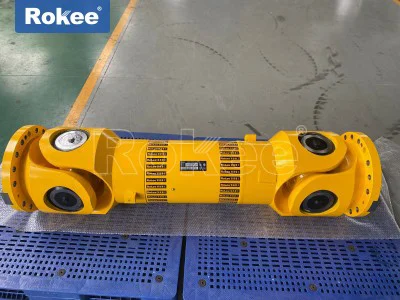
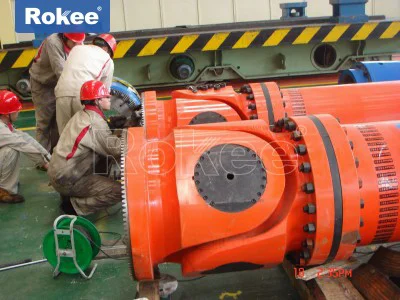
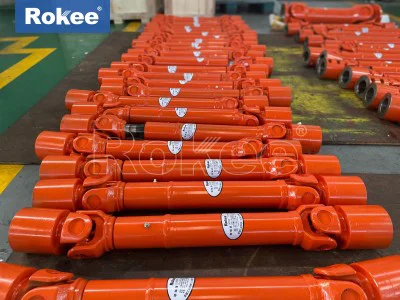
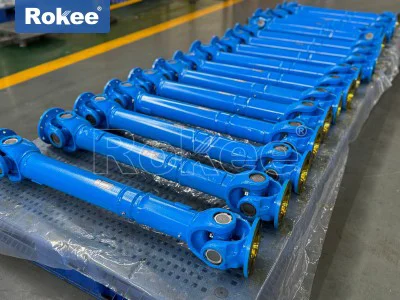
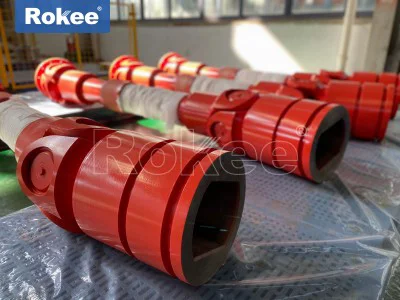
To understand the efficiency characteristics of cardan shafts fundamentally, it is necessary to start with their basic working principles and structural operating mechanisms. A complete cardan shaft assembly mainly consists of universal joint structures, intermediate shaft body and telescopic spline components, and the universal joint with a cross shaft structure is the core functional unit for realizing angle compensation and torque transmission. When the driving end shaft rotates, the cross shaft hinge structure drives the fork bodies at both ends to perform coordinated rotational motion, realizing power transmission between two shafts with a certain included angle. The structural design allows the shaft system to adapt to angular deviations ranging from 5 degrees to 45 degrees, and can automatically compensate for position displacement changes caused by equipment vibration, load fluctuation and structural deformation during long-term operation. The telescopic spline structure further solves the axial distance change problem in the operation process, ensuring uninterrupted torque transmission when the relative position of the connected shafts changes dynamically. This multi-dimensional deviation compensation capability is the core advantage of cardan shafts in complex working conditions, but the relative sliding, rotational friction and inertial motion impact between internal components in the transmission process inevitably produce energy loss, which constitutes the main source of efficiency attenuation.
The most prominent inherent factor affecting cardan shaft efficiency is the periodic angular velocity fluctuation of the driven shaft caused by the single universal joint transmission principle. Under the condition of a fixed included angle between the driving shaft and the driven shaft, when the driving shaft rotates at a constant speed, the angular velocity of the driven shaft will produce regular cyclic changes in each rotation cycle, presenting alternating acceleration and deceleration states. This non-uniform rotation characteristic will generate periodic inertial pulsating loads inside the shaft system, causing micro-vibration and torsional impact of components. These dynamic loads do not contribute to effective power output but consume part of the transmission power in the form of mechanical vibration and structural impact, resulting in reduced transmission efficiency. The magnitude of this efficiency loss is closely positively correlated with the shaft deflection angle and operating speed. The larger the included angle between the two connected shafts, the more intense the angular velocity fluctuation, and the more obvious the inertial impact loss; similarly, the increase of rotational speed will amplify the dynamic load effect, further widening the gap between actual transmission efficiency and theoretical optimal efficiency. In practical design, the paired double universal joint structure is usually adopted to offset the angular velocity difference of a single joint, which can effectively suppress periodic fluctuation and inertial loss and significantly improve the overall transmission efficiency of the shaft system.
Frictional loss between matching components is another major factor leading to cardan shaft efficiency reduction, running through the entire operating process of the equipment. The internal friction pairs of cardan shafts mainly include the matching contact part between the cross shaft and the joint fork, the sliding contact surface of the telescopic spline, and the rotational matching part of the bearing structure. In the working state, relative sliding and rolling friction exist in these contact parts. Pure mechanical friction will convert part of the mechanical energy into thermal energy, which is dissipated in the surrounding environment, resulting in irreversible power loss. The state of lubrication directly determines the level of frictional loss. Sufficient and high-quality lubrication can form a uniform oil film on the friction contact surface, isolating direct hard contact between metal components, reducing friction coefficient and wear degree, and maintaining low energy loss transmission. On the contrary, insufficient lubrication, aging and deterioration of lubricating medium, or impurities mixed in the lubricant will destroy the protective oil film, leading to dry friction or semi-dry friction between components. This not only sharply increases frictional power loss and reduces transmission efficiency, but also aggravates surface wear of parts, produces gaps in matching structures, and triggers more severe vibration and friction loss, forming a vicious cycle of performance attenuation.
Structural precision and assembly quality have a decisive impact on the initial efficiency and long-term stable efficiency of cardan shafts. Precision machining ensures that the dimensional tolerance, surface roughness and structural symmetry of core components such as cross shafts, joint forks and splines meet design standards, making the contact matching between friction pairs more uniform and the force transmission more smooth. Components with low machining precision often have local protrusions, dimensional deviations or asymmetric structures, which will cause uneven stress distribution during operation, produce partial excessive friction and micro-torsion, and increase unnecessary power consumption. Assembly precision is equally important. Inaccurate assembly positioning, inconsistent coaxiality of the shaft system, and inappropriate reserved gaps between matching parts will lead to additional radial and axial loads during rotation. These abnormal loads will induce operational vibration, increase component wear, and significantly reduce transmission efficiency. In addition, the dynamic balance performance of the cardan shaft body is a key factor affecting high-speed operating efficiency. Unbalanced mass distribution will produce centrifugal force during high-speed rotation, causing shaft body vibration and swing, consuming extra power, and meanwhile aggravating the wear of universal joints and bearings, further reducing the overall transmission efficiency of the system.
Operating load and working environment are important external variables that cause dynamic changes in cardan shaft efficiency. Under rated load conditions, the cardan shaft operates in the optimal design state, with stable friction and inertial loss, and maintains a relatively high and stable efficiency level. When operating under overload conditions for a long time, the internal stress of components increases sharply, the contact pressure of friction pairs rises, the friction coefficient increases, and the torsional deformation of the shaft body intensifies, all of which will lead to increased power loss and decreased transmission efficiency. Long-term light-load operation is also not conducive to efficient transmission. Too small load will cause insufficient contact stress between matching parts, unstable oil film state, and increased intermittent friction loss, resulting in low-load efficiency attenuation. The working environment also exerts an intuitive impact on efficiency. High-temperature environments will accelerate the thinning and aging of lubricating oil film, reduce lubrication performance, and increase frictional loss; low-temperature environments will increase the viscosity of lubricating media, raise rotational resistance, and consume more transmission power. Dust, moisture and corrosive media in harsh environments will cause component corrosion and surface abrasion, destroy the precision of matching structures, and bring continuous efficiency decline.
Component wear and aging failure are the main causes of gradual efficiency degradation of cardan shafts in the full service cycle. In the initial stage of operation, all components are in the best matching state, with minimal friction gap and stable lubrication state, and the transmission efficiency remains at the highest level. With the accumulation of operating time, the continuous friction and impact load will cause uniform wear on the surfaces of cross shafts, bearings and spline structures, increasing the matching gaps between components. The enlarged gaps will lead to slight torsional clearance and operational jitter during torque transmission, making the power transmission process not smooth enough and generating additional energy loss. In the middle and later stages of service, aging problems such as fatigue deformation of metal components and aging of auxiliary buffer structures will further deteriorate the operating state of the shaft system. Fatigue deformation will destroy the structural symmetry and dynamic balance of the shaft body, induce periodic vibration and impact, and aging buffer structures will lose the ability to absorb dynamic loads, resulting in a continuous increase in invalid power consumption. This natural aging and wear process is irreversible, but its development speed can be effectively delayed through scientific maintenance, so as to maintain the long-term efficient operation of the cardan shaft.
To optimize cardan shaft efficiency and reduce invalid power loss, systematic improvement can be carried out from structural design, material selection, processing technology and daily maintenance. In terms of structural design, the double universal joint symmetrical structure is widely used to eliminate the angular velocity fluctuation of a single joint, minimize inertial impact loss, and optimize the arc transition and contact structure of friction pairs to reduce friction resistance. The optimized telescopic spline structure can reduce sliding friction while ensuring axial compensation capability, balancing structural flexibility and transmission efficiency. In terms of material selection, high-strength and wear-resistant metal materials and surface strengthening treatment processes are adopted to improve the surface hardness and wear resistance of components, reduce the wear rate of friction pairs, and maintain long-term matching precision and low-loss transmission performance. Advanced dynamic balance correction technology in processing can eliminate unbalanced mass of the shaft body, suppress high-speed vibration loss, and greatly improve the stability of high-efficiency operation.
Scientific daily maintenance and standardized operation are the most economical and effective means to stabilize cardan shaft efficiency. Regular lubrication maintenance is the core of efficiency protection. Replacing deteriorated lubricating media in time and filling high-performance lubricants according to operating speed and load characteristics can always maintain a complete oil film protection state, reduce frictional loss and component wear. Regular inspection of assembly tightness and shaft system coaxiality can eliminate assembly deviation and abnormal gap faults in time, avoid additional vibration and friction loss caused by assembly problems. Timely cleaning of dust and impurities on the shaft surface and internal matching parts can prevent abrasive wear and structural corrosion, maintain the precision of the transmission structure. In addition, standardized operation avoiding long-term overload, super-high speed and abnormal angle operation can reduce the impact of extreme working conditions on component performance and efficiency, and extend the service life of high-efficiency operation of the cardan shaft.
The efficient operation of cardan shafts is of great significance for energy conservation, consumption reduction and stable operation of the entire mechanical system. In industrial production and mechanical operation, power loss caused by low cardan shaft efficiency will eventually be converted into invalid heat and vibration energy, which not only improves the overall energy consumption level of the equipment, but also accelerates the aging and failure of transmission components, increases the frequency of equipment maintenance and downtime, and affects production continuity and operational economy. High-efficiency cardan shaft transmission can maximize the conversion rate of input power into effective output power, reduce system energy consumption, and meanwhile reduce structural vibration and impact, making the equipment operation more stable and reliable. Stable and efficient transmission can also reduce the thermal load of components, avoid performance degradation caused by long-term high-temperature operation, and effectively extend the overall service life of the shaft system and matching equipment.
In the field of modern mechanical engineering, with the continuous improvement of equipment energy-saving requirements and operational stability standards, the efficiency optimization of cardan shafts has become an important direction of transmission system research and development. Traditional efficiency improvement methods focus on structural optimization and lubrication upgrading, while modern optimization technologies combine precision manufacturing, dynamic monitoring and intelligent maintenance. Through real-time monitoring of operating speed, load, vibration and temperature parameters of the cardan shaft, the operating state and efficiency attenuation trend can be accurately judged, so as to realize predictive maintenance, eliminate potential efficiency loss faults in advance, and maintain the optimal operating state of the shaft system. At the same time, the application of new composite materials and surface modification technologies further improves the wear resistance, low friction performance and fatigue resistance of components, laying a foundation for long-term high-efficiency and stable operation of cardan shafts under complex and harsh working conditions.
In conclusion, the transmission efficiency of cardan shafts is affected by the coupling of inherent structural characteristics, processing and assembly precision, operating conditions and maintenance state. Inertial impact loss caused by angular velocity fluctuation and frictional loss between matching components constitute the main body of efficiency loss, while structural aging, abnormal working conditions and inadequate maintenance accelerate efficiency attenuation. Through reasonable structural design optimization, high-precision processing and manufacturing, scientific material selection and standardized full-cycle maintenance management, the power loss in the transmission process can be effectively reduced, and the comprehensive transmission efficiency and operational stability of cardan shafts can be significantly improved. As an indispensable basic transmission component in mechanical systems, the continuous improvement of cardan shaft efficiency will not only optimize the operating performance of a single component, but also bring positive effects on energy conservation, emission reduction and stable and efficient operation of the entire mechanical equipment system, with important practical value and engineering significance for the development of modern mechanical transmission technology.