Integral Cardan Shaft
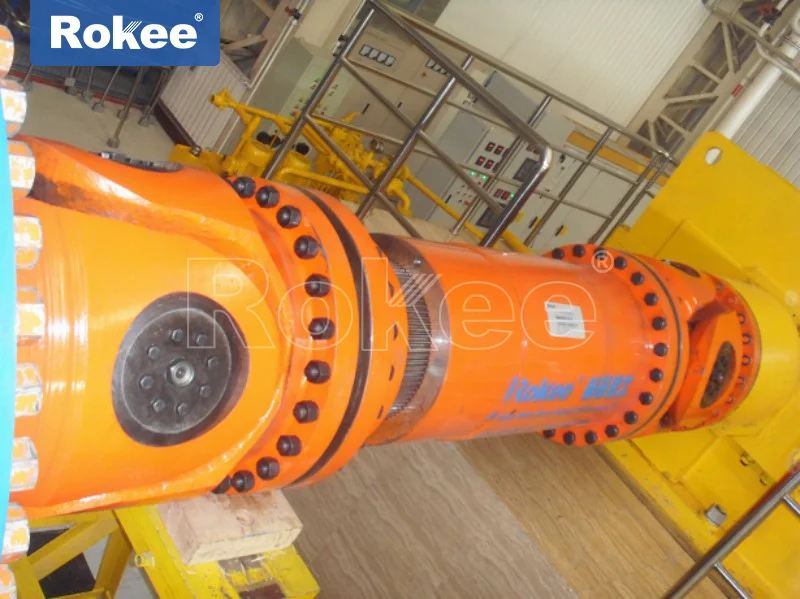
The integral cardan shaft stands as a foundational and highly reliable power transmission component widely adopted in modern mechanical transmission systems, serving as a critical connecting medium for transferring rotational torque and motion between misaligned mechanical components. Unlike segmented transmission structures that rely on assembled discrete parts, the integral structural design integrates core functional components into a unified whole, effectively balancing structural rigidity, motion flexibility and transmission stability, which enables it to adapt to complex and variable operating conditions in diverse industrial and mechanical scenarios. This type of shaft structure is specially optimized for equipment operation scenarios where driving and driven shafts cannot maintain absolute coaxiality, and can efficiently compensate for angular deviation, axial displacement and radial offset generated during equipment operation, ensuring continuous and stable power output of mechanical systems.
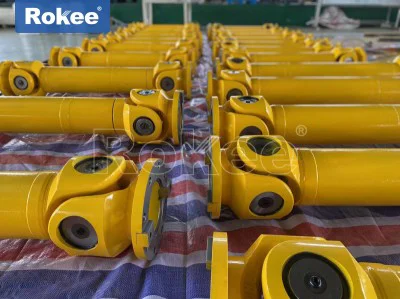
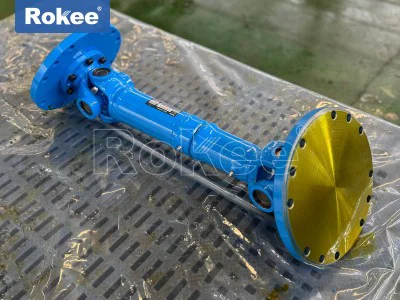
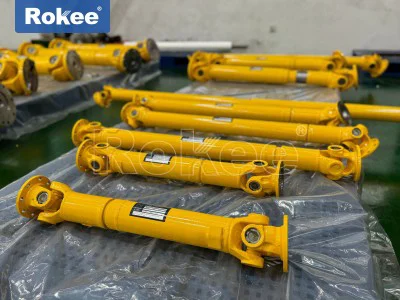
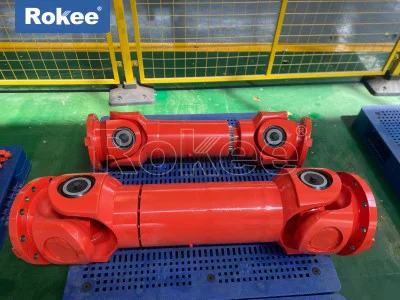
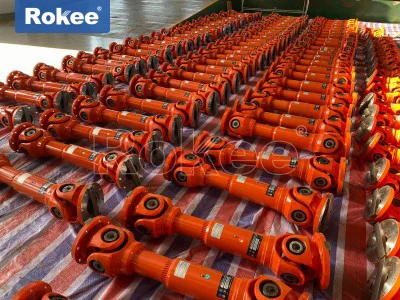
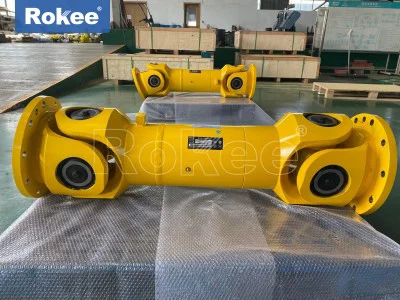
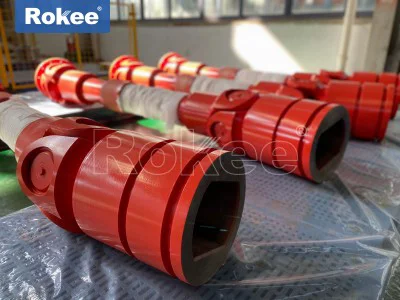
The overall structural design of the integral cardan shaft follows the dual core concepts of mechanical strength and motion flexibility, with all key functional parts integrally forged and machined to form a coordinated and unified transmission unit. Its core composition includes integrated universal joint assemblies, an integral central shaft body, precision cross shaft components, reinforced fork heads and matching bearing and fastening structures. The entire structure abandons redundant splicing gaps of traditional assembled cardan shafts, and the integral forming process makes the internal stress distribution of the component more uniform, avoiding structural deformation, loose connection and local stress concentration caused by long-term operation of assembled structures. The universal joint parts arranged at both ends of the central shaft are seamlessly connected with the shaft body, forming an integrated force-bearing structure, which can bear alternating loads and impact forces generated during high-speed rotation and heavy-load operation, while retaining the flexible rotation capability required for shaft misalignment compensation.
The working principle of the integral cardan shaft is based on the mechanical motion characteristics of universal joint transmission and the overall force-bearing advantage of the integral structure. In the operating state, the driving end transmits rotational power to the integral fork head, which drives the cross shaft assembly to perform synchronous rotational motion. The cross shaft, as the core force-transmitting and angle-adjusting component, connects the fork heads at both ends, and can realize flexible deflection within a certain angle range when the axes of the driving shaft and driven shaft are misaligned. The integral structural design ensures that the torque received by a single part can be quickly and evenly distributed to the entire shaft body, eliminating the power transmission loss and motion jitter caused by assembly gaps. When the mechanical equipment operates with angle deviation, the universal joint part of the integral cardan shaft can automatically adapt to the axis offset, convert the deflected rotational motion into stable and consistent output motion, and maintain synchronous rotation of the driving and driven ends without interfering with the normal power transmission process. The adaptable angle range of this structure usually covers the conventional deviation requirements of industrial mechanical transmission, and can maintain efficient transmission state under continuous variable angle working conditions.
Compared with traditional assembled cardan shafts, the integral structure endows the product with more superior comprehensive mechanical properties in practical application. First of all, the integral forming process greatly improves the overall rigidity and torsional resistance of the shaft body. Under heavy-load torque transmission conditions, the shaft body is not prone to torsional deformation and bending deflection, which effectively guarantees the precision of power transmission. Secondly, the integrated design reduces the number of connecting interfaces and fasteners, lowers the friction and abrasion points in the transmission system, and significantly reduces the mechanical loss and failure probability during operation. The smooth and continuous internal force transmission path enables the integral cardan shaft to maintain stable transmission efficiency even in long-term high-frequency operation, avoiding the gradual attenuation of transmission performance caused by loose assembly and component wear of traditional structures. In addition, the unified structural size and integrated processing precision make the motion coordination of each functional part more accurate, effectively suppressing vibration and noise generated during high-speed rotation, and improving the overall operating stability of mechanical equipment.
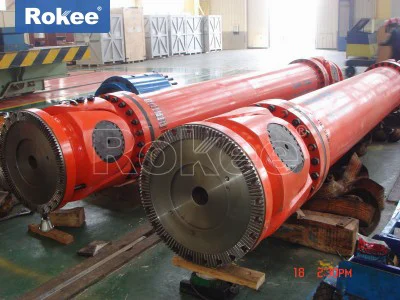
The excellent adaptive performance of the integral cardan shaft makes it applicable to a wide range of industrial mechanical transmission scenarios, covering heavy industry equipment, transportation machinery, industrial production equipment and other fields that require stable power transmission under complex working conditions. In heavy mechanical equipment such as metallurgical machinery, mining machinery and engineering machinery, the integral cardan shaft undertakes the torque transmission task under heavy load and strong impact working conditions. Its high structural strength and good impact resistance can adapt to the harsh operating environment of frequent load changes and uneven stress, ensuring the continuous operation of large-scale mechanical equipment. In industrial production lines including printing equipment, textile machinery and packaging machinery, the high-precision transmission characteristics of the integral cardan shaft avoid motion deviation and power jitter, guaranteeing the stable operation of high-precision production equipment and consistent product processing accuracy.
In the field of transportation and special mechanical equipment, the integral cardan shaft also plays an irreplaceable role. Many mobile mechanical devices will produce continuous axis offset and angle change during walking, lifting and rotating operations. The flexible compensation capability of the integral cardan shaft can adapt to this dynamic axis change, realizing uninterrupted power transmission in the state of equipment attitude change. Its compact integral structure saves installation space, simplifies the overall layout of mechanical transmission systems, and improves the integration degree of equipment. At the same time, the optimized structural design reduces the self-weight of the component on the premise of ensuring structural strength, which helps to reduce the overall load of the equipment and improve the energy utilization efficiency of the mechanical system during operation.
Material selection and processing technology are key factors that determine the service performance and service life of the integral cardan shaft. Qualified integral cardan shafts are mostly made of high-strength alloy materials with good toughness, wear resistance and fatigue resistance. Through integral forging, the internal metal fiber structure of the material is continuously distributed, which significantly improves the mechanical properties of the material compared with the splicing and welding forming process. After finishing machining, surface quenching and tempering heat treatment, the surface hardness and internal toughness of the component are effectively balanced, so that the shaft body has strong wear resistance, corrosion resistance and anti-fatigue ability. This series of processing technologies enables the integral cardan shaft to resist oxidation and wear in dusty, humid and high-temperature industrial environments, and avoid structural fatigue damage under long-term alternating load operation, greatly extending the stable service cycle of the component.
In terms of operating performance, the integral cardan shaft has outstanding advantages in transmission efficiency and operational stability. The seamless integral transmission structure minimizes power loss in the torque transmission process, and the effective transmission rate of rotational power is always maintained at a high level during continuous operation. The coordinated movement of the integrated universal joint and shaft body avoids the asynchronous motion problem of discrete components, ensures the synchronization of input and output rotational speed, and provides stable power support for the constant-speed operation of mechanical equipment. When the equipment starts, stops or loads suddenly, the integral structure can evenly absorb and buffer instantaneous impact force, reduce the mechanical vibration of the transmission system, and avoid abnormal wear and structural damage of equipment parts caused by instantaneous load fluctuation.
Daily maintenance and operation adaptation characteristics further reflect the practical value of the integral cardan shaft. The integrated structural design reduces the difficulty of daily maintenance, with fewer vulnerable parts and no need for frequent inspection and fastening of connecting gaps. The unified structural form is convenient for daily cleaning, lubrication maintenance and fault inspection, which effectively reduces the time cost and maintenance cost of equipment operation. In terms of working condition adaptation, it can normally operate in a wide temperature range and complex environmental conditions, and has good tolerance to dust, slight vibration and load fluctuation in industrial environments. Whether it is continuous high-speed operation or intermittent heavy-load operation, the integral cardan shaft can maintain stable working state and adapt to the diversified operation modes of modern mechanical equipment.
With the continuous upgrading of modern mechanical manufacturing technology and the gradual improvement of equipment precision requirements, the design and performance of integral cardan shafts are also constantly optimized and iterated. Modern structural optimization design further balances the rigidity, toughness and flexibility of the shaft body, realizing lightweight design on the premise of ensuring load-bearing capacity. The refined processing technology improves the motion precision of the universal joint structure, reduces the rotation gap and friction resistance, and further improves the transmission efficiency and operational stability. At the same time, the innovative application of new alloy materials and surface treatment technologies further enhances the wear resistance, corrosion resistance and fatigue resistance of the integral cardan shaft, making it more adaptable to extreme working conditions such as high load, high speed and strong corrosion.
In the entire mechanical power transmission system, the integral cardan shaft, as a key intermediate transmission component, connects the power source and the executing mechanism, and its operating state directly affects the overall working efficiency and stability of the equipment. Its unique integral structural advantage makes up for many performance defects of traditional assembled transmission shafts, solves the problems of easy loosening, large vibration, low precision and short service life of traditional structures, and provides a more reliable solution for medium and heavy-duty power transmission scenarios. In the future, with the continuous development of intelligent manufacturing and high-precision mechanical equipment, the integral cardan shaft will continue to realize performance upgrading in structural optimization, material innovation and precision processing, and play a more important role in more industrial fields, becoming an indispensable core component of modern mechanical transmission systems.