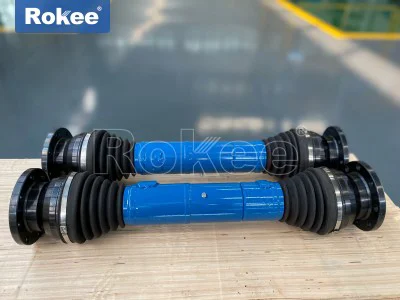
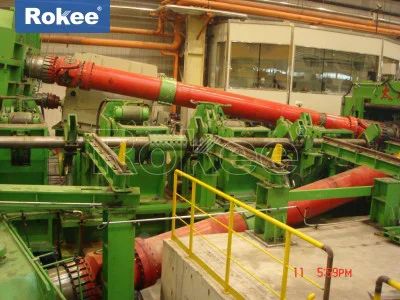
Spider Joint Cardan Shaft
The spider joint cardan shaft stands as one of the most fundamental and ingenious mechanical transmission components in modern mechanical systems, serving as a critical bridge for power transmission between misaligned rotating shafts across countless industrial, automotive, and heavy-duty machinery applications. Renowned for its flexible transmission capability, robust structural toughness, and exceptional adaptability to complex operating conditions, this mechanical assembly has become an indispensable part of power transmission systems where strict coaxial alignment of driving and driven shafts cannot be guaranteed. Unlike rigid shaft connections that rely on precise axial alignment to deliver stable torque, the cardan shaft integrated with a spider joint is engineered to compensate for angular, parallel, and axial deviations between connected shafts, ensuring continuous, efficient rotation and power transfer even when equipment undergoes structural deformation, vibration displacement, or assembly position changes during operation.
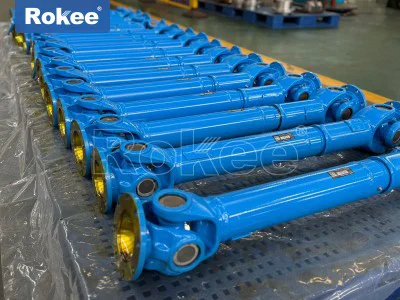
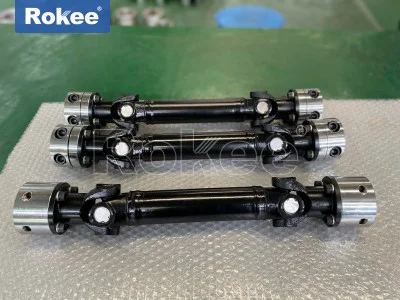
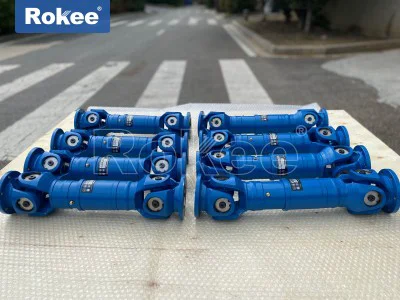
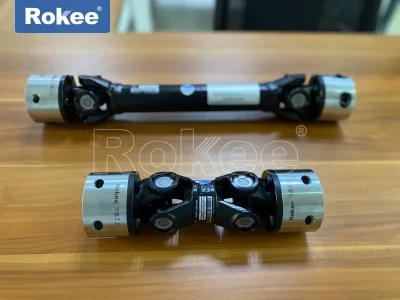
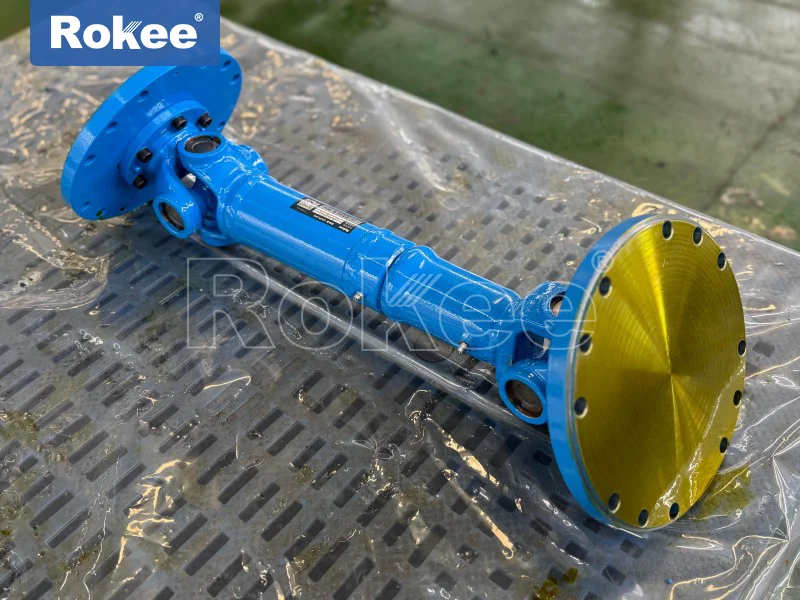
At the core of the entire transmission system lies the spider joint, also widely referred to as the cross joint, which defines the functional characteristics and service performance of the cardan shaft. The overall structure of the spider joint cardan shaft follows a concise and highly reliable mechanical configuration, mainly composed of two symmetrical fork-shaped yokes and a central cross-shaped spider component, with precision rolling bearings embedded at the matching positions to reduce friction resistance during relative motion. The two yoke structures are fixedly connected to the driving shaft and driven shaft respectively, undertaking the task of receiving and outputting rotational power. The central spider features four mutually perpendicular trunnions distributed in a cross layout, with each trunnion precisely fitted into the bearing cavity of the corresponding yoke. This unique structural layout enables independent rotational pivoting in two mutually perpendicular planes, laying the mechanical foundation for the component’s angular compensation ability.
The working mechanism of the spider joint cardan shaft follows classic kinematic principles of spatial mechanical motion, realizing flexible power transmission through the coordinated relative movement between internal components. When the driving shaft starts to rotate, it drives the connected active yoke to perform circular rotation. The active yoke transmits rotational torque to the spider through the bearing assembly, and the spider further drives the passive yoke and the connected driven shaft to rotate synchronously. During this process, if a certain angular deviation exists between the driving shaft and the driven shaft, the trunnions of the spider will continuously pivot and slide inside the yoke bearing cavities with shaft rotation. This continuous micro-adjustment of spatial angles effectively offsets the misalignment between the two shafts, ensuring that rotational motion and torque can be stably transmitted without mechanical jamming or motion interruption.
A notable kinematic feature of a single spider joint cardan shaft is the periodic fluctuation of output rotational speed under a fixed operating angle. When the two connected shafts form an included angle, the instantaneous angular velocity of the driven shaft will produce regular cyclic changes within a single rotation cycle, even if the driving shaft maintains a constant rotational speed. This speed fluctuation generates periodic torsional vibration and alternating load on the transmission system, which may cause fatigue stress on connecting parts and produce slight mechanical vibration during high-speed operation. To mitigate this inherent characteristic, most practical application scenarios adopt a double-section cardan shaft structure with two spider joints arranged in a matching manner. By reasonably setting the installation phase and operating angle of the two joints, the speed fluctuation generated by the front joint can be completely offset by the rear joint, achieving constant-speed and stable power transmission between spatially misaligned shafts.
The structural design of the spider joint endows the cardan shaft with outstanding comprehensive performance advantages that distinguish it from other transmission coupling components. First and foremost, it possesses excellent angular compensation capacity, capable of adapting to shaft included angles ranging from small deviations to large-angle deflections. This enables the equipment to maintain normal power transmission under complex working conditions such as equipment foundation settlement, thermal expansion and contraction of metal components, and dynamic displacement caused by load changes. Secondly, the overall structure features high mechanical strength and structural rigidity. The spider and yokes are usually manufactured from high-strength alloy materials through precision forging and finishing processes, which can withstand large torque impact and heavy load transmission, adapting to high-load working environments in engineering machinery and industrial equipment.
In terms of transmission efficiency, the optimized matching design between spider trunnions and precision needle roller bearings minimizes contact friction during relative motion. Compared with sliding friction structures, the rolling friction structure greatly reduces friction loss and mechanical wear, ensuring high-efficiency power transmission while extending the stable operation cycle of the equipment. Additionally, the compact structural layout of the spider joint cardan shaft saves installation space, with a simple and easy-to-install overall structure that imposes low requirements on assembly precision. It can be flexibly applied to various narrow and complex mechanical layout spaces, providing great convenience for mechanical design and equipment assembly.
The application scenarios of spider joint cardan shafts cover almost all mechanical fields that require flexible power transmission, showing extremely high engineering versatility. In the field of road transportation machinery, this component is widely used in the transmission systems of various vehicles, undertaking the power transmission task from the transmission to the differential. Vehicle working conditions are complex and variable, with chassis components often producing jitter and displacement during driving. The spider joint’s flexible compensation capability effectively adapts to the dynamic changes of the vehicle chassis structure, ensuring stable power output during driving, acceleration, and bumpy road travel.
In agricultural machinery equipment, cardan shafts with spider joints serve as core transmission components for power take-off systems. They connect the power output end of tractors with various agricultural working tools such as mowers, plowing machines, and harvesting equipment. Field operation environments are harsh, with equipment often subjected to uneven ground vibrations and position deviations. The reliable angular compensation and anti-vibration performance of the spider joint can adapt to these complex working conditions, ensuring continuous and stable power supply for agricultural tools and improving the continuity and efficiency of field operations.
In engineering machinery and industrial transmission systems, this type of cardan shaft is applied to heavy-load equipment such as excavators, loaders, compressors, and industrial generators. These devices often operate under long-term high-load and high-vibration conditions, and the rigid connection structure is prone to component fatigue damage and transmission failure. The spider joint cardan shaft can buffer part of the impact load through its flexible pivoting motion, reduce the rigid extrusion and friction between shafts, and improve the overall stability and durability of the transmission system. At the same time, in automated production equipment and light industrial machinery, its precise and efficient transmission characteristics also ensure the synchronization accuracy of mechanical motion, meeting the high-precision operation requirements of automated production lines.
Despite its high structural reliability, the spider joint cardan shaft will still produce normal wear and aging after long-term continuous operation, and understanding its wear mechanism and maintenance characteristics is crucial to extending equipment service life. The main wear parts are concentrated on the matching surfaces between the spider trunnions and bearings, as well as the contact parts between bearings and yoke cavities. Long-term alternating load and high-speed relative motion will cause gradual wear of bearing rolling elements and spider friction surfaces, leading to increased transmission clearance, weakened compensation performance, and even obvious vibration and noise during operation in severe cases. In addition, long-term exposure to harsh environments such as dust, moisture, and oil pollution may cause corrosion of metal components and deterioration of internal lubricating grease, further accelerating component wear and failure.
Daily maintenance of the spider joint cardan shaft focuses on lubrication maintenance and regular inspection. Good lubrication can form a stable oil film on the friction surface of the spider joint, effectively reducing friction and wear, while playing a role in vibration damping, heat dissipation, and rust prevention. In actual use, it is necessary to regularly supplement and replace special lubricating grease to ensure the internal lubrication state of the joint is always optimal. Meanwhile, regular inspection of the tightness of the connecting structure and the wear degree of internal components is required. Loose connecting parts will cause additional vibration and impact load, accelerating component damage, while excessive wear of the spider and bearings needs timely replacement to avoid transmission failure and equipment shutdown caused by component failure.
In terms of structural design optimization, continuous technological improvements have further enhanced the comprehensive performance of spider joint cardan shafts. Modern optimized designs adopt more streamlined yoke structures and symmetrical force-bearing layouts, which make the stress distribution of components more uniform during torque transmission, avoid local stress concentration, and improve the fatigue resistance of the structure. The surface of the spider trunnions is treated with precision finishing and anti-wear strengthening processes, which improve surface smoothness and hardness, greatly reducing friction coefficient and wear rate. At the same time, the optimized bearing structure design improves the uniformity of force bearing on rolling elements, enhances the impact resistance of the bearing assembly, and enables the entire cardan shaft to adapt to higher load and higher speed operating conditions.
The operational stability of the spider joint cardan shaft is also closely related to installation accuracy and operating angle. In the installation process, reasonable coaxiality and parallelism deviation ranges need to be controlled to avoid excessive single-side operating angle, which may cause intensified speed fluctuation and increased load of the transmission system. In double-joint matching installation, strict alignment of the installation phase is required to ensure the complementary speed adjustment effect between the two joints, so as to achieve the most stable constant-speed transmission state. During equipment operation, avoiding long-term overload operation and frequent sudden start and stop can effectively reduce the alternating impact load on the spider joint, delay component fatigue aging, and maintain long-term efficient and stable operation of the transmission system.
From the perspective of mechanical transmission development, the spider joint cardan shaft, as a classic flexible transmission component, still has irreplaceable application value despite the continuous emergence of new transmission structures. Its simple and reliable mechanical principle, low manufacturing and maintenance cost, strong environmental adaptability, and wide load adaptation range make it still the preferred transmission solution for most medium and low-speed, medium and heavy-load flexible connection scenarios. With the continuous progress of material technology and processing technology, the performance of spider joint cardan shafts is constantly upgraded. New high-strength and wear-resistant materials further improve component durability, and precision processing technology further improves transmission accuracy and operational stability, enabling this traditional mechanical component to continuously adapt to the evolving working conditions of modern mechanical equipment.
In conclusion, the spider joint cardan shaft realizes flexible, efficient, and reliable power transmission between misaligned rotating shafts through the ingenious cooperation of spider, yoke, and bearing components. Its unique angular compensation performance, excellent load-bearing capacity, compact structural form, and convenient maintenance characteristics make it widely used in various mechanical fields. Whether in traditional engineering machinery, agricultural equipment, or modern transportation and automated production equipment, it provides stable power transmission guarantee for the normal operation of equipment. In mechanical system design and equipment operation and maintenance, fully understanding the structural characteristics, working principles, and performance optimization methods of spider joint cardan shafts is of great significance for improving the overall operational efficiency, stability, and service life of mechanical transmission systems.