Collaborative Matching Of Universal Shaft Coupling And Transmission Components Of Sandwich Panel Production Line
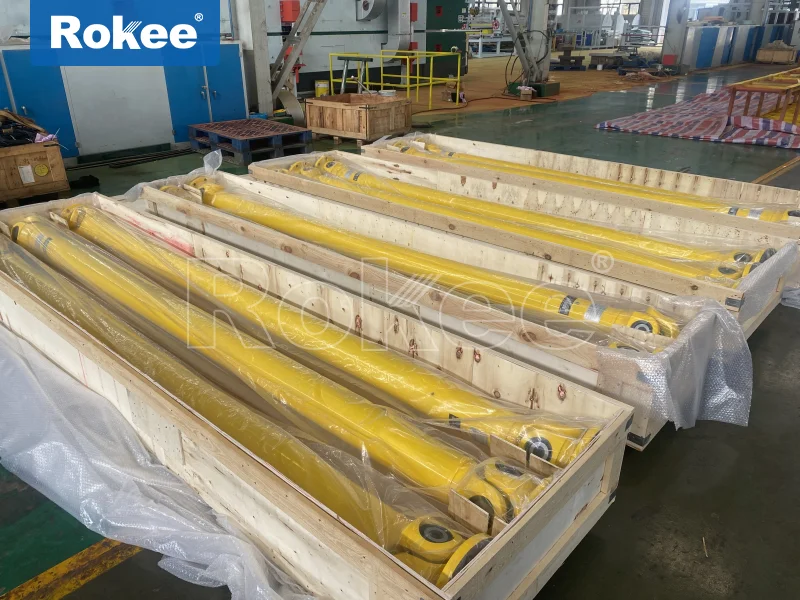
In modern industrial production, the sandwich panel production line is a key equipment system that integrates material processing, forming, and assembly, and its stable and efficient operation directly determines the quality and output of sandwich panel products. As the core connection and power transmission component in the transmission system of the production line, the universal shaft coupling undertakes the important task of transmitting torque and motion between different transmission components, while compensating for the angular, radial, and axial deviations that may exist between the shafts. The collaborative matching between the universal shaft coupling and other transmission components (such as motors, reducers, rollers, conveyors, and transmission shafts) is not only related to the transmission efficiency of the entire production line but also affects the service life of the equipment, the stability of the production process, and the consistency of product quality. Therefore, in-depth research on the collaborative matching principle, key matching points, optimization strategies, and maintenance methods of the universal shaft coupling and transmission components in the sandwich panel production line is of great practical significance for improving the overall performance of the production line and reducing production costs.
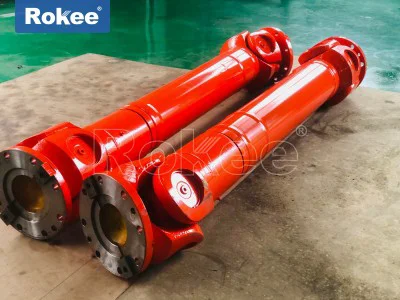
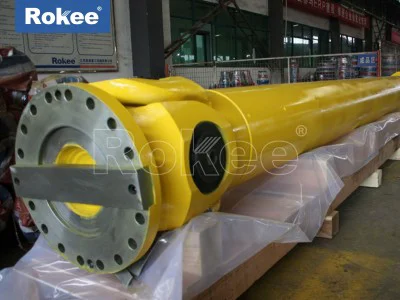
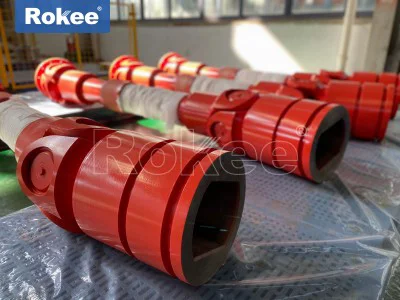
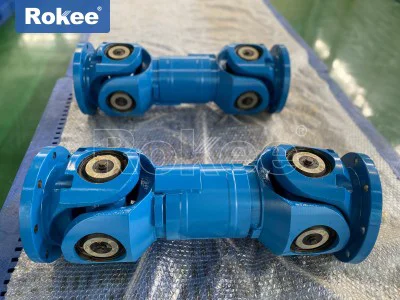
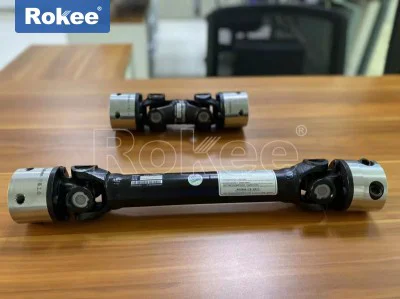
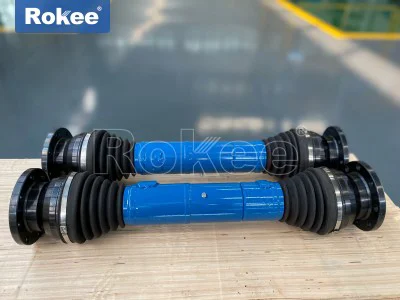
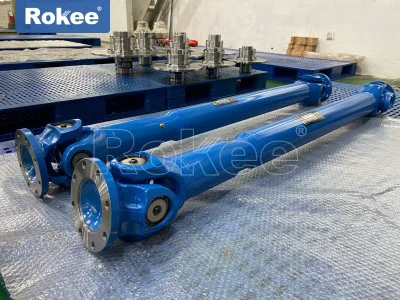
The universal shaft coupling, also known as the universal joint coupling, is a mechanical component that connects two shafts with non-coaxial or angular deviations and enables continuous rotation and reliable torque transmission. Its most prominent feature is its strong angular compensation capability, which can adapt to the installation deviations and relative displacements caused by manufacturing errors, installation errors, and equipment deformation during operation, ensuring the smooth transmission of power in complex working conditions. According to the structural characteristics, the common types of universal shaft couplings include cross-shaft type, ball cage type, ball fork type, and telescopic type, among which the cross-shaft universal shaft coupling and ball cage universal shaft coupling are most widely used in sandwich panel production lines. The cross-shaft type has the advantages of simple structure, high bearing capacity, and easy maintenance, which is suitable for the transmission scenarios with large torque and moderate angular deviation in the production line; the ball cage type has the characteristics of stable transmission, low vibration, and large angular compensation range, which is more suitable for the high-speed and high-precision transmission links in the production line, such as the transmission system of the slitting machine and the laminating machine. The working principle of the universal shaft coupling is based on the spatial linkage mechanism: taking the cross-shaft universal shaft coupling as an example, it converts the rotational motion of the input shaft into the swing motion of the cross shaft through the cross shaft, bearings, and yoke components, and then transmits the swing motion to the output shaft, thereby realizing the continuous transmission of torque. When there is an angle between the two connected shafts, the cross shaft will automatically adjust its spatial position with the rotation, ensuring that the power is transmitted without interruption. It should be noted that a single universal shaft coupling may cause periodic fluctuations in the speed of the output shaft during transmission, which may affect the stability of the production line. Therefore, in practical applications, a double-joint structure is usually adopted to eliminate the influence of speed fluctuations by reasonably arranging the spatial geometric relationship between the two universal shaft couplings, ensuring the synchronization of the driving and driven shafts.
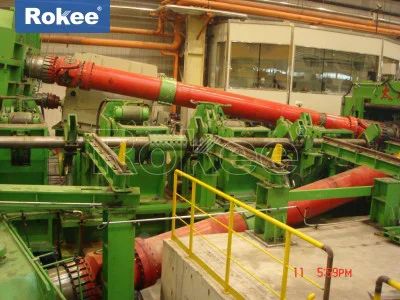
The transmission system of the sandwich panel production line is a complex integrated system composed of multiple components, and each transmission component undertakes different functions and forms a coordinated power transmission chain. The motor is the power source of the entire transmission system, which converts electrical energy into mechanical energy and provides the required power for the operation of the production line; the reducer reduces the speed of the motor output and increases the torque, so that the power output meets the working requirements of each transmission link; the rollers, conveyors, and other components are the executive parts, which drive the movement of the sandwich panel raw materials (such as face plates, core materials) through rotation, realizing the processes of feeding, slitting, laminating, pressing, and cutting; the transmission shaft is used to connect each transmission component, forming a continuous power transmission path. The universal shaft coupling is located at the connection points between these components, such as between the motor and the reducer, between the reducer and the transmission shaft, and between the transmission shaft and the rollers, playing the role of a "bridge" in power transmission. The collaborative matching between the universal shaft coupling and these transmission components is essentially to ensure that the performance parameters of each component are compatible, the force is reasonable, and the motion is synchronized, so as to avoid problems such as transmission jamming, vibration, noise, and component wear caused by mismatching, and ensure the stable and efficient operation of the entire production line.
The key to the collaborative matching between the universal shaft coupling and the transmission components of the sandwich panel production line lies in the reasonable matching of performance parameters, structural compatibility, and installation accuracy. In terms of performance parameter matching, the first is the matching of torque. The torque-bearing capacity of the universal shaft coupling must be compatible with the torque output by the motor and the torque required by the driven component (such as rollers, conveyors). If the torque-bearing capacity of the universal shaft coupling is too small, it will easily lead to fatigue damage, deformation, or even fracture of the coupling under long-term high-load operation; if the torque-bearing capacity is too large, it will cause unnecessary waste of resources, increase the weight and cost of the transmission system, and may also affect the flexibility of transmission. Therefore, in the process of matching, it is necessary to accurately calculate the maximum torque of the transmission system according to the working conditions of the production line (such as the speed of the production line, the thickness and weight of the sandwich panel, and the resistance during processing), and select the universal shaft coupling with appropriate torque-bearing capacity. At the same time, the speed matching between the universal shaft coupling and the transmission components should also be considered. The maximum allowable speed of the universal shaft coupling must be higher than the actual operating speed of the transmission system to avoid resonance, vibration, and other problems caused by the speed exceeding the limit, which will affect the stability of the transmission. In addition, the angular compensation range of the universal shaft coupling should match the possible angular deviation between the connected shafts. The sandwich panel production line will inevitably produce certain angular deviations between the shafts due to factors such as equipment installation errors, structural deformation during operation, and uneven stress. Therefore, the selected universal shaft coupling must have a sufficient angular compensation range to ensure that it can effectively compensate for these deviations and maintain stable power transmission. Generally, the angular compensation range of the universal shaft coupling used in the sandwich panel production line is between 5° and 45°, and the specific selection should be determined according to the actual working conditions of the transmission link.
Structural compatibility is another important aspect of collaborative matching. The structural design of the universal shaft coupling must be compatible with the connection mode and structural size of the connected transmission components. For example, the connection mode between the universal shaft coupling and the motor, reducer, or transmission shaft can be flange connection, keyway connection, or spline connection. It is necessary to ensure that the connection mode is consistent with the connected components, and the size of the flange, keyway, or spline matches accurately to avoid problems such as loose connection, inaccurate positioning, and power loss caused by structural mismatch. In addition, the overall structure of the universal shaft coupling should be compact and reasonable, so as to adapt to the limited installation space in the sandwich panel production line. For example, in the transmission link of the laminating machine, the installation space is relatively narrow, so a compact ball cage universal shaft coupling should be selected to avoid interference with other components. At the same time, the structural design of the universal shaft coupling should also consider the maintenance convenience. The production line operates continuously for a long time, and the maintenance of the transmission components is an important part of ensuring the stable operation of the equipment. Therefore, the universal shaft coupling should be designed with detachable structures, such as split yokes and replaceable bearings, which is convenient for daily inspection, maintenance, and replacement of parts, reducing the maintenance time and cost.
Installation accuracy is the guarantee for the collaborative operation of the universal shaft coupling and transmission components. Even if the performance parameters and structural design of the universal shaft coupling and transmission components are perfectly matched, if the installation accuracy does not meet the requirements, it will still lead to problems such as poor transmission, increased wear, and reduced service life. In the installation process, the first is to ensure the coaxiality of the connected shafts. Although the universal shaft coupling can compensate for a certain angular deviation, excessive coaxiality error will increase the additional load on the coupling and the connected components, leading to vibration and noise, and accelerating the wear of bearings and other parts. Therefore, when installing, it is necessary to use professional measuring tools such as laser alignment instruments and dial gauges to detect the coaxiality of the shafts, and adjust the position of the components through gaskets or other means to ensure that the coaxiality error is within the allowable range. Generally, the radial runout of the shafts should not exceed 0.05mm/m, and the angular deviation should not exceed 0.15°. Secondly, the installation of the universal shaft coupling should be carried out in strict accordance with the installation procedures. Before installation, it is necessary to thoroughly clean the connecting surfaces of the coupling and the shafts, remove oil stains, burrs, and rust to ensure the tightness and accuracy of the connection; when assembling, it is necessary to avoid violent impact, and use special tools to press the coupling into the shaft end to prevent damage to the coupling and the shaft. In addition, the fastening torque of the connecting bolts should be strictly controlled. The bolts should be tightened according to the cross method in three times (30%, 60%, and 100% of the rated torque) to ensure uniform stress and avoid loose bolts caused by insufficient torque or excessive torque, which will affect the transmission stability. After installation, a static and dynamic test should be carried out to check whether there is vibration, noise, or abnormal temperature rise during the operation of the transmission system, and adjust in time if any problems are found.
In the actual operation of the sandwich panel production line, the working conditions are complex and changeable, such as changes in production speed, fluctuations in raw material weight, and changes in ambient temperature, which will affect the collaborative matching effect between the universal shaft coupling and the transmission components. Therefore, it is necessary to optimize the matching strategy according to the actual working conditions to improve the adaptability and stability of the transmission system. For the transmission links with frequent load changes (such as the feeding conveyor and the cutting machine), a universal shaft coupling with good buffering and shock absorption performance should be selected, such as a telescopic universal shaft coupling with a buffer structure, which can absorb the impact load generated during the operation process, reduce the impact on the transmission components, and extend the service life of the equipment. For the high-speed transmission links (such as the slitting machine), the universal shaft coupling should be subjected to strict dynamic balance testing to ensure that the dynamic balance accuracy meets the requirements, so as to avoid resonance caused by unbalanced mass during high-speed operation, which will affect the transmission stability and product quality. In addition, with the continuous development of intelligent manufacturing technology, the intelligent monitoring of the transmission system can be realized by installing sensors on the universal shaft coupling and transmission components, which can real-time monitor the operating parameters of the components (such as torque, speed, vibration, and temperature), and timely find the hidden dangers of mismatching or component failure, so as to take adjustment and maintenance measures in advance, ensuring the continuous and stable operation of the production line.
Daily maintenance and maintenance are important means to maintain the good collaborative matching state between the universal shaft coupling and the transmission components. The sandwich panel production line operates continuously for a long time, and the universal shaft coupling and transmission components will be subject to wear, fatigue, and aging, which will affect the matching effect and transmission efficiency. Therefore, a scientific maintenance system should be established to carry out regular inspection and maintenance of the components. For the universal shaft coupling, the key maintenance contents include regular lubrication, inspection of bearing wear, and inspection of connection tightness. The bearings and spline pairs of the universal shaft coupling need to be lubricated regularly. High-temperature lithium-based grease or other suitable lubricants should be selected according to the working conditions, and the lubricant should be injected into the lubrication point until the new lubricant overflows, so as to ensure that the moving parts are fully lubricated, reduce friction and wear, and prevent rust and corrosion. The lubrication cycle should be determined according to the operating time and working environment of the production line, generally every 200 to 500 hours of operation. At the same time, it is necessary to regularly check the wear of the bearings, cross shafts, and other components. If the bearing is worn, stuck, or the cross shaft is deformed, it should be replaced in time to avoid affecting the transmission effect. For the connection bolts of the universal shaft coupling, it is necessary to check regularly whether there is looseness, and retighten them in time if there is looseness, and replace the bolts if they are worn or damaged. For other transmission components such as motors, reducers, and rollers, regular inspection and maintenance should also be carried out, such as checking the operation status of the motor, the oil level and quality of the reducer, and the wear of the rollers, to ensure that each component is in good operating condition, so as to maintain the collaborative matching effect with the universal shaft coupling.
In addition, the selection of materials for the universal shaft coupling and transmission components also has an important impact on their collaborative matching and service life. The sandwich panel production line has high requirements on the wear resistance, fatigue resistance, and corrosion resistance of the transmission components, especially in the harsh working environment with dust, humidity, or high temperature. Therefore, the universal shaft coupling should be made of high-quality alloy steel (such as 45 steel, 40 chromium steel) after heat treatment, which can improve the strength, wear resistance, and fatigue life of the coupling. For the transmission components that work in harsh environments, such as the rollers in the pressing process, materials with better corrosion resistance and wear resistance should be selected, such as stainless steel or wear-resistant alloy steel, to ensure that the components can work stably for a long time. At the same time, the processing accuracy of the components should be improved. High-precision processing can ensure the dimensional accuracy and surface quality of the components, reduce the installation errors and transmission losses caused by processing errors, and improve the collaborative matching accuracy between the universal shaft coupling and the transmission components.
The collaborative matching between the universal shaft coupling and the transmission components of the sandwich panel production line is a systematic project, which involves multiple aspects such as performance parameters, structural design, installation accuracy, material selection, and maintenance. Only by realizing the perfect matching of these aspects can the transmission efficiency of the production line be improved, the service life of the equipment be extended, the stability of the production process be ensured, and the quality of the sandwich panel products be improved. In the actual production process, it is necessary to combine the specific working conditions of the production line, select the appropriate universal shaft coupling and transmission components, strictly control the installation accuracy, establish a scientific maintenance system, and continuously optimize the matching strategy according to the changes in working conditions. With the continuous advancement of mechanical manufacturing technology and intelligent technology, the collaborative matching technology between the universal shaft coupling and transmission components will also be continuously improved, which will provide more reliable technical support for the high-efficiency, stable, and intelligent operation of the sandwich panel production line.
In conclusion, the universal shaft coupling, as a key component in the transmission system of the sandwich panel production line, its collaborative matching with other transmission components directly determines the overall performance of the production line. Through reasonable selection of universal shaft coupling types, accurate matching of performance parameters, optimization of structural design, strict control of installation accuracy, and scientific maintenance and maintenance, the collaborative operation effect between the universal shaft coupling and transmission components can be improved, the transmission efficiency can be enhanced, the equipment failure rate can be reduced, and the production cost can be saved. In the future, with the continuous development of the sandwich panel industry, the requirements for the stability and efficiency of the production line will be higher and higher, which will put forward new requirements for the collaborative matching technology of the universal shaft coupling and transmission components. Therefore, it is necessary to carry out in-depth research and exploration on this technology, continuously improve the matching level, and promote the healthy and sustainable development of the sandwich panel industry.