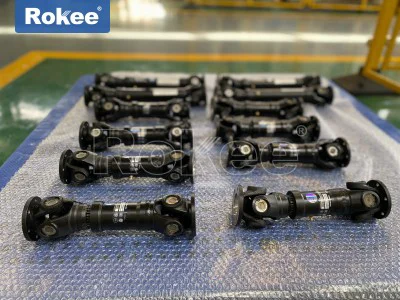
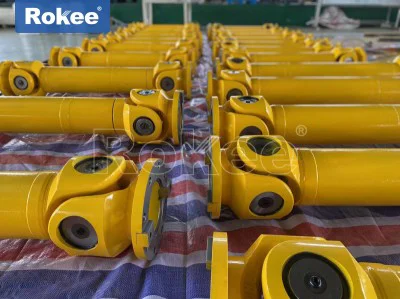
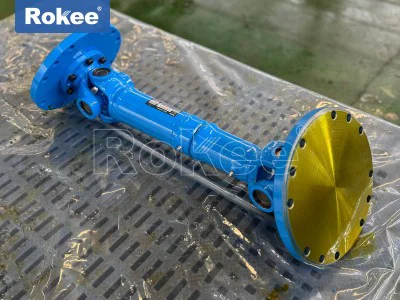
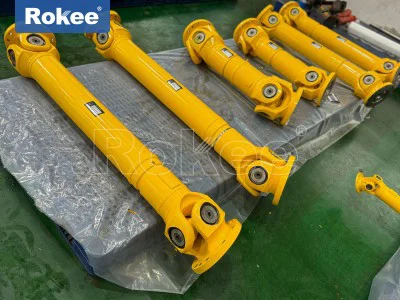
Rolling Mill Cardan Shaft
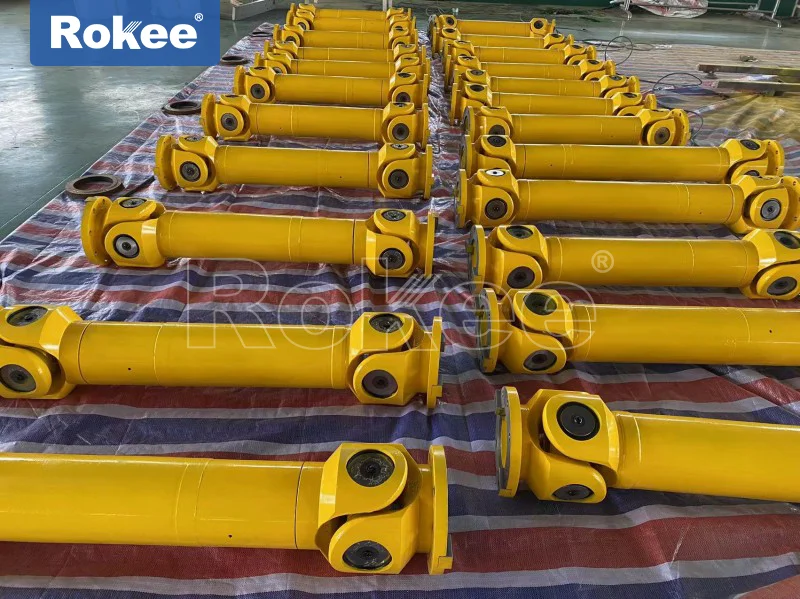
In the field of metallurgical machinery, the rolling mill cardan shaft serves as a critical core component in the power transmission system, functioning as a flexible "joint" that connects the main motor and the rolling rolls. Its ability to transmit torque stably while compensating for multi-dimensional displacements directly determines the operational efficiency of the rolling mill, the quality of the rolled products, and the service life of the entire equipment. Unlike ordinary transmission components, the rolling mill cardan shaft must withstand harsh working conditions such as high torque, high temperature, frequent impact loads, and the erosion of iron oxide scale and cooling water, which places extremely high requirements on its structural design, material selection, performance indicators, and type matching.
The structure of the rolling mill cardan shaft is a modular composite design that integrates multiple functional components, each of which undertakes specific transmission and protection tasks to ensure the overall stability and reliability of the component. The core structure mainly includes the cross shaft assembly, yoke components, telescopic spline, bearing system, sealing structure, and balance system, and these components are closely coordinated to form a complete power transmission mechanism. The cross shaft assembly is the core part of torque transmission, usually forged from high-strength alloy steel such as 42CrMo, and undergoes surface carburizing and quenching treatment to make its surface hardness reach HRC58-62, while the core maintains good toughness to resist torque impact and fatigue damage. The surface of the bearing position of the cross shaft is processed by ultra-precision grinding technology, with a roughness Ra ≤ 0.2μm, which effectively reduces friction and wear during operation and improves the service life of the bearing. The yoke components, which are divided into driving yoke and driven yoke, are integrally forged from 20CrMnTi or other high-strength alloy materials, and their fatigue life can reach more than 10^7 cycles, ensuring that they can withstand long-term heavy-load operation without deformation or fracture. The connection between the yoke and the cross shaft adopts a articulated structure, which allows a certain angular deviation between the two shafts, laying the foundation for angle compensation.
The telescopic spline is another key component of the rolling mill cardan shaft, which is mainly used to compensate for the axial displacement caused by the adjustment of the rolling rolls and the thermal expansion of the equipment during operation. The spline module usually ranges from 6mm to 12mm, and the surface is treated by quenching to reach a hardness of HRC50-55, which ensures its wear resistance and load-bearing capacity. The axial compensation range of the telescopic spline is generally ±50mm to ±150mm, which can flexibly adapt to the changes in the distance between the motor and the rolling rolls, avoiding the occurrence of structural stress due to axial displacement and protecting the entire transmission system. The bearing system is mainly composed of heavy-duty four-row tapered roller bearings, which have the characteristics of high load-bearing capacity, good rigidity, and strong impact resistance, and can effectively bear the radial and axial forces generated during the torque transmission process. To further improve the stability of the bearing system, a disc spring group is usually used to apply precise axial preload, eliminating the bearing clearance and improving the overall stiffness of the system, thereby reducing vibration during operation.
The sealing structure of the rolling mill cardan shaft is designed to adapt to the harsh working environment of the rolling mill, mainly adopting a combined form of multi-channel lip seal and non-contact labyrinth seal. The seal material is selected from high-temperature and wear-resistant materials, which can effectively block the intrusion of high-temperature radiation, water vapor, iron oxide scale, and other impurities in the rolling environment, protect the internal lubrication system from pollution, and ensure the normal operation of each component. The balance system is usually designed with a hydraulic cylinder counterweight, and the balance moment error is controlled within 3%, which can effectively reduce the vibration caused by the imbalance of the cardan shaft during high-speed operation, improve the stability of power transmission, and reduce the wear of the bearing and other components. In addition, the transition area between the cross shaft and the yoke is optimized by a large arc or elliptical curve design, which effectively reduces stress concentration, further improving the fatigue resistance and service life of the cardan shaft.
The performance of the rolling mill cardan shaft is closely related to its structural design and material selection, and its core performance indicators mainly include torque transmission capacity, angle compensation capacity, transmission efficiency, fatigue resistance, wear resistance, and high-temperature resistance, which jointly determine the adaptability and reliability of the cardan shaft in the rolling mill. Torque transmission capacity is the most basic performance indicator of the rolling mill cardan shaft, which refers to the maximum torque that the cardan shaft can transmit stably for a long time without damage. Due to the large torque generated by the main motor of the rolling mill during operation, the rolling mill cardan shaft must have strong torque transmission capacity, and its torque bearing range can reach several thousand kN·m, which can meet the power transmission needs of different types of rolling mills, from small section rolling mills to large plate rolling mills. The torque transmission capacity of the cardan shaft is mainly determined by the material strength of the cross shaft and yoke, the structural design of the connection part, and the processing accuracy. The use of high-strength alloy steel and integral forging technology can significantly improve the torque transmission capacity of the cardan shaft.
Angle compensation capacity is another key performance indicator of the rolling mill cardan shaft, which refers to the maximum angular deviation that the cardan shaft can adapt to between the driving shaft and the driven shaft while ensuring stable torque transmission. During the operation of the rolling mill, due to the elastic deformation of the rolling roll bearing seat and the frame caused by the rolling force, as well as the foundation settlement and thermal expansion, the spatial position of the transmission axis will change dynamically, which requires the cardan shaft to have good angle compensation capacity. The conventional angle compensation range of the rolling mill cardan shaft is 1.5°, and the maximum can reach 3°, which can effectively eliminate the adverse effects caused by the angular deviation and ensure the continuity and stability of power transmission. The angle compensation capacity is mainly determined by the structure of the cross shaft and yoke, the type of bearing, and the clearance of the articulated part. The optimized design of the articulated structure can further improve the angle compensation capacity and flexibility of the cardan shaft.
Transmission efficiency is an important indicator to measure the energy-saving performance of the rolling mill cardan shaft, which refers to the ratio of the torque transmitted to the driven shaft to the torque input by the driving shaft. The higher the transmission efficiency, the less energy loss during the transmission process, which is conducive to reducing the energy consumption of the rolling mill. The transmission efficiency of the rolling mill cardan shaft is usually more than 98%, which is mainly due to its reasonable structural design, high processing accuracy, and good lubrication condition. The ultra-precision grinding of the bearing position, the optimization of the spline fit clearance, and the use of high-performance lubricating oil can effectively reduce friction loss during operation, thereby improving transmission efficiency. In addition, the special design of the drum-shaped tooth surface can increase the contact area by 40% compared with the traditional straight tooth, reduce the contact stress by 35%, and further improve the transmission efficiency and stability.
Fatigue resistance and wear resistance are important indicators to determine the service life of the rolling mill cardan shaft. The rolling mill cardan shaft is in a state of continuous operation for a long time, and is subjected to frequent torque impact and alternating loads, which is very easy to cause fatigue damage and wear. Therefore, the cardan shaft must have strong fatigue resistance and wear resistance. Through the selection of high-strength alloy steel, reasonable heat treatment process (such as carburizing and quenching, deep ion nitriding), and optimization of structural design to reduce stress concentration, the fatigue life of the cardan shaft can be significantly improved, and the service life can reach more than 10^7 cycles. The wear resistance of the cardan shaft is mainly guaranteed by the surface hardening treatment of the key components and the use of wear-resistant materials. The surface hardness of the cross shaft, spline, and other components is improved, which can effectively reduce the wear caused by friction during operation, and extend the service life of the cardan shaft.
High-temperature resistance is another important performance requirement of the rolling mill cardan shaft, because the rolling mill operates in a high-temperature environment, and the surface temperature of the cardan shaft can reach 100-200°C, which requires the cardan shaft to have good high-temperature resistance. The material of the cardan shaft must maintain good strength and toughness at high temperatures, and the heat treatment process must be optimized to avoid the decline of material performance due to high temperature. The sealing material and lubricating oil must also have good high-temperature stability, which can maintain good sealing performance and lubrication effect at high temperatures, preventing the failure of the cardan shaft due to high-temperature damage. In addition, the cardan shaft also has good vibration damping performance, which can absorb and attenuate the vibration generated by the motor and the rolling mill during operation, reduce the impact of vibration on the transmission system, and improve the stability of the entire equipment operation.
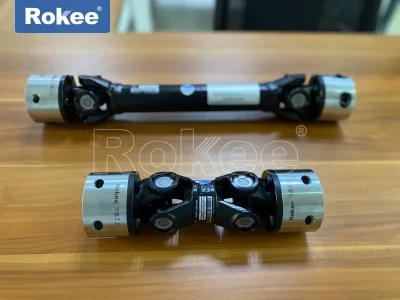
According to the structural characteristics, application scenarios, and performance requirements, the rolling mill cardan shaft can be divided into different types, and each type has its own unique structural characteristics and application scope, which can meet the different needs of various rolling mills. The most common classification method is based on the structure of the universal joint, which can be divided into cross-type cardan shaft, ball cage-type cardan shaft, and spherical yoke-type cardan shaft. The cross-type cardan shaft is the most widely used type in rolling mills, which is composed of two yokes and a cross-shaped bearing in the middle. Its structure is simple, reliable, and has strong load-bearing capacity, which is suitable for heavy-duty, low-speed, and large-angle compensation scenarios. The cross-type cardan shaft can be further divided into single cross-type and double cross-type. The single cross-type cardan shaft has a simple structure and low cost, but it will produce periodic speed fluctuations during transmission, which is suitable for occasions with small angle deviation and low speed requirements. The double cross-type cardan shaft is composed of two single cross-type universal joints connected by a central bearing yoke, which can eliminate speed fluctuations through phase adjustment, and has a larger angle compensation capacity, which is suitable for occasions with large angle deviation and high speed requirements, such as the main drive system of large plate rolling mills.
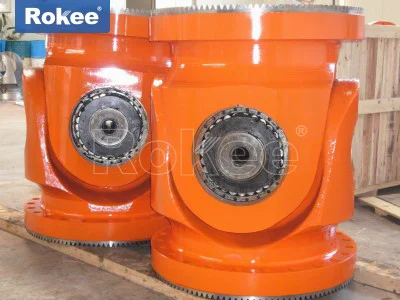
The ball cage-type cardan shaft is a kind of high-precision cardan shaft, which is composed of a ball cage, steel balls, and inner and outer raceways. Its structural characteristics are compact, the transmission is smooth, and there is no speed fluctuation during transmission, which is suitable for high-speed and high-precision transmission scenarios. The ball cage-type cardan shaft has a small angle compensation capacity, usually within 5°-15°, which is suitable for rolling mills with small angle deviation and high transmission precision requirements, such as cold rolling mills and precision strip rolling mills. The spherical yoke-type cardan shaft is composed of a spherical yoke and a cross shaft, which has a larger angle compensation capacity, up to 45°, and is suitable for occasions with large angle deviation and harsh working conditions, such as the edging machine and roughing mill in the rolling mill. In addition, according to the load-bearing capacity, the rolling mill cardan shaft can be divided into light-duty, medium-duty, and heavy-duty types. The light-duty cardan shaft has a small torque-bearing capacity, which is suitable for small rolling mills such as wire rod rolling mills; the medium-duty cardan shaft has a moderate torque-bearing capacity, which is suitable for medium-sized rolling mills such as section steel rolling mills; the heavy-duty cardan shaft has a large torque-bearing capacity, which can reach more than 20000 kN·m, which is suitable for large-scale rolling mills such as plate rolling mills and hot strip rolling mills.
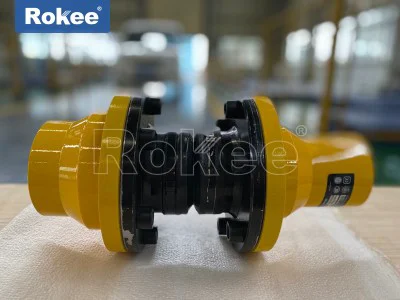
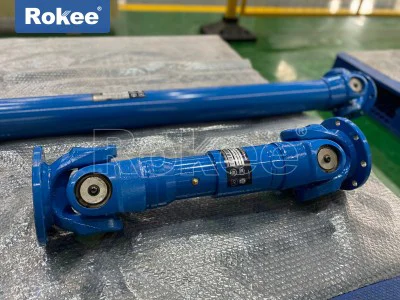
According to the installation form, the rolling mill cardan shaft can be divided into flange-connected cardan shaft and spline-connected cardan shaft. The flange-connected cardan shaft is connected to the motor and the rolling roll through flanges, which has the characteristics of firm connection and high transmission efficiency, and is suitable for large torque transmission scenarios; the spline-connected cardan shaft is connected through splines, which has good flexibility and can compensate for a certain axial and radial displacement, and is suitable for occasions where the installation position has a certain deviation. In addition, there are also custom-made cardan shafts, which are designed and manufactured according to the specific needs of the rolling mill, such as special length, special torque-bearing capacity, and special angle compensation requirements, to adapt to the special working conditions of some special rolling mills. Each type of cardan shaft has its own unique advantages and application scope, and the selection of the appropriate type of cardan shaft is crucial to the stable operation of the rolling mill.
The rolling mill cardan shaft is widely used in the metallurgical industry, mainly in various types of rolling mills, including hot rolling mills, cold rolling mills, section steel rolling mills, wire rod rolling mills, plate rolling mills, and tube rolling mills, and plays an irreplaceable role in the power transmission of these rolling mills. In the hot rolling mill, the cardan shaft is mainly used in the main drive system, edging machine, roughing mill, and finishing mill. The hot rolling mill operates in a high-temperature, high-load, and high-impact environment, which requires the cardan shaft to have strong torque transmission capacity, high-temperature resistance, and wear resistance. The heavy-duty cross-type or spherical yoke-type cardan shaft is usually selected to ensure the stable transmission of power, drive the rolling rolls to rotate at high speed, and complete the hot rolling of steel slabs, billets, and other materials. In the main drive system of the hot rolling mill, the cardan shaft transmits the huge torque generated by the main motor to the rolling rolls, which is the core link of power transmission. The stability and reliability of the cardan shaft directly affect the production efficiency and product quality of the hot rolling mill.
In the cold rolling mill, the cardan shaft is mainly used in the main drive system and the tension roller drive system. The cold rolling mill has high requirements for transmission precision and stability, and the rolling speed is high, so the ball cage-type or double cross-type cardan shaft is usually selected. These cardan shafts have the characteristics of smooth transmission, no speed fluctuation, and high precision, which can ensure the stable operation of the cold rolling mill, improve the surface quality and dimensional accuracy of the cold-rolled products, and meet the needs of high-precision rolling. In the section steel rolling mill, the cardan shaft is used to drive the rolling rolls of different passes to rotate, and the cross-type cardan shaft is usually selected because of its simple structure, reliable operation, and strong load-bearing capacity, which can adapt to the complex working conditions of section steel rolling and ensure the stable transmission of power. In the wire rod rolling mill, the rolling speed is very high, and the torque requirement is relatively small, so the light-duty ball cage-type or single cross-type cardan shaft is usually selected, which has the characteristics of high speed, smooth transmission, and low energy consumption, which can meet the needs of wire rod rolling.
In the plate rolling mill, especially the medium and heavy plate rolling mill, the torque required for rolling is very large, and the angle deviation between the motor and the rolling rolls is relatively large, so the heavy-duty double cross-type or spherical yoke-type cardan shaft is usually selected. These cardan shafts have large torque-bearing capacity and angle compensation capacity, which can stably transmit the huge torque generated by the main motor to the rolling rolls, drive the rolling rolls to complete the rolling of thick plates, and ensure the quality and dimensional accuracy of the plates. In the tube rolling mill, the cardan shaft is used to drive the piercing roller and the rolling roller to rotate, and the cross-type cardan shaft is usually selected, which can adapt to the complex spatial position of the tube rolling mill and the frequent adjustment of the rolling rolls, ensuring the stable operation of the tube rolling process.
In addition to the metallurgical industry, the rolling mill cardan shaft can also be used in other industrial fields that require heavy-duty power transmission and angle compensation, such as mining machinery, cement machinery, paper machinery, and heavy-duty pumps. In mining machinery, the cardan shaft is used to transmit power between the motor and the crusher, conveyor, and other equipment, which can adapt to the harsh working environment of the mine and the large angle deviation between the equipment; in cement machinery, the cardan shaft is used to drive the rotary kiln, mill, and other equipment, which has strong load-bearing capacity and high-temperature resistance; in paper machinery, the cardan shaft is used to transmit power between the motor and the paper machine, which has high transmission precision and smooth operation, ensuring the stability of the papermaking process. However, compared with the rolling mill, the working conditions of these fields are relatively mild, and the requirements for the cardan shaft are relatively low, so the medium and light-duty cardan shafts are usually selected.
The selection and use of the rolling mill cardan shaft need to be based on the specific working conditions of the rolling mill, including the torque required for rolling, the rolling speed, the angle deviation between the motor and the rolling rolls, the working temperature, and the working environment, so as to select the appropriate type, structure, and size of the cardan shaft. In the process of use, regular inspection and maintenance are also required to ensure the normal operation of the cardan shaft. For example, regular inspection of the wear of the cross shaft, bearing, and spline, regular replacement of lubricating oil, and inspection of the sealing performance to prevent the intrusion of impurities. At the same time, it is necessary to avoid overloading and over-speed operation of the cardan shaft, so as to prevent fatigue damage and premature failure of the cardan shaft. Only in this way can the service life of the cardan shaft be extended, the stable operation of the rolling mill be ensured, and the production efficiency and product quality be improved.
In conclusion, the rolling mill cardan shaft is a key power transmission component in the rolling mill, whose structure, performance, type, and application are closely related to the operation of the rolling mill. Its modular composite structure ensures the stability and reliability of power transmission; its excellent performance indicators, such as strong torque transmission capacity, good angle compensation capacity, high transmission efficiency, and strong fatigue resistance, enable it to adapt to the harsh working conditions of the rolling mill; its various types can meet the different needs of various rolling mills; and its wide application scope makes it an indispensable component in the metallurgical industry and other related fields. With the continuous development of the metallurgical industry, the requirements for the rolling mill cardan shaft are getting higher and higher, which promotes the continuous improvement of its structural design, material selection, and processing technology. In the future, the rolling mill cardan shaft will develop in the direction of higher torque, higher speed, higher precision, and longer service life, providing more reliable power transmission support for the development of the metallurgical industry.