Efficient Universal Coupling Promotes Quality And Efficiency Improvement Of PU Sandwich Panel Line

In the modern industrial landscape, the production of PU sandwich panels has become an integral part of the construction, cold chain logistics, and industrial insulation sectors, driven by the growing demand for high-performance, energy-efficient, and durable building materials. These panels, composed of two outer facings and a rigid polyurethane foam core, offer exceptional thermal insulation, sound absorption, and structural strength, making them indispensable in a wide range of applications from industrial warehouses and cold storage facilities to commercial complexes and modular housing. The efficiency and quality of PU sandwich panel production lines directly determine the competitiveness of manufacturers, as well as the performance and reliability of the final products.
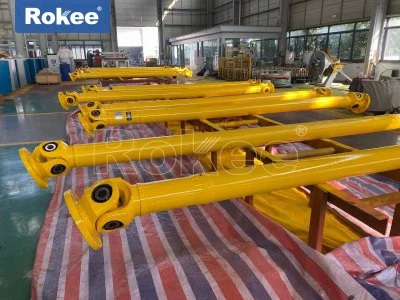
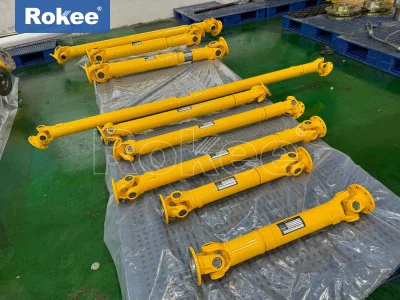
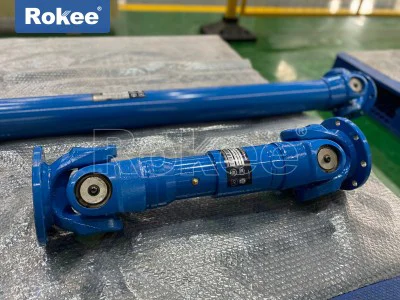
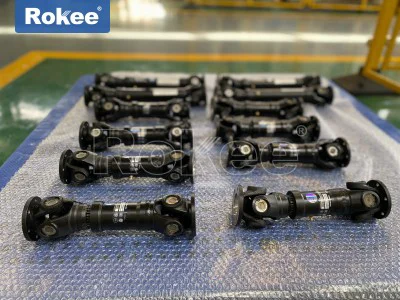
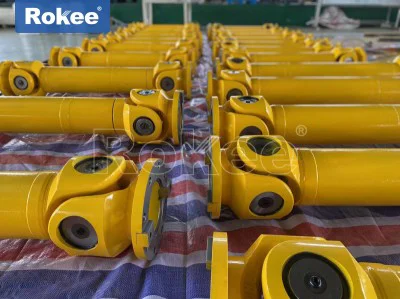
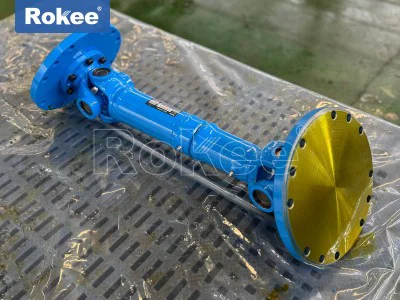
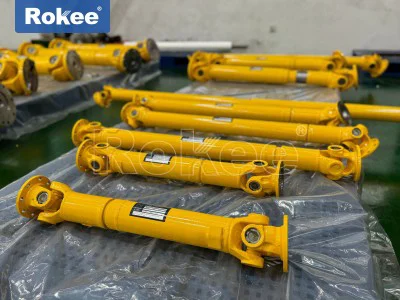
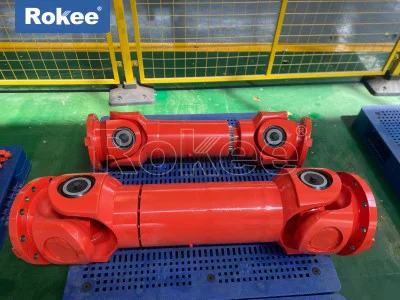
A universal coupling, also known as a universal joint or U-joint, is a mechanical component designed to transmit torque and rotational motion between two shafts that are not aligned along the same axis. Its core structure typically consists of a pair of hinges positioned close together, oriented at 90 degrees to each other and connected by a cross shaft, allowing for angular misalignment while maintaining efficient power transmission. Unlike rigid couplings that require perfect shaft alignment and offer no flexibility, universal couplings can adapt to varying degrees of axial, angular, and radial misalignment, making them ideal for complex industrial systems where multiple components need to work in coordination. The efficiency of a universal coupling is defined by its ability to transmit torque with minimal power loss, maintain stable rotational speed, and withstand the harsh operating conditions of industrial production lines, including high loads, continuous operation, and temperature fluctuations.
The PU sandwich panel line is a complex integrated system that involves multiple sequential processes, including uncoiling and leveling of outer facings, precision mixing and dispensing of polyurethane foam, composite forming, cooling and curing, and final cutting. Each of these processes relies on the coordinated operation of various mechanical components, such as motors, rollers, conveyors, and mixing heads, which are connected by transmission systems. The performance of these transmission systems directly affects the synchronization, precision, and efficiency of the entire production line. In traditional PU sandwich panel production lines, the use of rigid couplings or less efficient transmission components often leads to a range of issues, including excessive vibration, uneven power transmission, frequent equipment breakdowns, and reduced product quality. These problems not only increase maintenance costs and downtime but also result in inconsistencies in panel thickness, foam density, and surface flatness, ultimately affecting the marketability of the final products.
The integration of efficient universal couplings into PU sandwich panel production lines addresses these challenges by providing a flexible, reliable, and high-efficiency transmission solution. One of the key advantages of efficient universal couplings is their strong angle compensation capability, which allows them to adapt to larger axis deflection angles compared to rigid or elastic couplings. In PU sandwich panel production lines, the various components such as uncoiling machines, roll forming stands, and conveyor systems are often installed with slight misalignments due to installation errors, structural deformation during operation, or adjustments for different product specifications. Efficient universal couplings can compensate for these misalignments, typically up to 25 degrees or more depending on the design, ensuring that torque is transmitted smoothly and uniformly between connected shafts. This eliminates the need for precise alignment during installation and reduces the wear and tear on bearings, shafts, and other mechanical components, thereby extending the service life of the equipment and reducing maintenance requirements.
Another critical benefit of efficient universal couplings is their high transmission efficiency and torque-carrying capacity. Manufactured from high-strength alloy steel, these couplings can withstand heavy load conditions and transmit high torque without significant power loss. In PU sandwich panel production, the mixing and dispensing of polyurethane foam require precise control of motor speed and torque to ensure the correct ratio of isocyanate and polyol, which directly affects the foam density and thermal insulation performance of the panels. Efficient universal couplings ensure that the torque from the motor is transmitted to the mixing head with minimal loss, maintaining stable rotational speed even under varying load conditions. This precision in power transmission results in a more uniform mixing of foam components, reducing the occurrence of foam defects such as uneven density, voids, or incomplete curing. Similarly, in the roll forming process, the consistent torque transmission provided by universal couplings ensures that the outer facings are formed into the desired profile with uniform thickness and shape, avoiding deformations or inconsistencies that can compromise the structural integrity of the final panels.
The compact structure of efficient universal couplings also contributes to their effectiveness in PU sandwich panel production lines. Many production lines are designed with limited space, especially in the areas where multiple components are clustered, such as the foam mixing and dispensing section or the cutting area. Universal couplings, particularly cage-type designs, are small in size and light in weight, taking up less space under the same rotation diameter compared to other coupling types. This compact design allows for more flexible installation and integration with existing equipment, without requiring significant modifications to the production line layout. Additionally, the compact structure reduces the overall weight of the transmission system, minimizing the load on supporting structures and improving the overall stability of the production line.
Vibration reduction is another important advantage of efficient universal couplings that directly impacts the quality and efficiency of PU sandwich panel production. In traditional production lines, rigid couplings often transmit vibrations from motors or other rotating components to the entire system, leading to excessive noise, component wear, and inconsistencies in product quality. Efficient universal couplings, especially those with damping properties or constant velocity designs, can absorb and dampen mechanical vibrations, reducing their transmission to other parts of the production line. This not only improves the working environment for operators by reducing noise levels but also minimizes the impact of vibrations on the precision of the production processes. For example, in the foam dispensing process, reduced vibration ensures that the foam is distributed evenly across the outer facings, preventing uneven thickness or density in the core. In the cutting process, stable operation without vibration ensures precise cutting of panels to the required length, reducing material waste and improving production efficiency.
The adaptability of efficient universal couplings to complex working conditions further enhances their value in PU sandwich panel production. These couplings are designed to withstand high temperatures, humidity, and chemical exposure, which are common in the production environment where polyurethane foam is mixed and cured. High-temperature resistance ensures that the couplings maintain their performance even in the vicinity of heating units used for foam curing, while corrosion resistance prevents damage from chemical agents used in the foam production process. This durability reduces the frequency of coupling replacement and maintenance, minimizing downtime and ensuring continuous production. Additionally, efficient universal couplings can be customized to meet the specific requirements of different PU sandwich panel production lines, including varying shaft sizes, torque requirements, and operating angles, making them a versatile solution for manufacturers of all scales.
The impact of efficient universal couplings on the quality of PU sandwich panels is evident in the consistency and performance of the final products. By ensuring stable and precise power transmission throughout the production line, these couplings help to eliminate common product defects such as uneven panel thickness, inconsistent foam density, surface irregularities, and poor bonding between the outer facings and the foam core. For example, in the roll forming process, the uniform torque transmission provided by universal couplings ensures that the outer metal sheets are bent into the correct profile with consistent thickness, preventing weak points or deformations that could reduce the structural strength of the panels. In the foam mixing and dispensing process, precise control of motor speed and torque ensures that the foam components are mixed thoroughly and dispensed evenly, resulting in a core with uniform density and excellent thermal insulation properties. This consistency in product quality not only improves customer satisfaction but also reduces the rate of product rejection, lowering production costs and increasing profitability.
In terms of production efficiency, efficient universal couplings contribute to significant improvements by reducing downtime, increasing production speed, and minimizing material waste. The reliability and durability of these couplings reduce the frequency of equipment breakdowns, as they are less prone to wear and tear compared to traditional coupling systems. This means that production lines can operate continuously for longer periods, increasing overall output. Additionally, the smooth and efficient power transmission provided by universal couplings allows for higher production speeds without compromising product quality. For example, in the conveyor system, reduced friction and vibration enable faster movement of panels through the cooling and curing process,shorten the total production cycle. Furthermore, the precision of the production processes made possible by universal couplings reduces material waste, as fewer panels are rejected due to defects, and the accurate cutting of panels minimizes scrap material. All these factors combine to improve the overall efficiency of the production line, allowing manufacturers to meet growing market demand while reducing operational costs.
The integration of efficient universal couplings also supports the trend towards automation and intelligentization in PU sandwich panel production. Modern production lines are increasingly adopting automated control systems to reduce manual intervention, improve precision, and enhance productivity. Efficient universal couplings play a key role in this automation by ensuring that the various components of the production line work in perfect synchronization. For example, the connection between the motor and the conveyor system using universal couplings allows for precise control of conveyor speed, which can be adjusted automatically based on the production requirements. Similarly, in the foam mixing process, the stable torque transmission provided by universal couplings ensures that the mixing head operates at the correct speed, which can be controlled remotely through the automated system. This integration of universal couplings with automated control systems not only improves production efficiency but also reduces the risk of human error, further enhancing product quality.
It is important to note that the selection and installation of efficient universal couplings are critical to maximizing their benefits in PU sandwich panel production lines. Manufacturers should consider factors such as the required torque capacity, angular misalignment, operating speed, and environmental conditions when choosing the appropriate type of universal coupling. For example, in applications where constant velocity is required to avoid speed fluctuations, constant velocity (CV) universal joints are preferred, as they maintain a uniform output shaft speed regardless of the operating angle. In heavy-duty applications with high torque requirements, cross-axis universal couplings made from high-strength materials are more suitable. Proper installation and regular maintenance are also essential to ensure the optimal performance of universal couplings. Regular lubrication of bearings and cross shafts, inspection for wear and tear, and timely replacement of damaged components can extend the service life of the couplings and prevent unexpected breakdowns.
In conclusion, efficient universal couplings play a pivotal role in promoting the quality and efficiency improvement of PU sandwich panel production lines. Their unique capabilities, including strong angle compensation, high transmission efficiency, compact structure, vibration reduction, and adaptability to complex working conditions, address the key challenges faced by traditional production lines. By ensuring stable and precise power transmission, these couplings help to eliminate product defects, improve consistency, reduce downtime, increase production speed, and minimize material waste. As the demand for high-performance PU sandwich panels continues to grow, the integration of efficient universal couplings will become increasingly important for manufacturers looking to enhance their competitiveness, reduce operational costs, and meet the evolving needs of the market. With ongoing advancements in coupling technology, it is expected that universal couplings will continue to play an even more significant role in optimizing PU sandwich panel production processes, driving further improvements in quality and efficiency.