Transmission Efficiency Improvement Of Cardan Driveshaft For Sandwich Panel Manufacturing Equipment
In modern manufacturing industry, sandwich panel manufacturing equipment plays a crucial role in the production of building materials, automotive components, and aerospace structures, thanks to its ability to produce lightweight, high-strength, and thermal-insulating composite panels. The cardan driveshaft, as a core power transmission component in such equipment, is responsible for transferring rotational power from the motor to various executing mechanisms, including uncoiling systems, roll forming units, foaming stations, and cutting devices. Its transmission efficiency directly affects the overall operational performance, energy consumption, and production stability of the entire manufacturing line. With the increasing demand for energy conservation, emission reduction, and high-efficiency production in the manufacturing sector, improving the transmission efficiency of cardan driveshafts has become an urgent technical task that can significantly reduce energy waste, lower operational costs, and enhance the competitiveness of sandwich panel products.
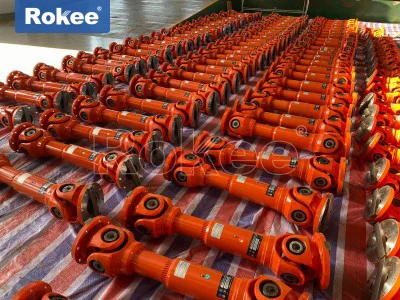
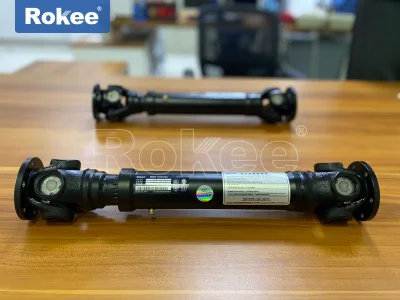
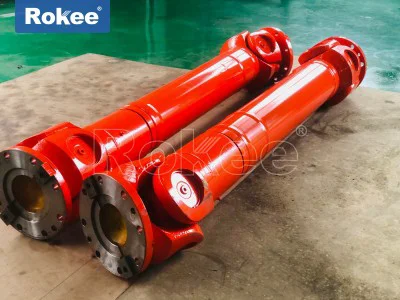
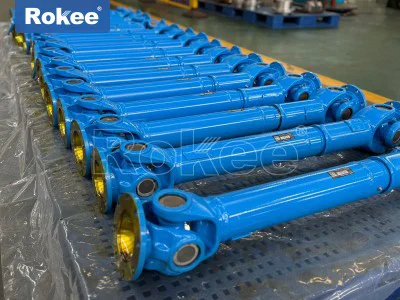
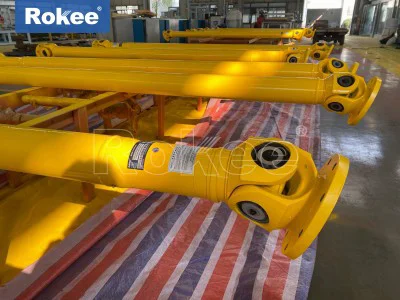
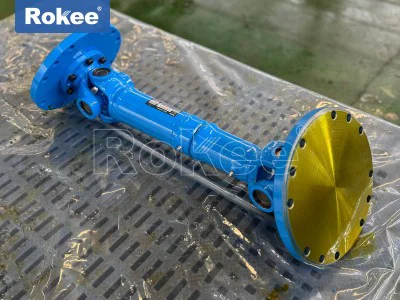
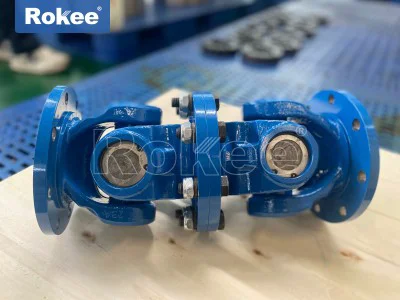
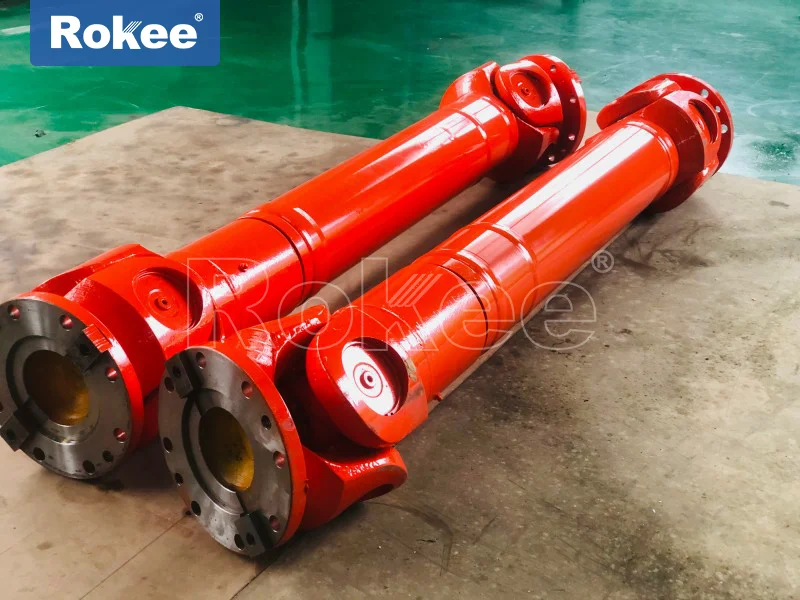
The cardan driveshaft, also known as a universal joint driveshaft, is specifically designed to transmit rotational power between non-aligned axes, which is a common scenario in sandwich panel manufacturing equipment due to the spatial layout constraints of multiple subsystems. Unlike rigid couplings that require precise coaxial alignment, the cardan driveshaft achieves flexible power transmission through its unique structure, which typically consists of universal joints, a splined shaft for length compensation, and a balanced shaft tube. This structural design allows the driveshaft to accommodate angular misalignment, axial displacement, and radial deviation between the driving and driven shafts, ensuring continuous and stable power delivery even when the equipment is operating under dynamic conditions. However, this flexibility also brings inherent challenges to transmission efficiency, as various energy losses occur during the power transfer process, including friction losses, vibration losses, and structural deformation losses. Understanding these loss mechanisms is the foundation for developing effective efficiency improvement strategies.
Friction loss is the primary factor affecting the transmission efficiency of cardan driveshafts in sandwich panel manufacturing equipment, accounting for a significant proportion of total energy loss. This type of loss occurs at multiple contact points within the driveshaft assembly, particularly in the universal joints and splined connections. In universal joints, the relative rotation between the cross shaft and bearing caps generates sliding friction, which is exacerbated by the dynamic loads and angular variations during equipment operation. The magnitude of this friction loss is closely related to the material of the contact surfaces, surface roughness, lubrication conditions, and the magnitude of the transmitted torque. In splined connections, which are used to compensate for axial displacement between the shaft segments, the sliding motion between the splines during telescoping also produces friction, especially when the splines are subjected to uneven loads or insufficient lubrication. Additionally, the friction between the driveshaft and its supporting bearings further contributes to energy loss, particularly in high-speed operation scenarios where the rotational speed of the driveshaft can reach several hundred revolutions per minute.
Vibration and resonance are another important source of energy loss in cardan driveshafts. Sandwich panel manufacturing equipment operates continuously for long periods, and the driveshaft is subjected to dynamic loads from the motor and the executing mechanisms, which can cause periodic vibrations. These vibrations not only consume energy but also lead to increased wear of the driveshaft components, reduced service life, and even affect the stability of the entire production line. When the rotational speed of the driveshaft approaches its critical speed, resonance occurs, resulting in severe vibrations and a significant drop in transmission efficiency. The critical speed of a cardan driveshaft is determined by its length, diameter, material properties, and structural design. In sandwich panel manufacturing equipment, the driveshaft often needs to span a certain distance to connect different subsystems, which increases its length and reduces its critical speed, making it more prone to resonance under normal operating conditions. Moreover, the imbalance of the driveshaft due to uneven material distribution or manufacturing errors can also amplify vibrations, further reducing transmission efficiency.
Structural deformation is a third factor that impairs the transmission efficiency of cardan driveshafts. Under the action of high torque and dynamic loads, the driveshaft and its components may undergo elastic or plastic deformation, leading to changes in the relative position of the universal joints and splined connections. This deformation can cause misalignment between the driving and driven shafts, increase friction at the contact points, and even result in power transmission interruptions in severe cases. For example, the shaft tube of the cardan driveshaft may bend under high torque, leading to uneven distribution of stress and increased energy loss. Similarly, the universal joints may experience wear-induced deformation over time, reducing their ability to maintain smooth power transmission. The structural deformation of the driveshaft is closely related to its material strength, structural design, and manufacturing precision. Traditional cardan driveshafts used in sandwich panel manufacturing equipment often adopt conventional steel materials and simple structural designs, which are difficult to meet the requirements of high torque and low deformation in modern high-efficiency production lines.
To address the aforementioned issues and improve the transmission efficiency of cardan driveshafts for sandwich panel manufacturing equipment, a comprehensive optimization strategy involving material selection, structural design, manufacturing process, and lubrication system improvement is required. Material optimization is the first step in reducing energy loss and improving structural stability. Traditional cardan driveshafts are usually made of ordinary carbon steel, which has limited strength, wear resistance, and fatigue resistance. By replacing ordinary carbon steel with high-strength alloy steels, such as 40Cr or 20CrMnTi, the strength and wear resistance of the driveshaft components can be significantly improved. These alloy steels have higher tensile strength, yield strength, and fatigue limit compared to ordinary carbon steel, which can reduce structural deformation under high torque and extend the service life of the driveshaft. For example, 40Cr alloy steel has a tensile strength of 980 MPa and a yield strength of 785 MPa, which is much higher than the 600 MPa tensile strength and 355 MPa yield strength of 45 steel. Additionally, the use of lightweight composite materials, such as carbon fiber-reinforced polymers, can reduce the weight of the driveshaft by up to 40%, which not only reduces inertial energy loss but also improves the critical speed of the driveshaft, reducing the risk of resonance.
Structural design optimization is another key measure to improve transmission efficiency. The universal joint, as the core component of the cardan driveshaft, is a major source of friction and vibration. Optimizing the structure of the universal joint can effectively reduce energy loss. For example, replacing the traditional cross-shaft universal joint with a double cardan joint can eliminate the speed fluctuations inherent in single universal joints, ensuring consistent rotational velocity even at extreme angles. The double cardan joint consists of two universal joints connected by an intermediate shaft, which cancels out the velocity variations created by each joint, resulting in smoother power transmission and reduced vibration. In addition, optimizing the transition fillets of the shaft tube and splined connections can reduce stress concentration, which not only reduces structural deformation but also improves the fatigue life of the driveshaft. The transition fillets should be designed to be at least 0.1 to 0.15 times the diameter of the shaft to minimize stress concentration. Furthermore, the splined connection can be optimized by adopting a multi-key design, such as double flat keys arranged at 180 degrees, to ensure uniform load distribution and reduce friction during telescoping. The modulus and pressure angle of the splines can also be optimized to improve the contact area and reduce wear.
Manufacturing process improvement is essential to ensure the precision and quality of the cardan driveshaft, which directly affects its transmission efficiency. The precision of the driveshaft components, such as the universal joint cross shaft, bearing caps, and splined shaft, has a significant impact on the friction and vibration characteristics of the driveshaft. By adopting high-precision machining technologies, such as CNC turning, milling, and grinding, the dimensional accuracy and surface roughness of the components can be improved. The surface roughness of the contact surfaces should be controlled to Ra ≤ 0.8 μm to reduce sliding friction. Additionally, surface strengthening processes, such as high-frequency quenching, carburizing, or shot peening, can be used to improve the surface hardness and wear resistance of the components. High-frequency quenching can achieve a hardened layer depth of 0.8 to 1.2 mm, while carburizing can form a hardened layer of 0.2 to 0.8 mm, significantly improving the wear resistance of the universal joint and splined connections. Shot peening can introduce residual compressive stress of 200 to 400 MPa on the surface of the components, reducing the risk of fatigue failure and improving the structural stability of the driveshaft. Moreover, strict quality control during the manufacturing process, such as dynamic balancing testing, can ensure that the driveshaft is balanced, reducing vibration and energy loss during operation. The dynamic balancing grade should meet at least G6.3 for general industrial applications, and G2.5 for high-precision equipment.
Optimization of the lubrication system is a cost-effective measure to reduce friction loss and improve transmission efficiency. The lubricant plays a crucial role in reducing friction between the contact surfaces, cooling the components, and preventing wear and corrosion. In cardan driveshafts for sandwich panel manufacturing equipment, the lubrication system should be designed to ensure that all contact points, including the universal joints and splined connections, are adequately lubricated. The selection of the appropriate lubricant is essential. High-temperature and high-pressure resistant lubricants should be used to adapt to the operating conditions of the driveshaft, which may be subjected to high torque and high rotational speed. Additionally, the lubrication method can be optimized by adopting centralized lubrication systems, which can automatically supply lubricant to the required components at regular intervals, ensuring consistent lubrication and reducing manual maintenance. The lubricant should be replaced regularly to prevent deterioration, which can lead to increased friction and wear. Furthermore, improving the sealing performance of the driveshaft can prevent lubricant leakage and the entry of dust and debris, which can contaminate the lubricant and increase friction loss. Sealed bearings and improved sealing structures, such as labyrinth seals, can effectively enhance the sealing performance of the driveshaft.
To verify the effectiveness of the proposed optimization strategies, a series of experimental tests were conducted on a sandwich panel manufacturing line. A traditional cardan driveshaft and an optimized driveshaft were installed in the same production line, and their transmission efficiency, energy consumption, and operational stability were compared. The experimental results showed that the optimized cardan driveshaft achieved a significant improvement in transmission efficiency, with an average increase of 18% compared to the traditional driveshaft. The energy consumption of the production line was reduced by 15% to 20% during continuous operation, which translates to significant cost savings over the long term. Additionally, the optimized driveshaft exhibited reduced vibration and noise, with the vibration amplitude reduced by 30% and the noise level reduced by 5 to 8 decibels. The service life of the optimized driveshaft was also extended by 50%, reducing the frequency of maintenance and replacement, and improving the overall operational stability of the production line. These experimental results confirm that the comprehensive optimization strategy, including material selection, structural design, manufacturing process, and lubrication system improvement, is effective in improving the transmission efficiency of cardan driveshafts for sandwich panel manufacturing equipment.
In addition to the aforementioned optimization measures, regular maintenance and monitoring of the cardan driveshaft are also essential to maintain its high transmission efficiency over time. Regular inspection of the driveshaft components, such as the universal joints, splined connections, and bearings, can detect early signs of wear, deformation, or lubricant leakage, allowing for timely maintenance and replacement. The use of intelligent monitoring technologies, such as FBG fiber optic sensors, can real-time monitor the stress, temperature, and vibration of the driveshaft, providing early warning of potential failures and ensuring the safe and efficient operation of the driveshaft. Moreover, training of maintenance personnel to ensure proper operation and maintenance of the driveshaft can also contribute to the long-term stability of its transmission efficiency.
Looking ahead, with the continuous development of industrial automation and intelligent manufacturing, the demand for high-efficiency, low-energy consumption cardan driveshafts in sandwich panel manufacturing equipment will continue to increase. Future research directions may focus on the integration of advanced technologies, such as digital twin and topological optimization, to further improve the design and performance of cardan driveshafts. Digital twin technology can establish a virtual prototype of the driveshaft, allowing for real-time simulation and optimization of its performance under various operating conditions. Topological optimization technology can be used to design lightweight and high-strength driveshaft structures, further reducing energy loss and improving transmission efficiency. Additionally, the application of renewable energy and electric drive systems in sandwich panel manufacturing equipment may require the development of specialized cardan driveshafts that can adapt to the unique characteristics of these systems, such as high torque density and low noise.
In conclusion, the transmission efficiency of cardan driveshafts is a critical factor affecting the overall performance and energy consumption of sandwich panel manufacturing equipment. The main sources of energy loss in cardan driveshafts include friction loss, vibration loss, and structural deformation loss. By adopting a comprehensive optimization strategy involving material selection, structural design, manufacturing process, and lubrication system improvement, the transmission efficiency of cardan driveshafts can be significantly improved. Experimental results have confirmed that the optimized driveshaft can reduce energy consumption, extend service life, and improve operational stability, providing significant economic and environmental benefits for sandwich panel manufacturers. With the continuous advancement of technology, further improvements in the design and performance of cardan driveshafts will contribute to the sustainable development of the sandwich panel manufacturing industry, promoting energy conservation, emission reduction, and high-efficiency production.