Universal Coupling Empowers Intelligent Transmission Upgrading Of Sandwich Panel Lines
In the modern construction and industrial manufacturing fields, sandwich panels have become an indispensable core material due to their excellent thermal insulation, structural stability, lightweight performance, and environmental friendliness. These panels, composed of two outer facing materials and a middle core layer, are widely used in external walls, roofs, cold storage facilities, prefabricated buildings, and various industrial workshops, driving the continuous development and upgrading of sandwich panel production technology. As the core of sandwich panel manufacturing, the production line’s transmission system directly determines the efficiency, stability, and product quality of the entire production process. With the arrival of the intelligent manufacturing era, traditional sandwich panel lines are facing urgent needs for upgrading—higher automation, more precise control, and more stable continuous operation have become the key goals of industry transformation. In this process, the universal coupling, as a critical component in mechanical power transmission, has gradually become the core driving force for the intelligent transmission upgrading of sandwich panel lines, relying on its unique structural advantages and excellent performance, bridging the gap between power sources and execution mechanisms, and injecting new vitality into the intelligent development of the industry.
To understand the important role of universal couplings in the intelligent transmission upgrading of sandwich panel lines, it is first necessary to clarify the working characteristics of modern sandwich panel production lines and the core challenges faced by their transmission systems. A modern sandwich panel production line is a complex integrated system that involves multiple continuous processes, including uncoiling of facing materials, roll forming, preheating, core layer foaming or filling, lamination, curing, and precision cutting. Each link requires precise and synchronous power transmission to ensure that the parameters such as the speed, pressure, and coordination of each equipment meet the production standards. For example, in the roll forming process, the facing materials need to be pressed into the required shape at a stable speed; in the lamination link, the outer panels and the core layer must be bonded with uniform pressure and consistent speed to avoid problems such as uneven bonding and layer separation; in the precision cutting link, the cutting speed must be strictly synchronized with the conveying speed of the panel to ensure the accuracy of the panel size. Any deviation in the transmission system will lead to defects in the final product, reduce production efficiency, and even cause equipment failure, resulting in production interruptions.
The traditional transmission system of sandwich panel lines often adopts rigid couplings or ordinary flexible couplings, which have obvious limitations in adapting to the intelligent upgrading needs. Rigid couplings require absolute alignment between the driving shaft and the driven shaft, but in the actual operation of sandwich panel lines, due to the layout constraints of multiple processes, the installation positions of each equipment are often not on the same axis, and angular deviations, radial displacements, or axial displacements will occur between the shafts due to factors such as equipment vibration, thermal expansion, and foundation settlement during long-term continuous operation. Rigid couplings cannot compensate for these displacements, which will lead to increased wear of the transmission components, increased vibration and noise, reduced equipment service life, and even affect the stability of the transmission system. Ordinary flexible couplings have a certain compensation capacity, but their torque transmission efficiency is low, and they cannot adapt to the high-speed, heavy-load working environment of modern sandwich panel lines, especially in the intelligent upgrading process, where the requirements for transmission precision and response speed are significantly improved, and ordinary flexible couplings can no longer meet the actual needs.
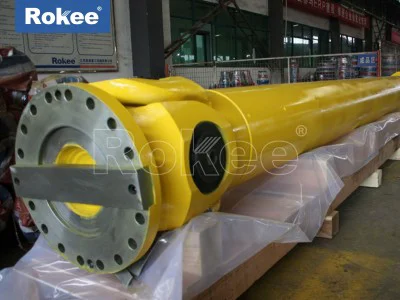
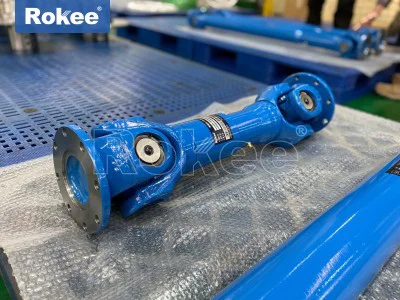
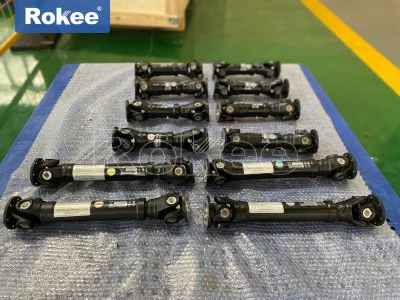
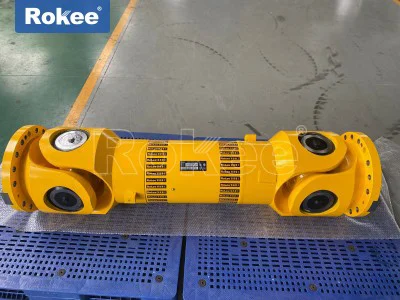
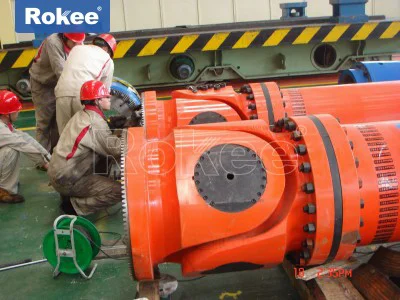
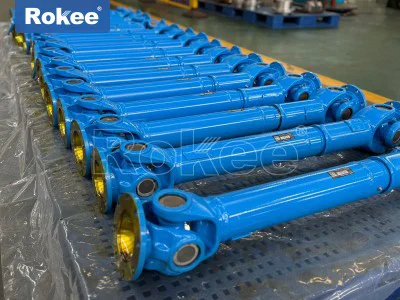
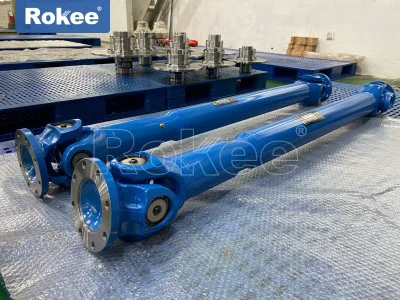
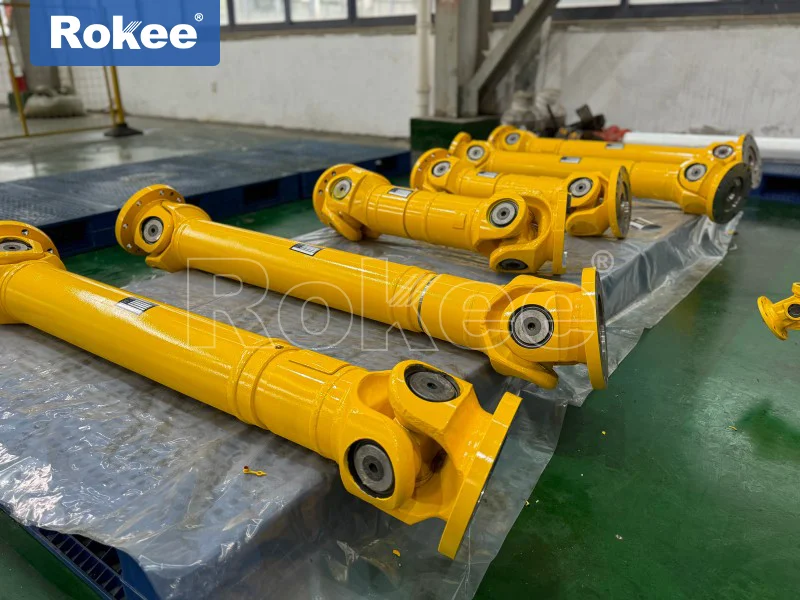
Against this background, the universal coupling has become an ideal choice for the intelligent transmission upgrading of sandwich panel lines due to its unique structural design and excellent performance. A universal coupling, also known as a universal joint coupling, is a mechanical component used to connect two shafts with different axes or relative displacements, realizing the efficient transmission of torque and motion while compensating for angular, radial, and axial displacements between the shafts. Its core structure usually consists of two yokes and a cross shaft with needle bearings, which allows the connected shafts to rotate freely at a certain angle, ensuring smooth and stable power transmission even when there is misalignment between the shafts. This structural advantage makes the universal coupling perfectly adapt to the complex working environment of sandwich panel lines, solving the key pain points of the traditional transmission system.
The high torque transmission capacity of universal couplings provides a solid guarantee for the efficient operation of sandwich panel lines. Modern intelligent sandwich panel lines often need to handle heavy-load working conditions, such as the transmission of large roll forming equipment, the driving of high-pressure lamination machines, and the conveying of large-size sandwich panels. The universal coupling is usually made of high-strength alloy materials, such as 42CrMo and 35CrMo, which have excellent mechanical properties after special heat treatment, significantly improving their fatigue resistance and load-bearing capacity. Compared with ordinary couplings, universal couplings can transmit higher torque with a compact structure, ensuring that each equipment in the production line can obtain sufficient power support, and realizing high-speed and stable operation. According to industry data, the torque transmission capacity of high-performance universal couplings can reach up to 5000kN·m, and the transmission efficiency can reach more than 98%, which effectively reduces energy loss and improves the overall energy efficiency of the production line. This high-efficiency and high-torque transmission performance is particularly important for the intelligent upgrading of sandwich panel lines, as it lays the foundation for the realization of high-speed continuous production and large-scale manufacturing.
The excellent displacement compensation capacity of universal couplings solves the problem of shaft misalignment in sandwich panel lines, which is a key factor in promoting the stability of the intelligent transmission system. As mentioned earlier, due to the layout of the production line and the influence of external factors, the shafts of each equipment in the sandwich panel line are prone to misalignment. The universal coupling can effectively compensate for angular deviations of up to ±45°, radial displacements of ±3mm, and axial displacements of ±8mm, depending on the structural type. This compensation capacity avoids the wear and damage of transmission components caused by misalignment, reduces the vibration and noise of the equipment, and ensures the smooth operation of the entire transmission system. In the intelligent upgrading process, the sandwich panel line is usually equipped with automated control systems and sensors to monitor the operation status of the equipment in real time. The stable operation of the transmission system provided by the universal coupling ensures the accuracy of the data collected by the sensors, laying the foundation for the intelligent adjustment and optimization of the production line. For example, in the continuous lamination process, the universal coupling can compensate for the slight displacement caused by the vibration of the lamination machine, ensuring that the pressure and speed between the outer panels and the core layer remain stable, thus improving the bonding quality of the sandwich panels.
The flexibility and versatility of universal couplings adapt to the diverse production needs of intelligent sandwich panel lines. With the continuous development of the construction industry, the demand for sandwich panels is becoming more and more diverse, requiring the production line to be able to flexibly switch between different specifications, materials, and processes. Modern intelligent sandwich panel lines often adopt a modular design, which can produce sandwich panels with different core materials such as polyurethane, rock wool, and glass wool, and can adjust the thickness and size of the panels according to customer needs. The universal coupling has strong adaptability, can be flexibly matched with different types of equipment, and can quickly adapt to the switching of production processes without major modifications to the transmission system. This flexibility not only improves the utilization rate of the production line but also reduces the time and cost of equipment transformation, providing strong support for the intelligent and flexible production of sandwich panel lines. For example, when the production line switches from producing polyurethane sandwich panels to rock wool sandwich panels, the load and speed requirements of the transmission system will change, and the universal coupling can adapt to these changes through its own structural characteristics, ensuring the stability and continuity of the production process.
In addition, the long service life and low maintenance cost of universal couplings further promote the intelligent upgrading of sandwich panel lines. Intelligent production lines pursue high efficiency and low downtime, and the reliability of components directly affects the overall operation efficiency of the production line. The universal coupling adopts high-quality materials and precision processing technology, which has excellent wear resistance and corrosion resistance, and its service life can reach more than 20,000 hours under normal use conditions. Compared with traditional couplings, universal couplings have fewer vulnerable parts, simple maintenance, and only need regular lubrication and inspection to ensure their normal operation, which significantly reduces the maintenance cost and downtime of the production line. This reliability is particularly important for the intelligent operation of sandwich panel lines, as it ensures the continuous and stable operation of the production line, reduces the impact of equipment failure on production, and improves the overall production efficiency and economic benefits.
The application of universal couplings in the intelligent transmission upgrading of sandwich panel lines is not only reflected in the improvement of transmission performance but also in the promotion of the integration of the transmission system with intelligent technologies. In modern intelligent sandwich panel lines, the transmission system is closely connected with the central control system, sensors, and actuators, forming a closed-loop control system. The universal coupling, as the core component of the transmission system, can cooperate with the intelligent control system to realize the precise control of the transmission speed, torque, and direction. For example, the sensors installed on the transmission system can collect the operating parameters of the universal coupling in real time, such as rotation speed, torque, and vibration, and transmit these data to the central control system. The central control system analyzes and processes the data, and adjusts the power output of the motor and the working state of the transmission system in real time according to the production needs, realizing the intelligent optimization of the transmission process. This integration not only improves the precision and stability of the transmission system but also lays the foundation for the overall intelligent management of the sandwich panel line, such as remote monitoring, fault diagnosis, and predictive maintenance.
With the continuous advancement of intelligent manufacturing technology, the requirements for the transmission system of sandwich panel lines are becoming higher and higher, and the universal coupling is also constantly evolving and upgrading to adapt to the new development needs. In recent years, with the application of new materials, precision processing technology, and intelligent monitoring technology, the performance of universal couplings has been further improved. For example, the application of high-strength lightweight alloys has reduced the weight of universal couplings by 40% while ensuring their load-bearing capacity, which is conducive to reducing the energy consumption of the transmission system; the adoption of precision machining technology has reduced the tolerance of the universal coupling to ±0.05mm, improving the transmission precision; the integration of intelligent monitoring sensors into the universal coupling can realize real-time monitoring of its operating state, predict potential faults in advance, and further improve the reliability and maintainability of the transmission system. These technological upgrades of universal couplings have further promoted the intelligent transmission upgrading of sandwich panel lines, making the production line more efficient, stable, and intelligent.
In practical applications, the rational selection and installation of universal couplings are crucial to giving full play to their role in the intelligent transmission upgrading of sandwich panel lines. When selecting a universal coupling, it is necessary to comprehensively consider the working conditions of the sandwich panel line, such as torque, speed, shaft misalignment, and working environment, and select the appropriate type and specification of the universal coupling. For example, in high-speed and high-precision production links such as precision cutting, a constant velocity universal coupling should be selected to ensure the stability of the transmission speed; in heavy-load links such as roll forming, a cross-shaft universal coupling with high torque capacity should be selected. At the same time, attention should be paid to the installation accuracy of the universal coupling, ensuring that the installation deviation is within the allowable range, and regular lubrication and maintenance should be carried out to extend its service life. Only in this way can the universal coupling fully exert its performance advantages, provide strong support for the intelligent transmission upgrading of the sandwich panel line, and promote the high-quality development of the sandwich panel industry.
The intelligent transformation of the manufacturing industry is an inevitable trend of industrial development, and the sandwich panel industry, as an important part of the construction and manufacturing industry, must keep up with the pace of the times and promote the intelligent upgrading of production lines. The universal coupling, as a key component in the transmission system, has become an important driving force for the intelligent transmission upgrading of sandwich panel lines due to its high torque transmission, excellent displacement compensation, flexibility, and reliability. It not only solves the key pain points of the traditional transmission system but also promotes the integration of the transmission system with intelligent technologies, improving the efficiency, stability, and precision of the production line. With the continuous advancement of technology, the performance of universal couplings will be further optimized, and their application in the intelligent upgrading of sandwich panel lines will be more extensive and in-depth.
In conclusion, the universal coupling plays an irreplaceable role in the intelligent transmission upgrading of sandwich panel lines. Its unique structural advantages and excellent performance provide a solid guarantee for the efficient, stable, and precise operation of the transmission system, promoting the transformation of sandwich panel lines from traditional manual and semi-automatic production to intelligent, automated, and continuous production. In the future, with the deep integration of intelligent manufacturing technology and the sandwich panel industry, the universal coupling will continue to empower the intelligent transmission upgrading of sandwich panel lines, helping the industry achieve higher quality, higher efficiency, and more sustainable development, and making greater contributions to the development of the modern construction and manufacturing industry.