Cardan Coupling Is The Key for Improvement Of Transmission Efficiency Of PU Sandwich Panel Production Line
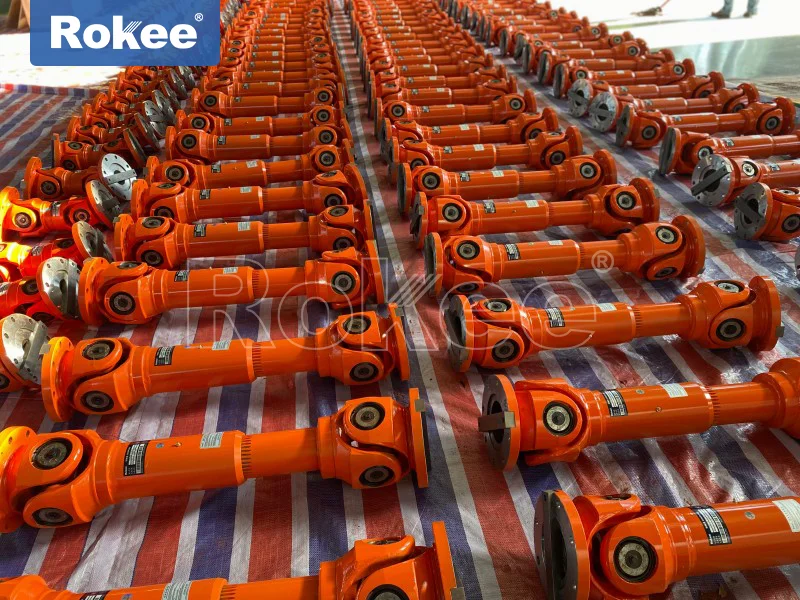
In the modern construction and industrial manufacturing fields, the demand for high-efficiency, energy-saving and high-precision production equipment is constantly rising, especially for the production of building materials with excellent comprehensive performance. PU sandwich panels, composed of two outer facing materials and a middle polyurethane foam core, have become indispensable materials in many fields due to their outstanding thermal insulation, sound insulation, structural stability and lightweight properties. The production efficiency and product quality of these panels are directly determined by the performance of the production equipment, and the transmission system, as the core part of the PU sandwich panel production line, plays a decisive role in the stable operation and efficiency improvement of the entire line. Among the numerous components that make up the transmission system, the cardan coupling, also known as the universal joint coupling, stands out as a key component, whose unique structural design and excellent transmission performance have significantly promoted the upgrading and transformation of the PU sandwich panel production line, becoming an indispensable core part for improving transmission efficiency.
To understand the important role of cardan coupling in improving the transmission efficiency of PU sandwich panel production lines, it is first necessary to clarify the working characteristics of the production line and the core challenges faced by its transmission system. A modern PU sandwich panel production line is a continuous and automated production system that integrates mechanical, electrical, hydraulic, and chemical reaction technologies. It requires the coordinated operation of multiple subsystems, such as the uncoiling system, roll forming system, foaming system, double-belt lamination system, cutting system, and conveying system. Each subsystem is driven by a separate power source, and the power needs to be transmitted to various executing components accurately and stably to ensure that the entire production line operates in a synchronized manner. The transmission system of the production line is faced with several key challenges: first, the installation and layout of each subsystem are often not on the same axis due to the limitations of the production process and the overall structure of the equipment, resulting in angular deviations between the driving shaft and the driven shaft; second, during the long-term continuous operation of the production line, the equipment will generate vibration and thermal expansion, leading to changes in the relative position of the shafts, which requires the transmission component to have a certain compensation capacity; third, the production process of PU sandwich panels requires stable and uniform power transmission, especially in the foaming and lamination links, where even slight fluctuations in transmission speed or torque will affect the density of the PU foam core and the bonding effect between the core and the facing materials, thereby reducing product quality; fourth, the production line needs to adapt to different specifications of PU sandwich panels, which involves adjusting the speed and torque of each subsystem, requiring the transmission component to have good flexibility and adaptability.
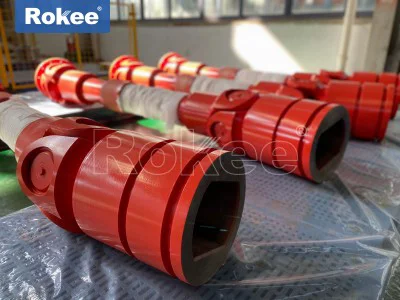
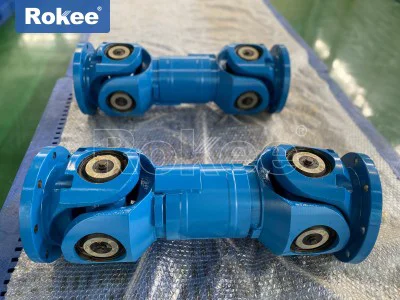
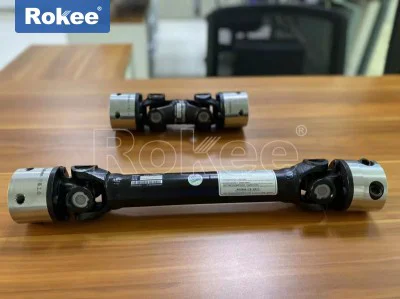
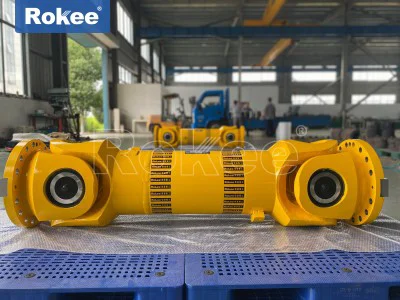
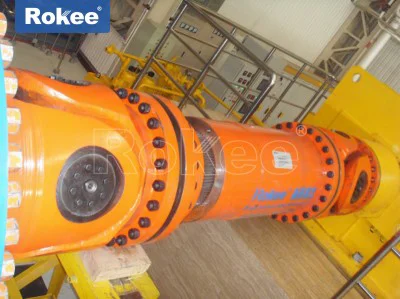
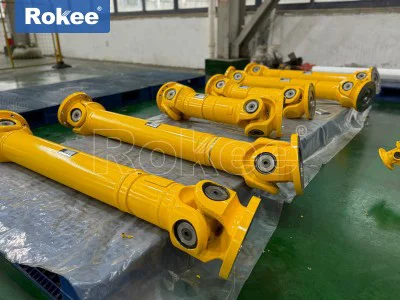
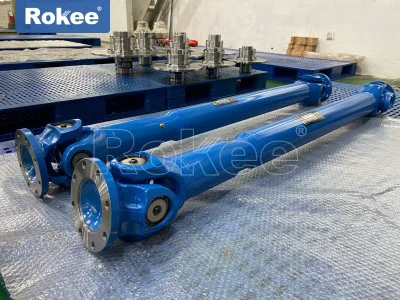
The cardan coupling, with its unique structural advantages and excellent transmission performance, perfectly solves the above-mentioned challenges of the transmission system of the PU sandwich panel production line, and becomes the key to improving transmission efficiency. The cardan coupling is a mechanical device used to connect shafts at an angle in order to transmit torque between them. Its core function is to realize reliable transmission of torque and rotational motion when there is an angular deviation between the two shafts. It consists of a cross-shaped piece with needle bearings at the ends of the cross to allow for flexibility in the connection, and is usually composed of universal joints, transmission shafts and intermediate supports. The unique articulated structure of the cardan coupling allows it to flexibly adapt to angular deviations between the driving shaft and the driven shaft, generally allowing an included angle of 5° to 45° for power transmission, and some special types can even withstand larger deflection angles. This angle compensation capability is particularly important for the PU sandwich panel production line, where the layout of each subsystem is often limited by the production process, making it difficult to ensure that all transmission shafts are coaxial. For example, the uncoiling system and the roll forming system are often installed in different positions due to the limitation of the production line space, resulting in a certain angular deviation between their transmission shafts. The cardan coupling can easily compensate for this deviation, ensuring that the power is stably transmitted from the motor to the executing components, avoiding the loss of transmission efficiency caused by shaft misalignment.
In addition to the excellent angle compensation capability, the cardan coupling also has the advantage of high transmission efficiency, which is another key factor for it to promote the efficiency improvement of the PU sandwich panel production line. The transmission efficiency of high-quality cardan couplings can reach more than 98%, and some precision types can even approach 99.8%, which can minimize energy loss during high-power transmission. In the PU sandwich panel production line, the transmission system needs to transmit a large amount of power to drive the operation of each subsystem, and the high transmission efficiency of the cardan coupling can effectively reduce the energy consumption of the entire production line, while improving the response speed of each subsystem. Compared with other types of couplings, the cardan coupling adopts a rolling friction design instead of sliding friction, which greatly reduces the friction loss during the transmission process. The needle bearings installed on the cross shaft of the cardan coupling can reduce the friction between the cross shaft and the universal joint fork, further improving the transmission efficiency and extending the service life of the coupling. In the long-term continuous operation of the PU sandwich panel production line, this low-friction and high-efficiency transmission characteristic can effectively reduce the wear of the transmission components, reduce the frequency of maintenance, and ensure the continuous and stable operation of the production line, thereby improving the overall production efficiency.
The stability and reliability of the cardan coupling also play an important role in improving the transmission efficiency of the PU sandwich panel production line. The production process of PU sandwich panels is a continuous process, and any failure of the transmission system will lead to the shutdown of the entire production line, resulting in huge economic losses. The cardan coupling is made of high-strength materials such as alloy steel, which has strong load-bearing capacity and can stably transmit a wide range of torques, adapting to the high-load operation requirements of the PU sandwich panel production line. At the same time, the cardan coupling can absorb part of the vibration and impact during the transmission process, reducing the impact of vibration on the transmission system and other components of the production line. During the operation of the PU sandwich panel production line, the foaming system and the lamination system will generate a certain amount of vibration, which will easily cause the loosening of the transmission components and affect the transmission efficiency. The cardan coupling can effectively absorb these vibrations through its own structural characteristics, ensuring the stability of the transmission system, reducing the failure rate of the equipment, and ensuring the continuous operation of the production line. In addition, the cardan coupling has a simple structure and convenient maintenance. Regular inspection and lubrication can ensure its long-term stable operation, which further reduces the maintenance cost and downtime of the production line, and provides a reliable guarantee for the improvement of transmission efficiency.
The flexibility and adaptability of the cardan coupling also make it an indispensable key component in the PU sandwich panel production line, which is conducive to improving the overall transmission efficiency and production flexibility of the production line. With the continuous development of the construction industry, the demand for PU sandwich panels of different specifications and types is increasing, which requires the production line to have good adjustability and adaptability. The cardan coupling can adapt to the adjustment of the speed and torque of each subsystem, and can still maintain stable power transmission when the production line is adjusted to produce different specifications of PU sandwich panels. For example, when the thickness or width of the PU sandwich panel needs to be adjusted, the speed of the roll forming system and the conveying system needs to be adjusted accordingly. The cardan coupling can quickly adapt to this speed change, ensuring that the power is transmitted stably and accurately, avoiding the inconsistency of the production rhythm caused by the adjustment of the transmission system, and improving the production efficiency. In addition, the cardan coupling can also compensate for the axial and radial displacements caused by thermal expansion and contraction during the operation of the equipment, further ensuring the stability of the transmission system and the consistency of product quality. The adaptability of the cardan coupling to different working conditions and production requirements makes the PU sandwich panel production line more flexible and efficient, and can better meet the diverse market demands.
To further understand the role of cardan coupling in improving the transmission efficiency of PU sandwich panel production lines, we can analyze it from the actual application effect. In the traditional PU sandwich panel production line, ordinary couplings are often used in the transmission system, which have poor angle compensation capability and low transmission efficiency. When there is an angular deviation between the shafts, the transmission efficiency will be significantly reduced, and the vibration and noise generated during the transmission process will also affect the product quality. After replacing the ordinary coupling with a cardan coupling, the transmission efficiency of the production line can be increased by 10% to 15% on average. The angle compensation capability of the cardan coupling solves the problem of shaft misalignment, reduces the energy loss caused by friction and vibration, and makes the operation of each subsystem more coordinated. In the foaming link, the stable power transmission of the cardan coupling ensures that the foaming agent is evenly mixed and foamed, improving the density and uniformity of the foam core; in the lamination link, the stable transmission speed ensures the tight bonding between the foam core and the facing materials, reducing the product defect rate. At the same time, the reduction of equipment failure rate and maintenance frequency also shortens the downtime of the production line, further improving the overall production efficiency and economic benefits.
It should be noted that to give full play to the role of the cardan coupling in improving the transmission efficiency of the PU sandwich panel production line, reasonable selection and correct installation and maintenance are essential. In the selection process, it is necessary to comprehensively consider the working conditions of the production line, such as the transmission torque, the angle deviation between the shafts, the operating speed and the working environment, so as to select the cardan coupling of appropriate type and specification. For example, in the high-speed and large-angle deviation working conditions of the foaming system and the cutting system, ball cage type cardan couplings can be selected, which have the characteristics of constant speed transmission and can adapt to larger angle deviations; in the heavy-load working conditions of the uncoiling system and the roll forming system, cross shaft type cardan couplings can be selected, which have strong load-bearing capacity and stable transmission performance. In the installation process, it is necessary to ensure the correct alignment of the cardan coupling and the transmission shafts, avoid excessive installation errors, and ensure the smooth operation of the coupling. At the same time, regular inspection and lubrication of the cardan coupling are required to check the wear of the cross shaft, needle bearings and other components, and timely replace the worn parts to ensure the long-term stable operation of the coupling.
With the continuous development of industrial technology, the structural design and material performance of the cardan coupling are also constantly optimized, which further improves its transmission efficiency and adaptability, and provides a stronger guarantee for the efficiency improvement of the PU sandwich panel production line. The application of new materials and new processes makes the cardan coupling have higher strength, wear resistance and corrosion resistance, which can adapt to the harsher working environment of the production line. The optimization of the structural design, such as the improvement of the cross shaft structure and the optimization of the bearing layout, further reduces the friction loss and improves the transmission efficiency. In addition, the combination of the cardan coupling with intelligent control technology makes it possible to monitor the operation status of the coupling in real time, timely find potential faults, and further reduce the maintenance cost and downtime of the production line.
In conclusion, the cardan coupling, as a key component in the transmission system of the PU sandwich panel production line, plays an irreplaceable role in improving transmission efficiency. Its excellent angle compensation capability solves the problem of shaft misalignment in the production line, its high transmission efficiency reduces energy consumption and improves the response speed of the system, its stability and reliability ensure the continuous operation of the production line, and its flexibility and adaptability meet the diverse production requirements of the production line. With the continuous optimization of the cardan coupling technology, its application in the PU sandwich panel production line will be more extensive and in-depth, which will further promote the upgrading and transformation of the PU sandwich panel production industry, improve production efficiency and product quality, and bring greater economic benefits to enterprises. In the context of the continuous pursuit of energy conservation and efficiency improvement in the industrial field, the cardan coupling will undoubtedly become an important driving force for the sustainable development of the PU sandwich panel production industry, and its key role in improving transmission efficiency will be more prominent.